
A cat that suddenly stops using the litter box is communicating that something has changed.
The problem may be the box itself.
It may be dirty. Too small. Difficult to reach. In a noisy location. Or filled with litter your cat dislikes.
Stress between cats can also cause problems.
Most importantly. Urinary disease. Constipation. Pain. Arthritis. And other medical conditions can cause a cat to avoid the litter box.
Do not punish your cat.
Instead look for the reason.
This guide explains how to investigate litter box problems safely and what you can do at home.
Quick Answer
Start by cleaning the litter box. Adding another box. Checking the location. And watching for signs of pain or urinary trouble.
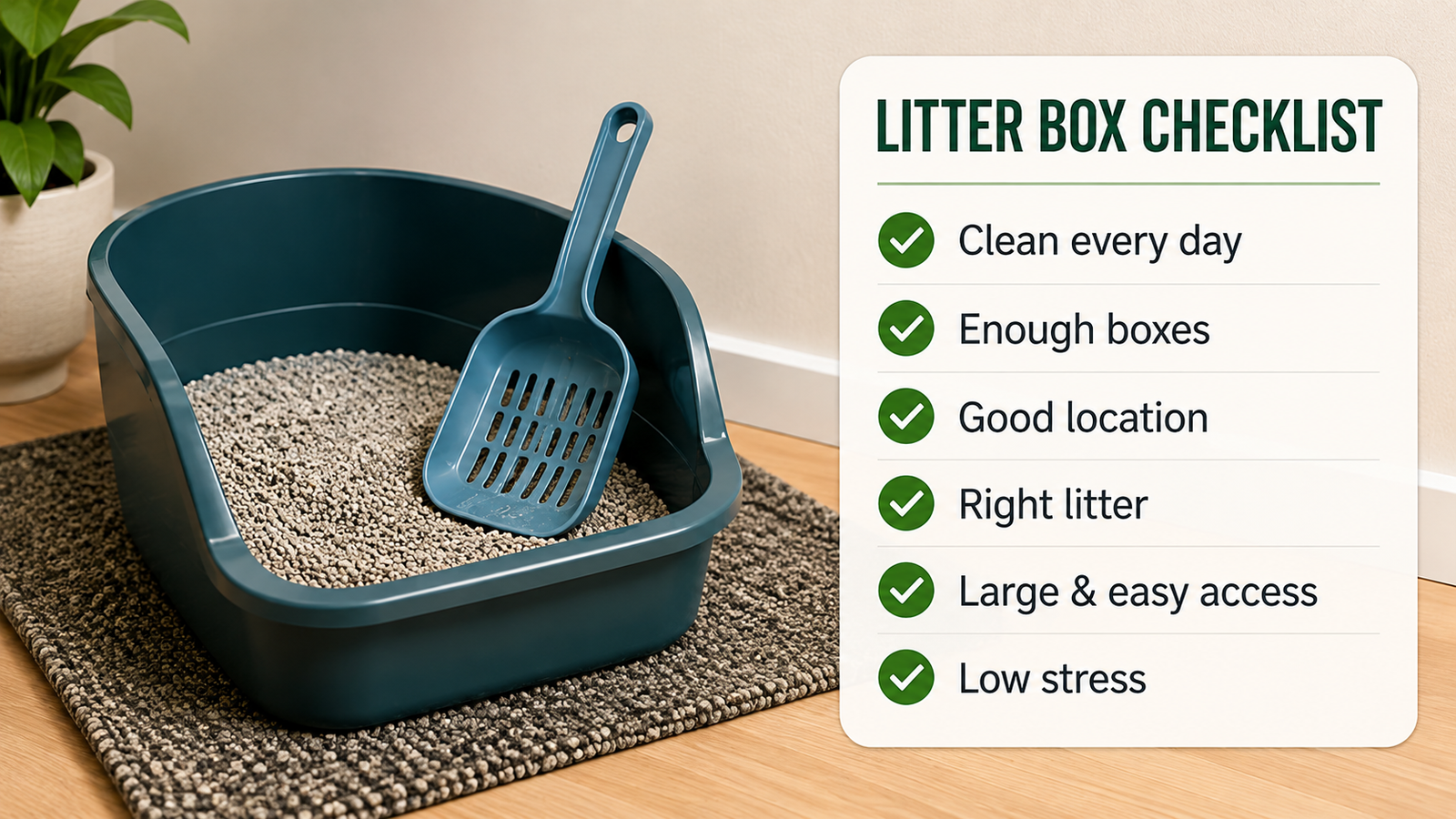
Use a large easy to enter box with unscented litter. Scoop at least daily. Provide several boxes in a multi cat home. Never punish accidents. A cat that strains. Cries. Or repeatedly tries to urinate but produces little or no urine needs urgent veterinary care.
Why Cats Stop Using the Litter Box
Common causes fall into four groups:
- Medical problems
- Litter box problems
- Environmental stress
- Conflict with other pets
Several causes can happen at the same time.
For example a cat may develop painful urination and then become afraid of the litter box where the pain happened.
Common Causes at a Glance
| Possible Cause | What You May Notice | First Step |
|---|---|---|
| Dirty box | Cat toilets beside or near the box | Scoop more often |
| Wrong litter | Avoids box after litter change | Return to familiar unscented litter |
| Stress | Hiding. Pacing. Marking. Avoidance | Provide safe separate resources |
| Joint pain | Difficulty entering high sided box | Provide a low entrance box and contact a vet |
| Urinary disease | Frequent attempts. Straining. Blood. Crying | Veterinary care |
1. The Litter Box Is Too Dirty
Many cats prefer a very clean toilet area.
Waste left inside can make another area feel more attractive.
Scoop solid waste and urine clumps at least once each day.
Twice daily may work even better.
Read our complete guide on how often to clean a cat litter box.
2. You Do Not Have Enough Litter Boxes
A useful starting guideline is:
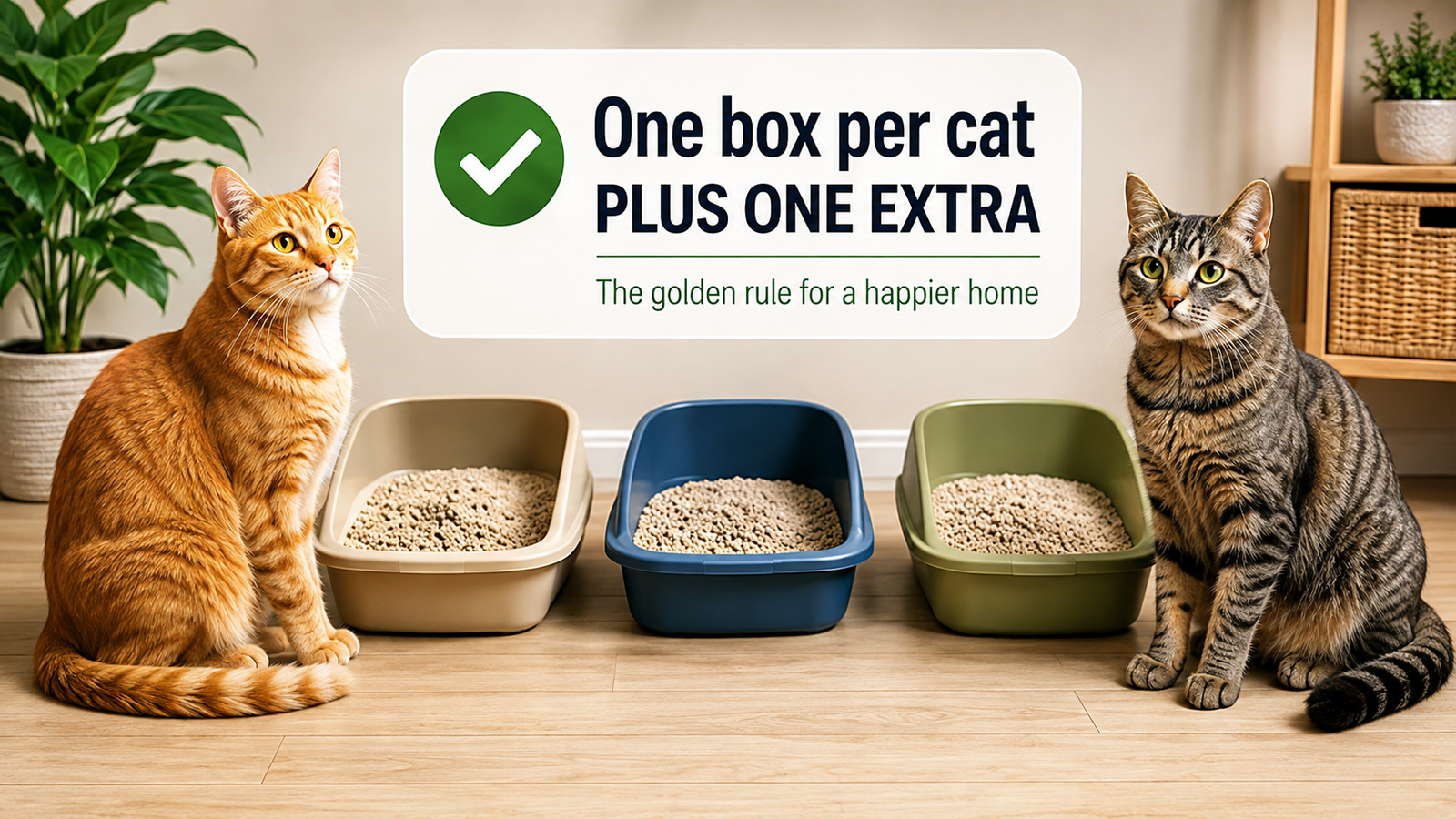
One litter box for each cat plus one extra.
This means:
- One cat can have two boxes
- Two cats can have three boxes
- Three cats can have four boxes
Not every household needs the exact same arrangement.
But multiple boxes give cats more choices.
3. All Boxes Are in the Same Location
Three boxes side by side may function like one toilet area from a cat’s perspective.
Place boxes in different useful locations.
A cat should have another option when one area feels unsafe.
4. The Litter Box Is Too Small
Your cat needs room to:
- Enter
- Turn
- Dig
- Choose a clean area
- Cover waste
Large cats often need larger boxes than standard store litter trays.
5. The Box Has High Sides
High sides may be useful for reducing litter scatter.
But they can be difficult for:
- Senior cats
- Kittens
- Cats with arthritis
- Cats recovering from injury
Try a low entrance box when movement appears difficult.
6. Your Cat Dislikes Covered Boxes
A covered box traps odor inside.
It also limits visibility and escape routes.
Some cats use covered boxes happily.
Others prefer an open box.
Try both styles when you are unsure.
7. The Litter Is Too Strongly Scented
A fragrance designed to smell fresh to people may be overwhelming to a cat.
Unscented litter is often a good starting choice.
Avoid using heavy perfume around the litter box.
8. You Changed Litter Suddenly
A sudden change in texture or smell can make the box unfamiliar.
When changing litter:
- Keep some of the familiar litter.
- Add a small amount of the new litter.
- Increase it gradually.
- Watch your cat’s response.
9. The Litter Is Too Deep or Too Shallow
Many cats prefer around two to three inches of litter.
Individual preferences vary.
Too much may move under the paws.
Too little may allow urine to reach the bottom quickly.
10. The Box Is in a Noisy Location
A washing machine. Dryer. Boiler. Door. Or busy hallway can frighten some cats.
Place the box somewhere:
- Quiet
- Easy to reach
- Available all day
- Away from food
- Safe from another animal
11. Another Cat Is Blocking the Box
Cat conflict is not always obvious.
One cat may silently block access.
Watch for:
- Staring
- Chasing
- Waiting near the box
- Blocking hallways
- One cat leaving when another arrives
Provide multiple boxes in different areas.
12. A New Cat Has Changed the Environment
A new cat can create territorial stress.
Slow introductions are important.
Give each cat separate:
- Food areas
- Water
- Resting areas
- Scratching surfaces
- Litter boxes
Read how to introduce a new cat to your home.
13. Your Cat May Be Stressed
Possible stress triggers include:
- Moving house
- Visitors
- A new baby
- New furniture
- Construction noise
- Outdoor cats
- Routine changes
- Conflict with pets
A stressed cat may also hide.
Read our guide on why cats hide.
14. Your Cat May Have Pain
Using the litter box involves walking. Climbing. Squatting. And digging.
Arthritis or another painful condition may make these movements difficult.
You may notice:
" alt="Why Is My Cat Not Using the Litter Box? Causes and Solutions">- Reduced jumping
- Slow walking
- Stiffness
- Difficulty entering the box
- Urinating just outside the entrance
Use a low entrance box and arrange veterinary care.
15. Your Cat May Have a Urinary Problem
Urinary disease can cause:
- Frequent litter box visits
- Straining
- Small urine amounts
- Blood
- Crying
- Licking the genital area
- Urinating outside the box
Urinary Blockage Is an Emergency
A cat that repeatedly strains but produces little or no urine needs urgent veterinary care. This is especially important in male cats because a urinary blockage can become life threatening.
16. Constipation Can Cause Litter Box Problems
A constipated cat may associate the box with painful bowel movements.
You may notice:
- Repeated attempts to pass stool
- Hard dry stool
- Small stool pieces
- Reduced appetite
- Vomiting
- Abdominal discomfort
Contact a veterinarian when constipation is suspected.
17. Diarrhea Can Cause Accidents
A cat with diarrhea may not reach the box quickly enough.
Ongoing diarrhea can cause dehydration.
Contact a veterinarian when diarrhea is severe. Repeated. Bloody. Or happens with weakness or vomiting.
18. Your Cat May Be Urine Marking
Urine marking is different from normal urination.
Marking often happens on vertical surfaces.
The cat may stand with the tail raised and deposit a smaller amount.
Common triggers include:
- Outdoor cats
- Territorial conflict
- New pets
- Stress
- Changes in the home
Medical causes should still be ruled out.
How to Fix Litter Box Avoidance Step by Step
Step 1: Check for Medical Warning Signs
Look for:
- Straining
- Blood
- Crying
- Frequent attempts
- Pain
- Vomiting
- Weakness
Step 2: Scoop Every Box
Remove waste immediately.
Step 3: Add Another Litter Box
Place it somewhere quiet and accessible.
Step 4: Use Unscented Litter
Choose a simple familiar texture.
Step 5: Use a Large Open Box
This is a useful starting setup for many cats.
Step 6: Keep Food and Water Separate
Do not place bowls beside the litter box.
Step 7: Reduce Stress
Provide hiding places. Climbing areas. And separate resources.
Step 8: Clean Accident Areas Correctly
Use an enzymatic pet urine cleaner.
Follow the product instructions.
The goal is to remove the smell rather than cover it with perfume.
How to Clean Cat Urine From the Floor
Blot fresh urine.
Do not rub it deeper into fabric or carpet.
Use an enzyme cleaner labeled for pet urine.
Allow it to work for the full recommended time.
Test the product on a hidden area first.
Should You Use Bleach?
Avoid mixing household chemicals.
Never mix bleach with ammonia.
Urine can contain ammonia compounds.
This combination can create dangerous gas.
Should You Put the Cat Into the Litter Box After an Accident?
Do not force or punish the cat.
You can calmly show the cat where a clean box is located.
Then allow the cat to leave.
Why Punishment Makes the Problem Worse
Punishment does not explain what the cat should do.
It can increase fear and stress.
Never:
- Hit the cat
- Shout
- Rub the nose in urine
- Spray water
- Trap the cat beside the accident
Focus on the medical. Environmental. Or behavioral cause.
How Water Intake Relates to Urinary Health
Fresh water should remain available at all times.
Several water stations may encourage drinking.
Read how much water a cat should drink each day.
What About a New Kitten?
Kittens may have accidents while learning.
Use:
- A low entrance box
- Quiet locations
- Several boxes in a large home
- Regular gentle reminders
Keep the box easy to find.
Helping a Senior Cat
Senior cats may need:
- Low entry boxes
- A box on each floor
- Night lights
- Shorter walking distances
- Veterinary checks for arthritis or disease
A sudden change in a senior cat deserves medical attention.
Common Litter Box Mistakes
Using Only One Box
Add more options when possible.
Putting Every Box Together
Use different locations.
Using Strongly Scented Litter
Try unscented litter.
Cleaning Too Rarely
Scoop every day.
Using a Box That Is Too Small
Give your cat space to turn and dig.
Punishing Accidents
This can increase stress.
Ignoring a Sudden Change
Medical problems should be ruled out.
When Should You Contact a Veterinarian?
Contact a veterinarian when your cat:
- Suddenly stops using the litter box
- Strains
- Cries while urinating
- Produces very little urine
- Has blood in urine or stool
- Vomits repeatedly
- Becomes weak
- Stops eating
- Has ongoing diarrhea
- Has constipation
- Appears painful
- Begins drinking much more
Frequently Asked Questions
Why is my cat peeing beside the litter box?
The box may be dirty. Too small. Hard to enter. Or associated with pain.
Why did my cat suddenly stop using the box?
Sudden changes can be caused by urinary disease. Pain. Stress. Or environmental changes.
How many litter boxes should I have?
One box per cat plus one extra is a useful starting guideline.
Can changing litter cause accidents?
Yes. Some cats dislike a new texture or smell.
Should I use scented litter?
Unscented litter is often a safer starting choice.
Why does my cat poop outside but pee inside the box?
Possible causes include constipation. Box size. Litter preference. Pain. Or stress.
Will adding another box help?
It often helps because it gives the cat another clean and safe option.
Should I punish my cat?
No. Punishment can increase fear and does not solve the cause.
Can stress cause litter box problems?
Yes. Environmental and social stress can affect toileting behavior.
Final Thoughts
A cat that stops using the litter box needs investigation rather than punishment.
Keep boxes clean.
Provide enough boxes.
Use quiet locations.
Try unscented litter.
Use a large box with easy access.
Reduce conflict between pets.
Clean accidents with an enzyme cleaner.
Most importantly. Watch for medical warning signs.
Straining with little or no urine is an emergency and needs immediate veterinary attention.
Related DailyPetTips Guides
- How Often Should You Clean a Cat Litter Box?
- How Much Water Should a Cat Drink Each Day?
- Why Is My Cat Hiding?
- How to Introduce a New Cat to Your Home
- Explore All Cat Guides
- Explore Pet Care Guides



Pet parent notes