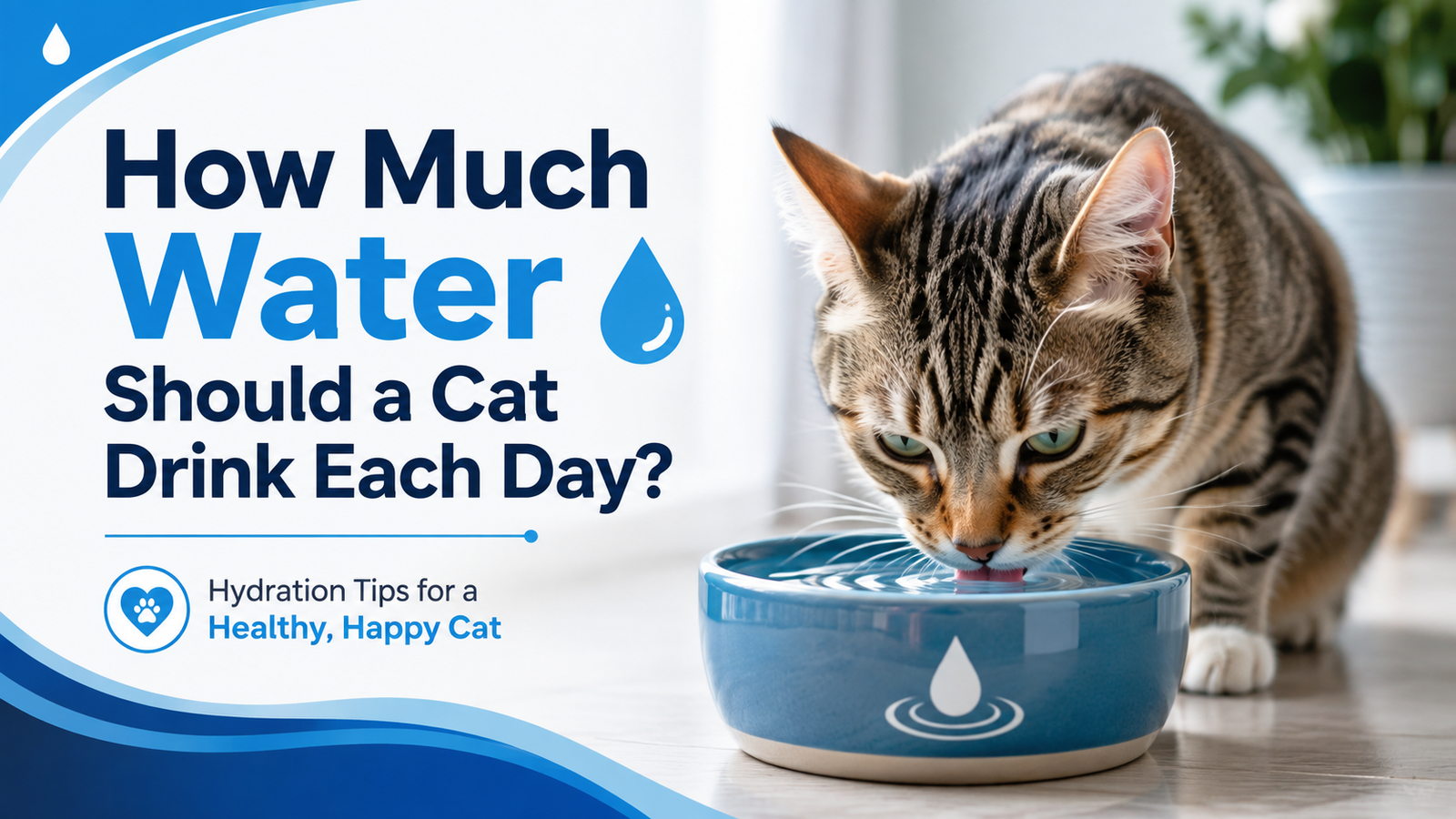
Water is essential for every cat.
It supports digestion. Blood flow. Body temperature. Kidney function. And normal movement of waste through the body.
Cats do not always drink large amounts from a bowl. Some cats receive much of their water from wet food.
This means you should look at the complete diet. A cat eating wet food may visit the water bowl less often than a cat eating dry food.
This guide explains how much water cats generally need. How food changes water intake. How to encourage drinking. How to check for dehydration. And when changes need veterinary attention.
Quick Answer
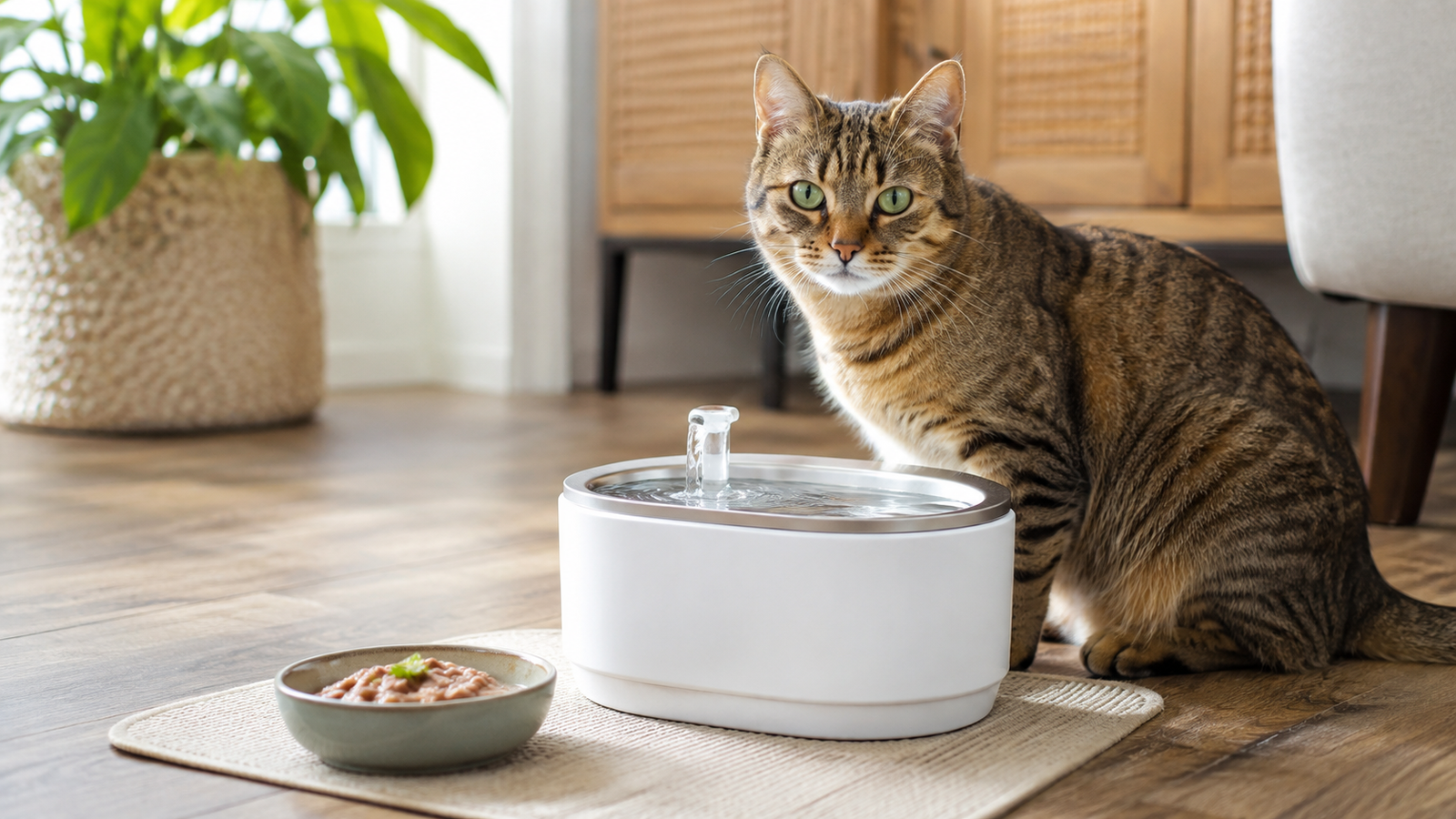
A cat should have clean fresh water available at all times.
The exact amount a cat drinks depends on body size. Food type. Weather. Activity. Age. And health. Cats eating wet food often drink less from a bowl because their food contains more moisture. Contact a veterinarian when your cat suddenly drinks much more or much less than normal.
Why Water Is Important for Cats
Water is involved in almost every major body function.
It helps:
- Move nutrients through the body
- Support healthy kidneys
- Control body temperature
- Support digestion
- Keep stool softer
- Support normal urination
- Protect tissues and joints
- Replace water lost through urine and stool
A cat cannot stay healthy without enough water.
Even a small change in normal drinking can give useful information about health.
How Much Water Does a Cat Need?
There is no single amount that is correct for every cat.
Veterinarians may estimate water needs using body weight. However the water inside food must also be counted.
A cat eating mostly wet food may receive a large part of its daily water from meals.
A cat eating dry food may need to drink more from a bowl or fountain.
| Factor | Possible Effect | Important Note |
|---|---|---|
| Wet food | More water comes from meals | The cat may drink less from a bowl. |
| Dry food | Less water comes from meals | Easy access to fresh water is especially important. |
| Hot weather | Water needs may increase | Keep bowls in cool shaded places. |
| High activity | The cat may need more water | Offer water after active play. |
| Kidney or urinary disease | Drinking may change | Follow a veterinary care plan. |
Important: Do not force a fixed amount of water into your cat without veterinary guidance.
Wet Food and Water Intake
Wet cat food contains much more moisture than dry food.
This can help increase total water intake without requiring the cat to drink everything from a bowl.
Wet food may be useful for some cats with urinary or kidney concerns. However it is not automatically the best diet for every cat.
Choose food based on:
- Age
- Body condition
- Health
- Dental needs
- Veterinary advice
- Complete and balanced nutrition
Do not change food suddenly.
A slow change may reduce stomach upset.
Dry Food and Water Intake
Dry food contains less moisture.
A cat eating dry food needs easy access to water throughout the day.
Place more than one water bowl around the home.
Watch whether another pet blocks access.
Clean the bowl every day because food pieces. Hair. And dust can enter the water.
How Can You Tell How Much Your Cat Drinks?
You can monitor drinking without making the routine stressful.
Use the Same Bowl
Fill the bowl to the same level each day.
Notice whether the level changes more or less than normal.
Measure When Needed
Use a measuring cup when your veterinarian asks for a more accurate record.
Write down how much water you add and how much remains.
Consider Other Pets
A shared bowl does not show how much one cat drinks.
Separate bowls may help when you need to monitor one cat.
Check the Litter Box
Changes in urine clump size or number can also provide useful information.
Read our guide on how often to clean a cat litter box.
Signs That a Cat May Not Be Drinking Enough
Possible signs include:
- Dry or sticky gums
- Low energy
- Reduced appetite
- Hard dry stool
- Less urine
- Sunken looking eyes
- Weakness
- Vomiting
- Skin that does not return quickly after gentle lifting
These signs are not a perfect home test.
Older cats. Thin cats. And cats with loose skin may give misleading skin results.
Contact a veterinarian when dehydration is possible.
Do Not Wait When Your Cat Seems Weak
A cat that is weak. Vomiting repeatedly. Unable to drink. Or producing little urine may need urgent veterinary care.
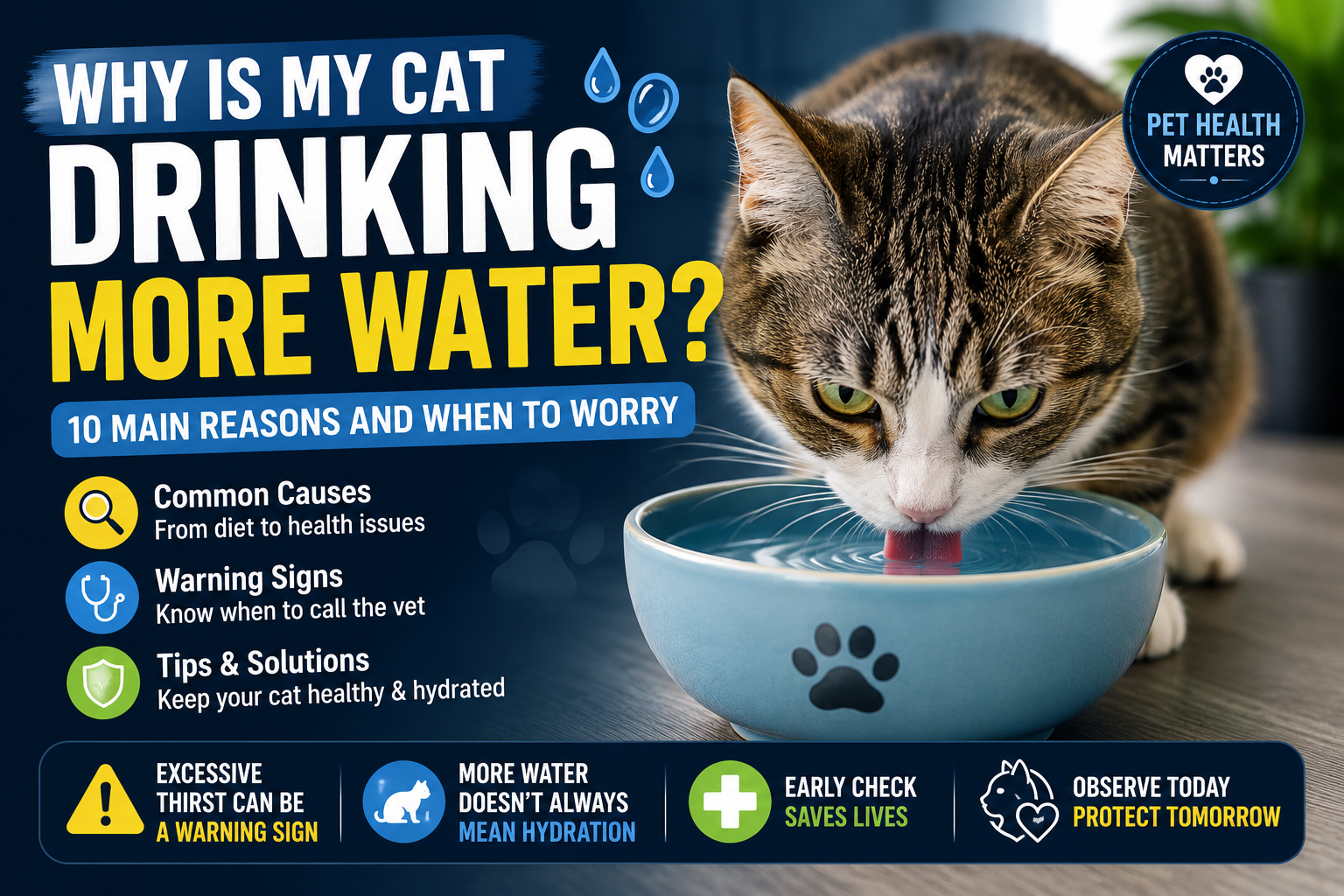
Why Is My Cat Suddenly Drinking More Water?
Hot weather and a change to dry food may increase drinking.
However a strong or lasting increase can also be connected with health problems.
Possible causes include:
- Kidney disease
- Diabetes
- Thyroid disease
- Urinary disease
- Fever
- Vomiting or diarrhea
- Medication effects
Do not limit water because your cat is drinking more.
Fresh water should remain available.
Contact a veterinarian and describe when the change began.
Why Is My Cat Drinking Less Water?
A cat may drink less from a bowl after changing to wet food.
Other possible reasons include:
- Dirty water
- A bowl the cat dislikes
- Water placed near the litter box
- Another pet blocking access
- Mouth pain
- Nausea
- Weakness
- Stress
A sudden decrease combined with reduced eating or low energy needs veterinary attention.
How to Encourage a Cat to Drink More Water
Provide Several Water Stations
Place bowls in different quiet areas.
This is especially helpful in a large home or a home with several cats.
Keep Water Away From the Litter Box
Cats may avoid water placed near their toilet area.
Try Different Bowl Materials
Some cats prefer ceramic. Glass. Or stainless steel.
Plastic can hold scratches and odor over time.
Use a Wide Bowl
A wide bowl may reduce contact with the whiskers.
Change the Water Daily
Fresh water may be more attractive.
Try a Cat Water Fountain
Some cats enjoy moving water.
Clean the fountain and filter according to the product instructions.
Add Water to Food
A small amount of water may be mixed into food when your cat accepts it.
Introduce the change slowly.
Ask a veterinarian before changing a medical diet.
Offer Wet Food
Wet food can increase total moisture intake.
Choose a complete and balanced food suitable for your cat.
Where Should You Put a Cat’s Water Bowl?
Choose a place that is:
- Quiet
- Easy to reach
- Away from the litter box
- Away from strong heat
- Safe from another animal
- Available day and night
Some cats prefer water away from the food bowl.
Try more than one location and observe which bowl your cat uses.
How Often Should You Clean the Water Bowl?
Wash the water bowl every day.
Use mild unscented soap.
Rinse thoroughly.
Slime can develop on bowls and fountains when they are not cleaned regularly.
Replace deeply scratched plastic bowls.
Can Cats Drink Milk?
Milk is not a replacement for water.
Many adult cats cannot digest lactose well.
Milk may cause:
- Diarrhea
- Gas
- Stomach discomfort
- Extra calories
Fresh water should remain the main drink.
Can Cats Drink Flavored Water?
Do not add sugar. Salt. Human drink powder. Or artificial sweetener.
Some owners use a very small amount of water from plain tuna packed in water.
It must not contain onion. Garlic. Heavy salt. Or seasoning.
This should be an occasional method and not the main water source.
Can Cats Drink From a Tap?
Many cats enjoy running tap water.
Supervise the cat and avoid wasting water.
A fountain may provide a safer regular option.
Clean the tap area and fountain regularly.
Signs of Urinary Trouble
Watch for:
- Frequent litter box visits
- Straining
- Producing very little urine
- Crying while urinating
- Blood in the urine
- Licking the genital area
- Urinating outside the box
- Vomiting
- Weakness
Urinary Blockage Is an Emergency
A cat that strains but produces little or no urine needs urgent veterinary care. Male cats are at higher risk of a dangerous blockage.
Common Cat Hydration Mistakes
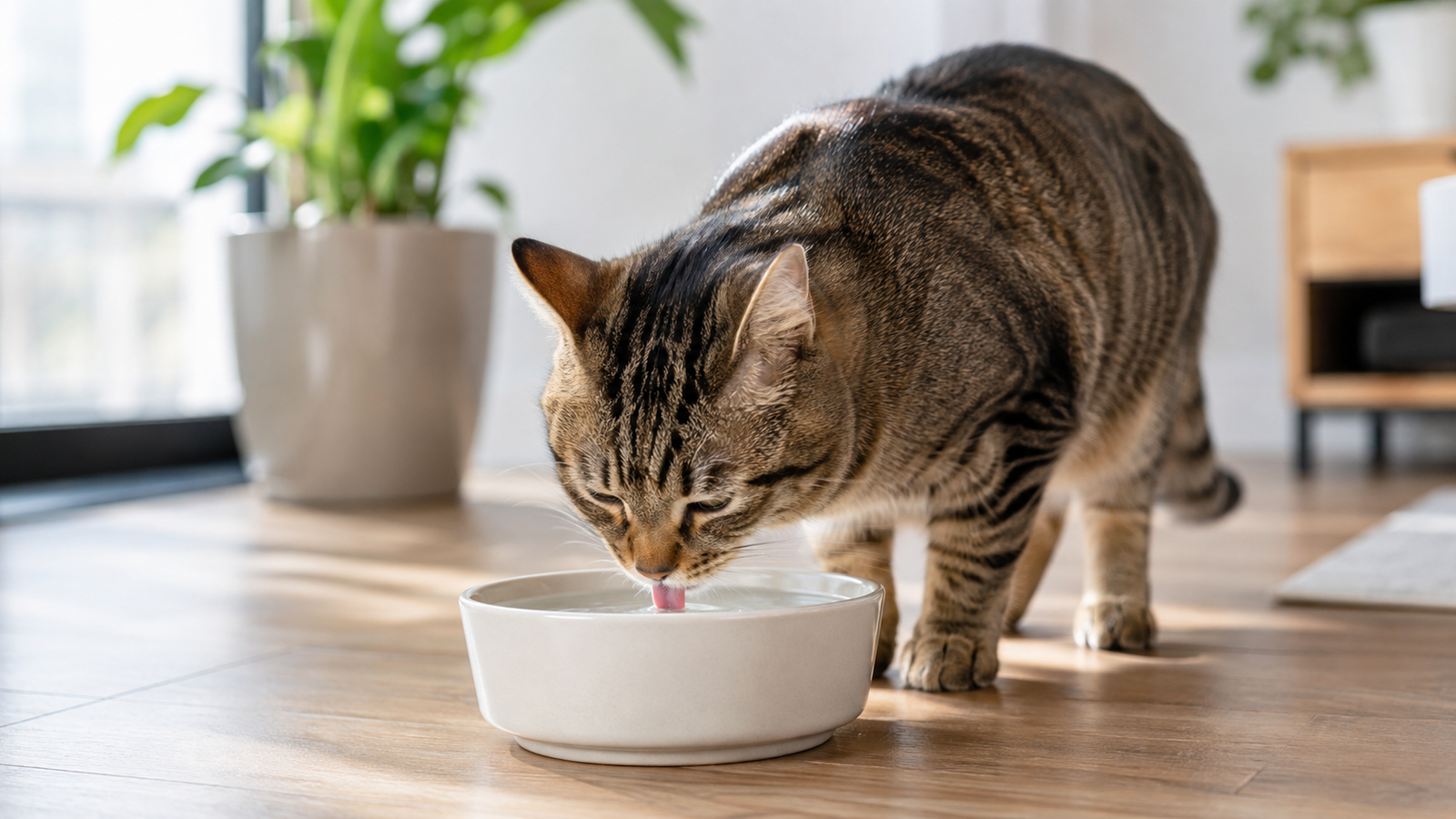
Offering Only One Small Bowl
Provide more than one water location when possible.
Keeping Water Near the Litter Box
Move it to a clean and quiet area.
Using a Dirty Fountain
Moving water still needs regular cleaning.
Ignoring a Sudden Change
More or less drinking can be a health sign.
Adding Unsafe Flavor
Avoid salt. Onion. Garlic. Sugar. And artificial sweeteners.
Forcing Water Into the Mouth
Liquid can enter the lungs.
Follow veterinary instructions when a cat cannot drink normally.
When Should You Contact a Veterinarian?
Contact a veterinarian when your cat:
- Suddenly drinks much more
- Suddenly drinks much less
- Stops eating
- Vomits repeatedly
- Has ongoing diarrhea
- Seems weak
- Has dry gums
- Produces little urine
- Strains in the litter box
- Has blood in urine
- Shows pain
- Has a major change in urine clumps
Frequently Asked Questions
Should cats drink water every day?
Yes. Cats need water every day even when they eat wet food.
Why does my cat rarely use the water bowl?
Your cat may receive water from wet food. The bowl location or cleanliness may also affect drinking.
Is a water fountain better than a bowl?
Some cats prefer fountains. Others prefer still water. Both can work when kept clean.
Can I add ice to cat water?
A small ice cube may be safe for many cats. Some cats dislike very cold water.
Should water be beside cat food?
Some cats accept this. Others drink more when water is placed in a separate location.
Can wet food replace drinking water?
Wet food provides moisture but fresh drinking water should still be available.
Why is my older cat drinking more?
Older cats have a higher risk of kidney disease. Diabetes. And thyroid disease. Contact a veterinarian.
Can dehydration cause constipation?
Low water intake can contribute to hard stool. Constipation can also have other causes.
Final Thoughts
Every cat needs clean fresh water every day.
The amount your cat drinks from a bowl depends partly on the moisture inside its food.
Provide several clean water stations.
Keep water away from the litter box.
Try a wide bowl or fountain when your cat drinks very little.
Do not ignore a sudden increase or decrease in drinking.
Changes in thirst and urination can be early signs of illness.
Related DailyPetTips Guides
- How Often Should You Clean a Cat Litter Box?
- How to Brush a Cat at Home Safely
- Explore All Cat Guides
- Explore Pet Health Guides


Pet parent notes