
Quick Answer
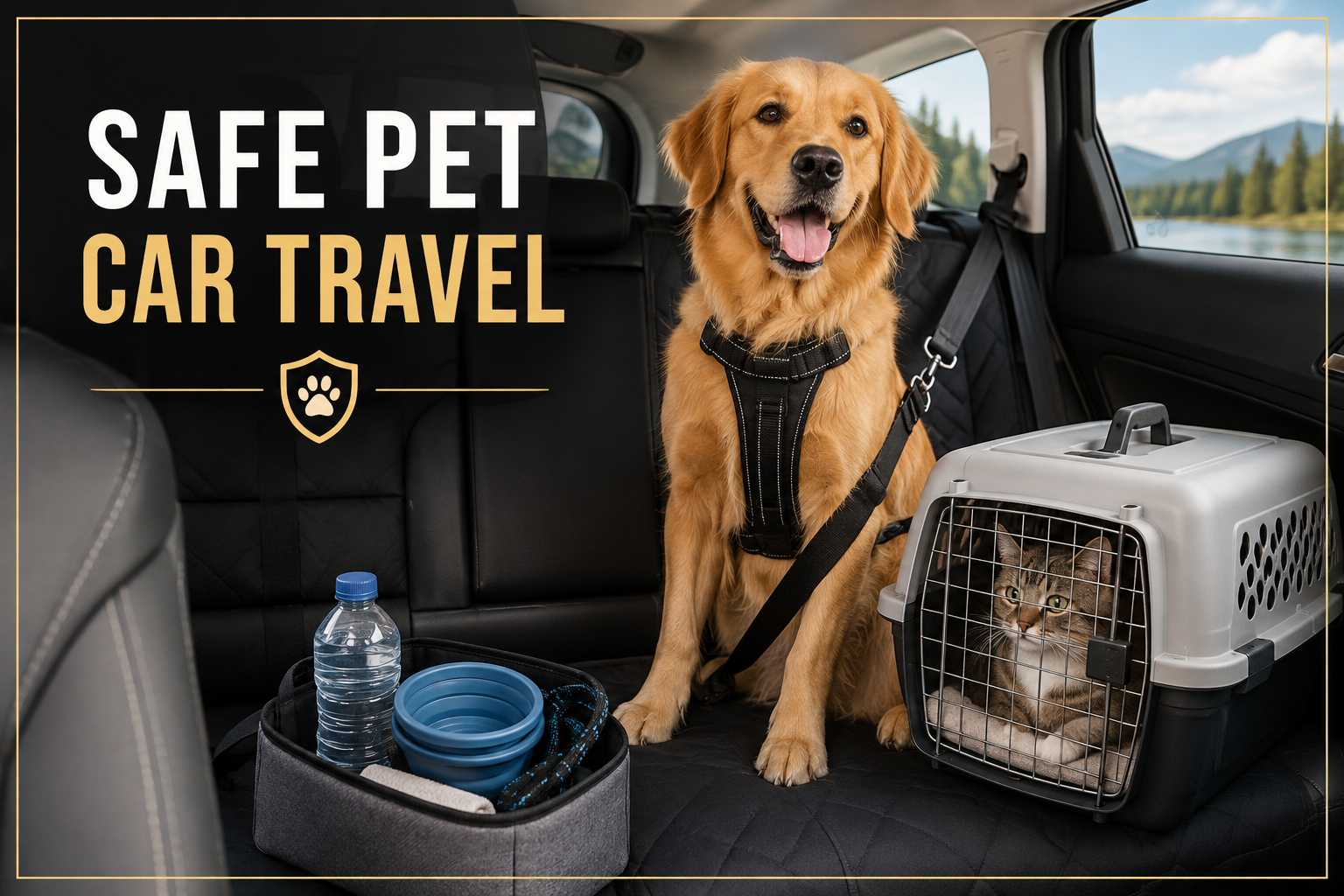
Dogs and cats should travel securely rather than moving freely around a vehicle.
Use an appropriate carrier crate or vehicle restraint system based on your pet and equipment instructions. Keep the vehicle at a safe comfortable temperature and never leave a pet unattended inside a parked car.
Bring identification water necessary medicines and basic emergency information on longer trips.
Key Takeaways
- Secure pets before the vehicle starts moving.
- Cats should normally travel inside secure carriers.
- Use dog restraints or crates that are appropriate for vehicle travel.
- Never let a pet ride loose in the front seat.
- Keep the vehicle comfortably cool.
- Never leave a pet alone in a parked car.
- Plan safe water and bathroom breaks.
- Speak with your veterinarian about severe travel anxiety or motion sickness.
Prepare Before the Trip
Do not make the first car experience a six hour journey if you can avoid it.
For pets that are new to travel begin with short calm experiences.
You might start by allowing the pet to sit inside the stationary vehicle while securely contained.
Then try a very short drive.
Build gradually if the animal remains comfortable.
Before a longer journey check:
- Your route
- Expected weather
- Rest stops
- Pet friendly accommodation
- Veterinary clinics near your destination
- Required travel documents
Check Identification Before Leaving
A pet that escapes in an unfamiliar place can be difficult to recover.
Make sure identification information is current.
Useful preparation can include:
- An identification tag
- Current phone number
- Microchip details if the pet is microchipped
- A recent photo
- Veterinary records when relevant
Keep important information on your phone and consider carrying a paper backup during longer travel.
Safe Car Travel for Cats
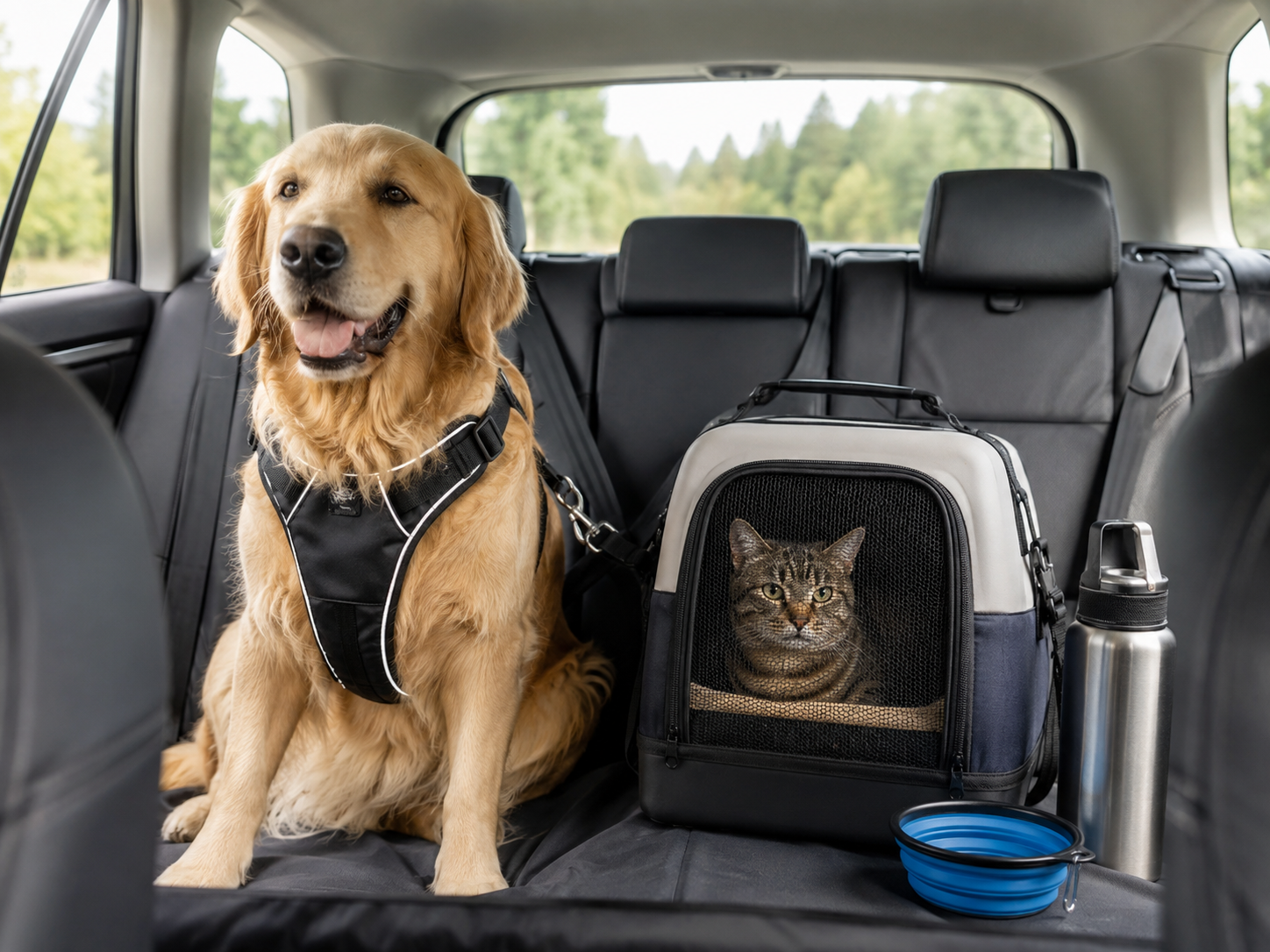
Cats should usually travel inside a secure carrier.
Holding a cat in your arms may feel reassuring but a frightened cat can escape when a vehicle door opens or interfere with the driver.
The carrier should:
- Be strong and secure
- Have adequate ventilation
- Be large enough for the cat to fit comfortably
- Close reliably
- Be positioned securely in the vehicle
Make the Carrier Familiar
Do not store the carrier out of sight until appointment or travel day.
Leaving it open at home with familiar bedding can help reduce the association between the carrier and stressful trips.
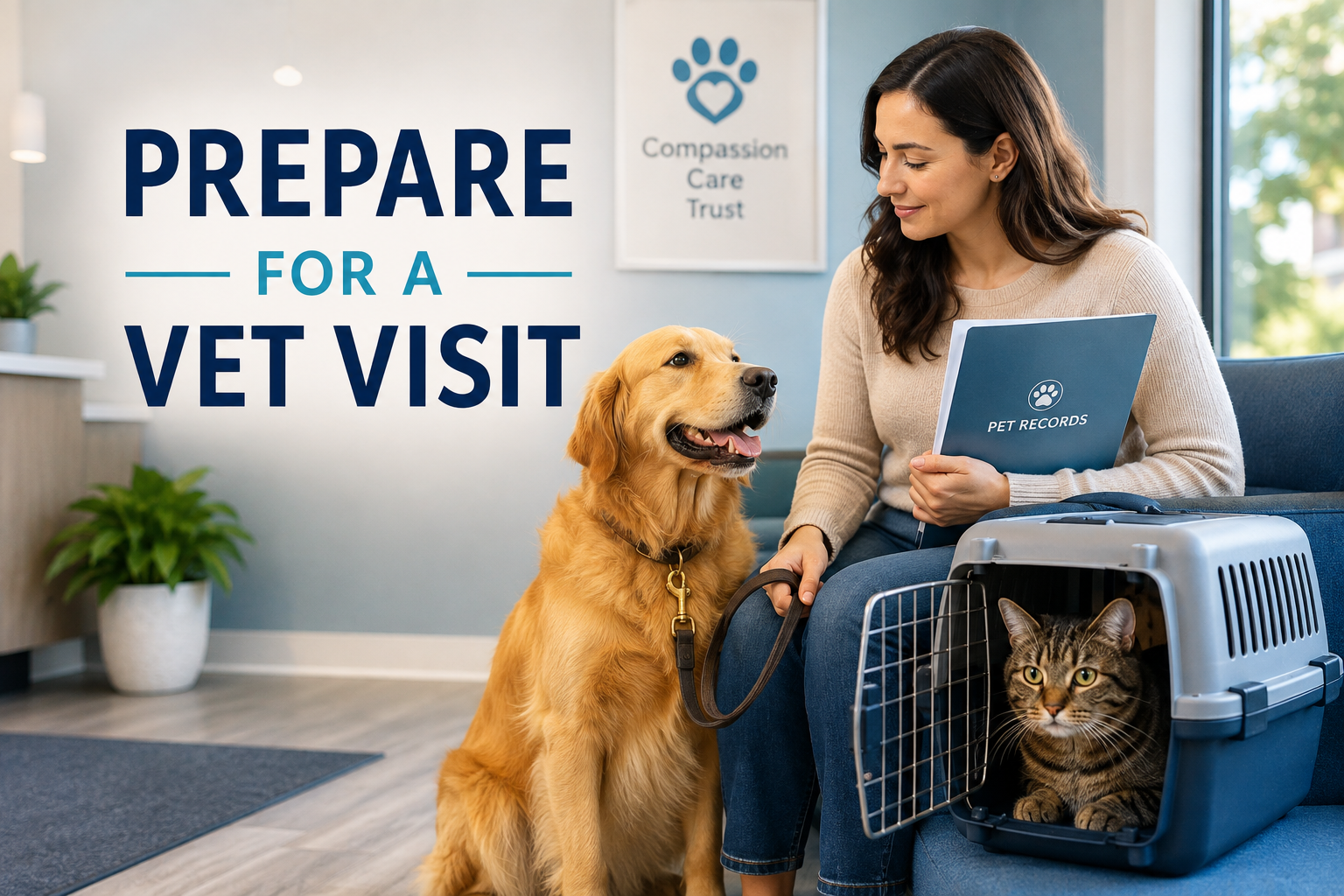
This same method is discussed in our guide on how to prepare your dog or cat for a vet visit.
Safe Car Travel for Dogs
Dogs should not move freely around the vehicle.
A loose dog can distract the driver and may be injured during sudden braking or a collision.
Depending on the dog and vehicle a suitable option may include:
- A secured travel crate
- A vehicle appropriate dog restraint
- A properly installed travel system designed for pets
Follow the product manufacturer's instructions carefully.
Do not attach a vehicle restraint to equipment that was not designed to handle that type of force.
Avoid the Front Seat
Airbags are designed for human passengers and can create risk for pets.
The back seat or another secure designated area is generally more appropriate.
Secure the Carrier Properly
A carrier that slides across the vehicle during a turn is not secure transportation.
Position and restrain it according to the carrier and vehicle instructions.
Keep the carrier:
- Stable
- Well ventilated
- Away from direct intense sun
- Away from loose heavy luggage
Do not stack bags or suitcases where they could fall onto the pet.
Manage Temperature Carefully
Vehicle temperature is one of the most important travel safety issues.
Keep the passenger area at a comfortable temperature.
Do not place a carrier in a closed hot cargo area without safe climate control.
Never leave a dog or cat unattended inside a parked vehicle.
A parked vehicle can become dangerously hot in a short time even when the outside temperature does not feel extreme.
For more warm weather guidance read how to keep dogs and cats safe in hot weather.
Plan Water and Bathroom Breaks
Bring clean drinking water instead of relying on finding a source along the road.
For dogs plan safe breaks based on trip length age and individual needs.
Always attach the dog's leash before opening the vehicle door.
An unfamiliar service area can contain traffic strangers dogs and other distractions.
For cats do not open the carrier outdoors or at an unsecured rest stop.
For long journeys discuss practical litter arrangements with your veterinarian if needed.
Food Before and During the Trip
Large meals immediately before travel may be uncomfortable for some pets.
However feeding needs vary by age health medication and individual routine.
If your pet has a medical condition or must eat with medication ask your veterinarian how to plan meals around travel.
Bring the pet's normal food rather than depending on finding the exact product at your destination.
Store it safely using the principles in our guide on how to store dry and wet pet food safely at home.
Travel Anxiety and Motion Sickness
Some pets become nervous in vehicles.
Signs may include:
- Vocalizing
- Panting
- Drooling
- Restlessness
- Vomiting
- Refusing to enter the vehicle
Do not punish a frightened pet.
Short positive practice sessions can help some animals.
If anxiety or motion sickness is severe speak with your veterinarian.
Veterinarians can determine whether behavior training environmental changes or prescribed medication may be appropriate.
Never give a human sedative motion sickness medicine or calming drug unless a veterinarian specifically instructs you to use it for your pet.
What to Pack for a Longer Pet Car Trip
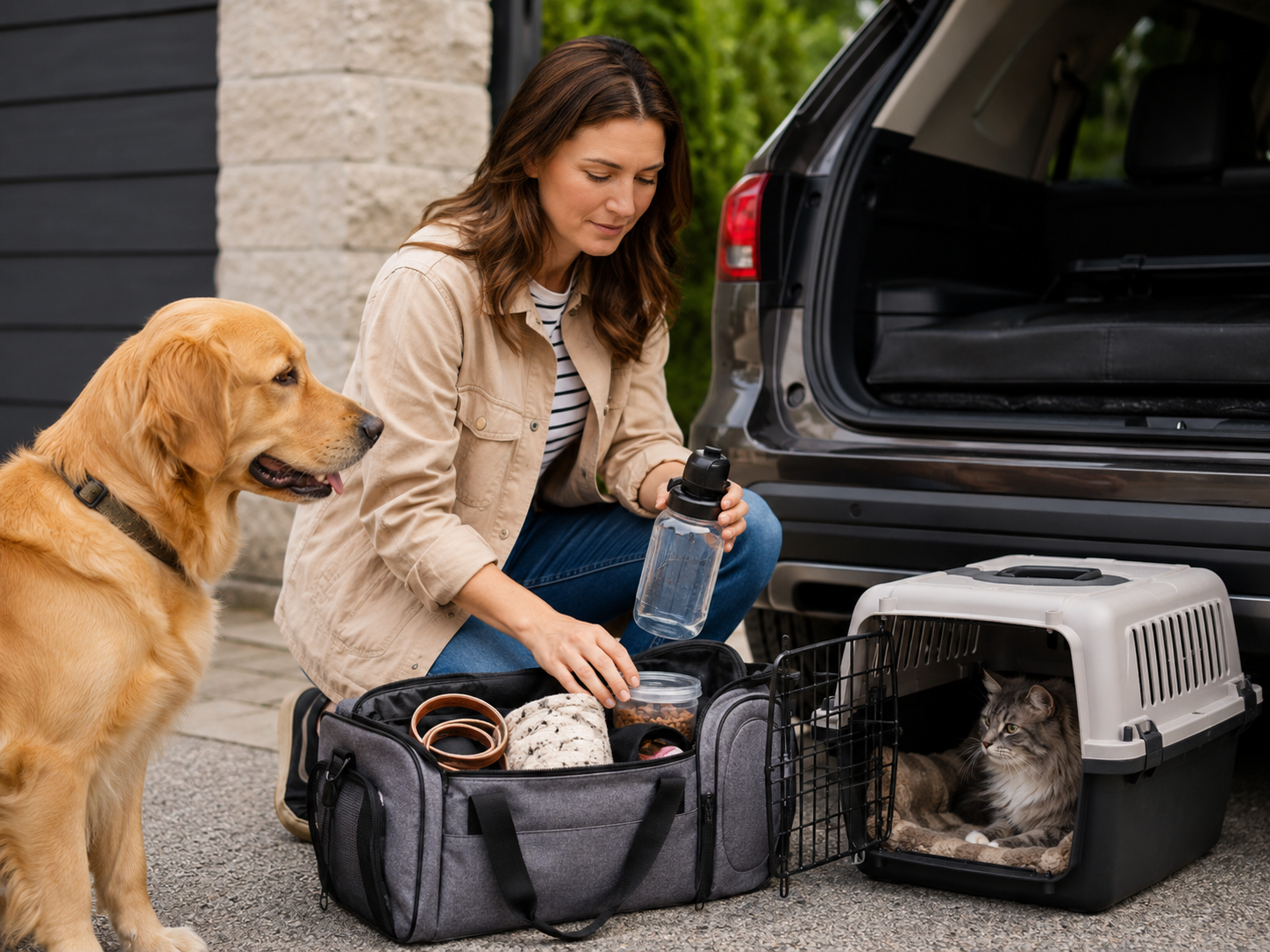
A small travel bag can make stops easier.
Useful items may include:
- Food
- Water
- Bowls
- Medicine
- Leash
- Waste bags
- Cat litter supplies when needed
- Cleaning supplies
- Identification information
- Veterinary records
- A familiar blanket
Your pet emergency kit can provide many of these items.
Staying Overnight With a Pet
Confirm that accommodation accepts your type and number of pets before arrival.
When entering a new room inspect it before allowing your pet to explore.
Check for:
- Open doors
- Loose cords
- Food left by previous guests
- Cleaning chemicals
- Unsafe balconies
- Small objects under furniture
Maintain normal feeding and bathroom routines as much as practical.
Do not leave a stressed pet alone in an unfamiliar room until you understand how the pet responds to the environment.
Common Pet Car Travel Mistakes
Allowing the Pet to Roam Freely
Loose animals can distract the driver and are harder to protect during sudden stops.
Opening a Cat Carrier at a Rest Stop
An unfamiliar outdoor location is a high risk place for escape.
Leaving the Pet in a Parked Vehicle
This can become dangerous quickly in warm conditions.
Waiting Until Travel Day to Try the Carrier
Familiarity can make transportation easier.
Using Unprescribed Sedatives
Medication should only be used with veterinary guidance.
Forgetting Identification
Travel increases the importance of current contact information.
Frequently Asked Questions
Can My Dog Sit on My Lap While I Drive?
No. A pet should not interfere with the driver's ability to control the vehicle. Use secure transport appropriate for your dog and vehicle.
Should My Cat Stay in a Carrier for the Car Ride?
Yes. A secure carrier is generally the safest practical way to transport a cat by car.
Can I Leave My Pet in the Car With the Windows Open?
No. Slightly open windows do not reliably prevent dangerous heat buildup.
What if My Pet Gets Car Sick?
Talk with your veterinarian. Motion sickness and anxiety may require different approaches.
Should I Give My Pet Food During a Long Drive?
Feeding plans depend on the animal and trip length. Bring the normal food and ask your veterinarian for advice when the pet has medical or medication related feeding needs.
Related DailyPetTips Guides
- How to Build a Pet Emergency Kit for Dogs and Cats
- How to Prepare Your Dog or Cat for a Vet Visit
- How to Keep Dogs and Cats Safe in Hot Weather
Sources and References
- American Veterinary Medical Association Traveling With Your Pet
- ASPCA Travel Safety Tips
- American Animal Hospital Association
Pet Travel Safety Disclaimer
This article provides general educational information and does not replace veterinary advice. Pets with heart disease breathing problems severe anxiety motion sickness or other medical conditions may need individual travel recommendations from a veterinarian.
Editorial Note
This guide focuses on practical transport safety and avoids recommending medication or restraint products without professional or manufacturer guidance. Veterinary advice is recommended whenever health anxiety or motion sickness affects travel.
About the Author
Ibrahim is a pet care writer at DailyPetTips. He creates practical easy to understand guides using responsible pet care principles and trusted veterinary and animal welfare resources.

Pet parent notes