
Quick Answer
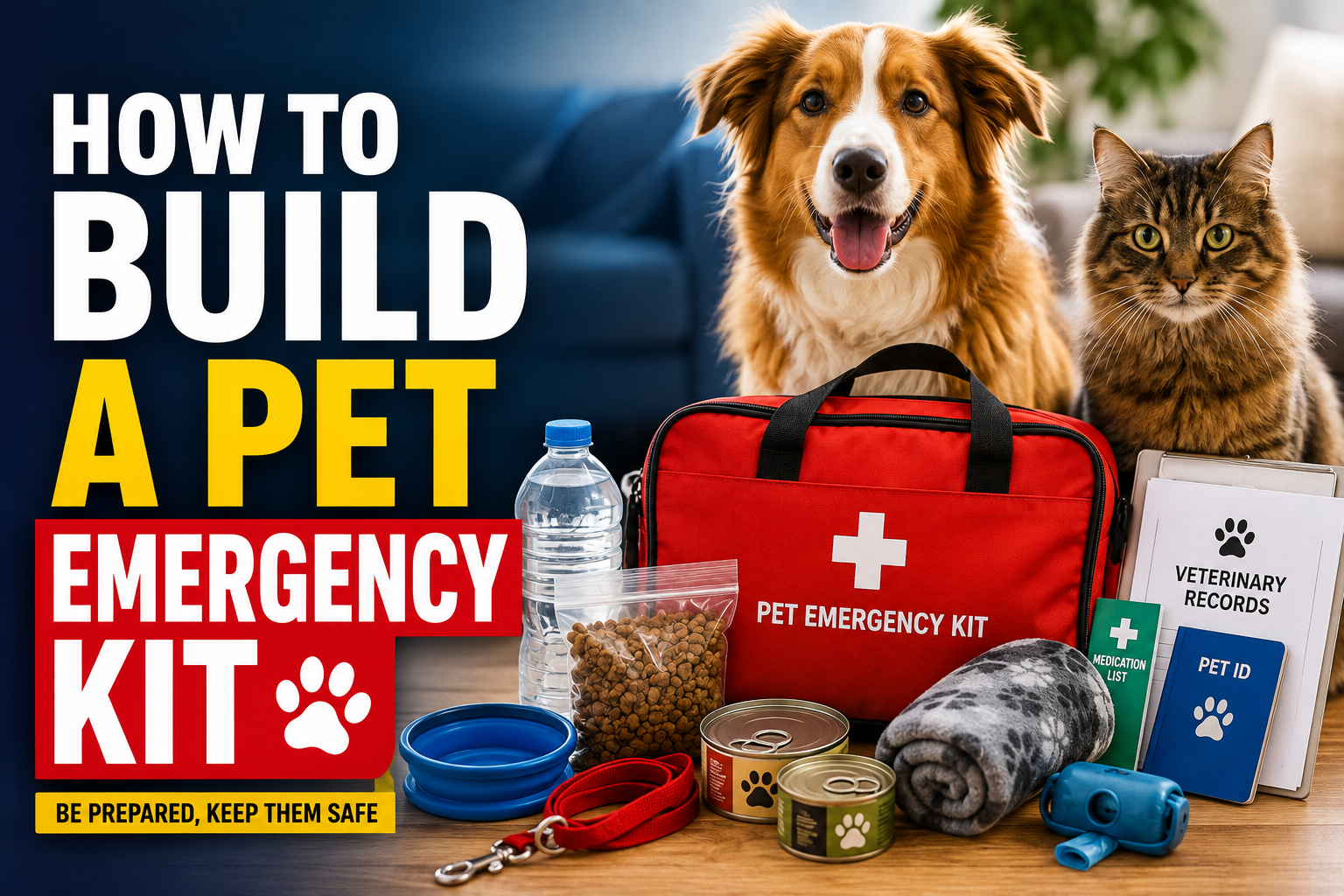
A useful pet emergency kit should contain enough essential supplies to help you care for your dog or cat if you need to leave home quickly or temporarily lose access to normal services.
Start with food water medicines identification veterinary records a carrier or leash sanitation supplies and basic first aid items. Keep everything together in an easy to carry container and check the kit regularly for expired food medicines or outdated information.
Key Takeaways
- Prepare supplies before an emergency happens.
- Keep food water medicines and identification easy to reach.
- Store copies of veterinary and vaccination records.
- Use secure carriers for cats and suitable leashes or harnesses for dogs.
- Include sanitation and cleanup supplies.
- Add recent photos of your pets in case you become separated.
- Review the kit several times each year.
- Never give human medication unless a veterinarian specifically instructs you to do so.
Why Every Pet Household Should Have an Emergency Kit
Emergencies are difficult because they give you less time to make decisions.
A power outage flood storm fire evacuation or unexpected trip to an emergency veterinary clinic can become more stressful when important pet supplies are scattered around the house.
A prepared kit gives you one place to find the essentials.
It does not need to be expensive or complicated.
The goal is simple. You should be able to pick it up quickly and have the most important supplies with you.
It also works well with normal home safety planning. If you have not already checked your home for hazards read our guide on how to pet proof your home for a dog or cat.
Pack Food and Water
Include a supply of the food your pet normally eats.
A sudden change of food during an already stressful event may cause digestive problems in some animals.
Keep food in secure moisture resistant packaging.
Write the date you packed it and replace it before it becomes old.
Include Drinking Water
Keep safe drinking water available for your pets as part of your household emergency supply.
You may also want:
- Collapsible bowls
- A lightweight food scoop
- A can opener if your pet eats canned food without an easy open lid
Do not pack an enormous quantity that makes the kit impossible to carry. The correct amount depends on your pet household and emergency plan.
Medicines and Medical Information
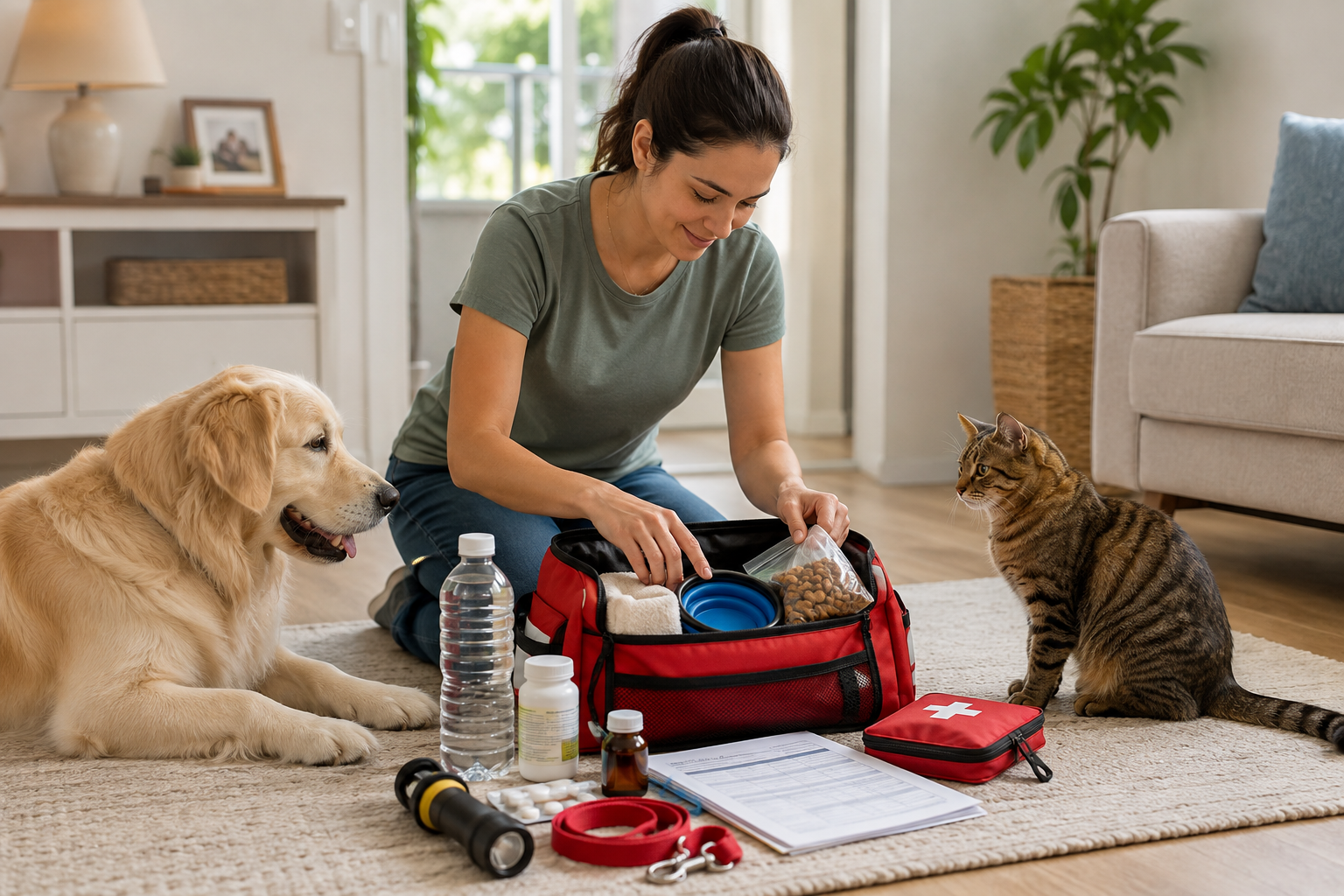
If your pet takes prescription medicine talk with your veterinarian about how to plan for emergencies.
Keep medications in their original labeled containers when possible.
Useful information may include:
- Medicine name
- Dose
- Schedule
- Prescribing veterinary clinic
- Important medical conditions
- Known allergies
Do not add random human medicines to your kit for pet use.
Many medicines that people commonly use can be unsafe for animals.
Identification and Important Records
Identification becomes especially important when routines are disrupted.
Your emergency information should include:
- Your name and phone number
- A backup contact
- Your veterinarian's contact information
- Vaccination records when relevant
- Important medical history
- Microchip information if your pet is microchipped
- A recent clear photo of each pet
It can be useful to keep both paper and digital copies.
If your pet wears an identification tag check that the phone number is current.
Carriers Leashes and Transport
A frightened pet may behave differently from normal.
Do not assume your calm indoor cat will remain calm during an evacuation.
For Cats
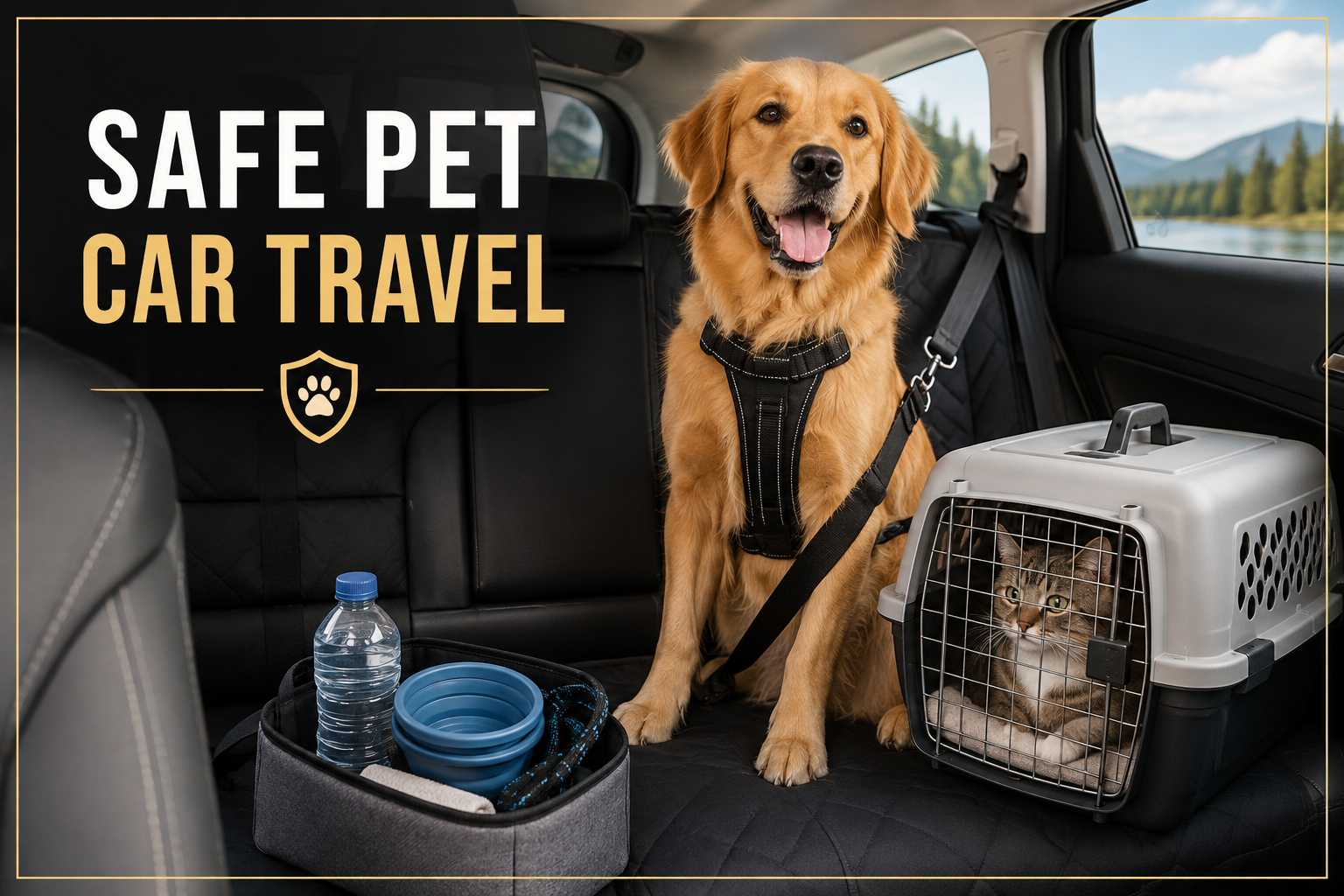
Keep a secure carrier that is large enough for your cat to fit comfortably.
Store it where you can reach it quickly rather than in a difficult attic or storage room.
For Dogs
Keep a reliable leash and suitable collar or harness available.
If your dog uses special walking or mobility equipment make sure it is easy to access.
Basic First Aid Supplies
A small pet first aid kit can be useful while you are arranging professional veterinary care.
Possible supplies include:
- Gauze
- Non stick wound pads
- Medical tape
- Disposable gloves
- Clean towels
- Blunt tip scissors
- Tweezers
- Saline suitable for basic wound or eye flushing when professionally recommended
- A digital thermometer if you have been taught how to use it safely
First aid supplies do not replace a veterinarian.
They are intended to help with immediate basic care while professional help is being arranged.
Sanitation and Cleanup Supplies
Emergencies can interrupt normal bathroom routines.
For dogs consider:
- Waste bags
- Paper towels
- Disposable cleanup supplies
For cats consider:
- A lightweight litter tray
- A small supply of familiar litter
- Waste bags
- A scoop
Hand sanitizer and cleaning wipes can also be useful for people handling pet supplies.
Add a Few Familiar Comfort Items
Emergency situations can be stressful for animals.
A small familiar item may help the environment feel less strange.
You might pack:
- A small blanket
- A familiar toy
- A familiar towel
Avoid filling the kit with too many bulky items.
Plan Before You Need to Evacuate
A kit is only one part of preparedness.
You also need a simple plan.
Think about:
- How you will transport every pet
- Who can help if you are not home
- Where carriers are stored
- Which hotels shelters friends or family may accept pets
- Where veterinary emergency services are located
Do not assume every public emergency shelter can accept animals.
Check your local emergency arrangements before a crisis.
Where Should You Store the Kit?
Choose a location that is:
- Easy to reach
- Dry
- Protected from extreme heat
- Known to other responsible household members
A strong backpack storage bin or dedicated emergency bag can work well.
Do not hide the kit behind heavy furniture or deep inside long term storage.
How Often Should You Check the Kit?
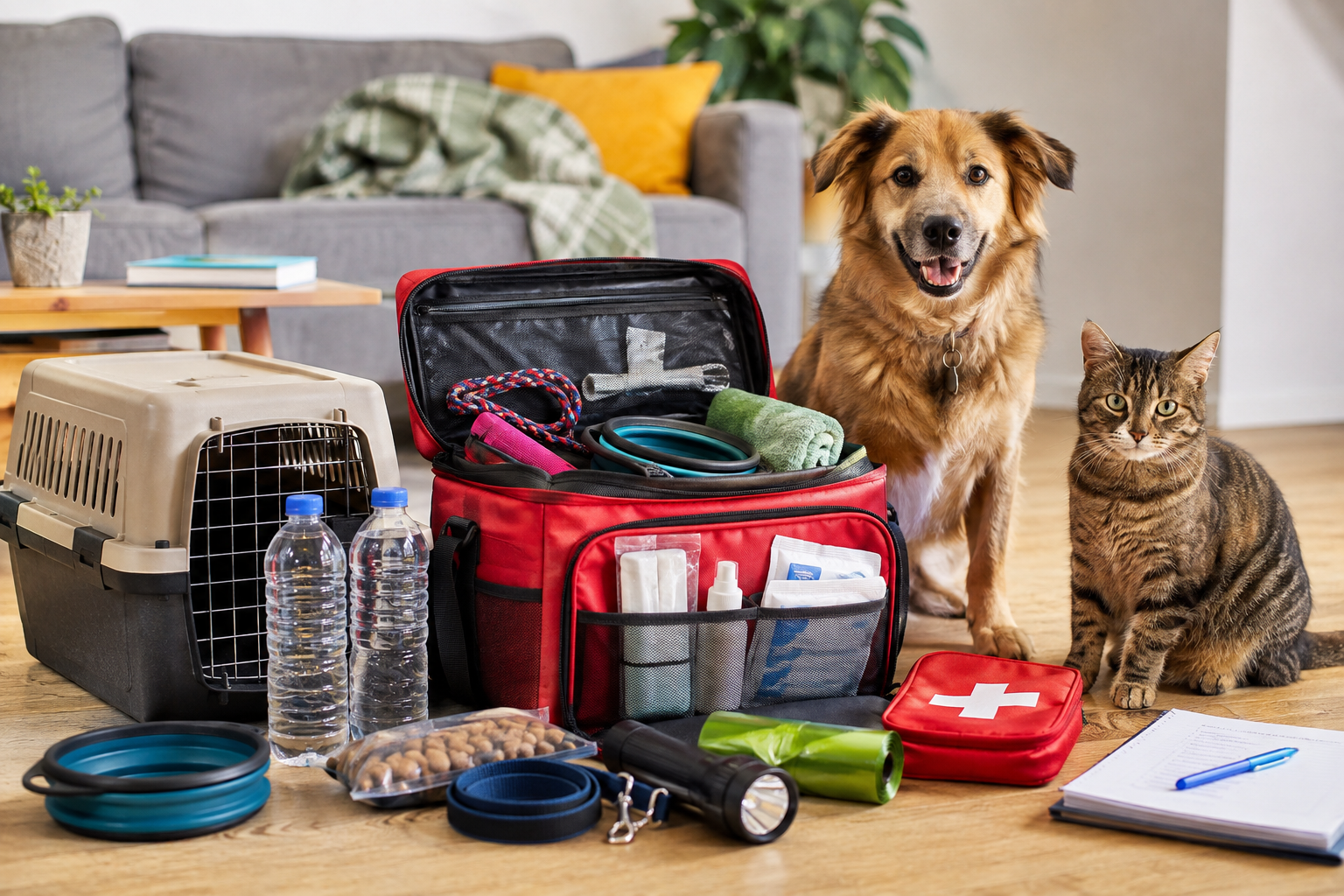
Review the kit several times each year.
Check:
- Food dates
- Medicine dates
- Water containers
- Identification
- Phone numbers
- Pet photos
- Medical information
- Carrier condition
You should also update the kit whenever your pet starts a new medicine develops a medical condition or changes diet.
Common Emergency Kit Mistakes
Packing the Kit and Never Checking It Again
Food medicine and information can become outdated.
Forgetting Identification
Emergency supplies are important but so is being able to prove which pet belongs to you.
Keeping the Carrier Somewhere Inaccessible
You may not have time to search for it during an emergency.
Adding Human Medication for Pet Use
Never assume a medicine is safe because people use it.
Making the Kit Too Heavy
You need to be able to carry it while managing your pet.
Frequently Asked Questions
Do Indoor Cats Need an Emergency Kit?
Yes. Indoor cats may still need to leave the home during fires floods severe weather or other emergencies.
Should I Keep a Carrier for Every Cat?
Ideally each cat should have access to secure transport. This can make evacuation safer and easier to manage.
Can I Keep Pet Food in the Kit Forever?
No. Check the dates and replace food before it becomes old or damaged.
Should I Put First Aid Medicine in the Kit?
Only include medicines specifically prescribed or recommended for your pet by a veterinarian.
Where Should I Keep Veterinary Records?
Paper copies can stay inside the kit while digital backups can be kept on a phone or secure cloud storage.
Sources and References
- Ready.gov Pets
- American Veterinary Medical Association Emergency Care
- ASPCA Animal Poison Control
- American Red Cross Pet Disaster Preparedness
Emergency Safety Disclaimer
This article provides general preparedness information and is not a substitute for veterinary treatment or local emergency instructions. If your pet is injured poisoned having difficulty breathing unconscious or showing another urgent medical problem contact a veterinarian or emergency veterinary service immediately.
About the Author
Ibrahim is a pet care writer at DailyPetTips. He creates practical easy to understand guides using reliable veterinary animal welfare and public safety sources where relevant. DailyPetTips content is reviewed for clarity usefulness and responsible pet care guidance before publication.

Pet parent notes