Quick Answer
Pet proofing means looking at your home from your pet's point of view and removing or blocking things that could cause injury poisoning escape or other problems.
Focus on food medicines cleaners electrical cords plants small objects windows doors trash and anything your pet may chew swallow climb into or knock over.
Key Takeaways
- Store medicines cleaners and chemicals where pets cannot reach them.
- Keep unsafe human foods out of reach.
- Protect cords and small swallowable objects.
- Check plants before bringing them into a pet household.
- Secure windows balconies doors and escape routes.
- Use bins and cabinets that pets cannot easily open.
- Recheck your home as your pet grows or learns new behaviors.
Start From Your Pet's Point of View
Walk slowly through each room and look at what your pet can reach.
For a puppy or small dog this means checking near floor level.
For a cat you also need to look upward because cats may reach shelves counters window ledges and cabinets.
Ask simple questions:
- Can my pet chew this?
- Can my pet swallow this?
- Can my pet knock this over?
- Can my pet get trapped here?
- Can my pet escape through this opening?
- Is this food plant medicine or chemical safe?
Pet proofing is not something you do only once.
Your pet may discover new places as confidence grows.
Pet Proof the Kitchen
Kitchens contain food heat sharp objects cleaners and trash.
Keep potentially unsafe foods where pets cannot reach them.
Some foods that are harmless to people can be dangerous to dogs or cats.
Use closed cabinets or high storage for items your pet should not access.
Secure Cleaning Products
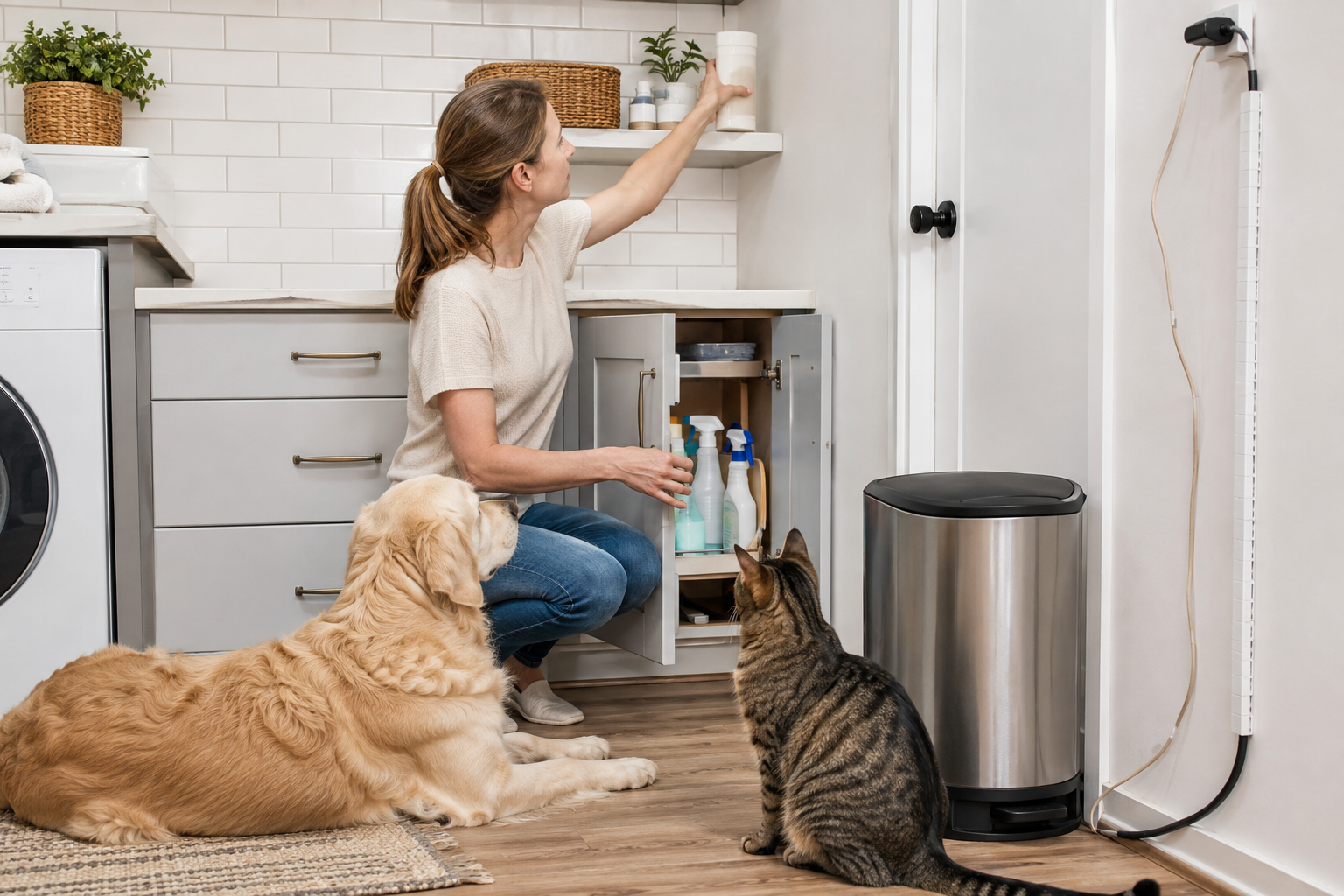
Store cleaners detergents and chemicals in a closed location.
Do not leave open containers on the floor.
Watch Hot Surfaces
Do not allow pets near hot pans boiling liquids or open flames.
Keep Sharp Objects Away
Knives skewers broken glass and sharp food packaging should not be left where a curious pet can reach them.
Pet Proof the Living Room
Living rooms may look safe but often contain cords decorations remote batteries candles and small objects.
Look under furniture and between cushions.
Remove items that could be swallowed.
If your pet chews cords use appropriate cord covers or block access.
Heavy objects should be stable enough that a pet cannot easily pull them down.
Pet Proof the Bathroom
Bathrooms often contain medicines personal care products cleaning chemicals razors and small objects.
Keep them in closed storage.
Do not assume a high counter is enough for a cat.
Close toilet lids when appropriate and make sure trash is not easy to open.
Pet Proof the Bedroom
Bedrooms can contain medication chargers hair ties jewelry cosmetics and small objects.
Store these items instead of leaving them on bedside tables.
Check under the bed for forgotten items.
If your pet sleeps in the room make sure cords and small objects are not within easy reach.
Check Houseplants Before Bringing Them Home
Not every houseplant is safe for pets.
Some plants can cause irritation digestive problems or more serious poisoning.
Before buying a plant check whether it is considered safe for your species.
The ASPCA maintains information about toxic and non toxic plants at ASPCA Toxic and Non Toxic Plants.
When you are unsure keep the plant completely inaccessible until you confirm its safety.
Manage Cords and Small Objects
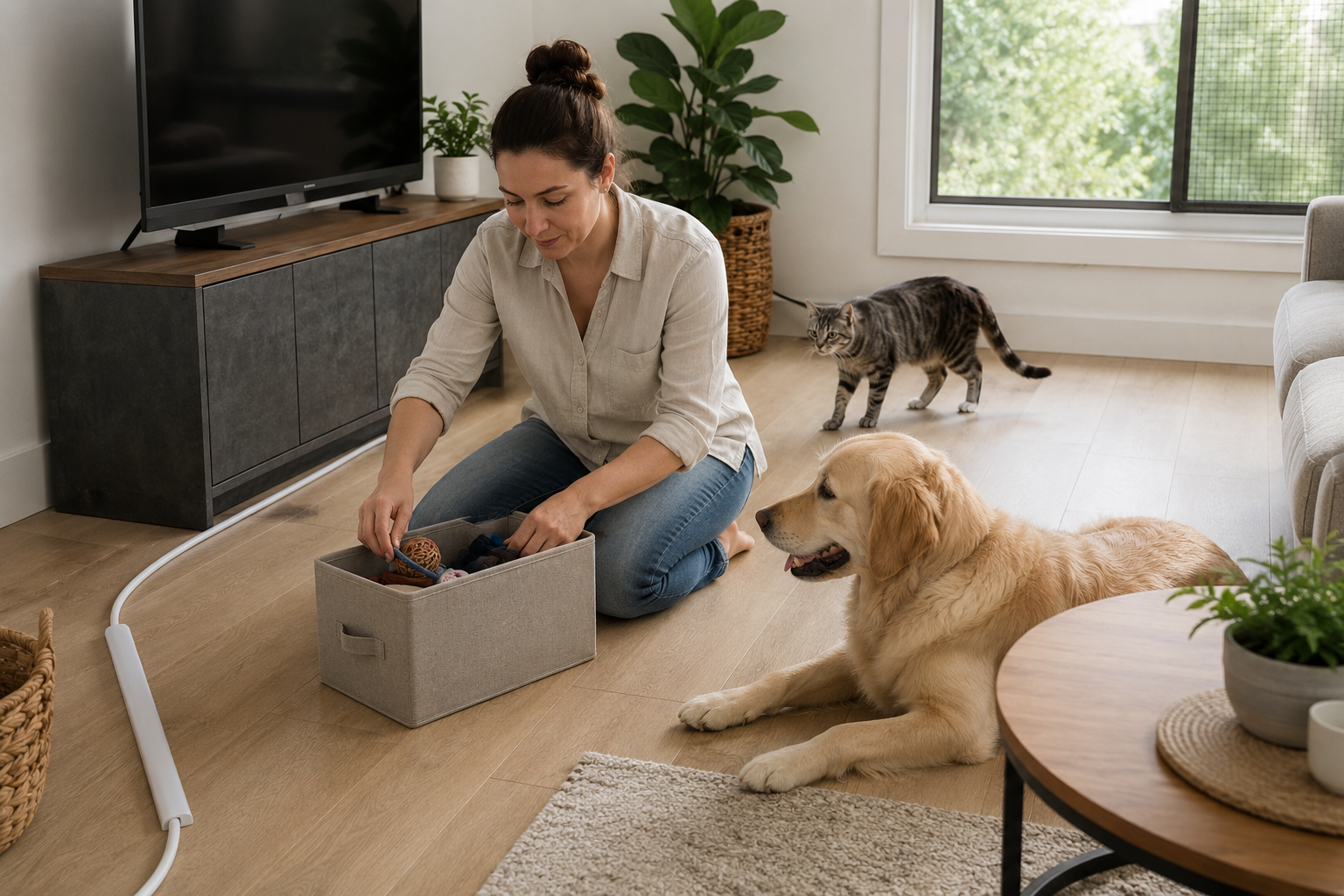
Puppies kittens and some adult pets may chew electrical cords.
Keep cords tidy and protected.
Also watch for small objects such as:
- Coins
- Batteries
- Hair ties
- Rubber bands
- Needles
- String
- Small toy parts
- Earbuds
- Children's toys
Cats in particular may play with string like objects.
Do not leave thread ribbon or similar items unsupervised where they can be swallowed.
Secure Doors Windows and Balconies
Escape prevention is part of home safety.
Check that screens are secure and cannot easily be pushed out.
Do not rely on a weak insect screen to safely contain a pet.
Balconies and high windows deserve extra attention.
If you live in a multi story home make sure your pet cannot access unsafe ledges or openings.
Watch the Front Door
Some dogs and cats may rush through an open door.
Create a habit of checking where the pet is before opening exterior doors.
A gate or second barrier can help in some homes.
Control Trash and Food Waste
Trash can contain spoiled food bones packaging chemicals or objects that can cause injury.
Use a secure bin or keep the bin inside a cabinet your pet cannot open.
Do not leave food waste on low surfaces.
Take Extra Care With a New Pet
A new pet may explore more than an established pet.
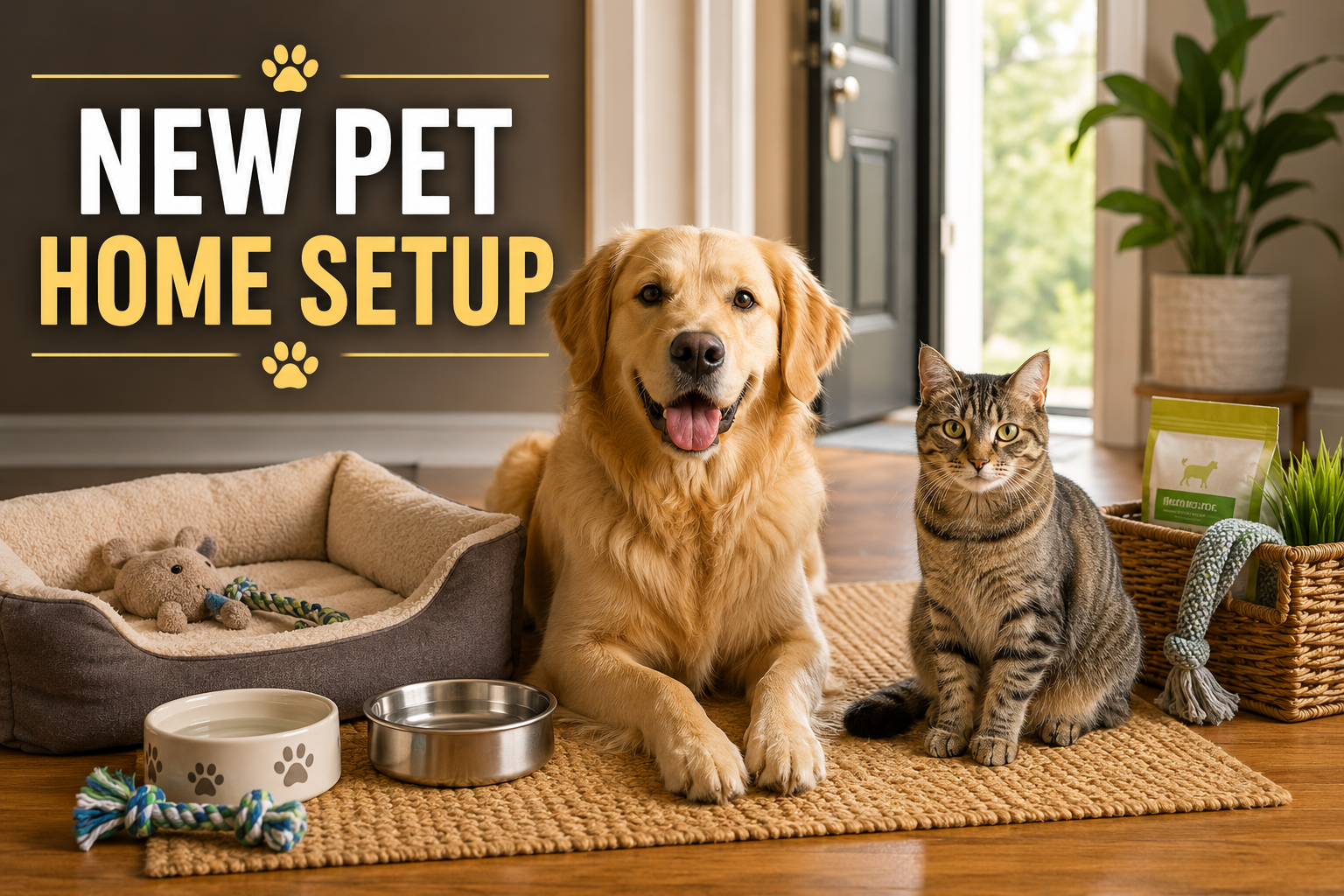
Instead of giving immediate access to the entire house start with a manageable safe area.
Our guide on how to create a safe and comfortable pet space at home explains how to set up a quiet area with basic supplies.
As the pet becomes comfortable you can gradually allow more access while supervising behavior.
Common Pet Proofing Mistakes
Assuming Adult Pets Will Never Chew Things
Some adult pets still chew or swallow unusual objects.
Only Checking the Floor
Cats may reach high places.
Ignoring Trash
Trash is a common source of food and object hazards.
Forgetting Guests
Visitors may leave bags medicine food or doors open.
Not Rechecking the Home
Your pet's abilities and behavior can change.
Frequently Asked Questions
Do I Need to Pet Proof Every Room?
Any room your pet can access should be checked for hazards.
What Is the Most Important Area to Pet Proof?
Start with rooms where the pet spends the most time. Kitchens bathrooms and entry doors deserve particular attention.
Can Cats Open Cabinets?
Some can. Use secure storage if a cabinet contains something dangerous.
Are All Houseplants Dangerous to Pets?
No. Some are considered pet safe while others are toxic. Check the exact plant species before allowing access.
How Often Should I Check My Home Again?
Recheck whenever your pet's behavior changes after moving furniture after bringing home new products and periodically as a normal safety habit.
Sources and References
- ASPCA Animal Poison Control
- ASPCA Toxic and Non Toxic Plants
- American Veterinary Medical Association Pet Owner Resources
Emergency Safety Note
If you think your pet may have swallowed a toxic substance medication battery sharp object or another dangerous item contact a veterinarian or animal poison service promptly. Do not induce vomiting unless a qualified professional specifically instructs you to do so.
About the Author
Ibrahim is a pet care writer at DailyPetTips. He creates practical and easy to understand guides using reliable veterinary animal welfare and educational sources where relevant. DailyPetTips content is reviewed for clarity usefulness and responsible pet care guidance before publication.
Pet parent notes