Quick Answer
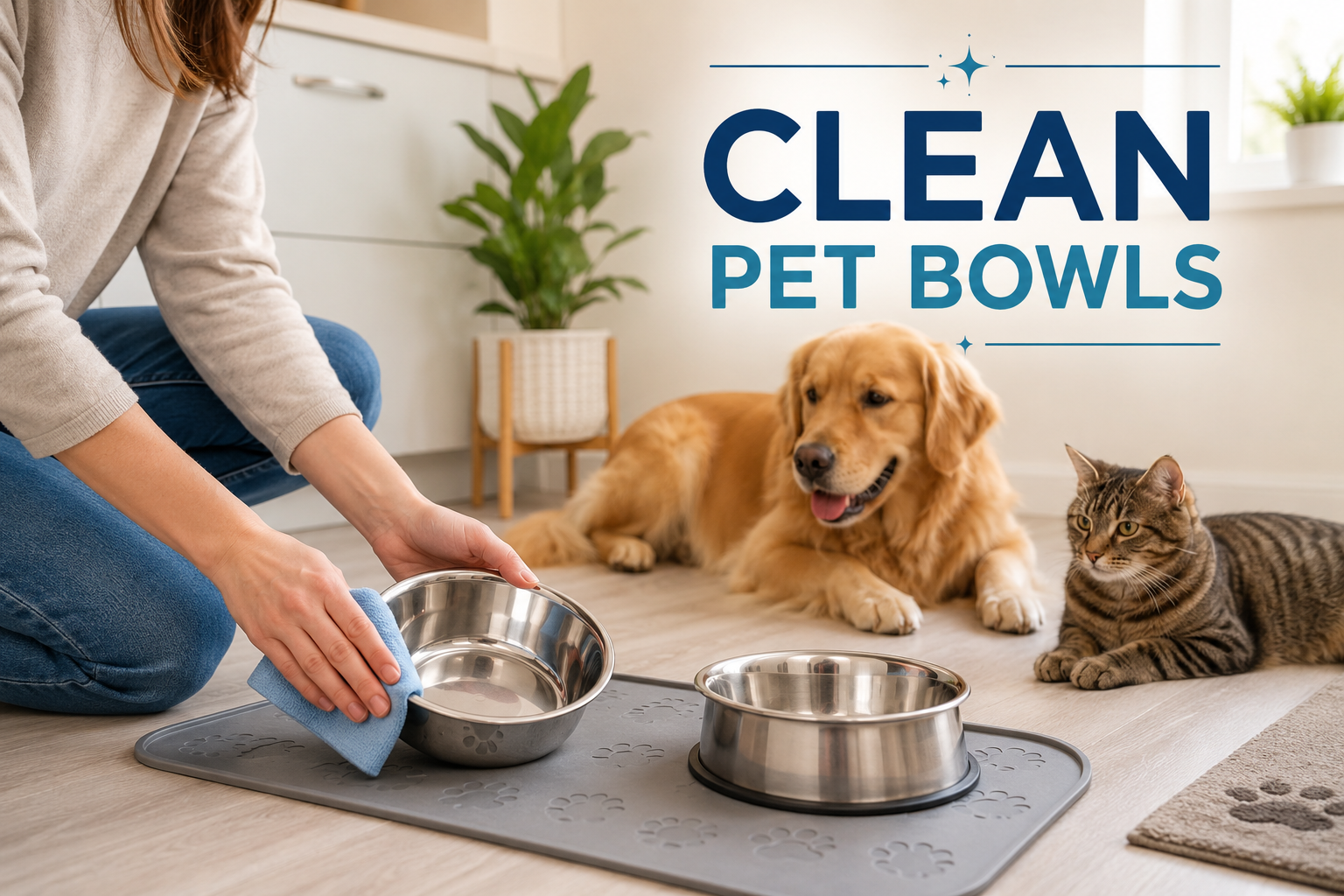
Pet food and water bowls should be kept clean just like other food contact items.
Remove old food and visible dirt wash bowls with hot soapy water or use a dishwasher when the bowl is dishwasher safe rinse thoroughly and allow them to dry.
Water bowls need regular washing too because residue can build up even when the water looks clear.
Key Takeaways
- Remove leftover food after meals.
- Wash food bowls regularly.
- Clean water bowls instead of only refilling them.
- Use food safe bowls that are easy to wash.
- Wash feeding mats and nearby surfaces.
- Keep raw pet food handling separate from human food preparation.
- Replace badly damaged bowls.
- Wash your hands after handling pet food and dirty bowls.
Why Pet Bowl Cleaning Matters
Food bowls come into contact with food saliva hands floors and household surfaces.
Water bowls also collect saliva fur dust and residue over time.
Regular cleaning reduces buildup and keeps your pet's feeding area more hygienic.
This does not require expensive products.
A practical routine using ordinary food safe cleaning methods is enough for most households.
How to Clean Pet Food Bowls
After a meal remove leftover food rather than allowing it to remain in the bowl for long periods.
When washing by hand:
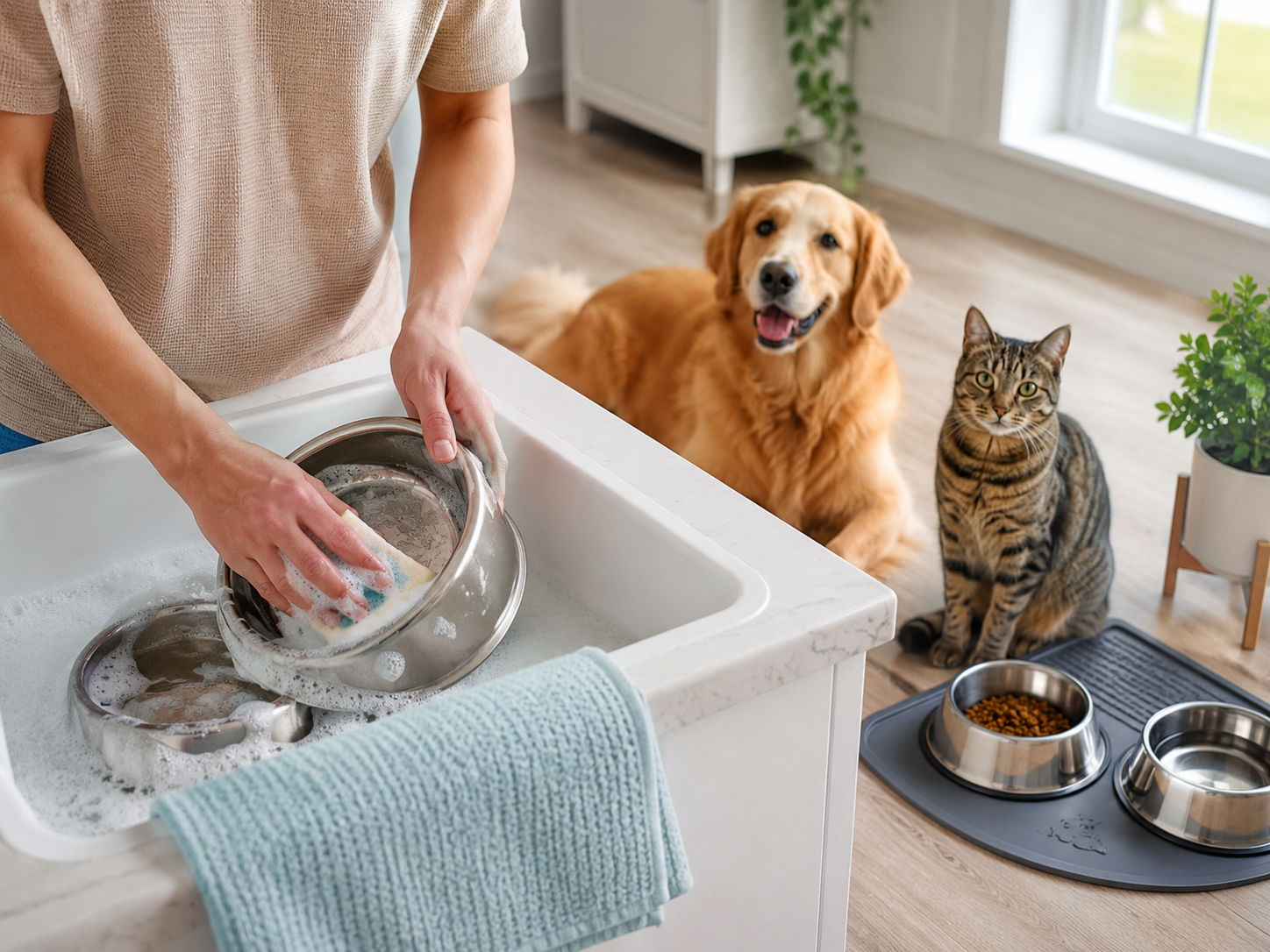
- Remove food and debris.
- Wash the bowl using hot water and dish soap.
- Scrub the inside outside rim and base.
- Rinse thoroughly.
- Allow the bowl to dry before the next use.
Follow any cleaning instructions provided by the bowl manufacturer.
A bowl with grooves seams or decorative shapes may require extra attention because food can collect in difficult areas.
Do Not Forget Water Bowls
One common mistake is emptying a water bowl and immediately refilling it without washing.
A bowl can develop a slippery film over time.
Instead make bowl washing part of your water routine.
Check the bowl whenever you refresh the water.
If it feels slippery looks dirty or contains food particles wash it before refilling.
Outdoor bowls may need more frequent attention because insects leaves dirt and warm temperatures can affect cleanliness.
Can Pet Bowls Go in the Dishwasher?
Many bowls can be washed in a dishwasher but not every material is designed for it.
Check the manufacturer's instructions.
If a bowl is dishwasher safe the dishwasher can provide an easy way to clean and sanitize food contact surfaces according to the machine and detergent instructions.
Do not place a bowl in high heat if its manufacturer says it should be hand washed.
Which Pet Bowl Material Is Best?
The most practical bowl is one that is:
- Food safe
- Easy to wash
- Durable
- Appropriate for your pet
- Free from sharp damaged edges
Stainless Steel
Stainless steel is popular because it is durable and usually easy to clean.
Choose a food grade product from a reliable manufacturer.
Ceramic
Ceramic bowls can work well but inspect them for chips and cracks.
Damaged surfaces can become harder to clean properly.
Plastic
Plastic bowls are lightweight but can become scratched.
If a plastic bowl becomes deeply scratched stained damaged or difficult to clean replacing it may be better than continuing to use it.
Clean the Feeding Area Too
Cleaning the bowl but ignoring the floor underneath it leaves part of the job unfinished.
Food crumbs water splashes and saliva can collect around the feeding area.
Clean:
- Feeding mats
- Floor around the bowls
- Nearby walls when splashed
- Food scoops
- Storage container handles
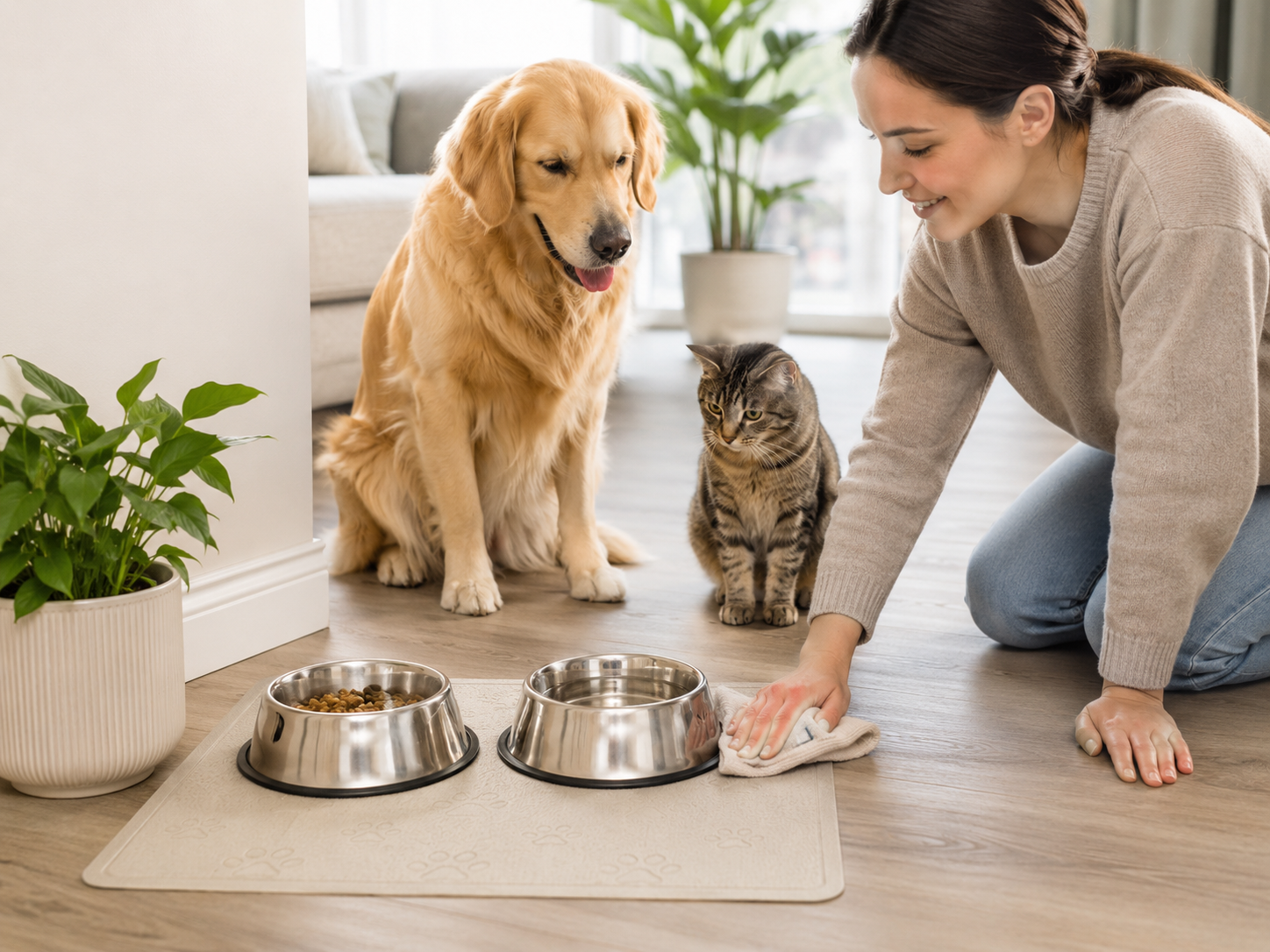
If you use a feeding mat select one that is easy to wash and dry.
Dry Pet Food Hygiene
Dry food looks clean but it still needs sensible handling.
Keep the bag closed and protected from heat moisture and pests.
Use a clean dry scoop.
Do not put a wet scoop into dry food.
Avoid touching food with hands that have just handled raw meat household chemicals or dirty surfaces.
For complete storage guidance read how to store dry and wet pet food safely at home.
Wet Pet Food Hygiene
Wet food contains more moisture and should not remain at room temperature indefinitely.
Serve an appropriate amount and remove leftovers rather than repeatedly adding fresh food on top of old food.
Opened wet food should be covered and refrigerated according to the manufacturer's instructions.
Wash the bowl after the meal so residue does not dry onto the surface.
Extra Care With Raw Pet Food
Raw animal products can contain harmful bacteria.
If your pet eats raw food hygiene becomes especially important.
The CDC and FDA advise careful handling because raw pet food can expose pets and people to foodborne germs.
Practical precautions include:
- Wash hands with soap and water after handling raw pet food.
- Clean food preparation surfaces.
- Wash bowls after feeding.
- Keep raw pet food away from human ready to eat food.
- Store raw products at safe temperatures.
- Do not allow young children to handle raw pet food.
If a household includes someone who is pregnant very young elderly or immunocompromised discuss food safety risks with appropriate medical and veterinary professionals.
Cleaning Bowls in a Multi Pet Home
Multiple pets can create extra mess around feeding areas.
Separate bowls can also help you monitor how much each pet is eating and drinking.
If one pet has a contagious illness ask your veterinarian whether separate bowls or additional cleaning measures are needed.
Do not assume that sharing a bowl is always harmless simply because pets normally get along.
When Should You Replace a Pet Bowl?
Replace a bowl when damage makes it unsafe or difficult to clean.
Examples include:
- Deep cracks
- Sharp edges
- Severe scratches
- Chipped ceramic
- Peeling coatings
- Persistent odor that remains after proper washing
A heavily damaged low cost bowl is usually not worth trying to rescue.
Common Pet Bowl Cleaning Mistakes
Only Adding More Water
Empty the bowl and wash it instead of endlessly topping it up.
Using the Same Dirty Scoop
Food scoops also need cleaning.
Ignoring the Feeding Mat
The mat catches much of the mess.
Mixing Fresh Food With Old Leftovers
Remove old wet food before serving a fresh meal.
Using a Damaged Bowl for Too Long
Cracks and scratches can make cleaning more difficult.
Forgetting Hand Hygiene
Wash your hands after handling pet food dirty dishes waste or other contaminated items.
Frequently Asked Questions
How Often Should I Wash My Dog's Food Bowl?
Wash it regularly and whenever it becomes dirty. Bowls used for wet or raw foods generally need especially prompt washing after meals.
Should I Wash My Cat's Water Bowl Every Day?
Refresh water daily and wash the bowl regularly. Wash it sooner whenever you notice residue food fur or a slippery film.
Can I Use Normal Dish Soap?
A standard dishwashing product used according to its instructions can be appropriate for many washable pet bowls. Rinse the bowl thoroughly afterward.
Can Pet Bowls Be Washed With Human Dishes?
Follow appropriate food safety and dishwasher guidance. Households using raw pet food should take extra precautions to prevent cross contamination.
Why Does My Pet's Water Bowl Feel Slimy?
Residue from saliva and microorganisms can create a film on bowl surfaces. Wash the bowl rather than simply adding more water.
Related DailyPetTips Guides
- How to Store Dry and Wet Pet Food Safely at Home
- How to Read a Pet Food Label
- How to Build a Simple Daily Pet Care Routine
Sources and References
- CDC Healthy Pets Healthy People
- U.S. Food and Drug Administration Animal and Veterinary
- American Veterinary Medical Association Pet Owner Resources
Pet Health and Food Safety Note
This article provides general hygiene information. Pets with medical conditions allergies skin problems or infections may need specific feeding and cleaning recommendations from a veterinarian.
Editorial Note
This guide focuses on practical household hygiene and food safety. Recommendations involving raw food handling and zoonotic risk are based on established public health and veterinary guidance.
About the Author
Ibrahim is a pet care writer at DailyPetTips. He creates practical easy to understand pet care guides with an emphasis on useful routines responsible care and trustworthy educational sources.
Pet parent notes