Quick Answer
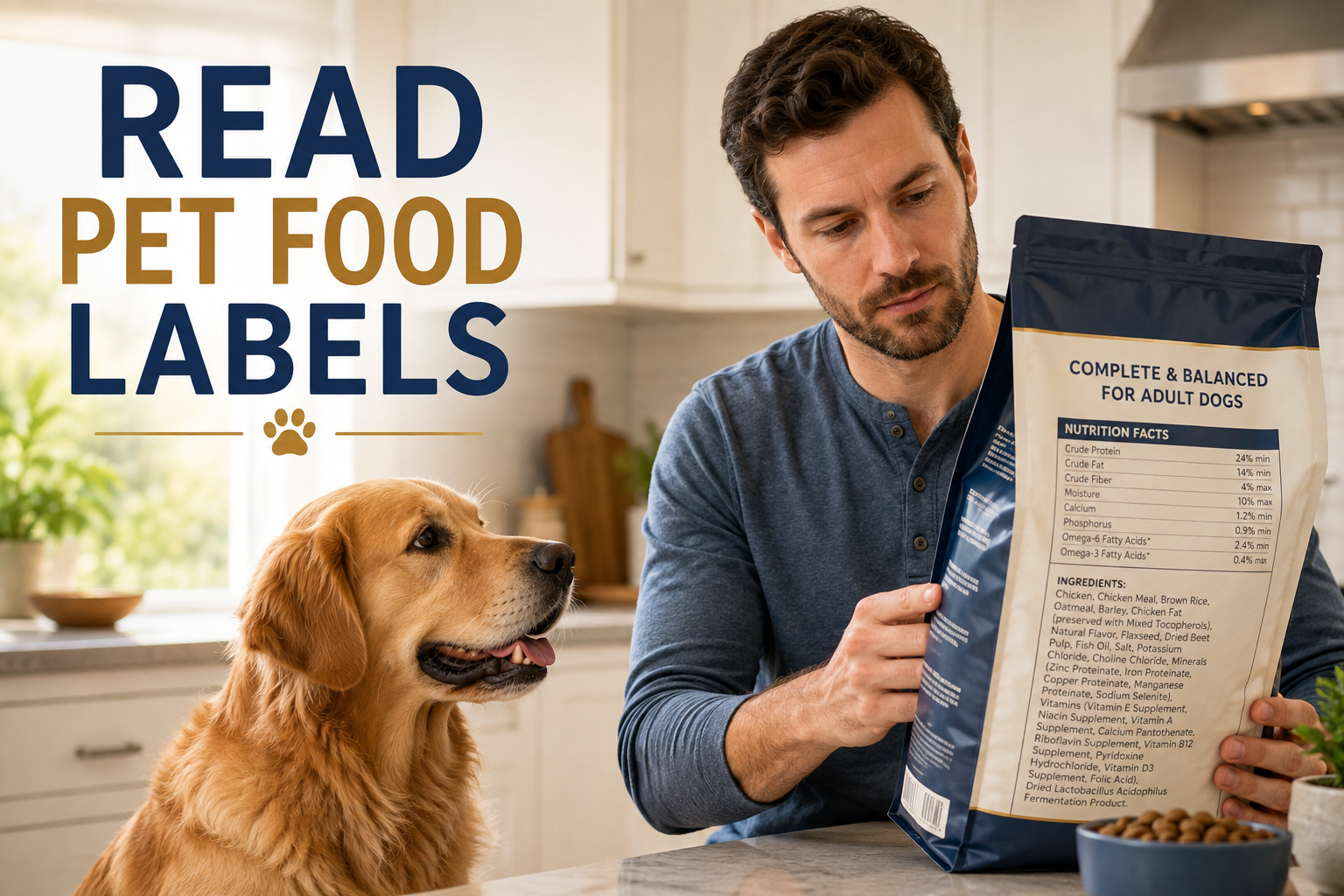
A good pet food label tells you much more than the flavor shown on the front of the bag. Look at the species the food is made for, the life stage, ingredient list, guaranteed analysis, calorie information, feeding directions, manufacturer details and nutritional adequacy statement.
Do not judge a food only by the first ingredient or marketing words such as premium, natural or grain free. The complete label gives you a much better picture.
Key Takeaways
- Check that the food is designed for the correct species and life stage.
- Read the nutritional adequacy statement instead of relying only on marketing claims.
- Ingredients are generally listed by weight before processing.
- Guaranteed analysis shows minimum or maximum levels of certain nutrients.
- Wet and dry foods cannot always be compared directly because their moisture levels are different.
- Feeding directions are a starting point rather than a perfect amount for every pet.
- Check calories, best by dates, lot information and manufacturer contact details.
Why Pet Food Labels Matter
Buying pet food can feel confusing because bags and cans often contain many claims.
You may see phrases such as high protein, natural ingredients, grain free, real meat, premium recipe or complete nutrition.
Some of these words can be useful, but the most important information is usually found in the smaller print on the package.
Learning how to read that information helps you compare foods more carefully and choose a product that better matches your pet's needs.
A label cannot tell you everything about a food, but it can help you avoid making decisions based only on packaging design or advertising.
Start With the Product Name
The product name may look simple, but wording can matter.
For example, a food described as a chicken recipe may be different from one described as chicken flavor.
Rules for product naming can vary by market, so do not assume that the biggest word on the front of the package tells you exactly how much of an ingredient is inside.
Use the product name as one piece of information rather than your entire decision.
Check the Species and Life Stage
This is one of the first things to check.
Cats and dogs have different nutritional needs. Food designed for dogs should not become a cat's regular diet, and cat food should not be used as a dog's main food unless a veterinarian specifically advises it.
Also look for the life stage.
A food may be intended for:
- Growth or kittens and puppies
- Adult maintenance
- Reproduction
- All life stages
- A specific veterinary purpose
Growing animals can have different nutritional needs from healthy adults.
Large breed puppies may also require special attention because very fast growth and mineral balance can matter for developing bones and joints.
If you are unsure which life stage is right for your pet, ask your veterinarian.
Understand the Ingredient List
Ingredients are generally listed in order by weight before processing.
This is useful, but it can also be misunderstood.
An ingredient that contains a lot of water may appear high on the list because it weighs more before cooking. A dry ingredient may appear lower even though it still contributes important nutrients.
That is why the first ingredient alone does not tell you whether a food is good or bad.
Are Meat By Products Automatically Bad?
No.
The term by product sometimes sounds negative to pet owners, but animal by products can include nutrient rich tissues and organs.
Quality, formulation, safety and whether the complete diet meets your pet's nutritional needs are more important than reacting to one ingredient name.
What About Ingredients You Cannot Pronounce?
A long scientific sounding name is not automatically dangerous.
Some vitamins and minerals appear under names that may look unfamiliar.
Instead of judging a food because an ingredient sounds complicated, look at the complete nutritional information and ask a veterinarian when you have a specific concern.
What Guaranteed Analysis Means
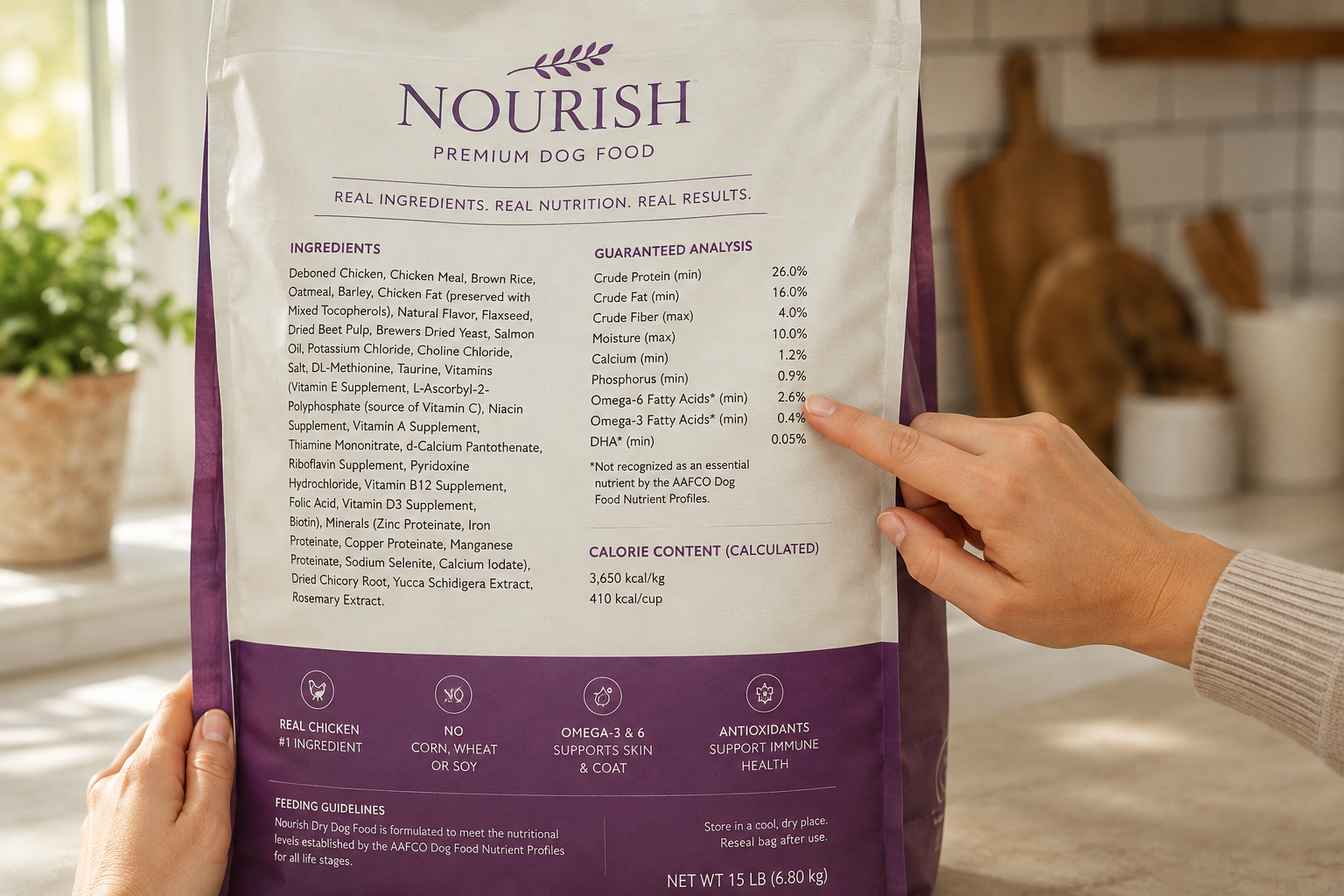
Pet food labels usually include a guaranteed analysis.
It commonly lists values such as:
- Crude protein
- Crude fat
- Crude fiber
- Moisture
Some products may also list additional nutrients.
The word crude does not mean poor quality. It describes the laboratory method used to estimate certain nutrient groups.
Guaranteed analysis is useful, but it should not be treated as a complete nutrition report.
Two foods with similar protein percentages can still have different ingredients, calorie levels, digestibility and overall nutrient profiles.
Why Moisture Changes Comparisons
One common mistake is comparing wet and dry food percentages directly.
Wet food contains much more water.
For example, a wet food may show a lower protein percentage on the label simply because a large part of the product is moisture.
If detailed comparison is necessary, nutrients can be compared on a dry matter basis.
Dry matter nutrient percentage = listed nutrient percentage divided by dry matter percentage multiplied by 100.
If a food contains 80 percent moisture, it contains approximately 20 percent dry matter.
For everyday feeding decisions, you usually do not need to calculate this yourself. Your veterinarian can help when detailed nutritional comparison is important.
Find the Nutritional Adequacy Statement
This is one of the most useful parts of a pet food label.
Look for wording explaining whether the food provides complete and balanced nutrition for a particular life stage.
In the United States, labels may refer to nutritional levels established by the Association of American Feed Control Officials, commonly known as AAFCO.
It is important to understand that AAFCO does not personally test and approve every pet food. AAFCO develops model regulations, ingredient definitions and nutrient profiles that regulators and manufacturers may use.
The adequacy statement helps you understand whether the product is intended to be a complete diet or only a treat, snack or supplemental food.
A product marked for intermittent or supplemental feeding should generally not replace a complete daily diet unless your veterinarian directs you to use it.
Check the Calories
Calories matter because two foods can have very different energy levels even when the serving size looks similar.
Look for calorie information listed as kilocalories, often written as kcal.
You may see calories listed:
- Per cup
- Per can
- Per pouch
- Per kilogram
Knowing calorie content is especially useful if your pet needs weight management.
Do not assume that one full cup of every dry food contains the same number of calories.
Read the Feeding Directions
Feeding directions provide a useful starting point.
However, they cannot perfectly predict the needs of every animal.
Your pet's ideal amount can depend on:
- Age
- Body size
- Activity
- Neuter status
- Health
- Body condition
- Treat intake
- Individual metabolism
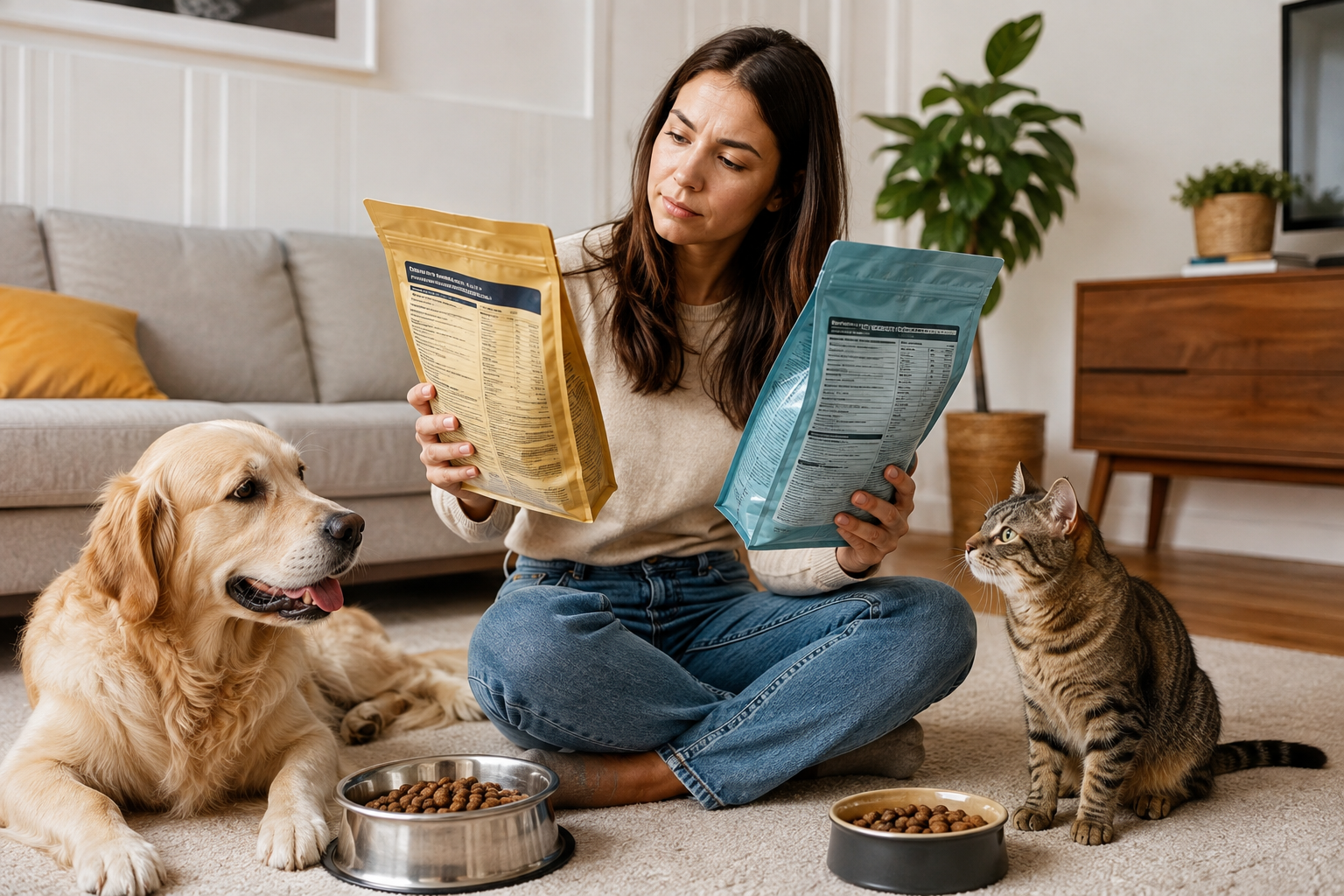
Watch your pet's body condition and weight over time.
If your pet is consistently gaining or losing unwanted weight, speak with your veterinarian rather than making very large feeding changes on your own.
Look at the Manufacturer Information
A trustworthy label should make it possible to identify and contact the company responsible for the product.
Look for information such as:
- Company name
- Contact information
- Product lot or batch details
- Best by or expiration information
Keep the original packaging when possible.
The lot number can be very useful if there is ever a recall, quality concern or complaint.
You can also visit the U.S. Food and Drug Administration Animal and Veterinary section for pet food safety information and recalls.
What Marketing Words Really Mean
Natural
The word natural does not automatically mean a food is nutritionally complete or better for every pet.
Premium
Premium may sound impressive, but it does not tell you whether the food is the best nutritional match for your individual animal.
Grain Free
Grain free is not automatically healthier.
Many pets can eat properly prepared grains without a problem.
A special diet should have a clear reason behind it rather than being selected only because of a trend.
High Protein
More protein is not automatically better for every animal.
The correct nutritional balance depends on the pet, life stage and health status.
Common Mistakes to Avoid
Avoid choosing food only because:
- Meat is the first ingredient
- The package looks expensive
- A social media creator recommended it
- The word natural appears on the bag
- It is grain free
- It has the highest protein number
- Your friend's pet eats the same product
A food that works very well for one pet may not be the best choice for another.
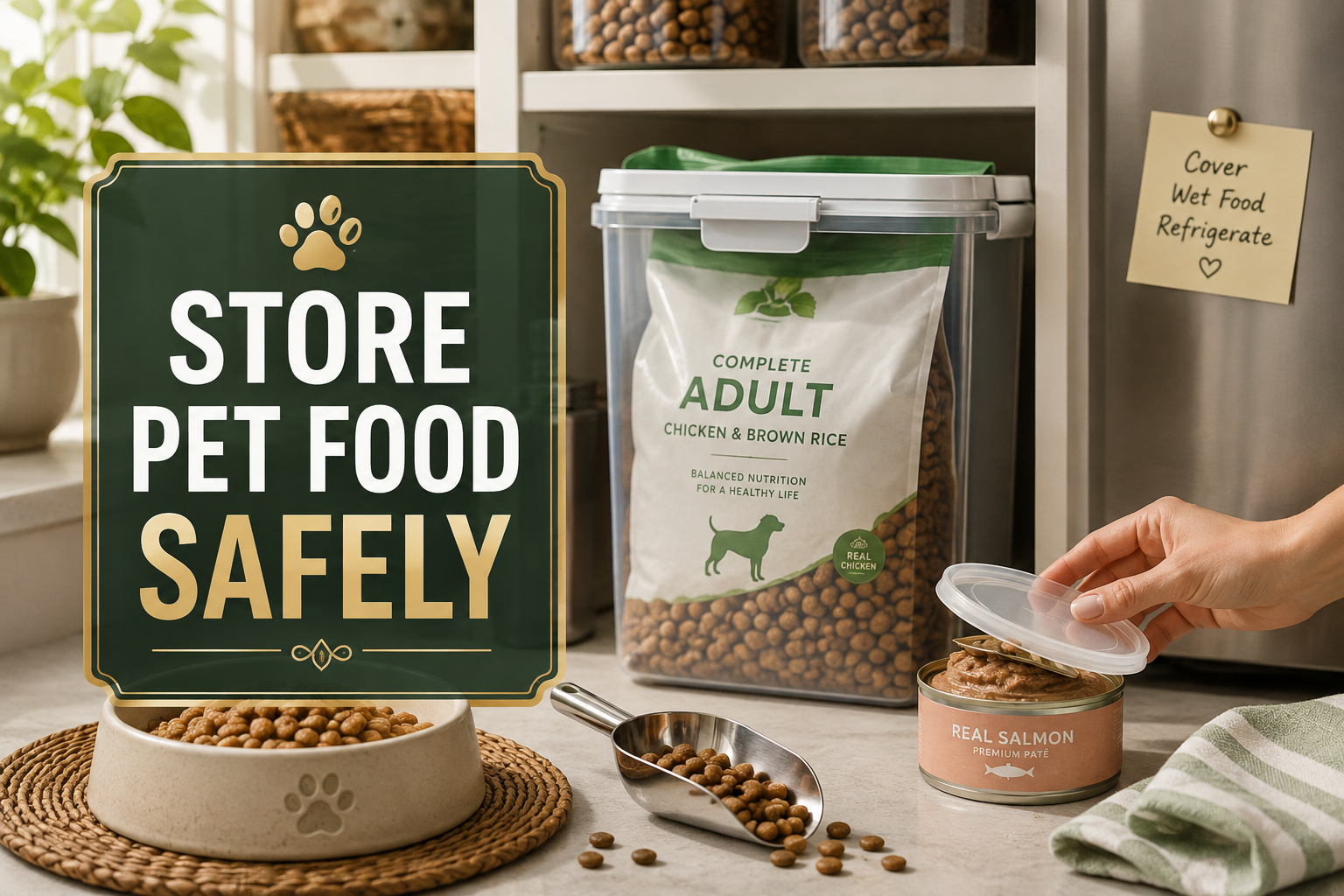
For safe storage after opening, also read our guide on how to store dry and wet pet food safely at home.
When to Ask Your Veterinarian
Ask your veterinarian before making major diet changes if your pet:
- Has kidney disease
- Has diabetes
- Has recurring digestive problems
- Has diagnosed food allergies
- Is very underweight or overweight
- Is pregnant or nursing
- Is a growing puppy or kitten with special nutritional needs
- Is eating a veterinary prescription diet
Nutrition is part of healthcare.
The best diet is not always the one with the most impressive ingredient list. It is the one that safely meets the needs of the individual pet.
Frequently Asked Questions
Is the First Ingredient Always the Most Important?
No. Ingredients are usually listed by weight before processing, so moisture can affect their position on the list. The complete formulation matters more than one ingredient.
Is Grain Free Pet Food Better?
Not automatically. Many pets can safely eat foods containing grains. Choose a diet based on your pet's needs rather than a marketing trend.
Does AAFCO Approve Pet Food?
AAFCO develops model rules, nutrient profiles and ingredient definitions. It does not personally approve every food sold in stores.
Can I Compare the Protein Percentage of Wet and Dry Food Directly?
Not always. Wet food contains much more water, which can make direct percentage comparisons misleading.
Should I Follow the Feeding Guide Exactly?
Use it as a starting point. Your pet may need more or less depending on body condition, age, activity and health.
Sources and References
- Association of American Feed Control Officials
- U.S. Food and Drug Administration Animal and Veterinary
- World Small Animal Veterinary Association Global Nutrition Guidelines
Veterinary Disclaimer
This article provides general educational information and is not a substitute for veterinary diagnosis, treatment or individualized nutritional advice. Pets with medical conditions may need a diet selected or monitored by a veterinarian.
About the Author
Ibrahim is a pet care writer at DailyPetTips. He creates practical and easy to understand guides for pet owners using reliable veterinary, animal welfare and educational sources where relevant. DailyPetTips content is reviewed for clarity, usefulness and responsible pet care guidance before publication.
Pet parent notes