Quick Answer
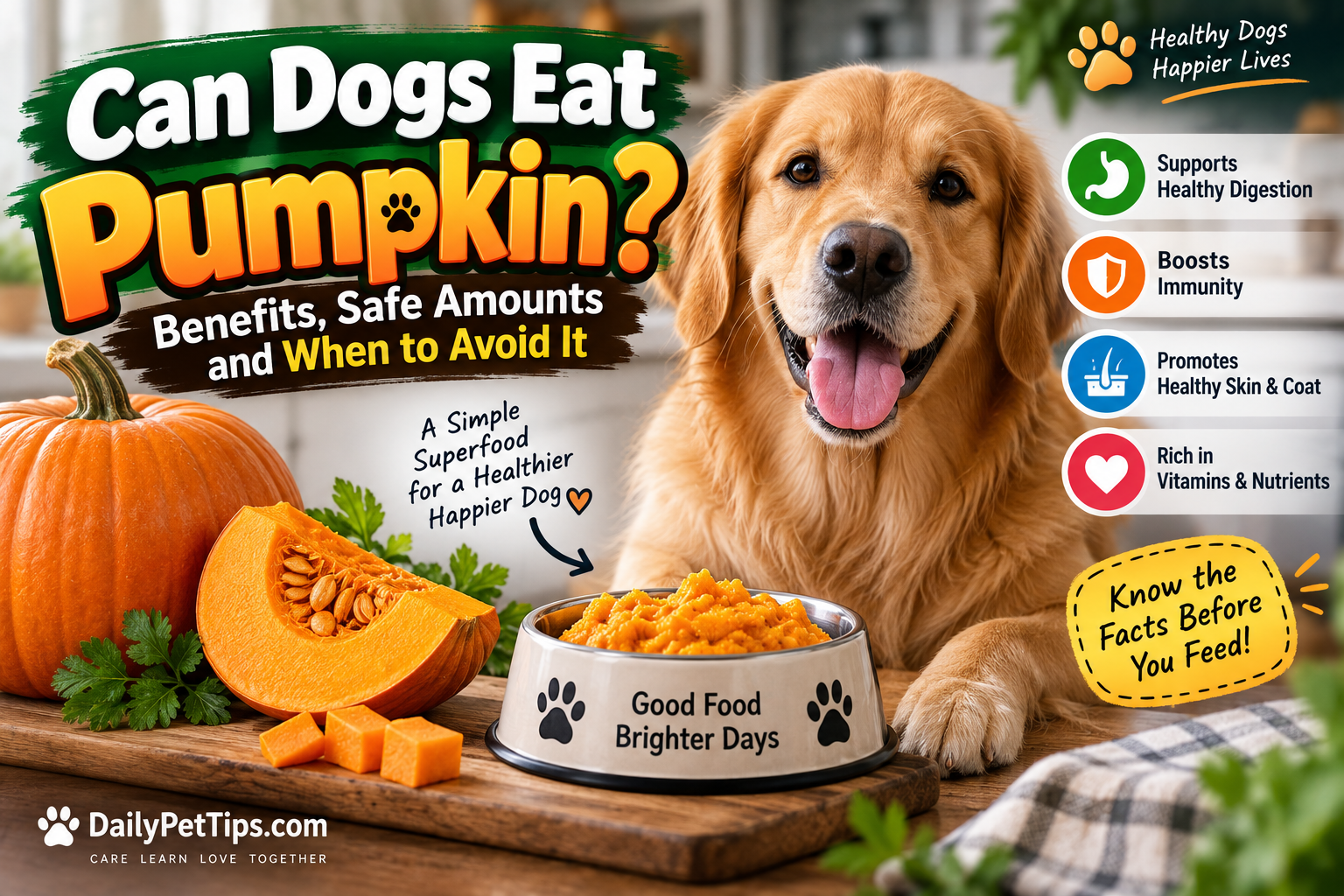
Yes. Most healthy dogs can eat small amounts of plain cooked pumpkin or plain canned pumpkin.
Pumpkin contains fiber, moisture and several nutrients. It can be a useful occasional food for some dogs, but it is not a treatment for every digestive problem and it should not replace a complete and balanced dog food.
The safest choice is plain pumpkin with no added sugar, salt, spices, butter or sweeteners.
Never confuse plain canned pumpkin with pumpkin pie filling. Pie filling can contain sugar, spices and other ingredients that are unnecessary or potentially harmful to dogs.
Key Takeaways
- Plain pumpkin is generally safe for most healthy dogs in small amounts.
- Use plain cooked pumpkin or 100 percent pure canned pumpkin.
- Avoid pumpkin pie filling and heavily seasoned pumpkin dishes.
- Pumpkin contains fiber and can affect stool consistency.
- Too much pumpkin can cause digestive upset.
- Treats and extras should remain a small part of a dog's overall diet.
- Persistent diarrhea, constipation, vomiting or appetite loss needs veterinary attention.
- Pumpkin should not be used to delay treatment when a dog is sick.
What Kind of Pumpkin Can Dogs Eat?
The simplest pumpkin is usually the safest.
Suitable options can include:
- Plain cooked fresh pumpkin
- Plain pumpkin puree
- 100 percent pure canned pumpkin
Always check the ingredient label on packaged pumpkin.
Ideally pumpkin should be the only ingredient when you are buying it specifically for your dog.
Is Canned Pumpkin Safe for Dogs?
Yes. Plain canned pumpkin can be convenient because it requires no cooking and has a soft texture that is easy to mix with normal food.
The important word is plain.
Check that the can contains pure pumpkin rather than pumpkin pie filling.
Once opened follow the storage instructions on the package and refrigerate it when required.
Pumpkin Puree vs Pumpkin Pie Filling
These products can look similar on a supermarket shelf but they are not the same.
Plain Pumpkin Puree
This is generally the option you want.
It may contain only pumpkin and can be offered in small amounts to many healthy dogs.
Pumpkin Pie Filling
This is designed for desserts.
Depending on the product it may contain:
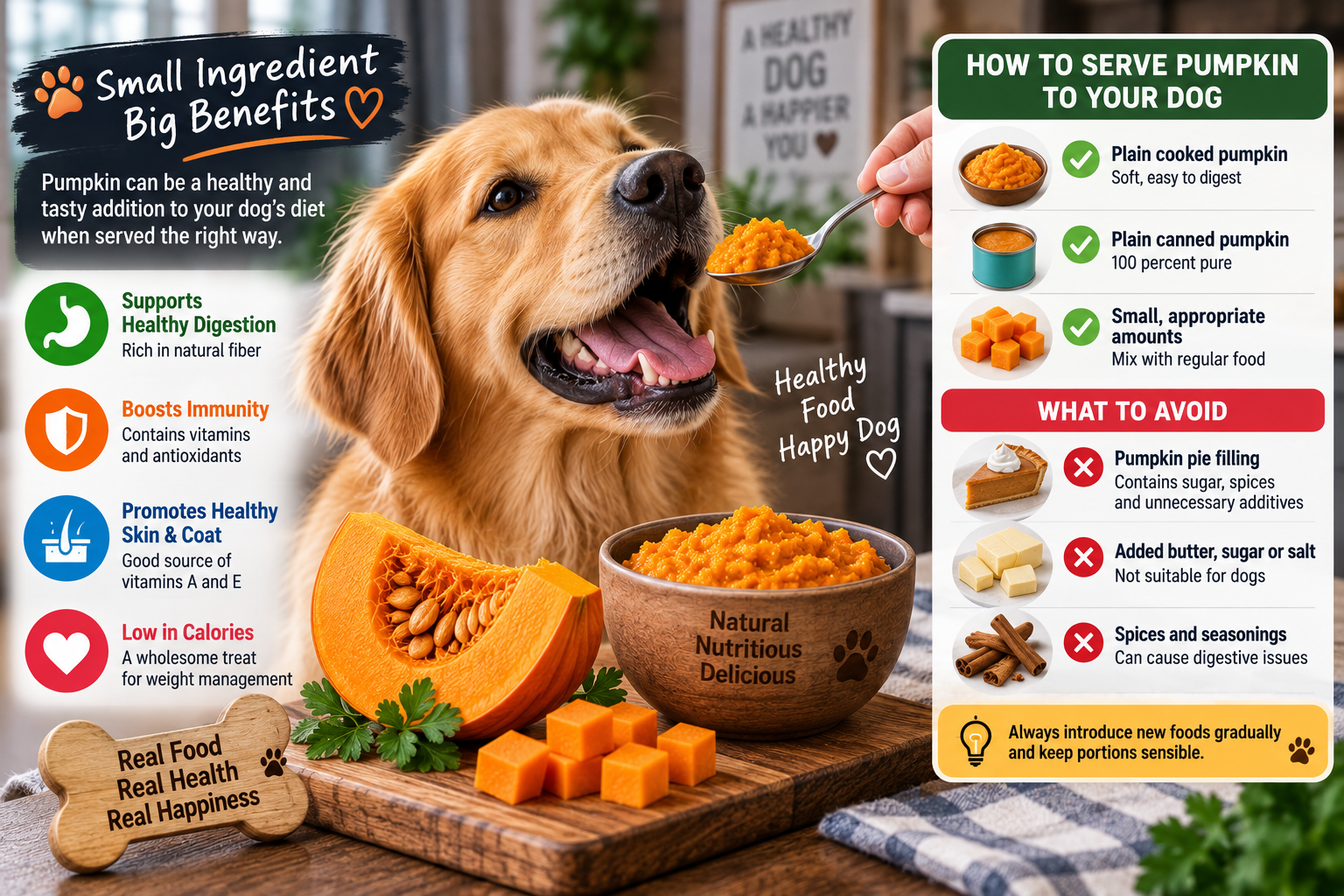
- Added sugar
- Spices
- Flavorings
- Other dessert ingredients
There is no benefit to giving a dog sweetened pie filling when plain pumpkin is available.
What Are the Nutritional Benefits of Pumpkin?
Pumpkin is a nutrient containing plant food.
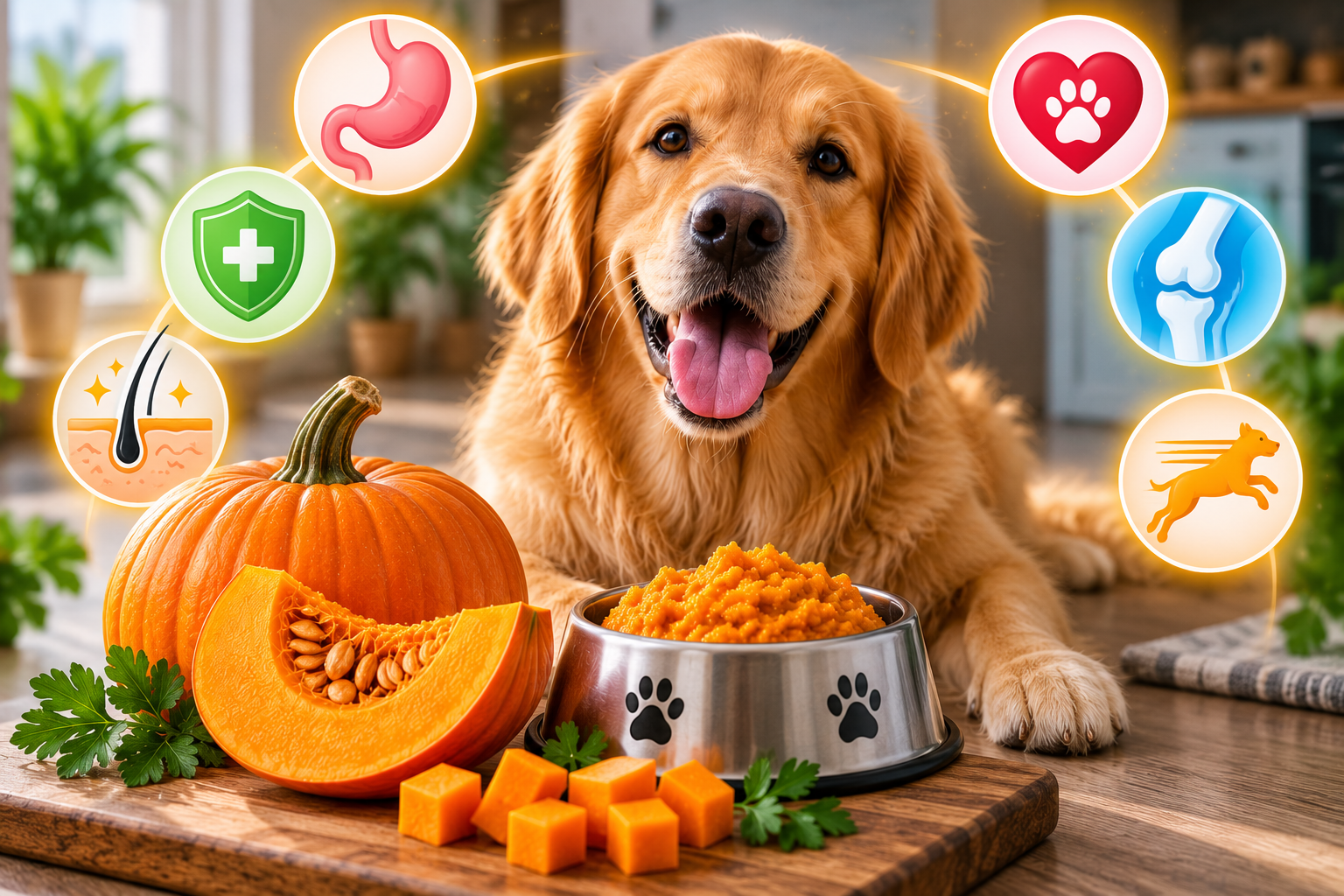
It provides dietary fiber and contains nutrients such as beta carotene which the body can use to produce vitamin A.
It also contributes moisture when served cooked or as puree.
However the fact that a food contains useful nutrients does not mean a dog needs large amounts of it.
A complete and balanced commercial dog food is formulated to provide the nutrients a dog needs in appropriate proportions.
Pumpkin is best considered an extra rather than the nutritional foundation of the diet.
Can Pumpkin Help a Dog With Diarrhea?
Fiber can influence stool consistency and plain pumpkin is sometimes recommended as a dietary addition for dogs with mild digestive changes.
But diarrhea has many possible causes.
These include:
- A sudden diet change
- Eating inappropriate food
- Parasites
- Infection
- Food intolerance
- Stress
- Pancreatic or intestinal disease
- Toxins or foreign objects
Because the causes vary, pumpkin should not automatically be treated as a cure for diarrhea.
If your dog has repeated diarrhea, blood in the stool, vomiting, weakness, abdominal pain, dehydration or loss of appetite, contact a veterinarian.
Can Pumpkin Help With Constipation?
Fiber and moisture can affect bowel movements, so pumpkin may be useful in some mild cases.
However constipation can also occur because of dehydration, pain, swallowed material, medication, orthopedic problems, prostate disease and other medical conditions.
A dog that repeatedly strains without producing normal stool should not simply receive increasing amounts of pumpkin at home.
Veterinary assessment is appropriate when constipation persists or appears painful.
How Much Pumpkin Can a Dog Eat?
There is no single perfect amount for every dog.
A Chihuahua and a Great Dane obviously should not receive the same serving.
The appropriate amount depends on:
- Body size
- Age
- Normal diet
- Calorie needs
- Digestive tolerance
- Medical conditions
- Why pumpkin is being offered
If you are simply introducing pumpkin as an occasional food, start with a very small amount mixed into the dog's normal meal.
For a small dog this might begin around a teaspoon or less. A larger dog may tolerate a little more.
These are not treatment doses.
If you are using pumpkin because your dog has diarrhea, constipation or another medical problem, ask your veterinarian how much is appropriate for that individual dog.
Start Small the First Time
Whenever introducing a new food, moderation makes it easier to identify whether your dog tolerates it.
Offer a small amount first.
Then watch for:
- Vomiting
- Loose stool
- Gas
- Abdominal discomfort
- Reduced appetite
- Itching or other unusual reactions
If the dog remains comfortable you can continue using a sensible small amount when appropriate.
Can Dogs Eat Raw Pumpkin?
Small pieces of pumpkin flesh are not generally considered toxic to dogs, but cooked plain pumpkin is usually easier to serve and digest.
Large hard chunks can be difficult to chew and may create a choking or gastrointestinal obstruction risk depending on their size.
For that reason cooked soft pumpkin or plain puree is a more practical choice.
Can Dogs Eat Pumpkin Skin?
The tough outer skin is not a good choice for dogs.
It is harder to chew and digest than the soft flesh.
Remove the tough rind before serving fresh pumpkin.
Can Dogs Eat Pumpkin Seeds?
Plain pumpkin seeds are not inherently toxic to dogs, but they are not necessary for a dog to receive the potential benefits of pumpkin flesh.
Salted, flavored or heavily seasoned seeds should be avoided.
Seeds can also create problems for dogs that swallow food without chewing well.
If you specifically want to add seeds to your dog's diet, discuss the amount and preparation with your veterinarian rather than giving large handfuls.
Can Puppies Eat Pumpkin?
A healthy puppy may be able to eat a tiny amount of plain pumpkin, but puppies have important nutritional requirements for growth.
Their main diet should be a complete and balanced food appropriate for their life stage.
Do not use pumpkin to repeatedly manage diarrhea in a puppy without veterinary advice.
Puppies can become dehydrated more quickly than healthy adult dogs and diarrhea may be associated with serious infections or parasites.
Can Senior Dogs Eat Pumpkin?
Many senior dogs can tolerate plain pumpkin.
However older dogs are also more likely to have medical conditions that affect diet.
Examples include:
- Kidney disease
- Diabetes
- Digestive disease
- Weight problems
- Prescription diet requirements
If your senior dog follows a therapeutic diet, ask the veterinarian before adding regular extras.
Can Dogs With Diabetes Eat Pumpkin?
Do not make routine dietary changes for a diabetic dog without discussing them with the veterinarian managing the condition.
Meal composition and consistency can matter when diabetes is being treated.
A small amount of plain pumpkin may be acceptable for some diabetic dogs, but suitability depends on the individual treatment and feeding plan.
Can Dogs Eat Pumpkin Every Day?
Some dogs may tolerate a small amount regularly, but daily use is not automatically necessary.
If you feel your dog needs pumpkin every day to maintain normal stool, consider discussing the underlying reason with your veterinarian.
A dog's regular diet should already provide appropriate nutrition.
Extras should not crowd out nutritionally complete food.
How to Prepare Fresh Pumpkin for a Dog
Preparation can be very simple.
- Wash the pumpkin.
- Cut it carefully.
- Remove the stem and tough outer rind before serving.
- Remove the stringy center and seeds if you are serving only the flesh.
- Cook the pumpkin until soft.
- Allow it to cool completely.
- Mash or puree a small portion.
- Serve it plain.
Do not add butter, sugar, syrup, salt or spice blends.
Easy Ways to Serve Pumpkin
Mix It Into Normal Food
A small spoonful can be mixed with the dog's regular meal.
Use a Small Amount as a Food Topper
Plain pumpkin can add texture and moisture without turning the entire meal into a treat.
Freeze Small Portions
Plain pumpkin puree can be frozen in appropriately sized portions for occasional use.
Make sure the frozen portion is suitable for your dog's size and chewing habits.
Use It in a Dog Safe Recipe
If making homemade treats, keep the overall ingredients dog appropriate and the portions small.
Ingredients You Should Not Add to Pumpkin
A plain food can become unsuitable when human dessert ingredients are added.
Avoid serving pumpkin prepared with:
- Large amounts of sugar
- Butter
- Heavy cream
- Chocolate
- Raisins
- Large amounts of salt
- Artificial sweeteners
Of particular importance is xylitol, a sweetener that is highly toxic to dogs.
If a dog eats a product containing xylitol, contact a veterinarian or animal poison service immediately.
What About Pumpkin Spice?
The phrase pumpkin spice usually refers to a mixture of spices rather than pumpkin itself.
Dogs do not need pumpkin spice.
Instead of trying to determine whether a particular dessert or drink contains a safe quantity of each ingredient, simply give plain pumpkin.
Can Too Much Pumpkin Be Bad for a Dog?
Yes.
More is not automatically better.
Large amounts of fiber or a sudden dietary change can cause digestive problems.
Too much pumpkin may contribute to:
- Loose stool
- Gas
- Abdominal discomfort
- Changes in appetite
- An unbalanced overall diet if it replaces too much regular food
Introduce it gradually and keep portions sensible.
Remember the Treat Rule
Veterinary nutrition guidance commonly recommends that treats and other extras provide no more than about 10 percent of a dog's daily calories, with the majority coming from a complete and balanced diet.
Pumpkin counts as an extra when it is not part of the dog's formulated main food.
This matters especially for dogs that need careful weight control.
Pumpkin Is Not a Substitute for Veterinary Care
This is one of the most important points in this guide.
If your dog has diarrhea or constipation, it can be tempting to keep adding pumpkin while waiting for the problem to disappear.
That approach can delay diagnosis when something more serious is happening.
Call Your Veterinarian If Your Dog Has
- Repeated vomiting
- Persistent diarrhea
- Blood in vomit or stool
- Black or tarry stool
- Severe lethargy
- A swollen or painful abdomen
- Repeated unsuccessful straining to defecate
- Loss of appetite
- Signs of dehydration
- Suspected foreign object ingestion
- Suspected toxin exposure
Very young puppies, elderly dogs and dogs with chronic disease may need veterinary attention sooner.
What If My Dog Ate Pumpkin Pie?
First check exactly what the pie contains and approximately how much the dog ate.
The risk depends on the ingredients and quantity.
Rich fatty desserts may cause gastrointestinal upset and can be particularly concerning for dogs prone to pancreatitis.
If the product contains xylitol, chocolate, raisins or another potentially toxic ingredient, seek veterinary or poison control advice immediately.
What If My Dog Ate a Whole Pumpkin?
A dog eating a large amount of pumpkin flesh, rind, stem or other material is different from giving a small spoonful of puree.
Large pieces of tough plant material can be difficult to digest and may create an obstruction risk.
Contact your veterinarian if a dog consumes a large amount or develops vomiting, abdominal pain, reduced appetite, repeated straining or inability to pass stool.
Does Pumpkin Help With Weight Loss?
Pumpkin is sometimes promoted online as a way to bulk out meals because it contains fiber and is less calorie dense than many treats.
However replacing part of a nutritionally complete diet without calculating calories and nutrients can unbalance the diet.
If your dog needs to lose weight, a veterinarian can help establish an appropriate calorie target and feeding plan.
Read more practical feeding information in our Pet Food guides.
Is Pumpkin Better Than Other Dog Treats?
It depends on the dog and the alternative.
Plain pumpkin can be a useful low complexity food because it can be served without added salt, sugar or fat.
But it is not nutritionally superior to every dog treat and it does not need to be part of every dog's diet.
The best treat is one that is safe, appropriately portioned and suitable for the individual dog's health needs.
Simple Pumpkin Safety Checklist
Before serving pumpkin ask:
- Is it plain?
- Does it contain xylitol or another sweetener?
- Is it pumpkin puree rather than pie filling?
- Is the portion appropriate for my dog's size?
- Am I introducing it gradually?
- Does my dog have a condition requiring a special diet?
- Am I using pumpkin instead of seeking care for persistent symptoms?
If those questions are addressed, pumpkin can be a simple occasional food for many dogs.
Frequently Asked Questions
Can Dogs Eat Pumpkin?
Yes. Most healthy dogs can eat small amounts of plain cooked pumpkin or pure canned pumpkin.
Is Canned Pumpkin Good for Dogs?
Plain 100 percent pumpkin can be suitable. Check the ingredient list and avoid pumpkin pie filling.
How Much Pumpkin Can I Give My Dog?
The appropriate amount depends on the dog's size, diet, health and reason for using it. Start with a very small amount for an occasional food and ask your veterinarian for a specific amount when using pumpkin for digestive symptoms.
Can Pumpkin Stop Dog Diarrhea?
Fiber may influence stool consistency, but pumpkin does not treat every cause of diarrhea. Persistent or severe diarrhea requires veterinary advice.
Can Pumpkin Help a Constipated Dog?
It may help some mild cases because it contains fiber and moisture, but persistent straining or constipation can have medical causes and should be evaluated.
Can Dogs Eat Pumpkin Pie?
Pumpkin pie is not recommended. It commonly contains sugar, fat, spices and other ingredients that dogs do not need.
Can Dogs Eat Raw Pumpkin?
Small amounts of flesh are not generally toxic, but plain cooked pumpkin is softer and easier to serve. Avoid giving large hard pieces.
Can Puppies Have Pumpkin?
A small amount may be tolerated by a healthy puppy, but puppy diarrhea should not repeatedly be treated at home because young dogs can become dehydrated and may have serious infections or parasites.
Can Dogs Eat Pumpkin Every Day?
Some dogs may tolerate small regular portions, but daily supplementation is not necessary for every dog. Ask your veterinarian if you are using it continuously for a health or digestive problem.
Related DailyPetTips Guides
Sources and References
- American Kennel Club — Pumpkin and Dog Digestion
- U.S. Food and Drug Administration — Xylitol and Dogs
- ASPCA Animal Poison Control
- WSAVA Global Nutrition Guidelines
Pet Health Disclaimer
This article provides general educational information and is not a substitute for veterinary diagnosis or treatment. Digestive symptoms can have many causes. Contact a veterinarian if your dog has persistent diarrhea, constipation, vomiting, pain, blood in the stool, weakness or other concerning symptoms.
Editorial Note
This guide distinguishes plain pumpkin from sweetened pumpkin products and treats pumpkin as an optional food rather than a cure. Recommendations prioritize a complete and balanced diet, moderate portions and veterinary evaluation when digestive symptoms persist.
About the Author
Ibrahim is a pet care writer at DailyPetTips. He creates practical and easy to understand pet guides using established veterinary, nutrition and animal welfare information with an emphasis on responsible everyday care.



Pet parent notes