
Quick Answer
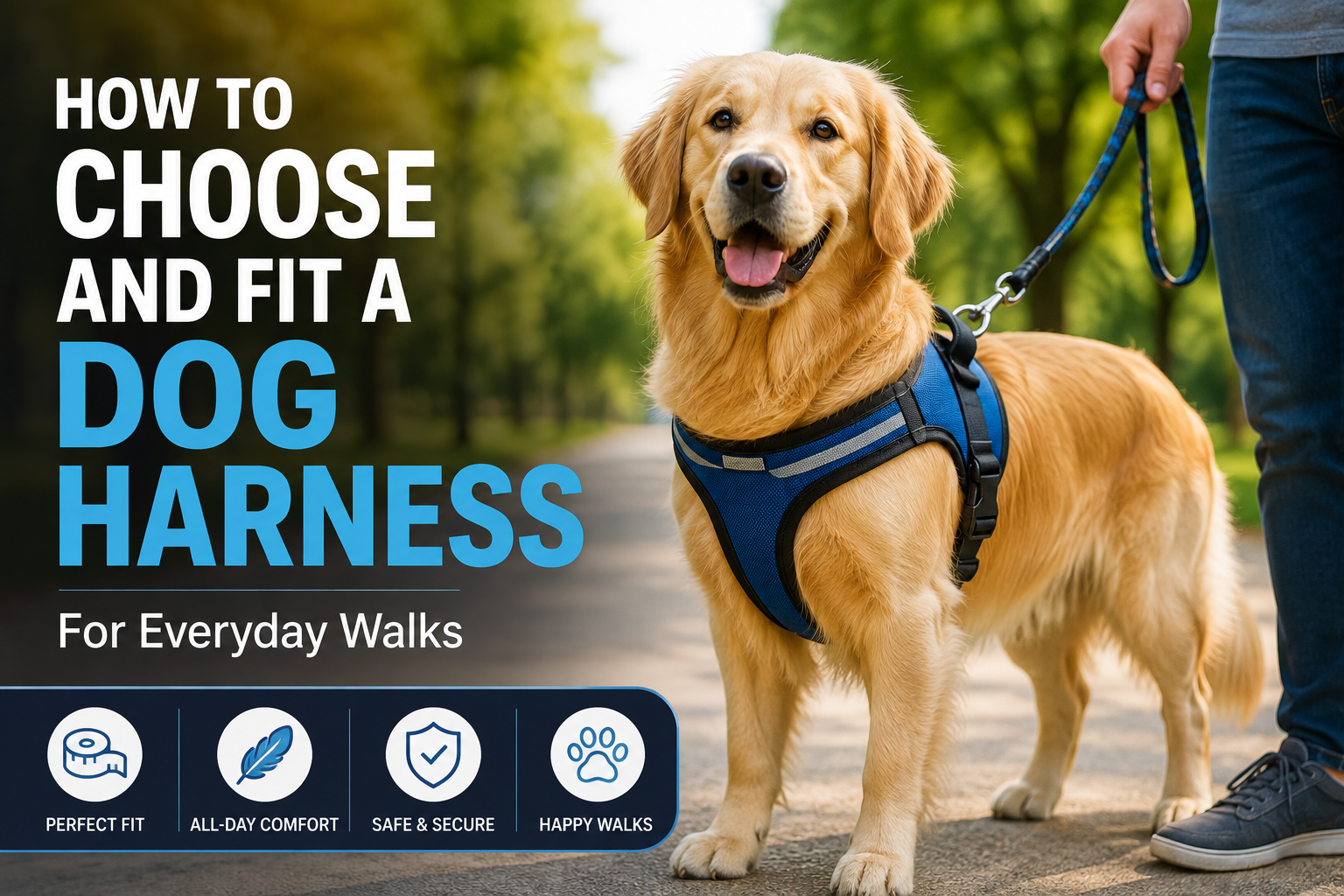
A good dog harness should fit securely without restricting normal shoulder movement or rubbing the skin.
Measure your dog before buying and follow the manufacturer's size chart. You should be able to fit fingers comfortably under the straps while the harness remains snug enough that the dog cannot easily back out.
The best harness depends on your dog's body shape walking behavior and purpose.
Key Takeaways
- Measure your dog instead of guessing the size.
- Check the manufacturer's specific size chart.
- The harness should be snug but not tight.
- Straps should not rub directly behind the front legs.
- Shoulder movement should remain comfortable.
- Check every buckle before each walk.
- Escape prone dogs may need additional security.
- No harness replaces good leash training.
Why Use a Dog Harness?
A harness distributes leash pressure across a larger area of the dog's body than a traditional neck collar.
It can be useful for:
- Everyday walking
- Dogs with sensitive necks
- Small breeds
- Puppies
- Dogs that need more secure handling
- Some training situations
A collar can still be useful for identification tags.
The right walking equipment depends on the dog.
If your dog has a neck spine breathing or mobility condition ask your veterinarian which equipment is most appropriate.
Measure Your Dog Before Buying
Harness sizes are not standardized.
A medium harness from one company may be very different from a medium harness from another.
Follow the exact manufacturer's measurement instructions.
Common measurements include:
- Chest girth
- Lower neck or shoulder area
- Body weight
Measure Chest Girth
Use a soft measuring tape around the widest part of the dog's rib cage.
This is usually behind the front legs.
Keep the tape close to the body without pulling it tight.
Do Not Buy by Breed Alone
Two dogs of the same breed can have very different body shapes.
Measure the actual dog.
Common Types of Dog Harnesses
Back Clip Harness
The leash attaches on the dog's back.
This simple design can work well for many everyday walkers.
Front Clip Harness
The leash attaches near the front of the chest.
This can give the handler more influence over the dog's direction.
It does not automatically teach loose leash walking.
Dual Clip Harness
Some harnesses include both front and back attachment points.
This can provide more flexibility depending on the walk or training plan.
Step In Harness
The dog steps into loops before the harness is fastened.
Some dogs find this easier than equipment that passes over the head.
Three Strap or Escape Resistant Harness
Some designs include an additional strap behind the rib cage.
This can provide more security for dogs that are skilled at backing out of normal harnesses.
How Should a Dog Harness Fit?
The harness should be close enough to the body that it does not twist around during normal walking.
However it should not:
- Dig into the skin
- Restrict breathing
- Pinch the armpits
- Force the dog's shoulders into an unnatural position
A common starting check is whether you can comfortably slide one or two fingers under the straps.
This is not a perfect rule for every harness.
The manufacturer's fitting instructions should come first.
Do the Back Out Test
Before going outside stand in a secure indoor area and gently check whether the dog can reverse out of the harness.
Do not pull hard or frighten the dog.
If the harness slides over the shoulders or head easily it may be too loose or the wrong shape.
Protect Normal Shoulder Movement
A harness should allow the dog to walk naturally.
Look at your dog from the side while walking.
The front legs should be able to extend comfortably.
Very restrictive straps across the front of the shoulder can interfere with movement in some designs.
Many owners prefer a Y shaped front design because it leaves more of the shoulder area open.
The correct fit still depends on the individual dog.
Check for Rubbing and Chafing
After the first few walks check areas under the harness.
Look especially:
- Behind the front legs
- Around the chest
- Under adjustment buckles
- Where straps cross thin hair
Watch for:
- Red skin
- Hair loss
- Soreness
- Repeated scratching
- reluctance to wear the harness
If irritation develops stop using the harness until you identify the cause.
What About Dogs That Escape From Harnesses?
Some dogs can quickly learn to reverse out of walking equipment.
Fearful newly adopted and very flexible dogs may need extra security.
A three strap escape resistant harness may help.
Some owners also use a properly designed backup connection between harness and collar.
Do not rely on improvised clips that could break or create entanglement.
If your dog is extremely fearful work with a veterinarian and qualified behavior professional on a complete safety plan.
Choosing a Harness for a Puppy
Puppies grow quickly.
A harness that fits perfectly today may become too tight after a short period.
Check the fit frequently.
Choose a design with useful adjustment range but do not buy a very oversized harness hoping the puppy will grow into it.
An oversized harness may allow escape.
Will a Harness Stop a Dog From Pulling?
No piece of equipment teaches walking behavior by itself.
A front attachment may make some dogs easier to manage but training is still important.
Reward the behavior you want.
Practice:
- Walking near you
- Checking in with you
- Changing direction calmly
- Responding to leash pressure
Avoid harsh leash corrections.
If pulling is severe a qualified reward based trainer can help.
Introduce the Harness Slowly
Some dogs are uncomfortable with new equipment.
Do not chase the dog around the room trying to put it on.
Instead use short sessions.
- Let the dog investigate the harness.
- Reward calm interest.
- Touch the harness gently to the body.
- Put it on briefly.
- Reward the dog.
- Remove it.
- Gradually increase wearing time.
If the harness passes over the head go slowly with dogs that are sensitive about face handling.
Inspect the Harness Before Walks
Walking equipment wears out.
Check:
- Buckles
- Stitching
- Leash attachment rings
- Adjustment sliders
- Straps
- Any elastic sections
Replace the harness if important parts become frayed cracked stretched or damaged.
Clean and Store the Harness Properly
Follow the manufacturer's cleaning instructions.
Some harnesses are machine washable while others need hand washing.
Remove mud salt sand and dirt that could irritate the skin or damage materials.
Allow the harness to dry completely before storing it.
Do not leave damp walking equipment sealed inside a bag.
Common Dog Harness Mistakes
Buying Without Measuring
Size labels alone are unreliable.
Leaving the Harness Too Loose
A dog may reverse out of it.
Leaving It Too Tight
This can cause rubbing discomfort and restricted movement.
Putting a Strap Directly Into the Armpit
Repeated friction can irritate the skin.
Never Rechecking a Growing Puppy
Fit can change quickly.
Assuming No Pull Means No Training
Equipment helps management but does not replace training.
Using Damaged Equipment
A worn buckle or strap can fail unexpectedly.
Frequently Asked Questions
How Tight Should a Dog Harness Be?
It should be snug enough to stay securely in place without digging into the dog. Follow the manufacturer's fitting instructions.
Is a Harness Better Than a Collar?
Neither is universally better for every purpose. Many owners use a harness for walking and a collar for identification. Medical conditions may change the best choice.
What Is a Y Shaped Harness?
It is a harness with straps that form a Y shape on the front of the dog's chest. Many designs leave the shoulders relatively open for natural movement.
Can My Dog Wear a Harness All Day?
It is usually better to remove walking equipment when it is not needed especially when the dog is unsupervised. This reduces rubbing and entanglement risk.
Why Does My Dog Back Out of the Harness?
The harness may be too loose or the shape may not suit the dog's body. Escape prone dogs may need a more secure design.
Can a Harness Stop Pulling?
A harness can help manage pulling but loose leash walking still needs training.
Related DailyPetTips Guides
- More Pet Accessories Guides
- How to Travel Safely With a Dog or Cat by Car
- How to Build a Simple Daily Pet Care Routine
Sources and References
Pet Safety Disclaimer
This article provides general educational information and does not replace veterinary or professional behavior advice. Dogs with breathing neck spinal mobility or orthopedic problems may need specific walking equipment recommended by a veterinarian.
Editorial Note
This article does not recommend a specific harness brand. The focus is on fit movement comfort escape prevention and practical inspection so owners can evaluate products based on the needs of the individual dog.
About the Author
Ibrahim is a pet care writer at DailyPetTips. He creates practical easy to understand guides using responsible animal care principles and trustworthy veterinary and animal welfare sources.


Pet parent notes