Quick Answer
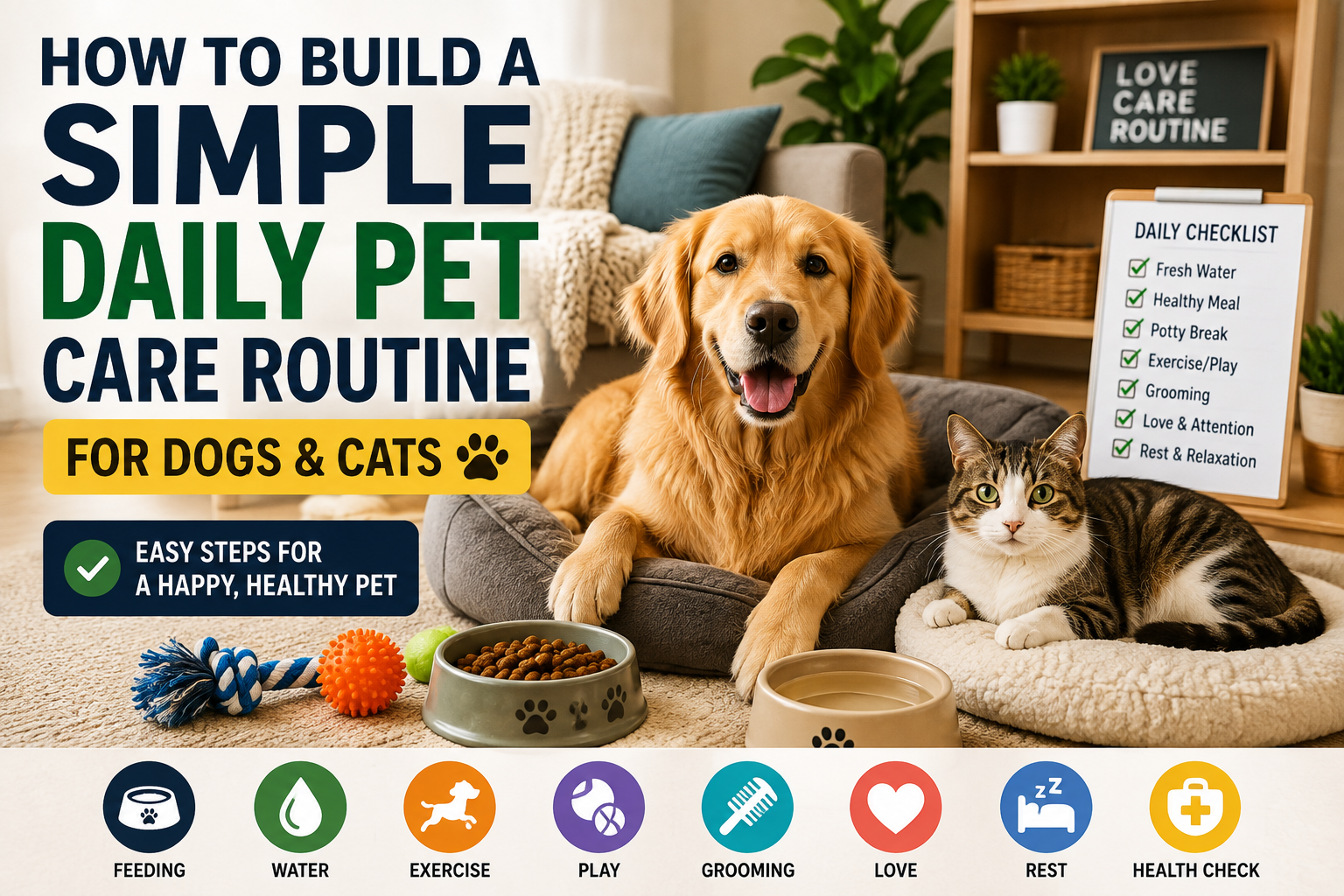
A good daily pet care routine does not need to be complicated. Most dogs and cats benefit from a predictable pattern that includes fresh water suitable meals bathroom opportunities activity play rest and a quick check of their general condition.
The best routine is one you can follow consistently while adjusting it for your pet's age personality health and lifestyle.
Key Takeaways
- Keep feeding and care times reasonably consistent.
- Provide fresh clean water every day.
- Give dogs regular bathroom opportunities and appropriate exercise.
- Give cats daily play and opportunities to climb scratch explore and rest.
- Use a quick daily check to notice changes in appetite energy movement coat or behavior.
- Keep the routine realistic enough to follow every day.
- Adjust the routine when your pet is young old unwell or unusually active.
Why a Daily Routine Matters
Pets often do better when important parts of their day are predictable.
A routine can make it easier for you to remember meals water bathroom care exercise medications if prescribed and basic grooming.
It can also make changes easier to notice.
If your dog normally finishes breakfast quickly but suddenly refuses food you are more likely to notice when feeding is part of a normal routine.
If your cat normally uses the litter box several times a day but suddenly changes that pattern a consistent routine may help you notice sooner.
The goal is not to make every day identical. The goal is to give your pet reliable care while still allowing flexibility.
A Simple Morning Routine
Start with the basic needs.
For many households a practical morning routine can include:
- Refresh the water bowl.
- Offer the morning meal if your pet eats at that time.
- Give dogs an opportunity to go outside.
- Check the cat litter box and remove waste.
- Spend a few minutes observing your pet.
- Add a short walk or play session when appropriate.
You do not need a long checklist every morning.
Even a few consistent habits can make daily care easier.
Plan Meals and Water
Feeding should match your pet's individual needs and the instructions given by your veterinarian when special nutrition is required.
Use the food label as a starting point rather than assuming every pet needs the same portion.
Body size age activity health treats and calorie density can all affect how much food is appropriate.
Our guide on how to read a pet food label explains how to check calories feeding directions life stage and nutritional adequacy.
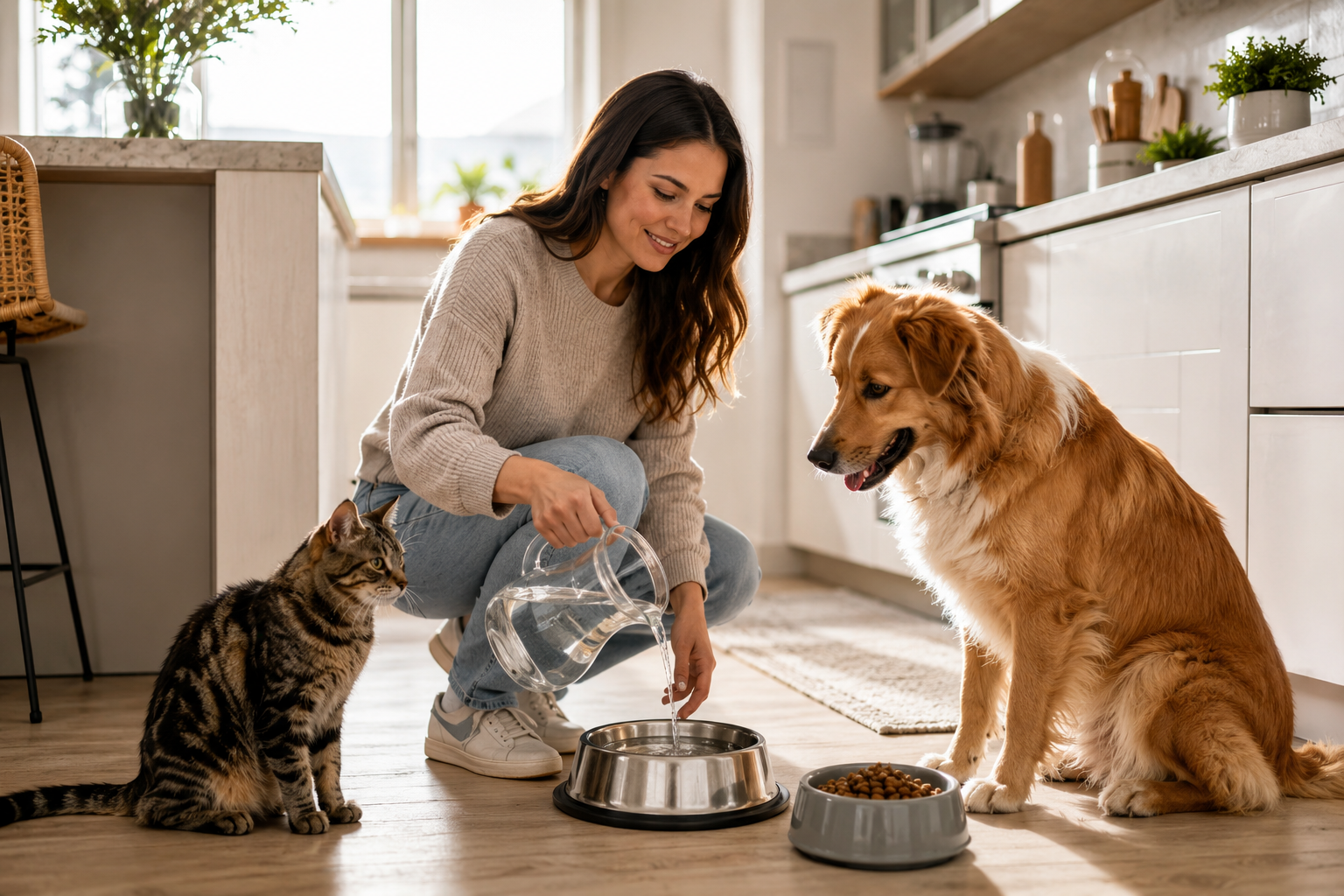
Keep Fresh Water Available
Pets should have reliable access to clean drinking water unless a veterinarian has given different medical instructions.
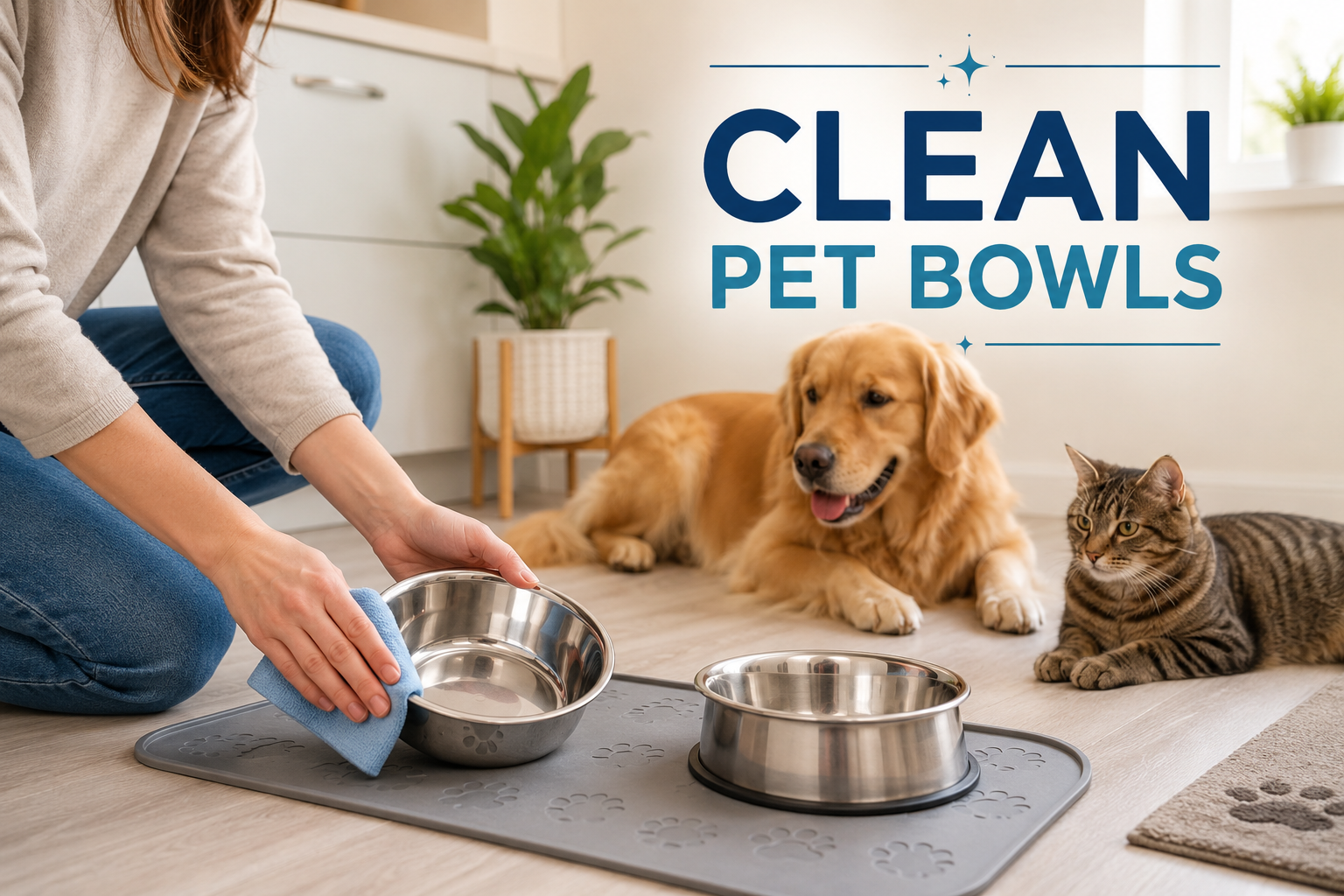
Refresh bowls regularly and clean them before residue builds up.
Store Food Properly
A daily routine works better when food is stored correctly.
Keep dry food protected from heat moisture and pests. Refrigerate opened wet food according to the product instructions.
For more detail read how to store dry and wet pet food safely at home.
Daily Exercise and Play
Activity is an important part of everyday pet care but the correct amount is different for every animal.
For Dogs
Dogs may benefit from a combination of:
- Walks
- Sniffing opportunities
- Play
- Training
- Safe social interaction
- Rest
A young energetic dog may need more activity than an older dog with mobility problems.
Very hot weather can also change when and how long you should exercise a dog.
For Cats
Indoor cats can benefit from short daily play sessions.
Try activities that allow natural behaviors such as chasing stalking climbing scratching and exploring.
Simple options include:
- Wand toys
- Soft balls
- Cardboard boxes
- Scratchers
- Cat trees
- Food puzzles suitable for cats
Rotate some toys instead of leaving every toy out all the time.
Bathroom and Litter Care
Bathroom care is an important part of daily hygiene.
Dogs
Give dogs appropriate opportunities to toilet throughout the day.
Puppies older dogs and pets with medical conditions may need more frequent opportunities.
Cats
Scoop litter boxes regularly and keep them in locations where the cat can reach them easily.
Cleaning also gives you a chance to notice unusual changes.
If a cat is repeatedly straining unable to urinate or showing obvious discomfort seek veterinary care promptly.
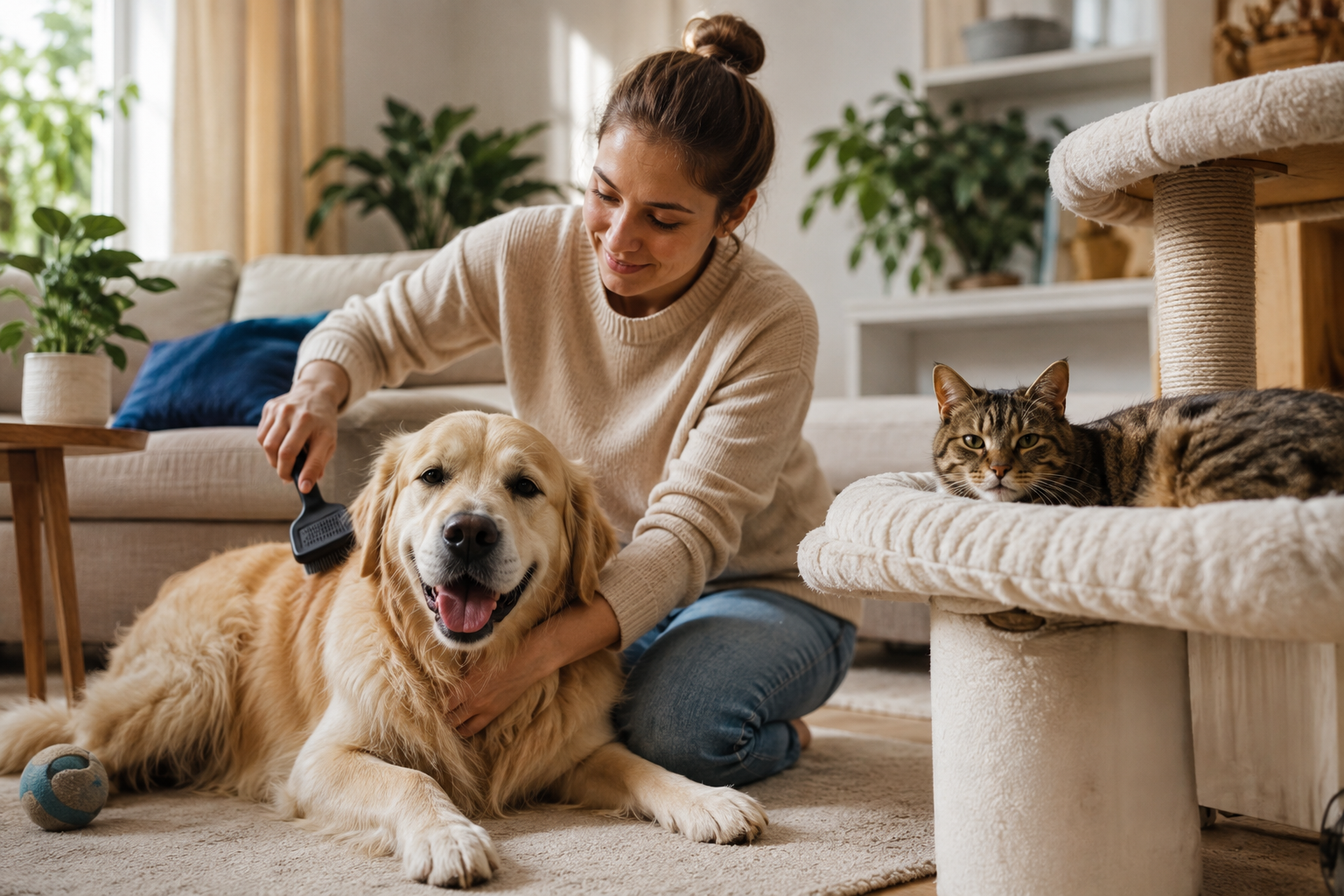
Small Grooming Habits Make a Difference
You do not need to complete a full grooming session every day.
Small habits can help prevent care from becoming overwhelming.
Depending on the pet you might:
- Brush for a few minutes.
- Check for mats.
- Look at the paws after outdoor activity.
- Notice unusual skin redness.
- Check whether nails are becoming too long.
Do not force grooming if your pet becomes highly stressed. Build tolerance gradually and ask a professional groomer or veterinarian for help when needed.
Do a Quick Daily Health Check
You do not need medical equipment to notice basic changes.
Spend a moment observing:
- Appetite
- Water intake
- Energy
- Walking and movement
- Breathing
- Coat and skin
- Bathroom habits
- Behavior
The goal is not to diagnose illness yourself.
The goal is to recognize when something is different enough to deserve attention.
Contact a veterinarian when you notice concerning or persistent changes.
Create a Calm Evening Routine
An evening routine can help the household settle down.
It may include:
- An evening meal
- A final dog walk or bathroom break
- A short cat play session
- Refreshing water
- Cleaning the litter box
- A quiet resting period
Keep sleeping areas comfortable and away from unnecessary disturbance.
Our upcoming guide on how to create a safe and comfortable pet space at home can help you improve resting areas and quiet zones.
What to Do on Busy Days
Busy days happen.
Instead of abandoning the routine completely focus on the essentials.
Prioritize:
- Food
- Fresh water
- Bathroom needs
- Medication if prescribed
- Necessary exercise
- A little attention and interaction
A shorter walk or play session is better than skipping all interaction because the full routine feels impossible.
Common Routine Mistakes
Making the Routine Too Complicated
A routine with twenty steps may look impressive but can be difficult to maintain.
Changing Feeding Amounts Constantly
Large unnecessary changes can make weight management difficult.
Using Exercise as the Only Enrichment
Mental activity and natural behaviors matter too.
Ignoring Rest
Pets also need quiet time.
Not Adjusting for Age
A puppy kitten adult and senior pet may need very different schedules.
Ignoring Sudden Changes
A routine should help you notice unusual behavior rather than make you dismiss it.
Frequently Asked Questions
Do Dogs Need the Same Routine Every Day?
No. A general pattern can be helpful but some flexibility is normal.
How Much Play Does a Cat Need?
The ideal amount varies. Several short interactive sessions can work well for many cats.
Should I Feed My Pet at the Same Time Every Day?
A reasonably consistent schedule can make feeding easier to manage. Follow veterinary instructions when your pet needs a special schedule.
Do I Need to Groom My Pet Every Day?
Not always. Grooming frequency depends on coat type age lifestyle and individual needs.
What Is the Most Important Part of a Daily Pet Routine?
Consistency with the essentials matters most. Food water bathroom needs activity comfort and basic observation should not be forgotten.
Sources and References
- American Veterinary Medical Association Pet Owner Resources
- ASPCA Pet Care
- CDC Healthy Pets Healthy People
Pet Health Disclaimer
This article provides general educational information and does not replace veterinary advice diagnosis or treatment. Contact a veterinarian when your pet has concerning symptoms or significant changes in normal behavior appetite movement or bathroom habits.
About the Author
Ibrahim is a pet care writer at DailyPetTips. He creates practical and easy to understand guides using reliable veterinary animal welfare and educational sources where relevant. DailyPetTips content is reviewed for clarity usefulness and responsible pet care guidance before publication.


Pet parent notes