Quick Answer
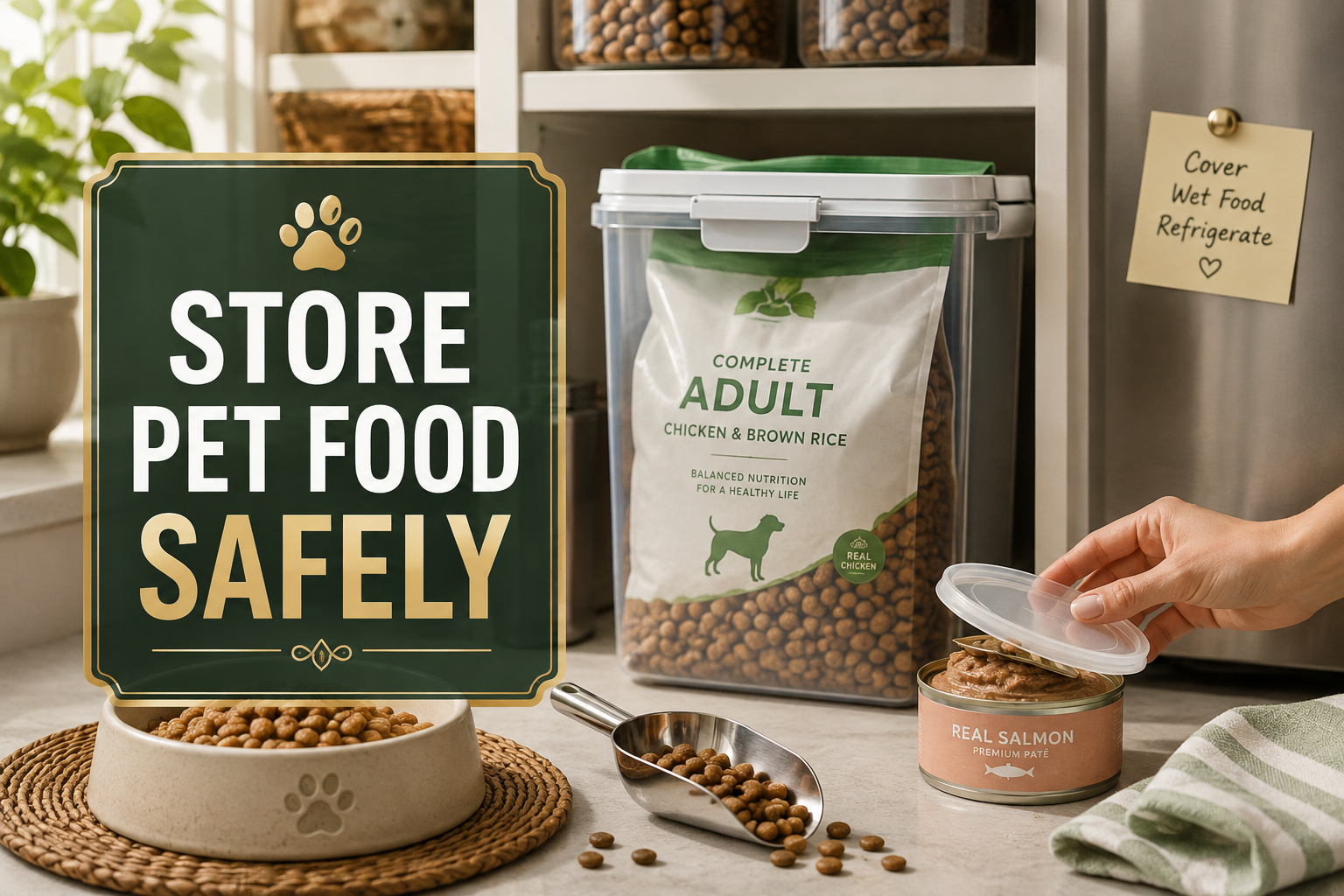
Keep dry pet food in a cool and dry place, preferably inside its original bag with the bag placed in a clean sealed container. Close the package after every use and keep it away from heat, moisture and pests.
Opened wet food should be covered, refrigerated promptly and used according to the manufacturer's storage instructions. Wash food bowls and scoops regularly and never use food that smells unusual, looks spoiled or comes from damaged packaging.
Key Takeaways
- Keep dry food cool, dry and tightly sealed.
- The original bag contains useful lot and product information.
- A storage container should be clean before a new bag is added.
- Do not keep topping old food with new food without washing the container.
- Refrigerate opened wet food promptly.
- Clean bowls and scoops regularly.
- Check best by dates and packaging condition.
- Throw food away when you suspect spoilage.
Why Pet Food Storage Matters
Pet food can lose freshness or become contaminated when it is stored poorly.
Heat, moisture, insects, rodents, dirty containers and repeated contact with unclean scoops can all create problems.
Good storage also helps protect flavor and nutrients.
You do not need expensive equipment. A few simple habits can make storage safer and more organized.
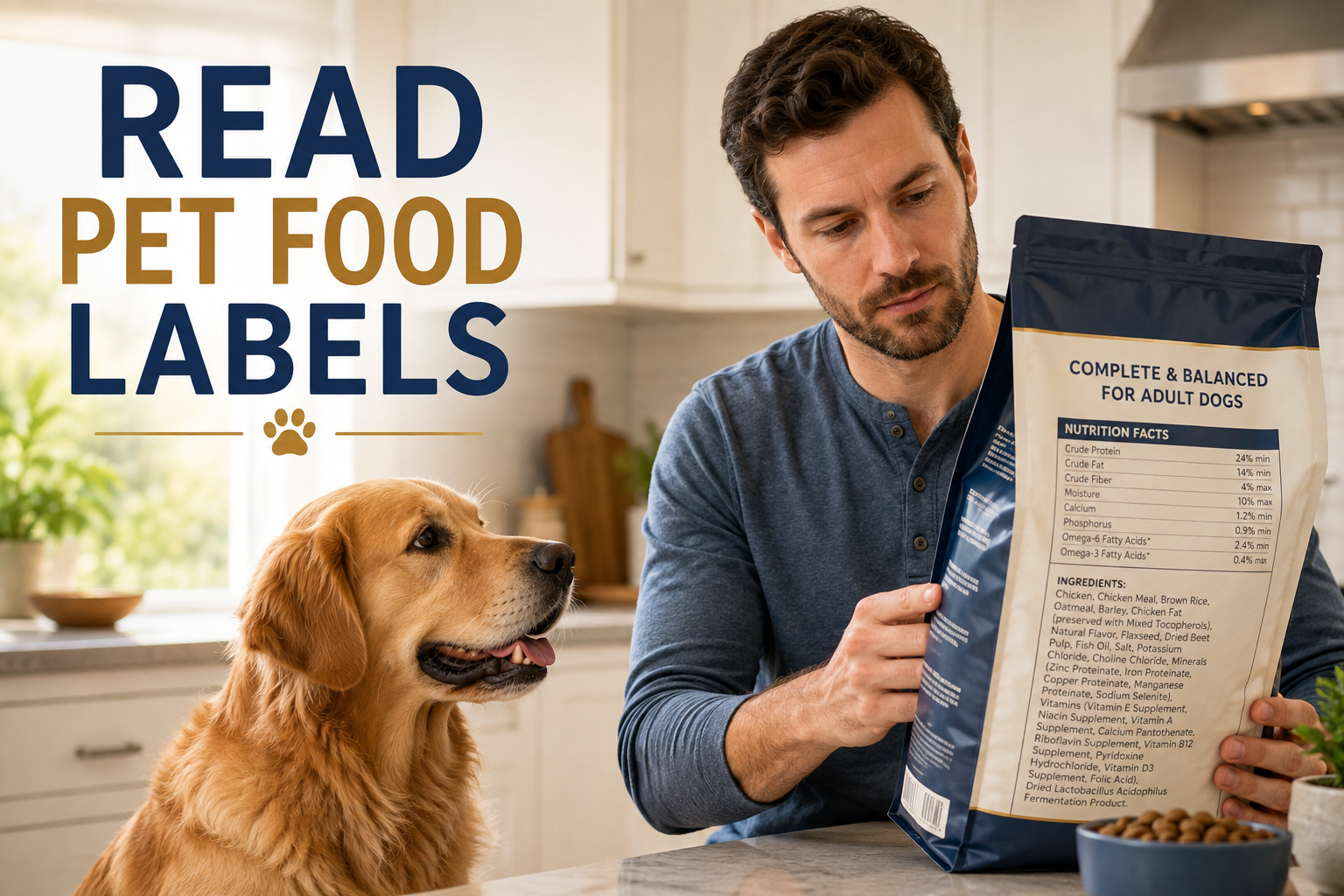
Before choosing a food, you may also want to read our guide on how to read a pet food label.
Best Way to Store Dry Pet Food
Dry food should generally be stored in a cool, clean and dry place.
Good locations may include:
- A pantry
- A dry kitchen cabinet
- A clean utility cupboard
- Another indoor area protected from heat and moisture
Avoid places that become very hot or humid.
A garage, outdoor shed or area beside a heater may experience large temperature changes.
Heat and moisture can reduce freshness and may encourage mold or pest problems.
After each feeding, close the bag securely.
Should You Use an Airtight Container?
A clean storage container can be useful.
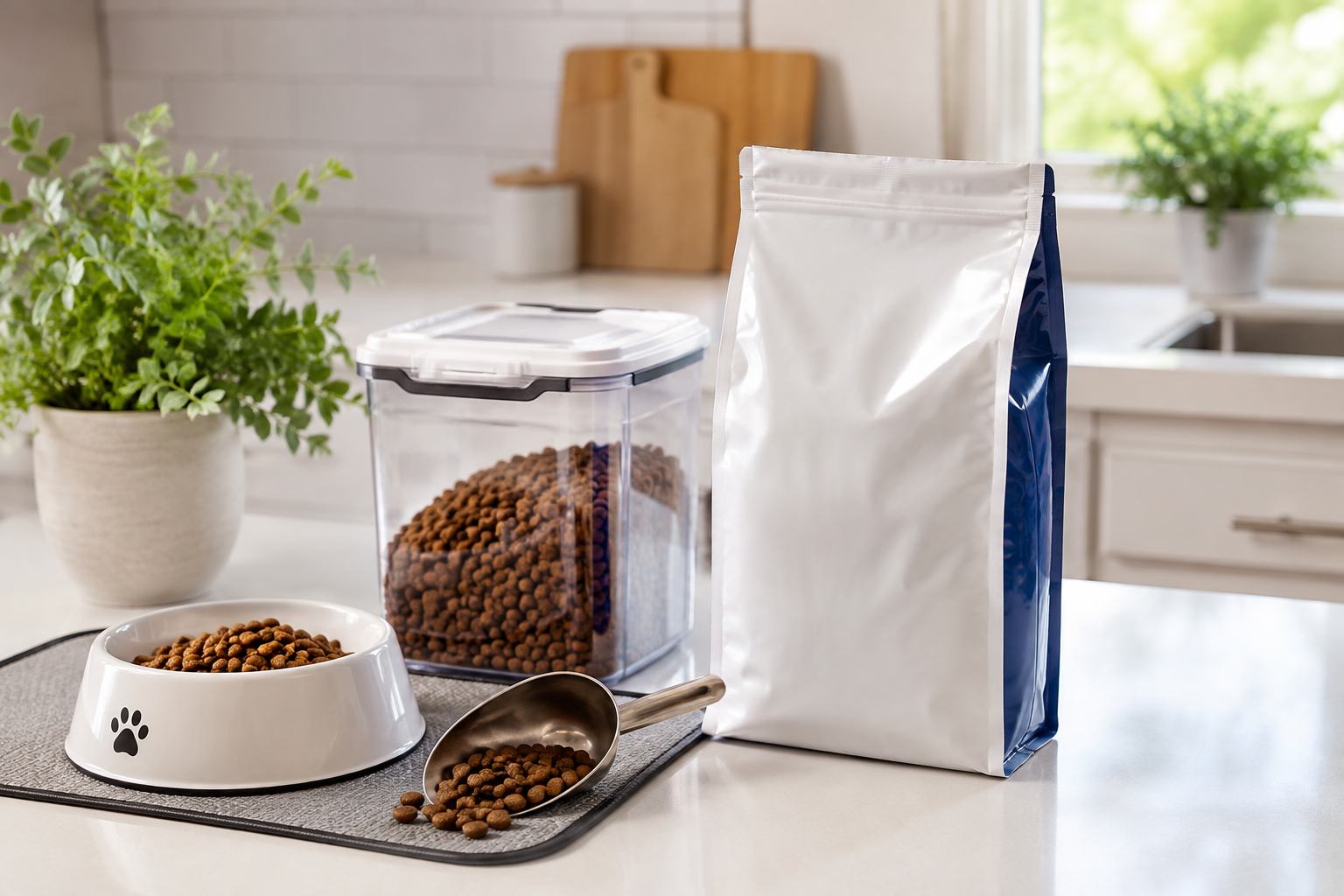
However, one practical approach is to keep the food in its original bag and place the entire bag inside the container.
This provides two benefits.
First, the container adds protection from pests and moisture.
Second, the original bag keeps the food's lot number, best by date, product information and manufacturer details with the food.
If you pour food directly into a container, make sure the container is intended for food storage and is completely clean and dry.
Do Not Mix New Food Into Old Crumbs
It is easy to keep topping up a storage bin, but that may not be the best habit.
Small pieces of old food, crumbs and fat residue can remain inside the container.
- Remove remaining crumbs.
- Wash the container according to its material and manufacturer instructions.
- Rinse it well.
- Let it dry completely.
- Add new food only after the container is dry.
Moisture left inside the container can create problems.
Why Keeping the Original Bag Helps
Do not immediately throw the bag away.
The package may contain:
- Lot or batch number
- Best by date
- Manufacturer contact information
- Feeding instructions
- Calorie information
- Ingredient list
If a recall or product quality issue ever occurs, the lot number can be especially useful.
You can fold or clip the bag closed even when it is placed inside another container.
How to Store Opened Wet Pet Food
Once a can or pouch is opened, treat the unused portion as perishable food.
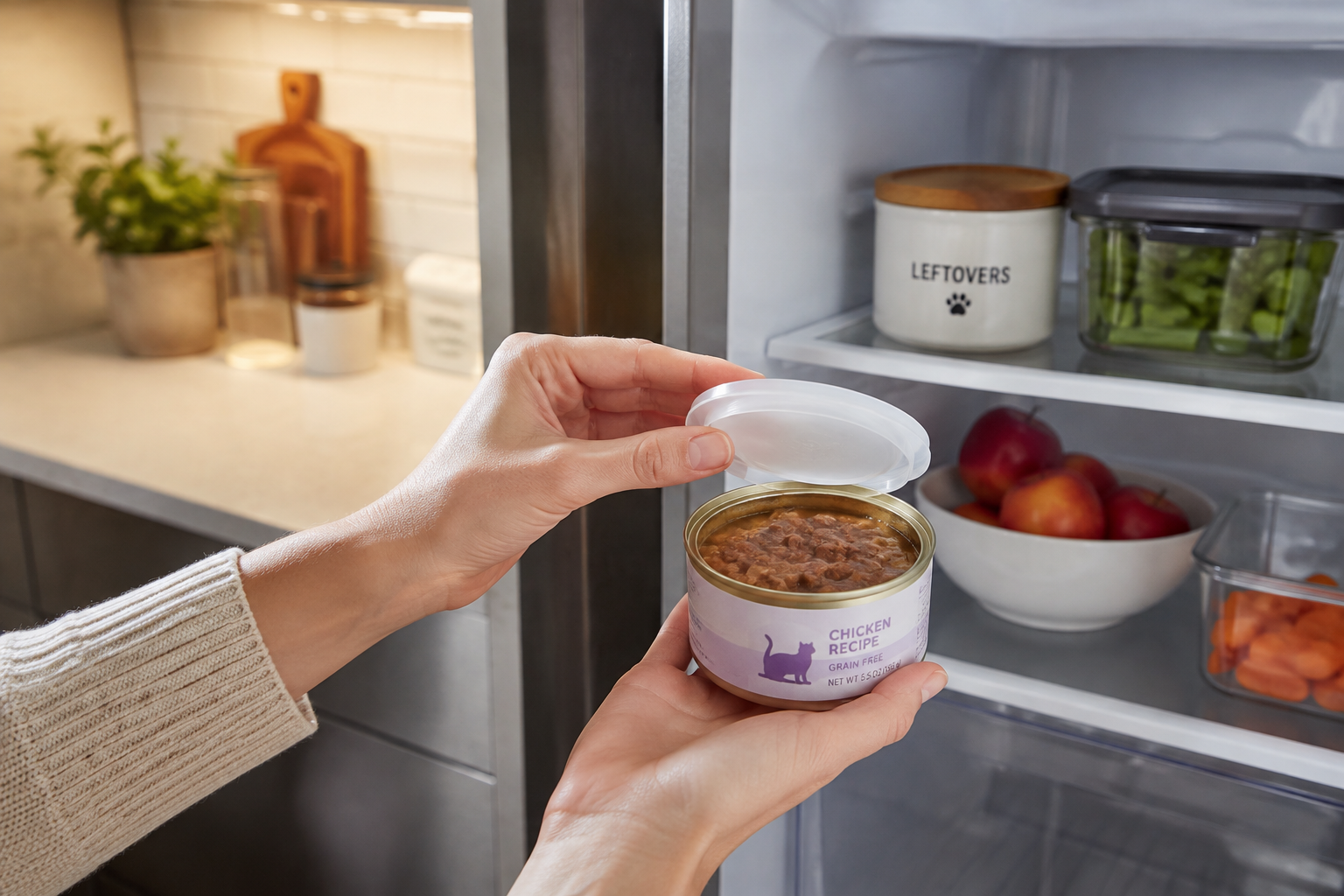
Cover it and refrigerate it promptly.
You can use:
- A fitted can cover
- A clean sealed food container
- Another refrigerator safe cover designed for food storage
Follow the manufacturer's instructions for how long the opened product should be kept.
If you are unsure how long it has been open, it is safer not to use questionable leftovers.
Never feed wet food that has an unusual smell, appearance or texture.
How Long Can Pet Food Sit in a Bowl?
Dry food is less perishable than wet food, but it should still not remain in a dirty bowl indefinitely.
Wet food can spoil much faster, especially in warm conditions.
Instead of relying on one universal time limit, consider:
- Room temperature
- Direct sunlight
- Type of food
- Manufacturer instructions
- Whether insects can reach the bowl
Give your pet a reasonable meal period and remove wet leftovers rather than leaving them sitting for many hours.
When the weather is hot, be even more careful.
Keep Scoops and Bowls Clean
Food safety is not only about the bag.
Bowls, scoops and storage containers also matter.
Pet saliva, food residue and moisture can collect in bowls.
Wash food bowls regularly using appropriate dishwashing methods for the material.
Water bowls should also be cleaned often.
If you use a scoop, avoid grabbing food with hands that are wet or dirty.
Store the scoop somewhere clean rather than leaving it inside a greasy or damp container.
Avoid Heat, Moisture and Pests
Pet food should be protected from:
- Direct sunlight
- High heat
- Water leaks
- Humidity
- Ants
- Cockroaches
- Rodents
- Other household pests
If pests have entered a bag or container, do not simply remove visible insects and continue feeding the food.
Contamination may extend beyond what you can see.
Check the Best By Date
A best by date helps you understand the period during which the manufacturer expects the unopened product to maintain its intended quality when stored correctly.
Check the date before purchasing and again when opening the food.
It can be useful to write the date you opened a large bag on the package.
This makes it easier to remember how long the food has been in use.
Check Packaging Before Feeding
Be careful with:
- Torn bags
- Broken seals
- Swollen cans
- Badly dented cans around seams
- Leaking cans or pouches
- Packages with unusual odors
If a product looks unsafe or damaged, contact the retailer or manufacturer rather than feeding it.
Signs Pet Food May Be Spoiled
Stop using food if you notice:
- Mold
- Unusual odor
- Unexpected discoloration
- Moisture inside dry food
- Insect contamination
- Greasy or unusual texture that was not present before
- Damaged or swollen packaging
Also pay attention to your pet.
If your pet suddenly refuses a food it normally eats, check the food carefully.
Refusal alone does not prove the food is spoiled, but it is worth investigating.
Common Storage Mistakes
Removing Food From the Original Package Without Saving Any Details
You may lose the lot number and best by date.
Storing a Bag Beside a Hot Appliance
Heat can reduce freshness.
Putting New Food on Top of Old Food
Residue can remain in the container.
Using a Damp Scoop
Moisture should be kept away from dry food.
Leaving Opened Wet Food Uncovered
Refrigerate and cover leftovers promptly.
Buying Bags That Are Too Large
A very large bag may not be a bargain if it takes so long to use that freshness becomes difficult to maintain.
Choose a size that fits your household and feeding routine.
Frequently Asked Questions
Is It Okay to Pour Dry Pet Food Into a Plastic Container?
Yes, if the container is clean, dry and suitable for food storage. Keeping the food inside its original bag and placing the bag in the container can also help preserve important product information.
Should Dry Pet Food Be Refrigerated?
Usually no. Most dry food is designed for cool, dry storage. Follow the manufacturer's instructions.
Can Opened Canned Pet Food Go in the Refrigerator?
Yes. Cover and refrigerate unused wet food promptly and follow the product's instructions for storage and use.
Can I Mix a New Bag With Food Remaining From an Old Bag?
It is better to empty and clean the container before adding a new bag.
What Should I Do if My Pet Food Smells Strange?
Stop feeding it. Check the date and package condition and contact the manufacturer or retailer if necessary.
Sources and References
- U.S. Food and Drug Administration Animal and Veterinary
- Association of American Feed Control Officials
- World Small Animal Veterinary Association
Pet Health Disclaimer
If you believe your pet became sick after eating a particular food, stop using the questionable product and contact your veterinarian. Keep the packaging and lot information when possible.
About the Author
Ibrahim is a pet care writer at DailyPetTips. He creates practical and easy to understand guides for pet owners using reliable veterinary, animal welfare and educational sources where relevant. DailyPetTips content is reviewed for clarity, usefulness and responsible pet care guidance before publication.
Pet parent notes