Quick Answer
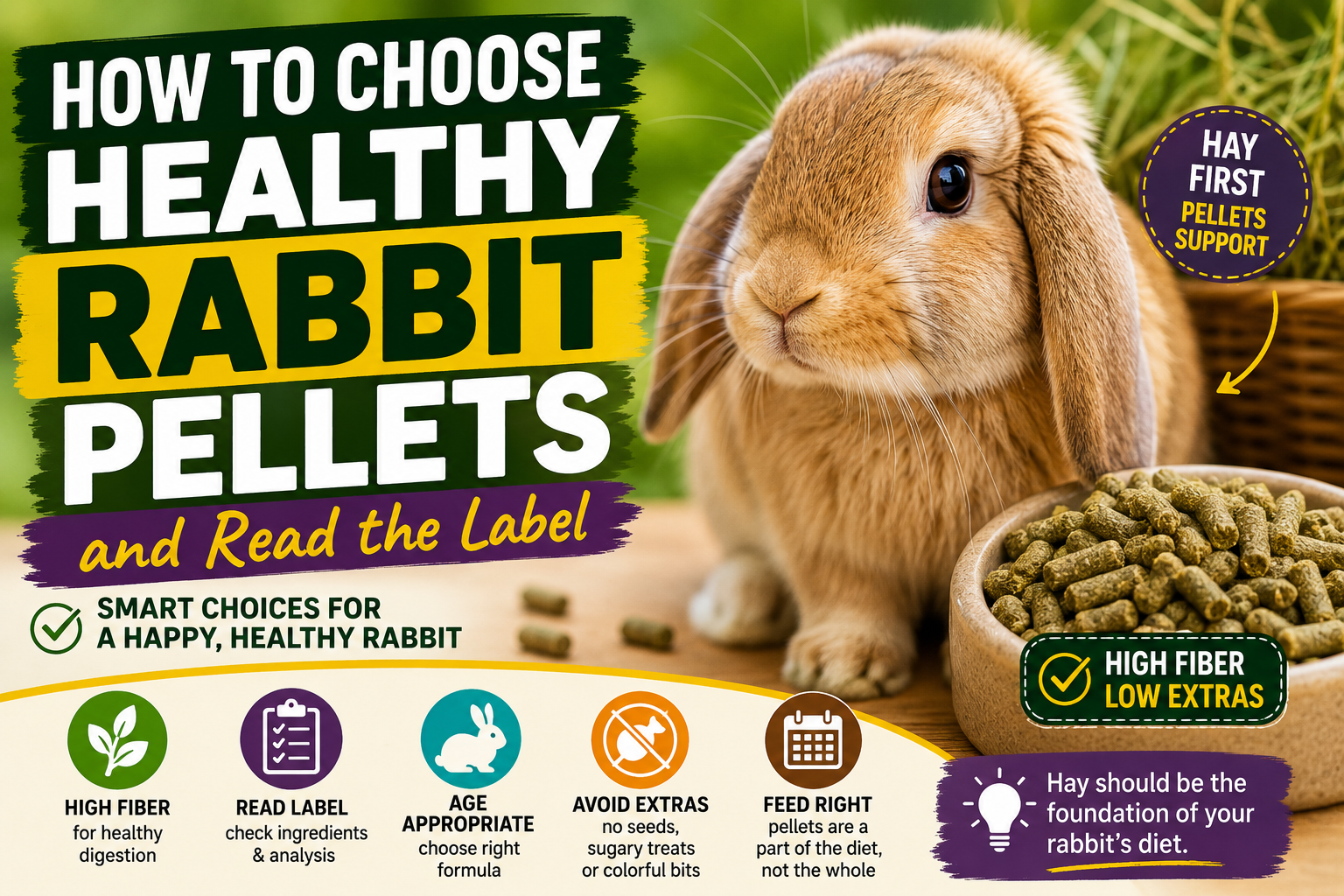
Rabbit pellets should support the diet rather than replace grass hay.
For most healthy adult rabbits grass hay should remain the main food while pellets are offered in an amount appropriate for the rabbit's size age health and veterinary advice.
When comparing pellets look for a simple product designed specifically for rabbits with a clear nutrition label useful fiber and no unnecessary colorful sugary extras.
Key Takeaways
- Grass hay should remain the foundation of an adult rabbit's diet.
- Choose pellets made specifically for rabbits.
- Read the guaranteed analysis instead of relying on package marketing.
- Fiber is an important part of rabbit nutrition.
- Avoid mixes filled with colorful cereal pieces seeds or sugary treats.
- Young growing rabbits and adults may need different feeding plans.
- Change foods gradually when possible.
- Contact an exotic animal veterinarian if your rabbit stops eating.
Pellets Are Only One Part of a Rabbit Diet
Rabbit pellets are convenient because they provide concentrated nutrition in a small amount of food.
However they should not become the entire diet for most adult pet rabbits.
Grass hay provides long chewing time and supports normal digestive function.
Fresh leafy greens may also be part of a balanced feeding plan.
The correct combination depends on age body condition health and veterinary recommendations.
Start by Checking Who the Food Is Made For
The package should clearly state that the product is formulated for rabbits.
Do not assume guinea pig hamster or generic small animal food is interchangeable.
Different species have different nutritional needs.
The label should also indicate whether the product is intended for:
- Young rabbits
- Adult rabbits
- All life stages
- A specific medical or veterinary purpose
If you are uncertain whether a formula suits your rabbit ask an exotic animal veterinarian.
Look at the Ingredient List
Ingredients are normally listed by weight.
A simple pellet designed around suitable forage ingredients is often easier to evaluate than a colorful mixed food containing many treats.
Adult rabbit pellets commonly use grass based ingredients such as timothy hay or other forage sources.
Young growing rabbits may be fed differently and some formulas use alfalfa because of its nutritional profile.
Do not switch a young rabbit to an adult diet simply because one ingredient sounds healthier.
Why Fiber Matters
Rabbits have a digestive system adapted to frequent intake of fibrous plant material.
This is one reason grass hay is so important.
The guaranteed analysis on a pellet label normally lists crude fiber along with other nutrients.
Do not judge a rabbit diet by the pellet fiber number alone.
Look at the whole feeding plan especially how much suitable grass hay the rabbit eats each day.
Avoid Colorful Muesli Style Mixes
Some rabbit foods contain a mixture of pellets seeds grains flakes and colorful pieces.
These mixes can encourage selective feeding.
A rabbit may eat the most appealing pieces and leave the more balanced parts behind.
A uniform pellet makes selective feeding more difficult because every piece is similar.
Do Rabbits Need Seeds and Nuts in Their Pellets?
Seeds nuts and sugary pieces are not necessary ingredients in a normal everyday pellet for most pet rabbits.
They can make a product more attractive to the owner without making it better suited to rabbit nutrition.
Choose food based on nutritional purpose rather than appearance.
Check the Guaranteed Analysis
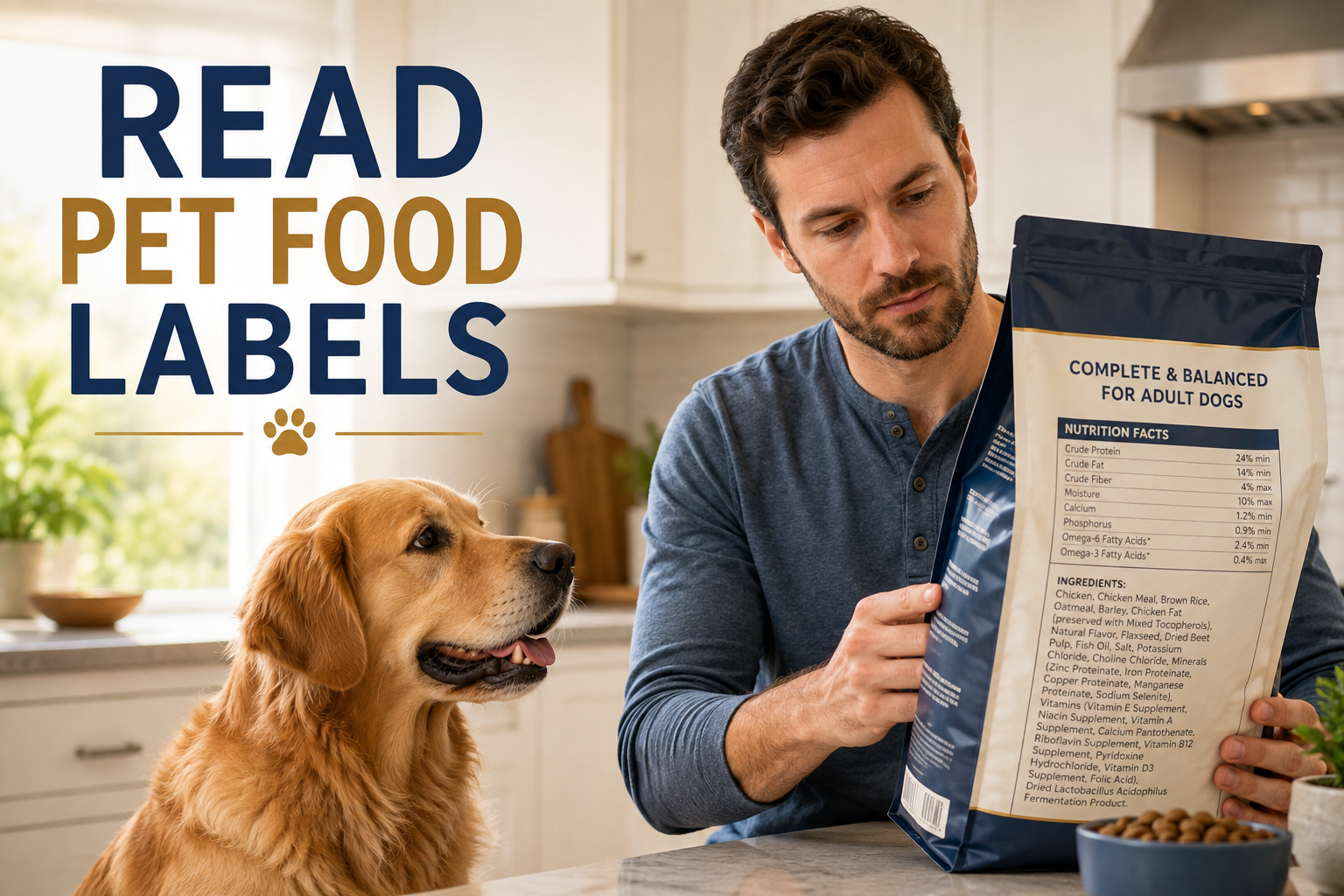
The guaranteed analysis provides useful information about nutrients in the food.
It may include:
- Crude protein
- Crude fat
- Crude fiber
- Moisture
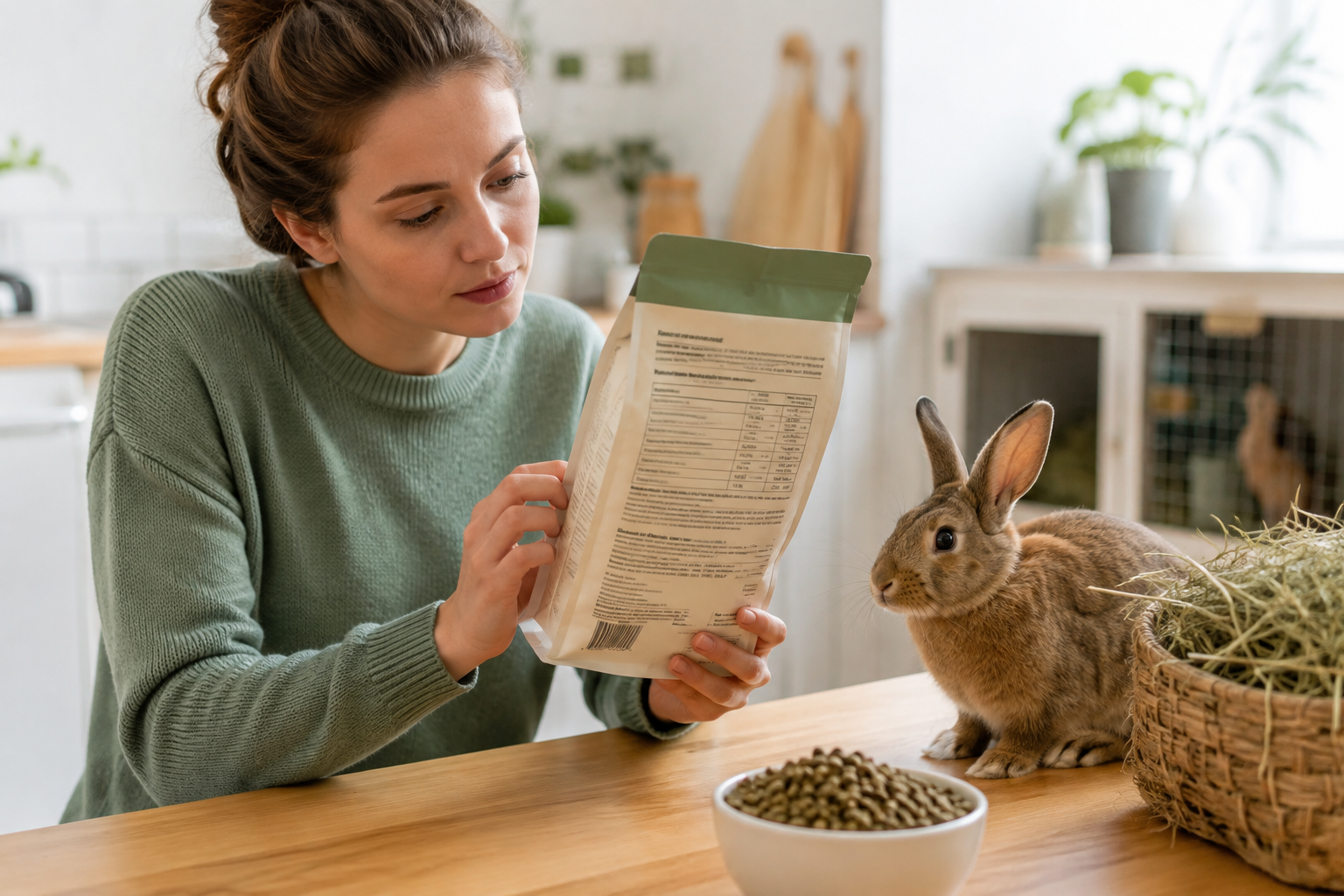
These numbers help compare products but they do not tell the whole story.
Ingredient quality feeding amount life stage and the rest of the rabbit's diet also matter.
Our general guide on how to read a pet food label explains common label sections in more detail.
Check the Feeding Instructions
Pellet packages normally provide a starting feeding guide.
Use it as a starting point rather than assuming every rabbit needs exactly the same amount.
A veterinarian may adjust the amount based on:
- Body size
- Age
- Activity
- Body condition
- Pregnancy
- Medical conditions
- Other foods in the diet
Overfeeding pellets can reduce interest in hay in some rabbits.
Young Rabbits May Need a Different Formula
Growing rabbits have different nutritional needs from mature adults.
This is why a feeding plan that is appropriate for a healthy adult rabbit should not automatically be applied to a young rabbit.
If you recently adopted a young rabbit ask what food it was eating previously and discuss the future diet with an exotic animal veterinarian.
Senior Rabbits Are Not All the Same
Age alone does not tell you exactly what an older rabbit should eat.
Some senior rabbits maintain a healthy body condition on their normal diet.
Others may have dental disease kidney problems digestive issues or weight changes that require a veterinary feeding plan.
Do not dramatically reduce or increase pellets simply because your rabbit has reached a certain age.
Check the Expiration or Best Before Date
Before buying a bag check the date printed on the package.
Choose a size that your rabbit can finish while the product remains fresh.
A very large bag may look cheaper but can be poor value if the pellets become stale before they are used.
Store Pellets Properly
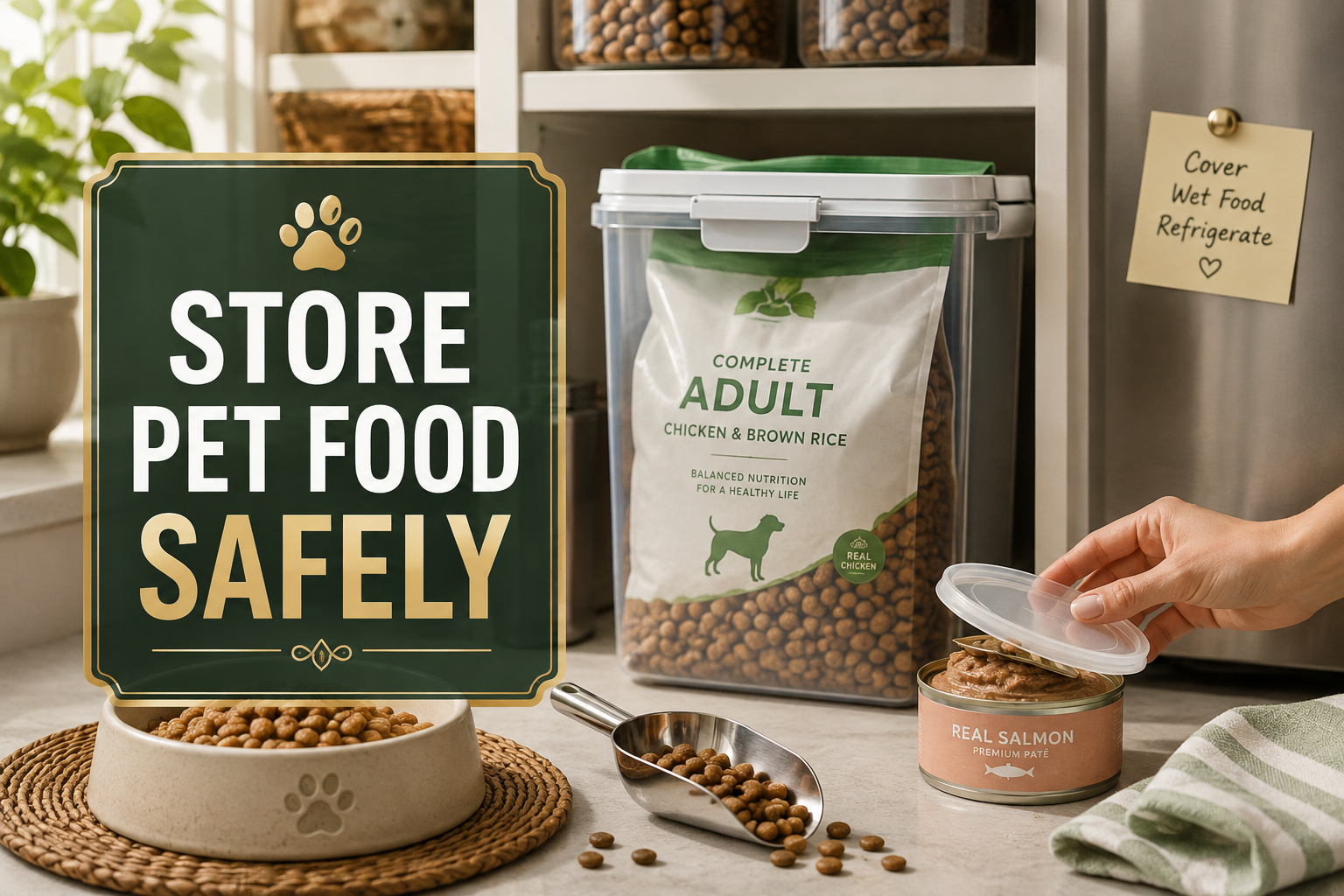
Keep rabbit pellets in a cool dry location away from moisture direct sunlight and pests.
The original package is useful because it contains:
- Lot information
- Best before date
- Manufacturer details
- Feeding instructions
You can place the original bag inside a clean sealed container rather than throwing the package away.
Change Pellets Gradually
Sudden diet changes can upset a rabbit's normal routine and may contribute to digestive problems.
If you need to change pellet brands or formulas make the transition gradually unless your veterinarian tells you otherwise.
A simple transition may involve mixing increasing amounts of the new pellet with decreasing amounts of the old pellet over several days.
Monitor:
- Appetite
- Hay intake
- Water intake
- Droppings
- Behavior
Do Not Let Pellets Replace Hay
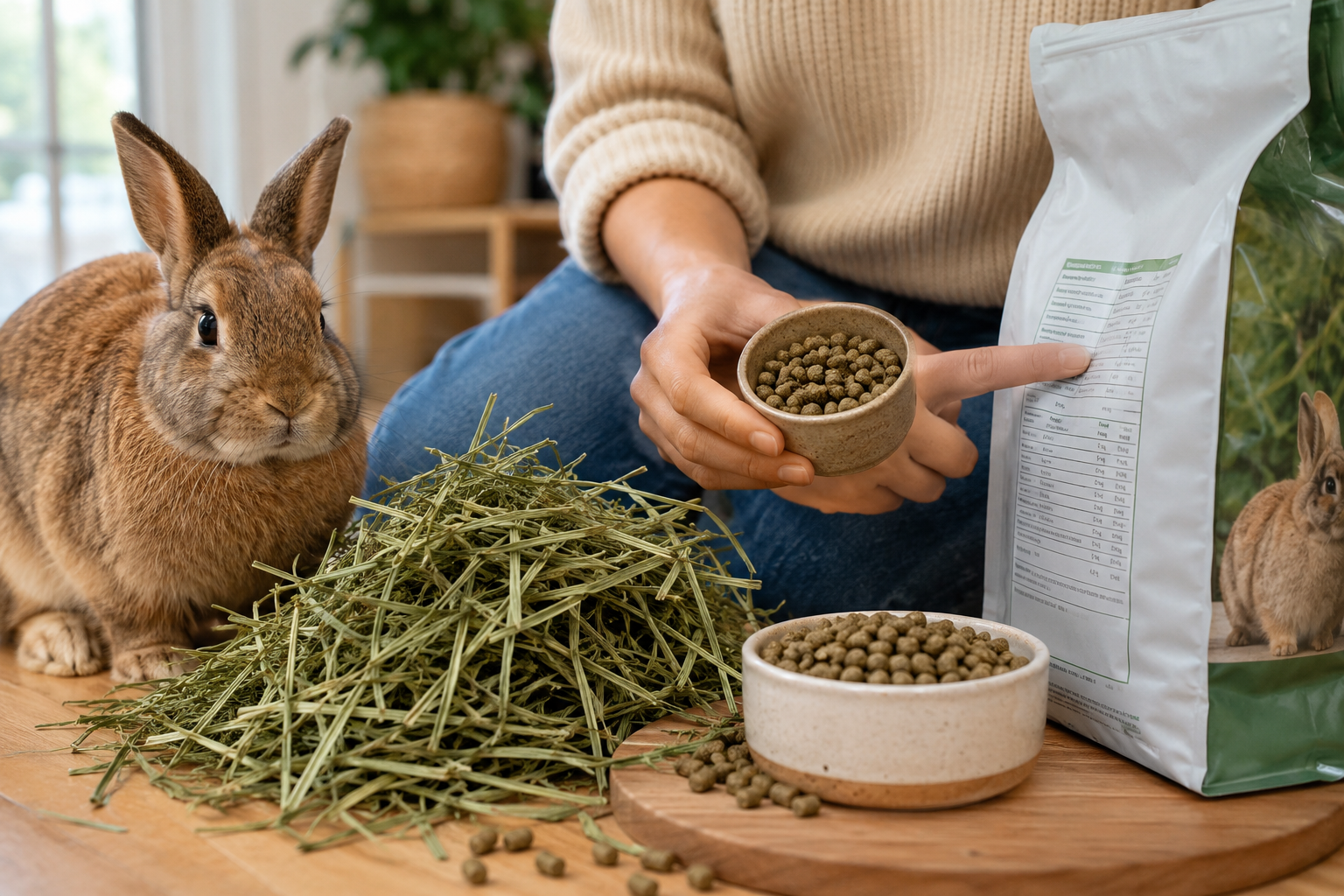
A bowl full of pellets can be eaten quickly.
Hay encourages much longer periods of natural chewing and feeding behavior.
For most healthy adult rabbits appropriate grass hay should be continuously available unless a veterinarian has given different instructions.
If you are improving the rabbit's overall environment read our guide on how to set up a safe indoor home for a pet rabbit.
Watch Your Rabbit's Body Condition
The correct feeding amount is not determined only by what is printed on a bag.
Regular weight and body condition monitoring can help you notice gradual changes.
If your rabbit is losing weight gaining excessive weight or eating differently ask a veterinarian before making major diet changes.
When a Rabbit Stops Eating
A rabbit that suddenly refuses food should be taken seriously.
Reduced appetite can be associated with dental problems digestive disease pain stress and other medical conditions.
Contact an exotic animal veterinarian promptly if your rabbit stops eating or produces significantly fewer droppings.
Do not wait several days hoping appetite will return on its own.
Common Rabbit Pellet Mistakes
Buying Food Because It Looks Colorful
Appearance does not tell you whether a product is nutritionally appropriate.
Feeding Unlimited Pellets to Every Adult Rabbit
The appropriate amount depends on the individual rabbit and the total diet.
Allowing Pellets to Replace Hay
Hay should remain central to normal adult rabbit feeding.
Changing Brands Overnight
A gradual transition is usually easier unless a veterinarian directs an immediate change.
Using Food Made for Another Small Animal
Choose a formula specifically designed for rabbits.
Ignoring Changes in Appetite
A rabbit that suddenly eats less may need veterinary attention.
Frequently Asked Questions
Do Rabbits Need Pellets Every Day?
Many pet rabbits receive a measured amount of pellets as part of the diet. The correct amount depends on age health size and the rest of the feeding plan.
Are Timothy Based Pellets Good for Adult Rabbits?
Timothy based pellets are commonly used for healthy adult rabbits. Individual medical or nutritional needs may require a different formula.
Are Alfalfa Pellets Bad?
Not automatically. Alfalfa based diets can have an appropriate role for some young growing rabbits or other specific situations. Life stage matters.
Should Rabbit Pellets Have Seeds?
Seeds are not required in a normal uniform rabbit pellet and mixed foods may encourage selective eating.
Can I Change Rabbit Pellets Suddenly?
A gradual transition is generally preferable unless a veterinarian tells you to change immediately.
What if My Rabbit Will Not Eat the New Pellets?
Do not allow your rabbit to go without food. Keep suitable hay available and contact an exotic animal veterinarian if overall appetite drops.
Related DailyPetTips Guides
- More Pet Food Guides
- More Rabbit Guides
- How to Read a Pet Food Label
- How to Set Up a Safe Indoor Home for a Pet Rabbit
Sources and References
Rabbit Health Disclaimer
This article provides general educational feeding information. Rabbits with medical conditions growth needs pregnancy weight problems dental disease or appetite changes may require an individual feeding plan from an exotic animal veterinarian.
Editorial Note
This guide does not recommend a specific pellet brand. It focuses on label reading life stage forage intake freshness and practical feeding principles so owners can compare products without relying on marketing claims.
About the Author
Ibrahim is a pet care writer at DailyPetTips. He creates practical easy to understand guides using responsible animal care principles and established veterinary and animal welfare resources.
Pet parent notes