Quick Answer
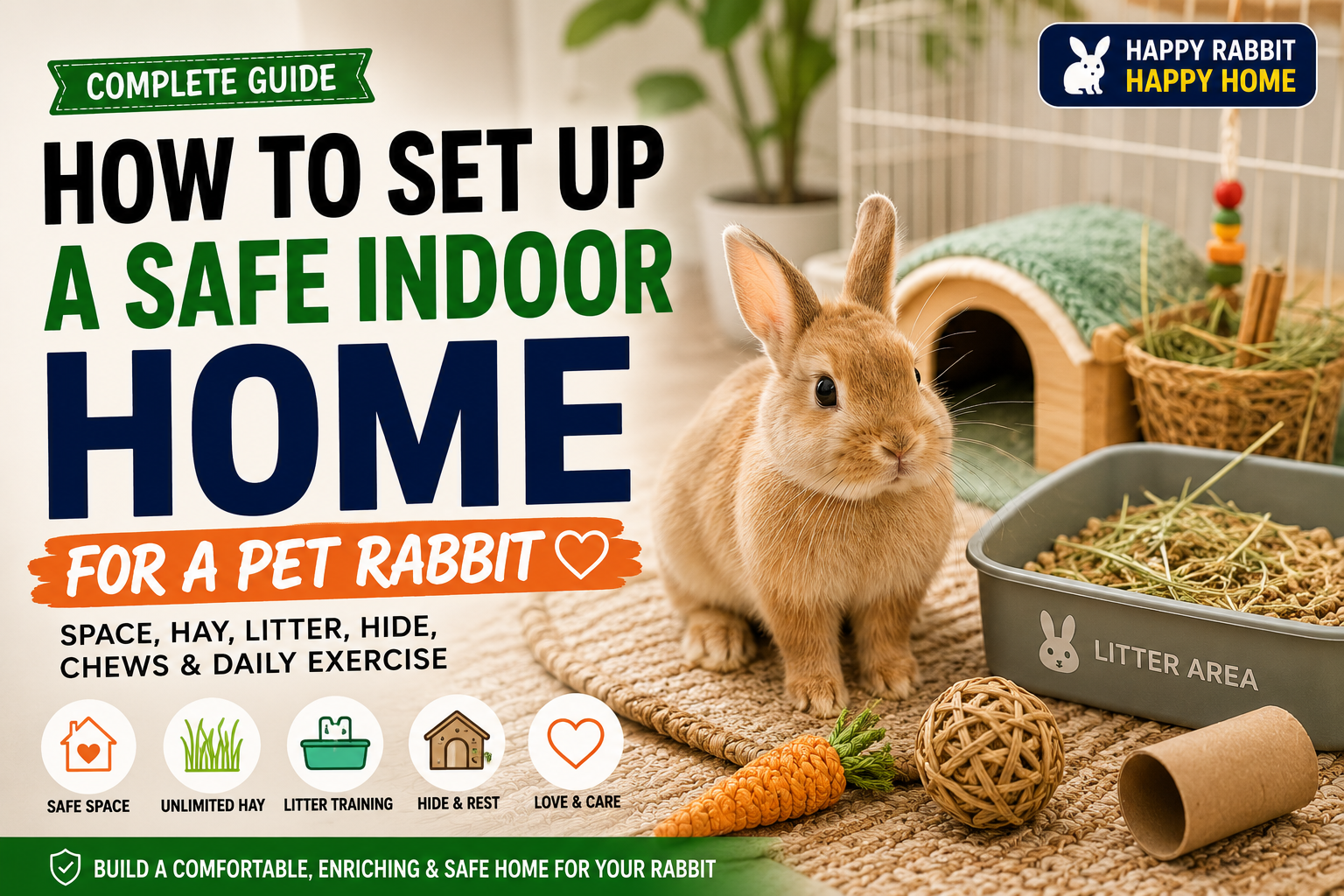
A pet rabbit needs much more than a small cage. A good indoor setup should give the rabbit enough room to stand fully upright stretch out hop around hide eat hay use a litter area and explore safely.
Use solid comfortable flooring. Provide unlimited grass hay fresh water safe hiding places chew items and daily exercise outside the main enclosure in a rabbit proofed area.
Keep electrical cords toxic plants medicines chemicals and unsafe household items completely out of reach.
Key Takeaways
- Do not rely on a tiny traditional rabbit cage.
- Provide generous usable floor space.
- Use solid flooring rather than exposed wire flooring.
- Keep grass hay available every day.
- Add a litter box and a safe hiding place.
- Provide safe chew items and enrichment.
- Rabbit proof electrical cords and furniture.
- Give the rabbit daily opportunities for exercise.
- Watch eating and droppings because sudden changes can be important health warning signs.
How Much Space Does a Rabbit Need?
Rabbits are active animals.
They need room to hop stand stretch turn around and move between different areas.
A small cage that only fits a food bowl litter tray and sleeping rabbit does not provide enough opportunity for normal movement.
Many indoor rabbit owners use:
- A large exercise pen
- A rabbit proofed room
- A large enclosure connected to a safe exercise area
The exact amount of space depends on the rabbit's size number of rabbits and how much supervised or free roaming exercise is provided.
More usable space is generally better than a tall narrow enclosure.
Think in Zones
A useful rabbit home can have separate areas for:
- Resting
- Eating hay
- Drinking
- Using the litter box
- Hiding
- Playing
This makes the enclosure more useful than simply filling it with random accessories.
Choose Safe Flooring
Rabbits need stable flooring that gives their feet traction.
Avoid making the rabbit spend long periods on exposed wire flooring.
Wire can be uncomfortable and may contribute to foot problems.
Smooth slippery flooring can also make movement difficult.
Useful options may include:
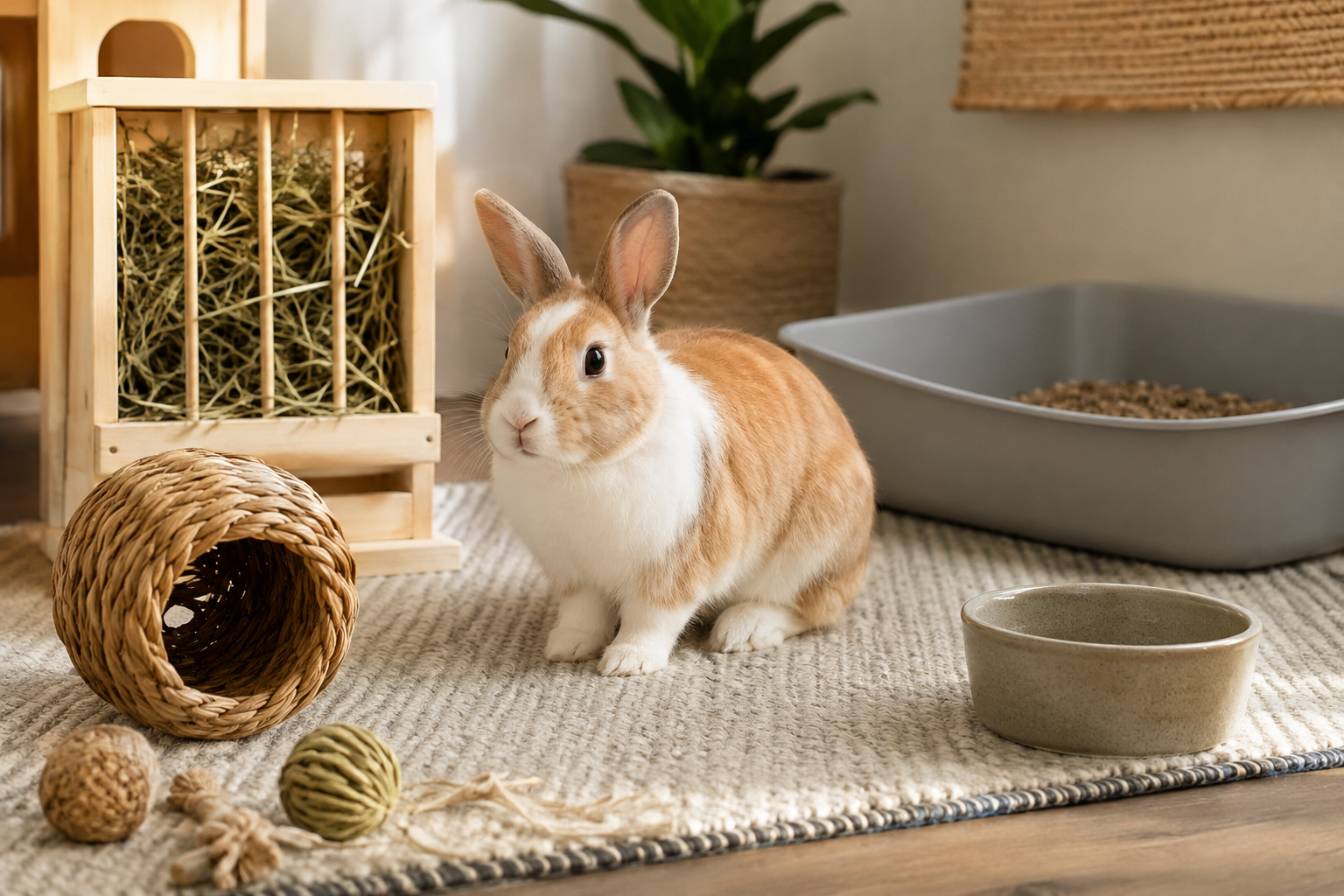
- Washable rugs
- Low pile mats
- Fleece over a suitable protective layer
- Other rabbit safe non slip surfaces
Watch whether your rabbit chews the flooring.
Remove materials that are being swallowed or coming apart.
Create a Dedicated Hay Area
Grass hay is a central part of normal rabbit care.
Adult rabbits generally need continuous access to suitable grass hay unless a veterinarian has given a different medical feeding plan.
Hay supports normal digestive function and helps provide natural chewing activity.
You can place hay:
- Beside the litter box
- In a safe hay rack
- In a clean basket or feeder designed for rabbits
Make sure the rabbit can reach it comfortably.
Discard hay that becomes wet dirty moldy or heavily contaminated.
Set Up a Rabbit Litter Box
Many rabbits can learn to use a litter area.
Choose a box large enough for the rabbit to sit comfortably inside.
Use rabbit safe litter.
Avoid strongly scented products and dusty materials.
Do not use clumping cat litter unless an exotic animal veterinarian specifically recommends a product because some materials may be unsafe if eaten.
Placing hay near or above the litter box can encourage use because rabbits often eat and eliminate at similar times.
Provide Fresh Water Every Day
Fresh drinking water should be available at all times unless a veterinarian has provided different instructions.
Many rabbits drink well from a heavy ceramic bowl.
A bottle can also be used but should be checked frequently because tubes can become blocked.
Some owners provide both.
Whatever method you choose keep it clean and make sure the rabbit is actually drinking.
Add at Least One Good Hiding Place
Rabbits are prey animals.
A hiding place gives them somewhere to feel protected.
Good options can include:
- A cardboard box
- A wooden rabbit house made from safe material
- A tunnel
- A covered section of the enclosure
A hide with more than one opening can help a rabbit feel less trapped.
For two rabbits provide enough hiding spaces so one rabbit cannot block access to all of them.
Provide Safe Chew Items
Rabbit teeth continue growing and normal chewing is important.
Hay provides a large amount of useful chewing activity.
You can also offer safe enrichment such as:
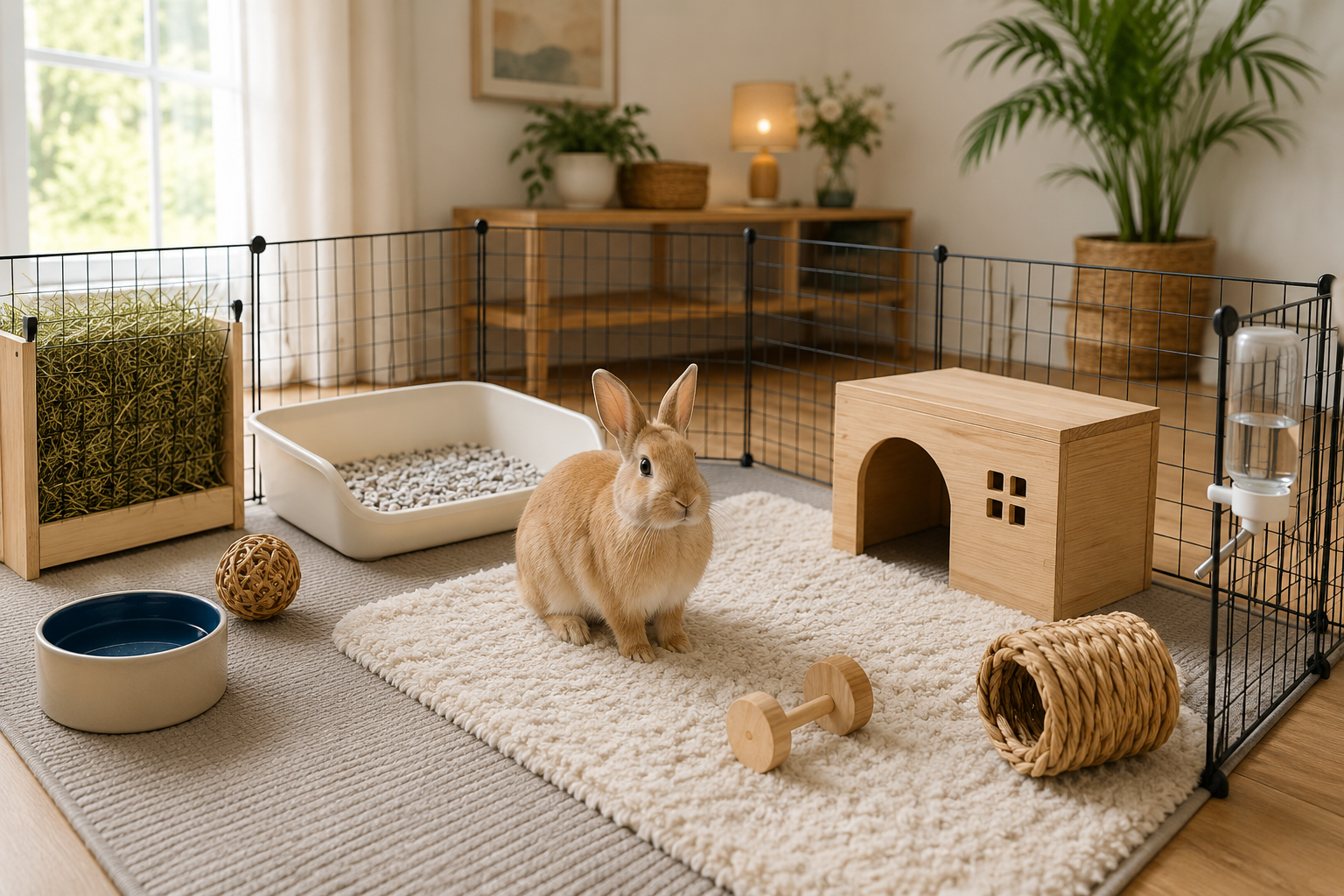
- Untreated cardboard
- Rabbit safe wooden chews
- Willow items made for rabbits
- Cardboard tubes stuffed with hay
Do not give random wood from outdoors unless you know the exact plant species and know that it has not been treated with chemicals.
Plan Daily Exercise
A rabbit should not spend its entire life inside a small enclosed space.
Daily exercise lets the rabbit:
- Run
- Hop
- Explore
- Stretch
- Play
- Interact with you
A rabbit proofed room or large exercise pen can provide a safer space.
Supervise when needed especially while you are still learning what your rabbit likes to chew.
Rabbit Proof the Home
Rabbit proofing is one of the most important parts of indoor care.
Rabbits may chew items that look completely uninteresting to people.
Protect Electrical Cords
Electrical cords can cause severe injury.
Keep them completely inaccessible or use strong protective systems designed to prevent chewing.
Move Toxic Plants
Do not assume a houseplant is safe.
Identify every plant in areas the rabbit can access and confirm whether it is safe.
Block Unsafe Spaces
Check behind furniture and appliances.
A rabbit may squeeze into narrow areas and become difficult to reach.
Protect Furniture
Chewing furniture is normal behavior for some rabbits.
Block access or provide safe alternatives rather than punishing natural chewing behavior.
Our general guide on how to pet proof your home also covers household hazards such as medicines cleaners cords and trash.
Keep the Environment Comfortable
Rabbits generally cope with cool conditions better than excessive heat.
Keep the enclosure away from:
- Direct strong sunlight
- Radiators
- Hot windows
- Poorly ventilated spaces
- Strong cold drafts
Provide a stable comfortable indoor environment.
If your home becomes very hot take extra precautions and ask an exotic animal veterinarian for advice appropriate to your rabbit and local climate.
Create a Simple Cleaning Routine
You do not need to remove every familiar smell each day.
Focus on hygiene.
Regular tasks may include:
- Removing wet litter
- Replacing heavily soiled bedding
- Washing food and water bowls
- Removing spoiled vegetables
- Checking hidden food
- Sweeping loose hay
Use cleaning products that are safe around rabbits.
Rinse cleaned surfaces thoroughly and allow them to dry.
Watch Eating and Droppings Carefully
Rabbits can become seriously ill when normal digestion slows or stops.
Learn what normal eating activity and droppings look like for your rabbit.
Contact a veterinarian promptly if you notice:
- A sudden refusal to eat
- A major reduction in droppings
- No droppings
- Severe lethargy
- A swollen or painful abdomen
- Difficulty breathing
- Repeated tooth grinding with signs of pain
Do not wait several days to see whether a rabbit that has stopped eating improves on its own.
Rabbits can deteriorate quickly.
Common Rabbit Housing Mistakes
Using a Tiny Cage as the Entire Home
A rabbit needs meaningful room to move and exercise.
Using Exposed Wire Flooring
Solid supportive flooring is more comfortable for normal everyday use.
Providing Too Little Hay
Grass hay should be a major part of normal rabbit care.
Ignoring Electrical Cords
Chewing a live electrical cord can be fatal.
Using Unsafe Litter
Choose a low dust rabbit appropriate product.
Keeping the Rabbit Isolated All Day
Rabbits need exercise enrichment and social interaction.
Assuming Not Eating Is Normal
Loss of appetite in rabbits can be an urgent health concern.
Frequently Asked Questions
Can a Rabbit Live in a Cage?
A small cage should not be the rabbit's entire living environment. Provide substantial usable space and regular exercise.
Should Rabbits Have Hay All Day?
Healthy adult rabbits generally need continuous access to suitable grass hay unless a veterinarian gives different instructions.
Can Rabbits Use Cat Litter?
Some cat litters can be unsafe for rabbits. Use rabbit appropriate low dust litter and avoid clumping products unless advised by an exotic animal veterinarian.
Do Rabbits Need Toys?
Yes. Safe chew forage dig and exploration activities can provide useful enrichment.
Why Is My Rabbit Chewing Everything?
Chewing is normal rabbit behavior. Rabbit proof unsafe items and provide suitable alternatives.
Is It Serious if My Rabbit Stops Eating?
Yes. A rabbit that suddenly stops eating or producing normal droppings should receive prompt veterinary attention.
Related DailyPetTips Guides
- More Rabbit Guides
- How to Create a Safe and Comfortable Pet Space at Home
- How to Clean Pet Bowls and Feeding Areas Safely
Sources and References
Rabbit Health Disclaimer
This article provides general educational information and does not replace advice from an exotic animal veterinarian. Rabbits can become seriously ill quickly. Seek veterinary care promptly for loss of appetite reduced droppings breathing problems severe weakness or signs of pain.
Editorial Note
This guide focuses on normal rabbit behaviors including hopping hiding chewing digging eating hay and using a litter area. Housing recommendations prioritize usable space safety and enrichment rather than decorative cage accessories.
About the Author
Ibrahim is a pet care writer at DailyPetTips. He creates practical easy to understand guides using responsible animal care principles and trusted veterinary and animal welfare sources.
Pet parent notes