Quick Answer
Rabbit nails need regular checking because overgrown nails can make normal movement uncomfortable and may catch on flooring or bedding.
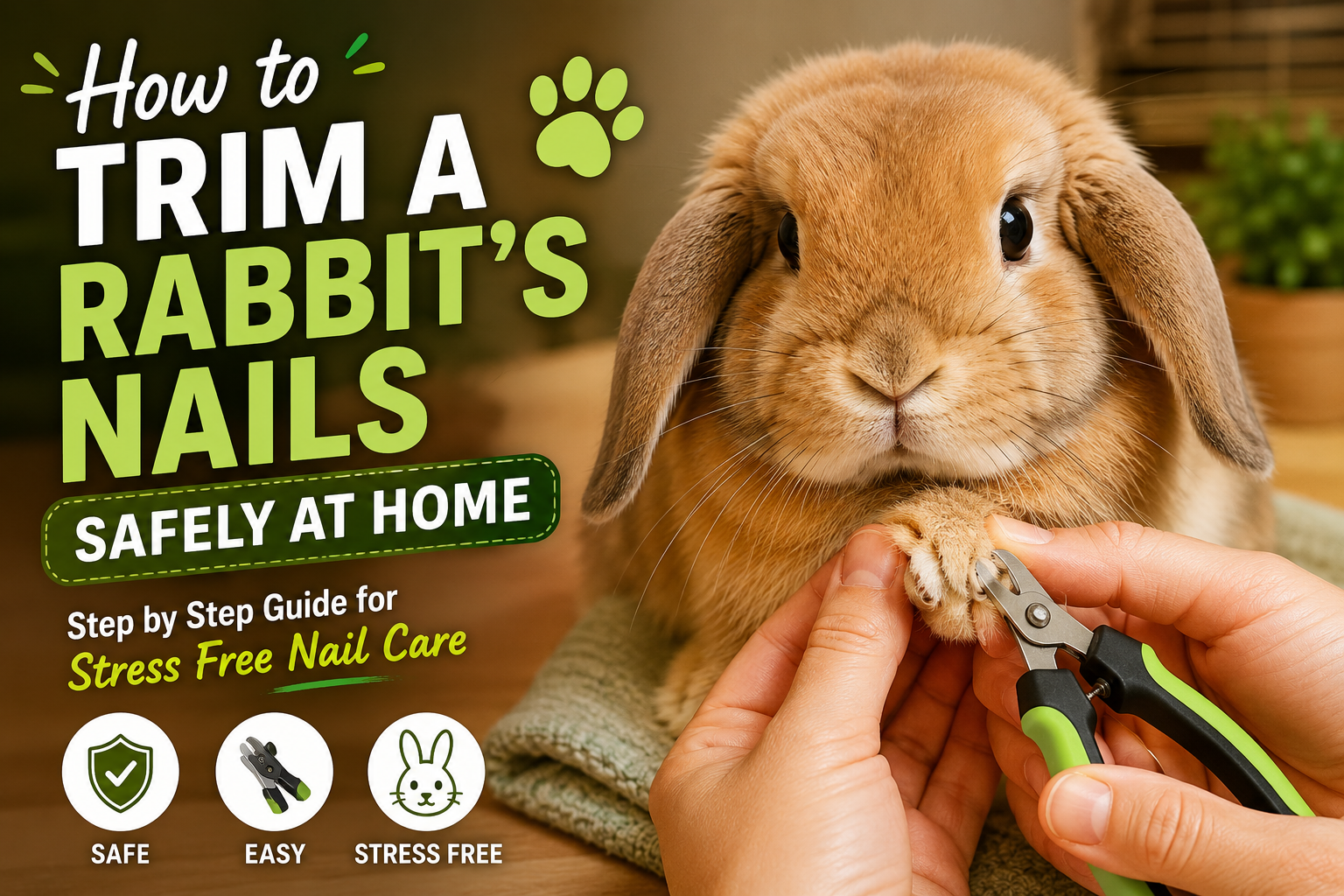
Use small pet nail clippers and work in a calm well lit area. Identify the quick inside each nail and remove only the sharp tip rather than cutting close to the living tissue.
If your rabbit struggles strongly or the nails are very dark overgrown damaged or difficult to see ask an exotic animal veterinarian or experienced rabbit groomer for help.
Key Takeaways
- Check your rabbit's nails regularly.
- Use clippers designed for small pets.
- Trim only a small amount at a time.
- Avoid cutting into the quick.
- Good lighting makes the job safer.
- Do not force a panicking rabbit to stay still.
- Support the rabbit's body securely.
- Professional help is appropriate when you are unsure.
Why Rabbit Nail Care Matters
Rabbit nails continue growing throughout life.
Wild rabbits naturally wear their nails through digging and moving over rough ground. Indoor rabbits usually live on softer surfaces so their nails may not wear down at the same rate.
When nails become too long they can:
- Change the way the rabbit places its feet
- Catch on rugs or bedding
- Make walking less comfortable
- Break or tear
- Place extra pressure on the toes
Regular checking helps you catch excessive growth before it becomes a bigger problem.
How Often Should Rabbit Nails Be Trimmed?
There is no exact schedule that works for every rabbit.
Nail growth depends on age activity flooring genetics and individual wear.
A practical habit is to inspect the nails every few weeks.
If the nails clearly extend well beyond the fur around the toes or begin curving downward they may need attention sooner.
Do not wait only for a calendar date. Look at the individual rabbit.
What You Need Before You Start
Prepare everything before handling your rabbit.
Useful items include:
- Small animal nail clippers
- Good lighting
- A towel or non slip mat
- A small reward if your rabbit enjoys treats
- Styptic powder or another veterinarian recommended product for minor nail bleeding
Keep supplies close enough that you do not need to leave the rabbit unattended halfway through the session.
Choose the Right Nail Clippers
Small pet nail clippers or compact cat nail clippers can work well for many rabbits.
The tool should be sharp enough to make a clean cut.
Dull clippers can crush the nail instead of cutting it smoothly.
Avoid using large human nail tools that are difficult to control around small rabbit toes.
Understand the Quick
Inside each nail is living tissue containing blood vessels and nerves. This is called the quick.
Cutting into it can cause pain and bleeding.
Light Colored Nails
On pale nails the quick may appear as a pink area inside the nail.
Leave a safe margin in front of this area and remove only the clear pointed tip.
Dark Nails
Dark nails are more difficult because the quick may not be visible from the outside.
Trim very small amounts instead of attempting one large cut.
If you cannot judge where it is safe to cut ask a veterinarian or experienced professional to demonstrate the technique.
Prepare a Calm Grooming Area
Choose a quiet room away from dogs loud televisions children running around and other distractions.
Place the rabbit on a stable non slip surface.
A smooth table can make a frightened rabbit slide or struggle.
A towel can provide more traction.
Let Your Rabbit Settle First
Do not immediately grab the feet as soon as you place the rabbit down.
Give the rabbit a moment to settle.
Use calm slow movements.
If your rabbit is comfortable with normal handling you can gently touch the legs and paws before bringing out the clippers.
How to Hold a Rabbit Safely
Rabbit spines can be injured during uncontrolled kicking so secure body support is important.
Keep the rabbit close to a stable surface and support the hindquarters.
Do not allow the rear legs to hang unsupported.
Some rabbits are easier to groom with a second person.
One person can gently support the body while the other trims the nails.
Should You Put a Rabbit on Its Back?
Do not rely on placing a rabbit fully on its back or forcing it into a trance like position just to make nail trimming easier.
This posture can be stressful and removes the rabbit's ability to choose or move normally.
Use calm supported handling instead.
Step by Step Rabbit Nail Trimming
Step 1: Choose One Paw
Start with whichever paw your rabbit allows you to handle most comfortably.
Step 2: Separate the Fur
Long fur can hide the nails.
Use your fingers to gently move fur away from the nail before positioning the clippers.
Step 3: Find the Safe Cutting Area
On light nails identify the quick and leave space in front of it.
On dark nails plan to remove only a tiny amount.
Step 4: Make One Clean Cut
Trim the sharp end of the nail.
Do not repeatedly squeeze the clippers while deciding whether to cut.
Step 5: Check the Rabbit
If your rabbit is calm continue to the next nail.
If the rabbit becomes tense or begins struggling give it a break.
Do You Need to Trim Every Nail in One Session?
No.
It is better to trim a few nails calmly than force the rabbit through an exhausting session.
You can complete the remaining nails later when the rabbit has relaxed.
This is especially useful when training a young or nervous rabbit to accept grooming.
Do Not Forget the Front Dewclaws
Rabbit front feet include a nail positioned slightly higher on the inside of the leg.
Because it does not contact the floor as much it may become long without being obvious.
Check it whenever you inspect the other nails.
What if You Accidentally Cut the Quick?
A small amount of bleeding can occur if the quick is nicked.
Stay calm.
Apply gentle pressure and use a veterinarian recommended styptic product if available.
Monitor the nail until bleeding stops.
Contact a veterinarian if bleeding is heavy does not stop or the nail has torn badly.
What if a Rabbit Nail Is Broken?
A cracked or partly torn nail can be painful.
Do not pull a damaged nail off yourself.
If the nail is bleeding repeatedly hanging loose or damaged close to the base contact an exotic animal veterinarian.
How to Make Future Nail Trims Easier
Handling practice between grooming sessions can help.
When your rabbit is relaxed you can briefly:
- Touch a paw
- Lift a foot for one second
- Separate fur around the toes
- Show the clippers without cutting
- Reward calm behavior

Keep practice very short.
The goal is to make foot handling ordinary rather than something that only happens before an uncomfortable grooming session.
Use a Safe Indoor Environment
Healthy flooring and regular movement help support normal foot use.
A rabbit should have enough room to hop explore and exercise rather than living permanently in a small cage.
Our guide on how to set up a safe indoor home for a pet rabbit explains flooring hides hay areas and exercise space.
Watch the Feet While Checking the Nails
Nail trimming is also a useful opportunity to look at the feet.
Watch for:
- Red skin
- Swelling
- Broken nails
- Hair loss
- Sores
- Unusual tenderness
If you notice a painful or persistent problem ask your veterinarian to examine it.
When Professional Nail Trimming Is Better
Professional help may be safer when:
- Your rabbit panics during handling
- The nails are extremely long
- Most nails are dark and difficult to judge
- The rabbit has mobility problems
- A nail is broken
- You are worried about supporting the rabbit safely
There is no benefit in risking injury simply to prove you can complete the trim at home.
Common Rabbit Nail Trimming Mistakes
Cutting Too Much at Once
Small cuts provide a greater safety margin around the quick.
Using Dull Clippers
Dull tools can crush or split nails.
Allowing the Hind Legs to Kick Freely
Proper body support is important for rabbit safety.
Forcing a Panicking Rabbit
Stop and try again later or seek professional help.
Ignoring the Dewclaws
These nails may become long because they receive less natural wear.
Waiting Until Nails Become Extremely Long
Regular checks make maintenance easier.
Frequently Asked Questions
Can I Use Human Nail Clippers on a Rabbit?
Small animal clippers usually provide better control. Ask your veterinarian what type suits your rabbit.
How Short Should Rabbit Nails Be?
Trim the pointed excess while leaving a safe margin before the quick. Do not try to make every nail extremely short.
Why Are My Rabbit's Nails So Dark?
Nail pigment varies naturally. Dark nails simply make the quick harder to see.
Can Overgrown Rabbit Nails Cause Problems?
Yes. Very long nails may change foot position snag on surfaces or break.
Should I Trim Rabbit Nails if My Rabbit Hates It?
Nails still need care but you do not need to force the process yourself. A veterinarian or experienced rabbit professional can help.
Related DailyPetTips Guides
Sources and References

Rabbit Health Disclaimer
This article provides general grooming information and does not replace veterinary care. Contact an exotic animal veterinarian for torn nails persistent bleeding foot sores severe stress during handling or other health concerns.
Editorial Note
This guide emphasizes small careful trims secure body support and stopping when handling becomes unsafe. It does not recommend forcing rabbits into stressful positions or making aggressive cuts close to the quick.
About the Author
Ibrahim is a pet care writer at DailyPetTips. He creates practical easy to understand guides using responsible animal care principles and established veterinary and animal welfare sources.

Pet parent notes