
Quick Answer
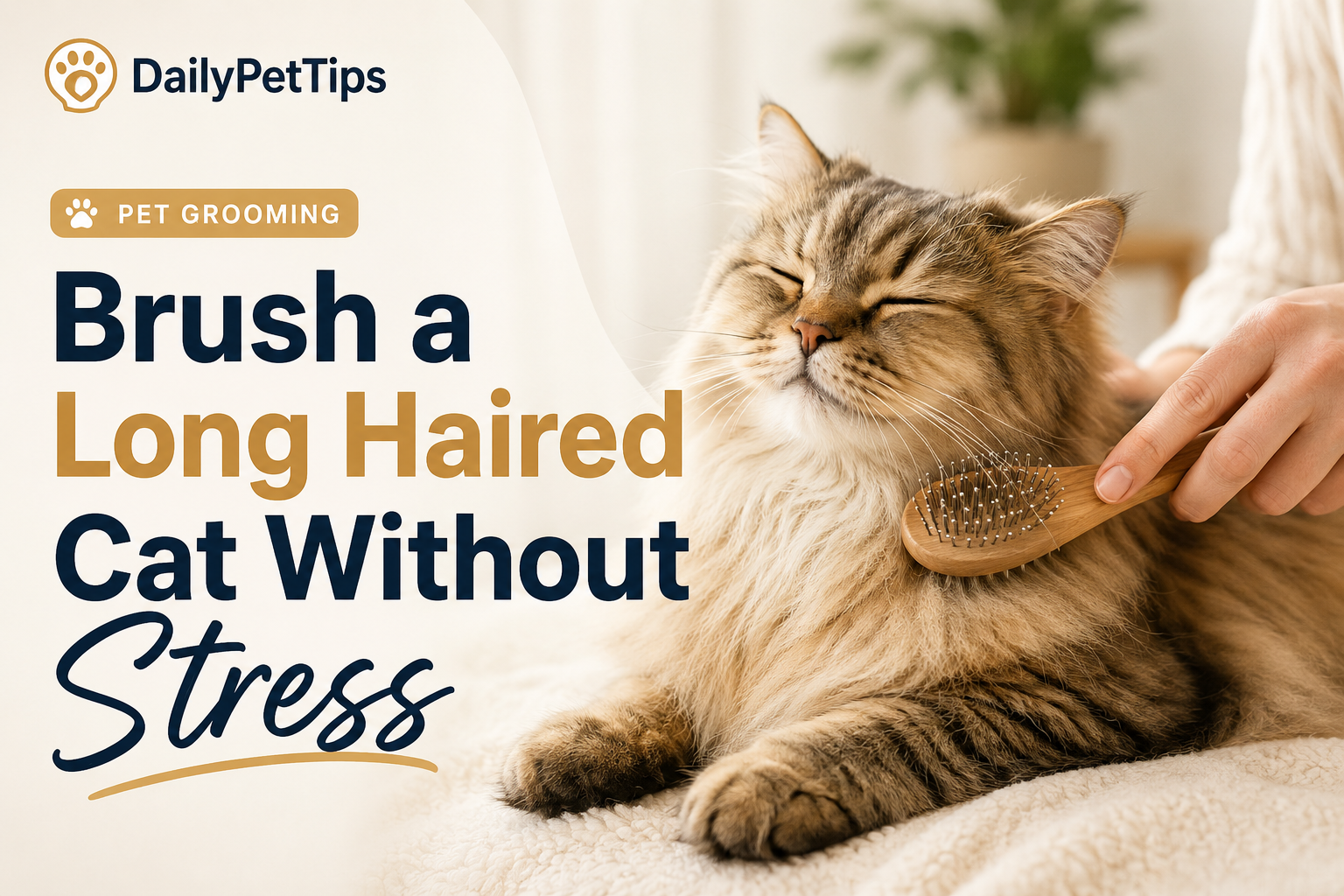
The easiest way to brush a long haired cat is to keep grooming sessions short gentle and predictable.
Start when your cat is calm. Let the cat inspect the brush and reward relaxed behavior. Brush small areas at a time using light pressure and stop before your cat becomes frustrated.
Pay extra attention to areas where mats commonly develop such as behind the ears under the front legs around the chest and near the back legs.
If you find a tight painful mat close to the skin do not cut it with household scissors. Ask a veterinarian or professional cat groomer for safe help.
Key Takeaways
- Choose grooming tools that match your cat's coat.
- Start with short sessions rather than a complete grooming session.
- Brush in the natural direction of the coat.
- Check common matting areas regularly.
- Never pull hard on tangled fur.
- Do not use scissors close to the skin.
- Reward calm behavior during grooming.
- Seek professional help for tight painful or skin level mats.
Why Long Haired Cats Need Regular Brushing
Long haired cats can develop tangles more easily than short haired cats because loose hairs can become trapped inside the coat.
Regular brushing helps remove loose fur before it forms difficult mats.
Grooming can also give you a chance to notice changes in your cat's skin and coat.
You may notice:
- Small tangles
- Dry or flaky skin
- Hair loss
- Redness
- Unusual lumps
- Parasites
- Areas your cat finds painful
Brushing is not a replacement for veterinary care but it can help you notice when something has changed.
Choose the Right Grooming Tools
No single grooming tool works perfectly for every long haired cat.
Useful options may include a wide tooth comb a gentle slicker brush and a metal grooming comb designed for cats.
Wide Tooth Comb
A wide tooth comb can help work through areas of long fur without pulling as aggressively as a very fine comb.
Metal Grooming Comb
A grooming comb can help you check whether the coat is free from smaller tangles after brushing.
Soft Slicker Brush
A cat safe slicker can help collect loose fur from some coat types.
Use light pressure because sharp or aggressive brushing can irritate skin.
Avoid using tools simply because they remove a large amount of hair quickly.
The best tool is one that works safely with your cat's individual coat and skin.
Prepare Before You Start
Choose a quiet room where your cat already feels comfortable.
Do not begin immediately after something stressful such as travel visitors or a veterinary appointment.
Have everything ready before bringing the cat into position.
You may want:
- Your chosen brush
- A grooming comb
- Small treats if your cat enjoys them
- A comfortable non slip surface
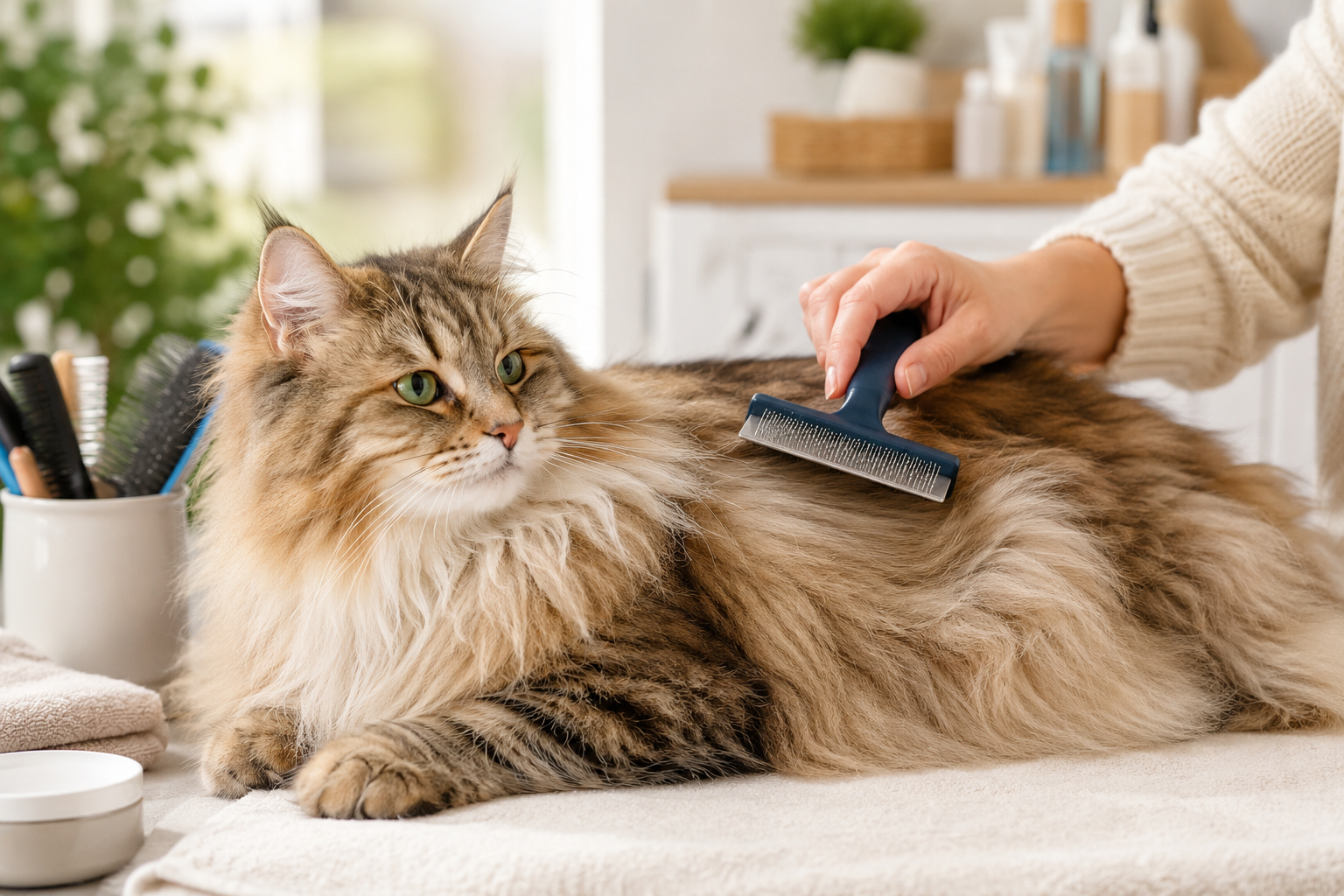
Allow your cat to smell the grooming tool.
You can reward calm investigation before brushing begins.
Keep the First Grooming Session Very Short
A common mistake is trying to completely groom the entire cat during the first session.
Instead begin with an easy area such as the back or shoulders.
Make only a few gentle strokes.
If your cat remains calm give a reward and stop.
The goal of early sessions is to teach the cat that brushing predicts a short comfortable experience.
How to Brush a Long Haired Cat
Brush gently in the natural direction of the fur.
Start with areas your cat already accepts being touched.
Work in small sections.
Support long fur with one hand when necessary so you are not pulling directly against the skin.
A practical sequence may be:
- Back and shoulders
- Sides
- Chest
- Neck
- Tail area
- Legs and other sensitive areas last
You do not need to complete every area in one session.
Check Areas That Mat Easily
Some areas experience more friction and movement.
Common matting locations include:
- Behind the ears
- Under the front legs
- Chest
- Lower belly
- Back legs
- Under the collar if your cat wears one
Check these areas regularly rather than waiting until you can see a large mat from a distance.
How to Handle a Small Tangle
If you find a small loose tangle stop normal brushing.
Hold the fur gently closer to the skin so pulling is reduced.
Use your fingers or a suitable wide tooth comb to work from the end of the hair toward the base gradually.
Do not pull continuously against resistance.
If the tangle does not loosen easily leave it and seek help.
What to Do With Tight Mats
A tight mat can pull painfully on the skin.
Cat skin can also be surprisingly thin and may be pulled upward inside a mat.
For this reason household scissors can cause serious accidental cuts.
Do not try to cut a tight mat close to the skin yourself.
A professional groomer experienced with cats or a veterinary team can decide whether clipping is needed.
If your cat has extensive matting or the skin underneath looks red wet painful or damaged contact a veterinarian.
How Often Should You Brush a Long Haired Cat?
There is no perfect schedule for every cat.
Some long haired cats benefit from brushing every day while others can remain comfortable with several sessions each week.
Frequency depends on:
- Coat length
- Coat density
- Seasonal shedding
- Age
- Weight
- Self grooming ability
- Health conditions
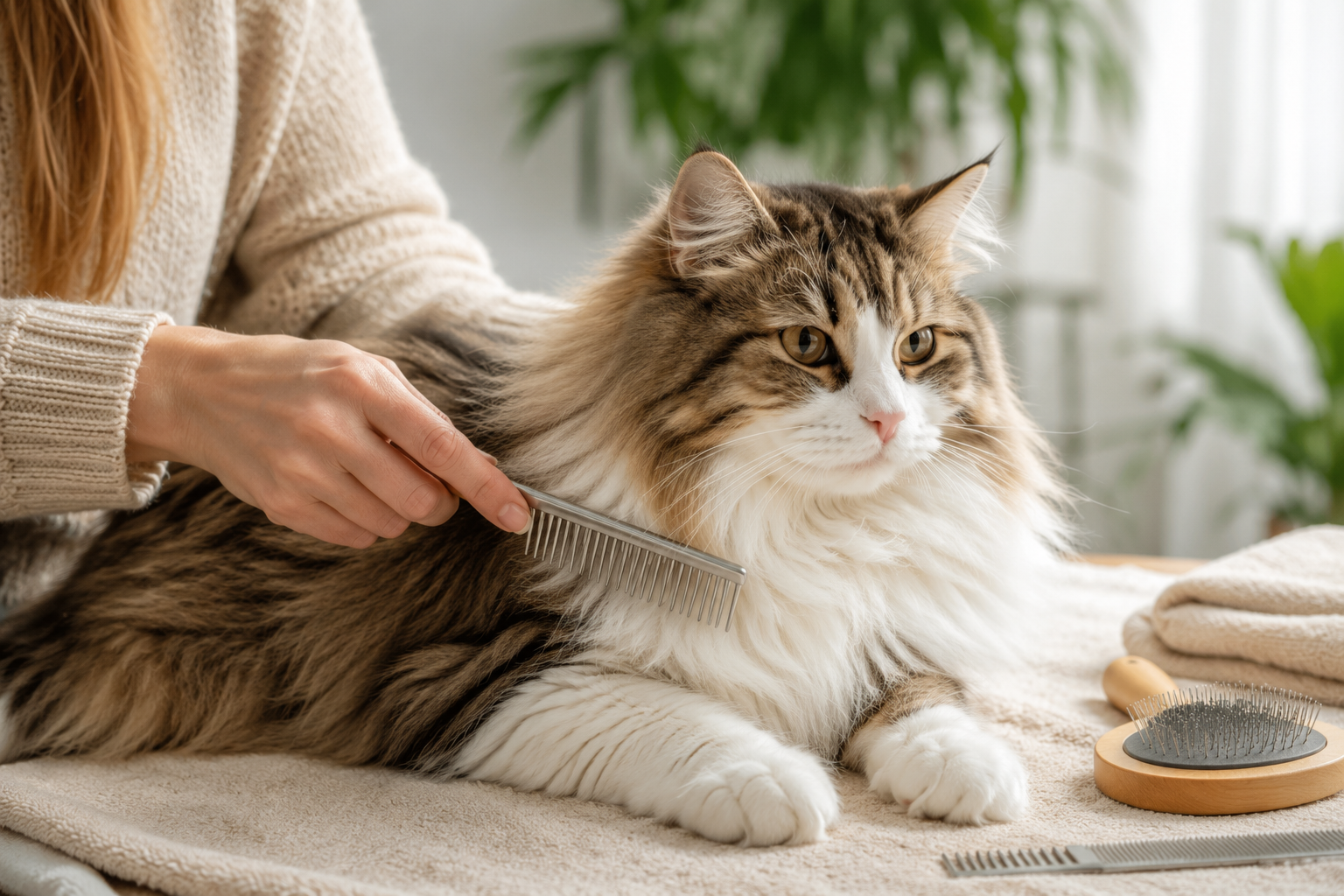
Frequent short sessions are often easier than occasional long sessions.
Signs Your Cat Needs a Break
Watch the cat rather than focusing only on the coat.
Possible signs of increasing stress include:
- Tail flicking
- Ears moving backward
- Skin twitching
- Repeated attempts to leave
- Growling
- Swatting
- Biting
- Sudden intense grooming
Stop before the situation becomes a struggle.
Short successful sessions build better long term cooperation than forcing the cat through a complete grooming session.
Grooming Senior Cats
Older cats sometimes have more difficulty grooming themselves.
Arthritis excess weight dental pain or other medical conditions may make twisting and reaching uncomfortable.
A senior cat that suddenly develops more mats than usual may need a veterinary check rather than simply more brushing.
Be especially gentle around joints and areas that seem sensitive.
Keep Grooming Tools Clean
Remove trapped hair from combs and brushes after use.
Clean tools according to the manufacturer's instructions.
Do not share grooming equipment between animals with known skin infections unless the equipment has been appropriately cleaned and disinfected.
Make Grooming Part of a Routine
Predictability can make grooming easier.
You could brush your cat briefly at the same calm time each day.
For more ideas read our guide on how to build a simple daily pet care routine.
Common Long Haired Cat Grooming Mistakes
Waiting Until Mats Are Large
Small tangles are easier to manage than tight skin level mats.
Pulling Through Knots
This can make grooming painful and teach the cat to fear the brush.
Using Scissors Near the Skin
This can cause accidental injury.
Trying to Groom the Entire Cat at Once
Short sessions are often easier for both owner and cat.
Ignoring Changes in Grooming Ability
A cat that suddenly stops caring for its coat may have a health problem.
Using Too Much Pressure
Brushes should move through the coat without scraping the skin.
Frequently Asked Questions
Should I Brush My Long Haired Cat Every Day?
Daily brushing can be useful for many long haired cats but coat needs vary. Regular short sessions are more important than following one rigid schedule.
What Is the Best Brush for a Long Haired Cat?
The best tool depends on coat type. Many owners use a combination of a gentle brush and a metal grooming comb.
Can I Cut a Mat Out With Scissors?
No. Cat skin may be pulled into a mat and can be accidentally cut. Tight mats should be handled by a professional.
Why Does My Cat Hate Being Brushed?
The tool may pull the coat or the cat may have learned that grooming lasts too long. Pain can also make handling uncomfortable.
Why Is My Older Cat Becoming Matted?
Older cats may groom less because of mobility pain obesity dental problems or other health conditions. A veterinary check can help identify the cause.
Related DailyPetTips Guides
Sources and References
Cat Health Disclaimer
This article provides general educational information and does not replace veterinary care. Contact a veterinarian if your cat has painful skin severe matting wounds hair loss sudden grooming changes or other concerning symptoms.
Editorial Note
This guide focuses on low stress grooming and mat prevention. It does not encourage owners to cut tight mats at home because cat skin can be injured easily when trapped inside matted fur.
About the Author
Ibrahim is a pet care writer at DailyPetTips. He creates practical easy to understand guides using responsible pet care principles and established veterinary and animal welfare resources.


Pet parent notes