

Hiding is a normal behavior for many cats.
A cat may hide to rest. Feel safe. Avoid noise. Or watch the home from a protected place.
However sudden or constant hiding can sometimes mean fear. Stress. Pain. Or illness.
The most important question is not only where your cat is hiding.
You should also ask whether eating. Drinking. Toileting. Movement. And normal behavior have changed.
This guide explains common reasons cats hide. How to create safe hiding places. What not to do. And when hiding needs veterinary attention.
Quick Answer
A cat may hide because it wants rest. Feels frightened. Is adjusting to a change. Or does not feel well.
Do not pull your cat from hiding. Keep food. Water. And a litter box easy to reach. Watch for appetite loss. Vomiting. Urinary problems. Weakness. Pain. Or breathing difficulty. Contact a veterinarian when hiding is sudden or happens with other symptoms.
Why Do Cats Like Hiding Places?
A small protected space can help a cat feel safe.
Hiding allows a cat to:
- Rest without interruption
- Avoid loud sounds
- Stay away from other animals
- Observe the room quietly
- Reduce stress
- Stay warm
- Feel protected on several sides
A healthy cat may use a hiding place every day and still come out to eat. Play. Socialize. And use the litter box.
Common Reasons a Cat Hides
| Possible Reason | What You May Notice | What to Do |
|---|---|---|
| Normal rest | Cat comes out for normal activities | Provide a safe quiet space. |
| New home | Cautious behavior and slow exploration | Use one quiet safe room at first. |
| Visitors or noise | Hiding during the event | Do not force interaction. |
| Conflict with another pet | Blocking. Chasing. Or avoiding shared areas | Provide separate resources. |
| Pain or illness | Appetite. Movement. Or toileting changes | Contact a veterinarian. |
Is It Normal for a New Cat to Hide?
Yes.
A new home contains unfamiliar smells. Sounds. People. And spaces.
Place the new cat in a quiet room with:
- Food
- Fresh water
- A litter box
- A bed
- A cardboard box
- A scratching post
- Simple toys
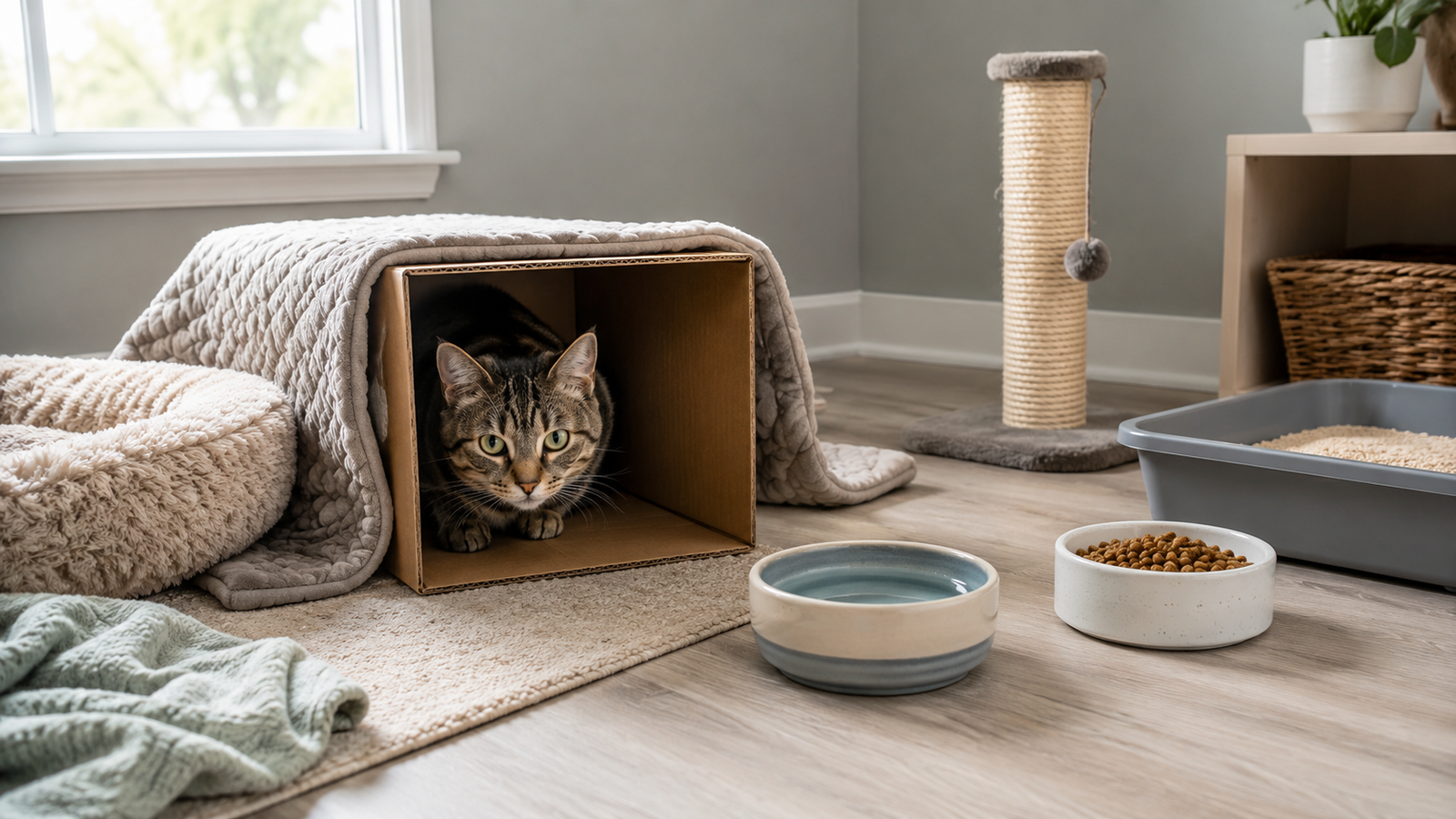
Allow the cat to come out at its own pace.
Read our complete guide on how to introduce a new cat to your home.
Why Does My Cat Hide From Visitors?
New voices. Smells. And movement can feel threatening.
Do not ask visitors to pull the cat out or follow it.
Give your cat:
- A quiet room
- A high resting place
- A covered bed
- Food and water access
- A clear escape path
Some cats may come out after the home becomes quiet.
Why Does My Cat Hide After a Loud Noise?
Thunder. Fireworks. Construction. Vacuum cleaners. And shouting can frighten cats.
Close windows and curtains when it is safe.
Use normal household sound to reduce sudden noise.
Do not play extremely loud music.
Keep your cat indoors during frightening outdoor events.
Why Does My Cat Hide From Another Cat?
One cat may block access to food. Water. Litter boxes. Doors. Or resting places.
This can happen without an obvious fight.
Watch for:
- Staring
- Chasing
- Blocking doorways
- Guarding food
- Guarding litter boxes
- One cat leaving when another enters
Provide separate resources in different areas.
Use one litter box for each cat plus an extra box as a useful starting point.
Can Pain Cause Hiding?
Yes.
Cats may hide when they feel vulnerable.
Possible signs of pain include:
- Reduced movement
- Limping
- Hunched posture
- Not jumping
- Growling when touched
- Reduced grooming
- Fast breathing
- Loss of appetite
Do not give human pain medicine.
Many human medicines are dangerous for cats.
Can Illness Cause Hiding?
Yes.
Hiding can happen with many health problems.
Possible causes include:
- Fever
- Dental pain
- Digestive illness
- Urinary disease
- Kidney disease
- Injury
- Breathing problems
- Infection
Hiding alone does not identify the cause.
A veterinarian needs to examine the cat.
How to Tell if Hiding Is Normal
Normal hiding may be more likely when your cat:
- Comes out for meals
- Drinks normally
- Uses the litter box normally
- Plays
- Grooms normally
- Moves without pain
- Returns to social contact
Monitor any new change.
Signs That Hiding May Be a Problem
Contact a veterinarian when hiding happens with:
- Loss of appetite
- Reduced drinking
- Repeated vomiting
- Diarrhea
- Straining in the litter box
- Little or no urine
- Blood
- Weakness
- Breathing difficulty
- Pain
- Sudden aggression
- Inability to walk normally
Urinary Trouble Can Be an Emergency
A cat that repeatedly visits the litter box but produces little or no urine needs urgent veterinary care.
What Should You Do When Your Cat Hides?
Step 1: Stay Calm
Do not shout or move furniture suddenly.
Step 2: Check the Environment
Look for a recent change.
This may include:
- A new person
- A new pet
- Loud work
- A moved litter box
- A new smell
- A house move
Step 3: Keep Resources Close
Make food. Water. And a litter box easy to reach.
Do not place food directly beside the litter box.
Step 4: Allow Space
Sit quietly nearby.
Speak softly.
Allow your cat to approach.
Step 5: Monitor Health
Check eating. Drinking. Urine. Stool. Movement. And breathing.
Step 6: Contact a Veterinarian When Needed
Do not wait when your cat appears sick or painful.
Should You Pull a Cat From Hiding?
No.
Pulling may increase fear and lead to scratching or biting.
Only remove a cat immediately when the hiding place is dangerous.
Examples include:
- Inside a working machine
- Near electrical wires
- Behind a hot appliance
- Inside a wall opening
- Near toxic chemicals
How to Create Safe Hiding Places
Use:
- Cardboard boxes
- Covered cat beds
- Open carriers
- Cat trees with enclosed spaces
- Blankets over safe furniture
- High shelves designed for cats
Every hiding place should have airflow and a safe exit.
How Long Will a Frightened Cat Hide?
Some cats recover within minutes.
A new cat may hide for days.
There is no exact schedule.
Progress is more important than time.
Contact a veterinarian when the cat does not eat. Drink. Or use the litter box normally.
How to Help a Shy Cat Build Confidence
Try:
- Regular meal times
- Quiet play
- Slow blinking
- Small treats
- High resting areas
- Predictable routines
- Short calm visits
Do not stare directly at a frightened cat for a long time.
Do not force touching.
Common Mistakes When a Cat Hides
Pulling the Cat Out
This may increase fear.
Removing Every Hiding Place
Safe hiding supports confidence.
Ignoring Appetite Loss
A cat that stops eating needs veterinary advice.
Punishing Fear
Punishment does not make a cat feel safe.
Allowing Another Pet to Block the Exit
Provide more than one safe path.
Using Essential Oils
Some essential oils are dangerous for cats.
Waiting Too Long During Illness
Cats can hide serious health problems.
When Should You Contact a Veterinarian?
Contact a veterinarian when your cat:
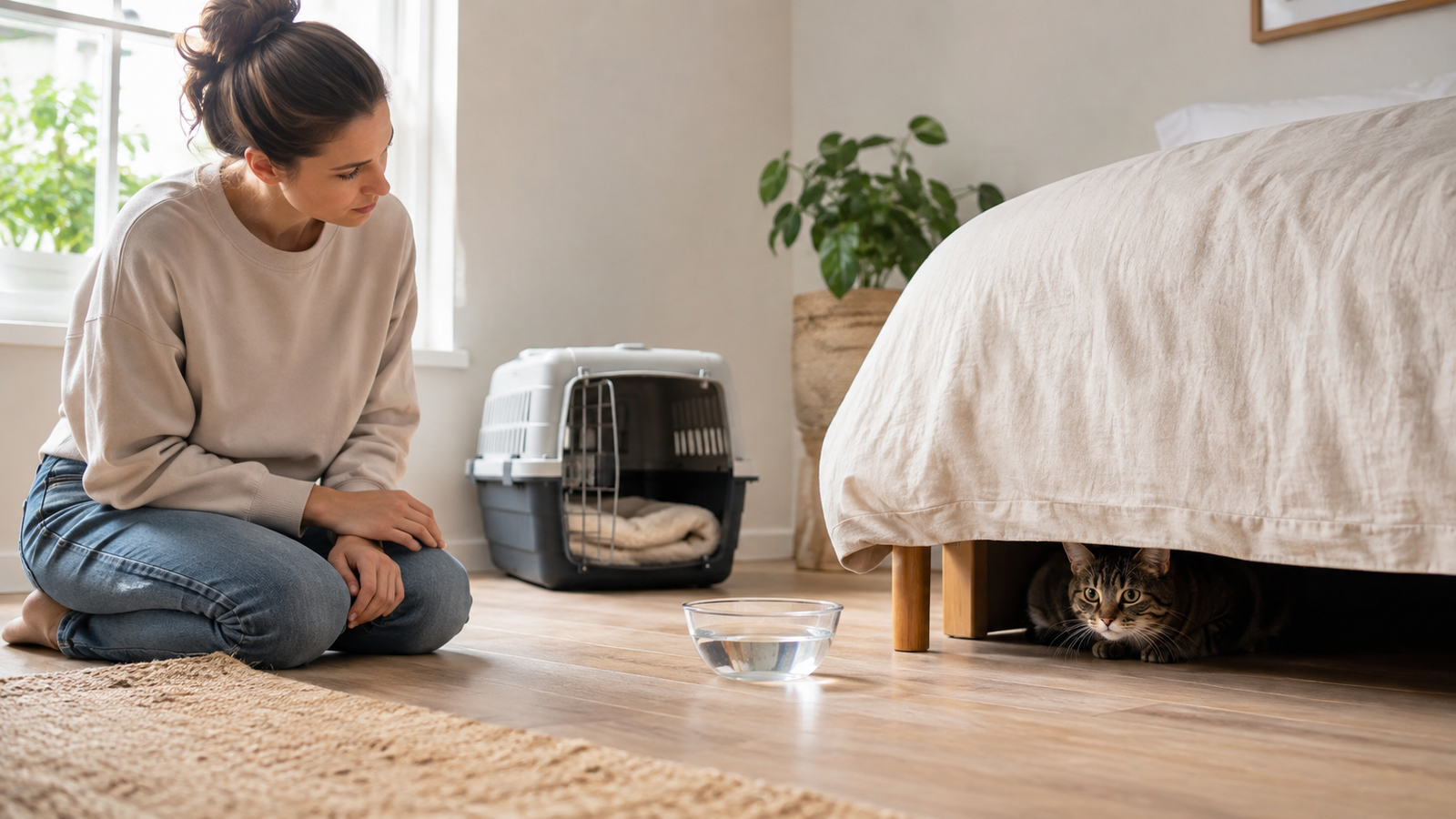
- Suddenly begins hiding
- Stops eating
- Drinks much more or less
- Vomits repeatedly
- Has diarrhea
- Strains to urinate
- Produces little urine
- Appears weak
- Breathes with difficulty
- Shows pain
- Has an injury
- Cannot walk normally
Frequently Asked Questions
Why does my cat hide during the day?
Your cat may be resting in a quiet place. Watch whether normal daily behavior continues.
Why does my cat hide under the bed?
The space is dark. Quiet. And protected on several sides.
Should I block access under the bed?
Only block it when the area is unsafe. Provide another safe hiding place first.
Why does my cat hide after eating?
Your cat may be resting. Sudden hiding with pain or vomiting needs attention.
Why does my cat hide when guests arrive?
Visitors create unfamiliar sound. Smell. And movement.
Can stress make a cat sick?
Stress can affect appetite. Toileting. And behavior. Ongoing changes should be discussed with a veterinarian.
How can I make my cat feel safer?
Provide hiding places. High areas. Predictable routines. Separate resources. And gentle interaction.
Should I feed my cat inside the hiding place?
Place food nearby without pushing it deep into an unsafe area.
Final Thoughts
Hiding can be a normal part of cat behavior.
A healthy cat may hide to rest and still continue normal eating. Drinking. Toileting. Play. And movement.
Do not pull your cat from hiding.
Provide a quiet safe space and easy access to resources.
Watch for other health or behavior changes.
Sudden hiding with appetite loss. Pain. Weakness. Vomiting. Breathing problems. Or urinary difficulty needs veterinary attention.
Related DailyPetTips Guides
- How to Introduce a New Cat to Your Home
- How to Stop a Cat From Scratching Furniture
- How Often Should You Clean a Cat Litter Box?
- How Much Water Should a Cat Drink Each Day?
- Explore All Cat Guides
- Explore Pet Health Guides



Pet parent notes