

Bringing a new cat home is exciting.
It can also be stressful for the new cat and the animals already living in the home.
A fast introduction may cause hiding. Hissing. Chasing. Fighting. Or litter box problems.
A slow introduction gives every animal time to feel safe.
This guide explains how to prepare a room. How to use scent swapping. How to begin visual meetings. How to introduce cats to dogs. And when you should slow down or seek professional help.
Quick Answer
Place the new cat in a quiet separate room with food. Water. A litter box. Hiding places. A bed. And toys.
Allow the cat to settle before face to face meetings. Swap scents first. Feed the animals on opposite sides of a closed door. Then use a safe visual barrier. Keep early meetings short. Move back one step when either animal becomes highly stressed.
Why Slow Introductions Work Better
Cats care strongly about territory.
A new smell or animal inside the home can feel threatening.
A gradual introduction allows each cat to:
- Learn the other animal’s scent
- Build positive associations
- Keep a safe personal space
- Avoid sudden chasing
- Develop confidence
- Use normal routines
Some cats become comfortable within days.
Others need several weeks or longer.
Do not compare your cats with another household.
What You Need Before the New Cat Arrives
Prepare:
- A separate quiet room
- A litter box
- Food and water bowls
- A comfortable bed
- Hiding places
- A scratching post
- Toys
- A carrier
- A baby gate or secure screen
- Separate cleaning tools
Keep food and water away from the litter box.
Choose a room that can remain closed.
What Should Be Inside the Safe Room?
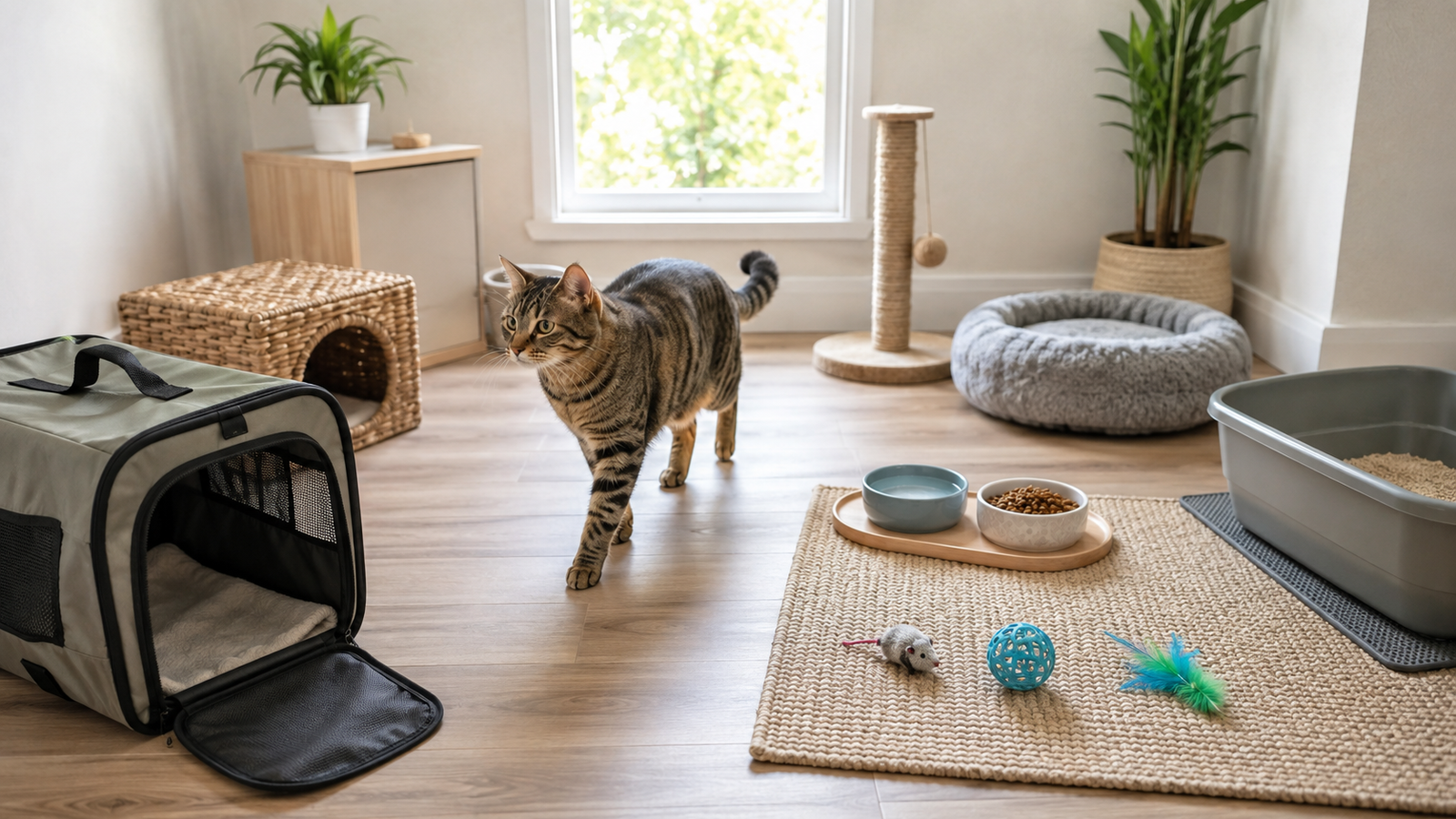
The room should include everything the cat needs.
Add:
- A litter box in one area
- Food and water in another area
- A cardboard box or covered bed
- A high resting place when safe
- A scratching surface
- Soft bedding
- A few simple toys
A hiding place helps the cat feel secure.
Do not pull a frightened cat from hiding.
How Long Should a New Cat Stay in One Room?
There is no fixed number of days.
The cat may be ready for the next step when it:
- Eats normally
- Drinks normally
- Uses the litter box
- Explores the room
- Plays
- Accepts calm human contact
- Does not hide constantly
A very frightened cat may need more time.
Do not rush because of the calendar.
The Step by Step Introduction Process
Step 1: Start With Complete Separation
Take the new cat directly to the safe room.
Close the door.
Do not allow an immediate meeting with resident pets.
Step 2: Allow Quiet Adjustment
Sit quietly in the room.
Speak softly.
Allow the cat to approach you.
Keep visitors away during the first stage.
Step 3: Begin Scent Swapping
Rub a soft cloth gently on one cat’s cheeks.
Place the cloth near the other cat’s resting area.
Do not force the animal to smell it.
You can also swap bedding.
Step 4: Feed Near the Closed Door
Place food bowls on opposite sides of the closed door.
Begin far enough away that both animals can eat calmly.
Move the bowls closer over several meals.
Food can help create a positive connection with the other animal’s scent.
Step 5: Swap Rooms Without Meeting
Place the resident cat in another safe room.
Allow the new cat to explore part of the home.
Then return the new cat to its room.
This allows scent exploration without direct contact.
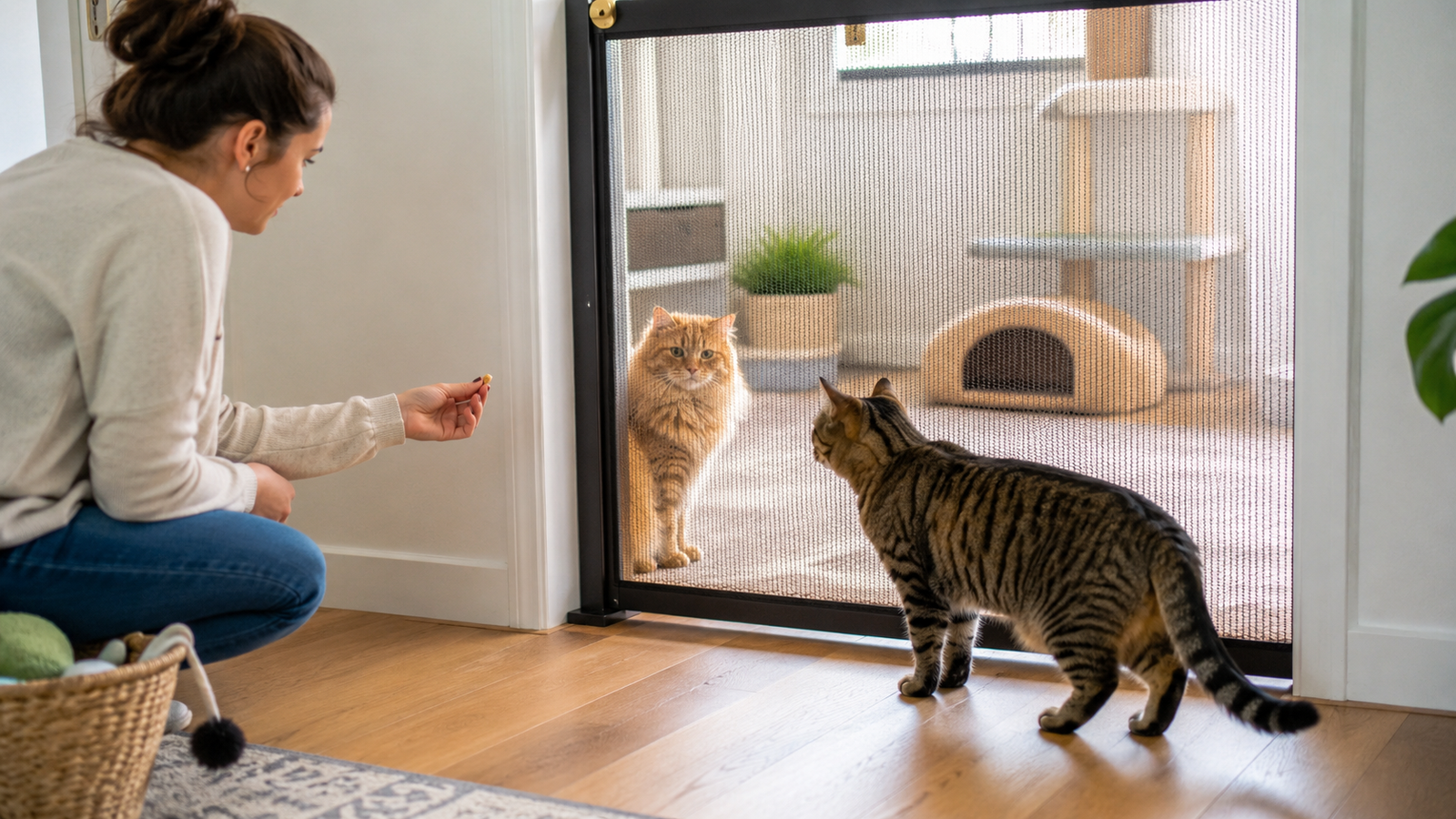
Step 6: Begin Safe Visual Contact
Use a secure baby gate. Screen. Or slightly opened door.
Make sure neither animal can push through.
Keep the first visual meeting very short.
Give treats for calm behavior.
Step 7: Increase Visual Time Slowly
Add a little more time when both animals remain calm.
End before stress becomes strong.
Step 8: Begin a Short Supervised Meeting
Use a large room with escape routes.
Do not hold the cats close together.
Allow them to choose their distance.
Keep toys and treats ready.
Step 9: Separate After a Good Meeting
End after calm behavior.
Do not wait for a fight.
Step 10: Increase Shared Time
Add time slowly.
Continue separate feeding and litter box access.
Do not leave them together unsupervised too soon.
What Behavior Is Normal During Introductions?
Some mild behavior can be normal.
This may include:
- Brief hissing
- Watching from a distance
- Avoiding the other cat
- Short growling
- Walking away
- Sniffing under the door
These behaviors show communication.
They do not always mean the introduction has failed.
When Should You Slow Down?
Move back to an earlier step when you see:
- Constant growling
- Repeated chasing
- Blocking food or litter boxes
- Swatting through the barrier
- Refusal to eat
- Constant hiding
- Urination outside the box
- Severe staring
- Screaming
- Fighting
Going Back Is Not Failure
Return to scent swapping and closed door feeding when visual meetings become too difficult. Slower progress is safer than forcing contact.
How to Break Up a Cat Fight Safely
Do not place your hands between fighting cats.
You may be bitten or scratched.
Instead:
- Place a large cushion between them
- Use a blanket as a visual barrier
- Open a safe escape path
- Separate the cats into different rooms
- Allow a long calming period
Do not punish either cat.
Check both animals for injury.
How Many Litter Boxes Do Multiple Cats Need?
A common starting point is one box for every cat plus one extra.
Place boxes in different areas.
Do not put every box side by side.
One cat should not be able to block all toilet access.
Read our guide on how often to clean a cat litter box.
How Many Food and Water Stations Do You Need?
Provide separate feeding areas during the introduction.
In a multi cat home use more than one water station.
This reduces competition.
Read our guide on how much water a cat should drink.
Why Vertical Space Is Important
High resting areas allow cats to avoid conflict.
Useful options include:
- Cat trees
- Window shelves
- Strong wall shelves
- Furniture tops that are safe
- Raised beds
Make sure every high area has a safe way up and down.
How Scratching Posts Help
Scratching helps cats mark space and reduce stress.
Provide more than one scratching surface.
Place them in shared and separate areas.
Read how to stop a cat from scratching furniture.
How to Introduce a Kitten to an Adult Cat
Kittens may be energetic and ignore boundaries.
The adult cat needs quiet areas where the kitten cannot disturb it.
Use short supervised sessions.
Play with the kitten before meetings.
Do not expect the adult cat to become a babysitter.
How to Introduce Two Adult Cats
Adult cats may need more time.
Use full separation. Scent swapping. And barrier meetings.
Provide enough resources for both cats.
Do not force them to share beds. Bowls. Or litter boxes.
How to Introduce a New Cat to a Dog
Start With Separation
The new cat needs a dog free room.
Exchange Scents
Allow each animal to smell bedding from the other.
Use a Barrier
Keep the dog on a leash.
Allow the cat to remain behind a strong gate or screen.
Reward Calm Dog Behavior
Reward the dog for looking at the cat and returning attention to you.
Give the Cat Escape Routes
The cat needs high places and a path away from the dog.
Never Allow Chasing
End the meeting when the dog becomes too excited.
Some dogs may never be safe around cats.
Seek professional help when the dog has strong hunting behavior.
Never Hold a Cat Near an Excited Dog
The cat may panic and scratch. The dog may jump or bite. Use distance and a secure barrier.
Should You Use Calming Products?
Some cats may benefit from feline pheromone products.
These products do not replace a slow introduction.
Use products made for cats.
Avoid essential oils.
Ask a veterinarian when your cat has a health condition.
How to Reduce Stress During Introductions
Keep routines predictable.
Provide:
- Quiet resting areas
- Hiding places
- Vertical space
- Daily play
- Separate resources
- Calm human interaction
- Regular feeding times
Avoid large parties and loud changes during the introduction period.
Common Cat Introduction Mistakes
Putting the Cats Together Immediately
Start with separation.
Holding Cats Face to Face
Allow them to control distance.
Using Only One Litter Box
Provide several toilet options.
Punishing Hissing
Hissing is communication.
Leaving Them Alone Too Soon
Increase unsupervised time slowly.
Allowing Chasing
Chasing can create fear and a lasting bad pattern.
Removing Hiding Places
Safe hiding helps cats feel secure.
Rushing Because One Cat Seems Ready
Both animals must be comfortable.
How Long Does a Cat Introduction Take?
Some introductions take a few days.
Many take several weeks.
Difficult introductions may take longer.
The pace depends on:
- Age
- Past experience
- Personality
- Health
- Territory
- Number of pets
- Available space
Progress should be based on behavior and not a strict deadline.
When Should You Contact a Veterinarian?
Contact a veterinarian when either cat:
- Stops eating
- Stops drinking
- Vomits repeatedly
- Has ongoing diarrhea
- Stops using the litter box
- Strains to urinate
- Becomes weak
- Has a bite wound
- Has swelling
- Shows severe stress
- Develops a sudden health change
Cat bite wounds may look small but can become infected.
When Should You Ask a Behavior Professional?
Seek help when:
- Fighting continues
- One cat constantly blocks resources
- One cat remains hidden
- There is repeated urine marking
- A dog continues trying to chase
- You cannot manage safe separation
- The introduction is getting worse
Choose a qualified professional who uses humane methods.
Frequently Asked Questions
Can I introduce cats in one day?
Some calm cats progress quickly. A full one day introduction is too fast for many cats.
Is hissing normal?
Brief hissing can be normal. Constant aggression means you should slow down.
Should cats share food bowls?
Separate feeding areas reduce competition.
Can cats share a litter box?
Some cats may use the same box. Multiple boxes should still be available.
Should I let the cats fight it out?
No. Fighting can cause injury and make future introductions harder.
What if my resident cat stops eating?
Contact a veterinarian. Cats should not go long without food.
Can I leave them together overnight?
Only after many calm supervised meetings and when you are confident they are safe.
Why is my old cat angry at me?
Your resident cat may be stressed by the change. Keep normal attention and routines.
Can a kitten and dog become friends?
Yes. However meetings must be supervised and the dog must not chase.
Final Thoughts
A successful cat introduction should be slow and safe.
Begin with a separate room.
Allow the new cat to settle.
Swap scents before visual meetings.
Use barriers and short supervised sessions.
Provide enough litter boxes. Food stations. Water bowls. Hiding places. And scratching areas.
Do not punish hissing or fear.
Move back one step when stress becomes strong.
Patience gives every animal a better chance of living calmly together.
Related DailyPetTips Guides
- How Much Water Should a Cat Drink Each Day?
- How to Stop a Cat From Scratching Furniture
- How Often Should You Clean a Cat Litter Box?
- How to Brush a Cat at Home Safely
- Explore All Cat Guides
- Explore Pet Care Guides



Pet parent notes