
A clean litter box helps your cat feel comfortable and keeps your home fresher.
Cats usually prefer a clean and quiet place to use the toilet. A dirty box may smell bad. It may also make some cats look for another place inside the home.
Cleaning does not mean replacing all the litter every day. Most boxes need waste removed every day. They also need a deeper wash on a regular schedule.
This guide explains how often to scoop a litter box. How often to wash it. How much litter to use. How to control odor. And when changes in litter box use may need veterinary attention.
Quick Answer
Scoop solid waste and urine clumps at least once every day. Twice a day is even better for many homes.
Wash the full box about once every one to four weeks depending on the litter type. Number of cats. Box size. And odor. Add fresh litter after scooping and keep a steady depth. Replace the box when deep scratches hold odor or become difficult to clean.
Why a Clean Litter Box Matters
A litter box is a very important part of a cat’s home.
Regular cleaning can help:
- Reduce bad odor
- Make the box more comfortable
- Keep waste from building up
- Make daily health checks easier
- Reduce litter tracking caused by an overfilled box
- Help you notice changes in urine or stool
- Reduce the chance that your cat avoids the box
Scooping also gives you useful information.
You may notice:
- More urine than normal
- Very small urine clumps
- Loose stool
- Hard dry stool
- Blood
- Worms
- No waste for an unusual amount of time
These changes do not always mean illness. However repeated or serious changes should be discussed with a veterinarian.
How Often Should You Scoop a Cat Litter Box?
Scoop the box at least once each day.
Many cats prefer the box to be scooped in the morning and evening.
A home with multiple cats may need more frequent cleaning.
| Situation | Possible Scooping Routine | Important Note |
|---|---|---|
| One cat | At least once daily | Twice daily may control odor better. |
| Two or more cats | Once or twice daily for every box | Add more boxes when one becomes dirty quickly. |
| Kitten | Check several times daily | Kittens may use the box more often. |
| Cat with urinary or digestive illness | Follow veterinary advice | Frequent checks can help track changes. |
| Hot or humid weather | Check more often | Odor may build faster. |
Important: Do not wait for a strong smell before scooping.
How Often Should You Wash the Full Litter Box?
The complete washing schedule depends on the type of litter.
Clumping Litter
Clumping litter allows urine clumps and solid waste to be removed every day.
Many boxes using clumping litter can be fully emptied and washed about every two to four weeks.
Wash sooner when:
- Odor remains after scooping
- Litter sticks to the bottom
- Urine reaches the base of the box
- The litter becomes dusty or dirty
- The box is shared by several cats
Non Clumping Litter
Non clumping litter may hold urine throughout the box.
It often needs a full change more frequently.
Some boxes may need changing every few days or about once a week.
Follow the instructions on the litter package and use smell and moisture as guides.
Natural or Plant Based Litter
Natural litter can behave differently depending on the material.
Wood. Paper. Corn. Wheat. And other products may have different cleaning schedules.
Read the product instructions and replace the litter when it becomes wet. Broken down. Or difficult to scoop.
How Many Litter Boxes Do You Need?
A common starting point is one litter box for every cat plus one extra box.
For example:
- One cat may benefit from two boxes
- Two cats may benefit from three boxes
- Three cats may benefit from four boxes
This is not a strict rule for every home.
Available space. Cat relationships. Box location. And health needs also matter.
Place boxes in different useful locations. Do not place every box side by side because cats may see them as one toilet area.
What Size Should a Litter Box Be?
The box should give your cat enough room to enter. Turn around. Dig. And choose a clean area.
A box that is too small becomes dirty quickly.
Large cats may need an extra large box.
Older cats and cats with joint pain may need a low entrance.
Kittens need a box they can enter safely.
How Deep Should Cat Litter Be?
Many cats are comfortable with about two to three inches of litter.
Some cats prefer more or less.
Too little litter may allow urine to reach the bottom.
Too much litter may move under the cat’s feet and create more tracking.
Keep the depth steady by adding fresh litter after scooping.
What You Need for Litter Box Cleaning
Prepare:
- A strong litter scoop
- Waste bags
- Disposable gloves
- Warm water
- Mild unscented soap
- Paper towels or a clean cloth
- Fresh litter
- A small brush used only for the litter box
Keep litter box cleaning tools separate from kitchen and bathroom cleaning tools.
How to Scoop a Litter Box Correctly
Step 1: Put on Gloves
Wear disposable or washable gloves.
Wash your hands after cleaning even when gloves were used.
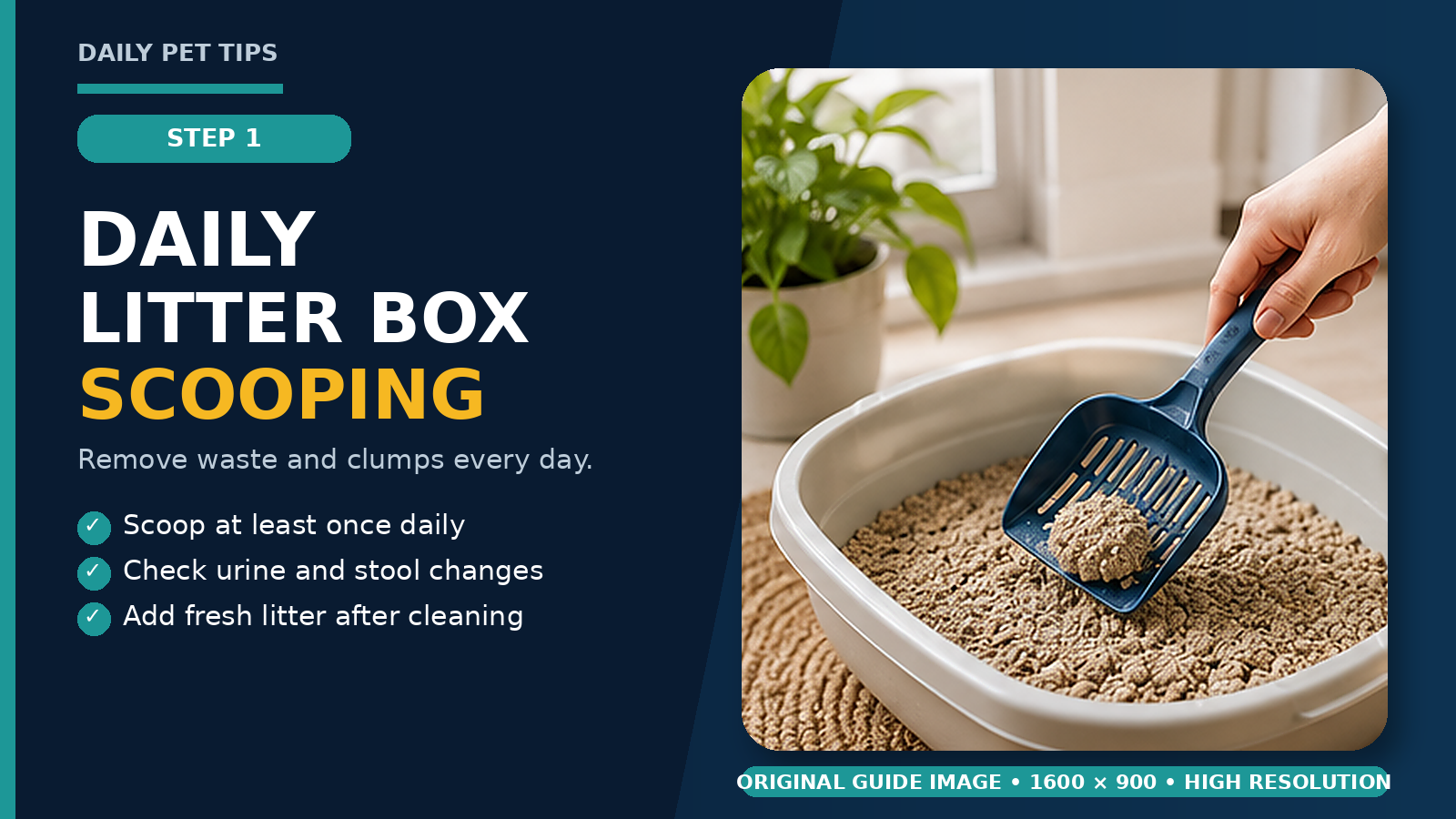
Step 2: Remove Solid Waste
Use the scoop to remove stool.
Check around the edges and corners.
Step 3: Remove Urine Clumps
Slide the scoop under the full clump.
Lift slowly so it does not break.
Broken clumps can leave dirty pieces inside the box.
Step 4: Check the Bottom
Move the litter gently.
Look for wet areas stuck to the base.
Step 5: Add Fresh Litter
Add enough clean litter to return to the normal depth.
Do not place fresh litter over hidden dirty litter.
Step 6: Clean Around the Box
Sweep or vacuum tracked litter.
Wipe the outside of the box when needed.
How to Deep Clean a Cat Litter Box
Step 1: Empty the Box
Pour the used litter into a strong waste bag.
Do not flush cat litter unless the product and your local waste system clearly allow it.
Many types of litter can block plumbing.
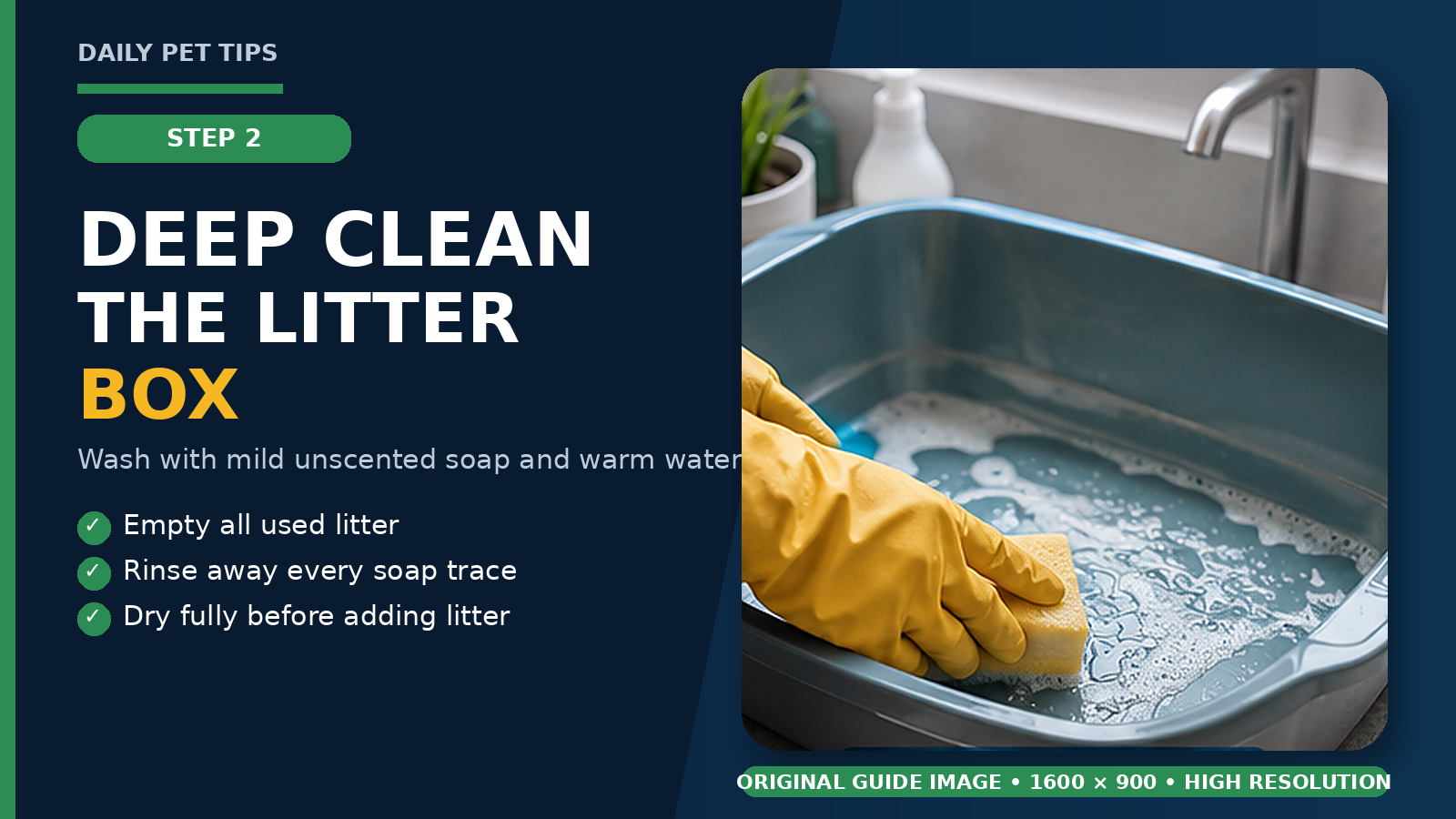
Step 2: Rinse the Box
Use warm water to loosen material stuck to the bottom.
Step 3: Wash With Mild Soap
Use a small amount of mild unscented soap.
Scrub the bottom. Corners. Sides. And rim.
Step 4: Rinse Thoroughly
Remove all soap.
Strong smells or soap residue may make the box less attractive to your cat.
Step 5: Dry the Box
Dry the box completely.
Fresh litter can stick to a wet surface.
Step 6: Add Clean Litter
Add the normal amount of litter.
Return the box to the same quiet location unless the old location was unsuitable.
Which Cleaning Products Should You Avoid?
Cats have a strong sense of smell.
Harsh or strongly scented products may make the box unpleasant.
Avoid:
- Strong perfume
- Essential oils
- Heavy air freshener
- Strong disinfectant residue
- Products that are not safe around cats
- Mixing household chemicals
Never Mix Bleach With Ammonia
Cat urine can contain ammonia. Mixing bleach with ammonia can produce dangerous gas. Use mild soap and plenty of water unless a veterinarian recommends another safe product.
Should You Use Scented Cat Litter?
Scented litter may smell pleasant to people.
Some cats dislike strong fragrance.
An unscented litter is often a safer starting choice.
Good odor control should come mainly from regular scooping. Enough boxes. Proper litter depth. And full cleaning.
Should You Use a Litter Box Liner?
Liners can make emptying easier.
Some cats scratch holes in them.
A torn liner can trap urine between the liner and box.
You do not need a liner when the box is easy to wash.
Watch your cat’s response and remove the liner when it creates noise or discomfort.
Open or Covered Litter Box?
Both types can work.
Open Box
An open box usually has better airflow.
It is easy to inspect and scoop.
Some cats feel safer because they can see around them.
Covered Box
A covered box may reduce visible litter scatter.
It can also trap odor inside.
Large cats may feel crowded.
Remove the door flap when your cat seems unsure about entering.
Whichever style you use should be large. Clean. And easy to enter.
Where Should You Put the Litter Box?
Choose a place that is:
- Quiet
- Easy to reach
- Away from loud machines
- Away from food and water
- Available at all times
- Safe from another pet blocking the path
- Easy for you to clean
Do not place the only box behind a door that may close.
Older cats may need a box on every floor they use.
For more ideas about creating a peaceful pet space read our calm home checklist for pet parents.
How to Control Litter Box Odor
Use simple methods first.
- Scoop at least once daily
- Use enough boxes
- Replace dirty litter
- Wash the box regularly
- Keep litter at a steady depth
- Use a larger box
- Improve safe room ventilation
- Clean waste around the box
Do not hide a strong new smell with perfume.
A sudden strong urine or stool odor may be connected to food. Diarrhea. Infection. Or another health change.
Why Is My Cat Avoiding the Litter Box?
A dirty box is one possible reason.
Other causes may include:
- A urinary problem
- Constipation
- Diarrhea
- Joint pain
- A box that is too small
- A difficult entrance
- Strongly scented litter
- A noisy location
- Stress
- Conflict with another cat
- A negative experience near the box
Do not punish a cat for toileting outside the box.
Punishment may increase stress and will not treat a medical problem.
Cleaning a Litter Box During Pregnancy
Cat waste can carry parasites including the parasite linked with toxoplasmosis.
A pregnant person should ask another adult to clean the litter box when possible.
When that is not possible:
- Wear disposable gloves
- Clean the box every day
- Wash hands carefully
- Avoid touching the face during cleaning
- Follow medical advice from a healthcare professional
People with weakened immune systems should also discuss safe handling with a healthcare professional.
When Should You Replace the Litter Box?
Plastic boxes develop scratches over time.
Deep scratches can hold odor and become difficult to clean.
Replace the box when:
- Odor remains after washing
- The plastic is cracked
- The surface feels rough
- Deep scratches hold waste
- The box is too small
- The entrance no longer suits your cat
Common Litter Box Cleaning Mistakes
Scooping Too Rarely
Waste and odor build quickly.
Using Strong Perfume
A fragrance that seems pleasant to you may be too strong for your cat.
Using Too Few Boxes
One dirty box may not be enough for several cats.
Changing Litter Suddenly
Some cats need a gradual change from one litter to another.
Moving the Box Without a Transition
Move the box slowly or add a new box before removing the old one.
Ignoring Urine and Stool Changes
Daily scooping is also a health check.
Punishing Accidents
Look for health. Box. Location. Or stress problems instead.
When Should You Contact a Veterinarian?
Contact a veterinarian promptly when your cat:
- Strains to urinate
- Produces little or no urine
- Visits the box repeatedly
- Cries inside the box
- Has blood in urine or stool
- Suddenly urinates outside the box
- Has ongoing diarrhea
- Has not passed stool
- Vomits and seems unwell
- Shows pain
- Becomes weak
- Stops eating
Urinary Blockage Can Be an Emergency
A cat that strains but produces little or no urine needs urgent veterinary care. This is especially important for male cats.
Frequently Asked Questions
Is scooping once a day enough?
Once daily is a useful minimum for many homes. Twice daily may keep the box cleaner and make health changes easier to notice.
Can I wash a litter box with dish soap?
A small amount of mild unscented soap may be used. Rinse the box thoroughly.
Why does the box still smell after scooping?
Urine may have reached the bottom. Small dirty pieces may remain. Or the plastic may hold odor.
Should I replace all litter every week?
It depends on the litter type. Non clumping litter often needs replacement more frequently than clumping litter.
Can I put baking soda in cat litter?
Some litter products already contain odor control ingredients. Ask your veterinarian before adding household products when your cat has breathing or skin sensitivity.
Can I use bleach to clean the box?
Mild soap and water are usually enough. Never mix bleach with ammonia or urine residue.
Why does my cat watch me clean the box?
The litter box is an important part of your cat’s territory. Watching you clean it can be normal curiosity.
Should food be placed near the litter box?
No. Keep food and water away from the toilet area.
Why does my cat use the box immediately after cleaning?
Your cat may prefer the fresh surface or may be adding its scent back to the area.
Final Thoughts
Scoop a cat litter box at least once every day.
Twice daily may be better for odor control and health monitoring.
Wash the complete box about every one to four weeks depending on the litter. Number of cats. And condition of the box.
Use mild unscented soap. Rinse thoroughly. Dry completely. And add fresh litter.
Keep enough boxes in quiet and accessible places.
Do not punish a cat for avoiding the box.
Sudden litter box changes may be caused by pain or illness and should not be ignored.
Related DailyPetTips Guides
- A Calm Home Checklist for Every Pet Parent
- Explore All Cat Guides
- Explore Pet Care Guides
- Explore Pet Health Guides



Pet parent notes