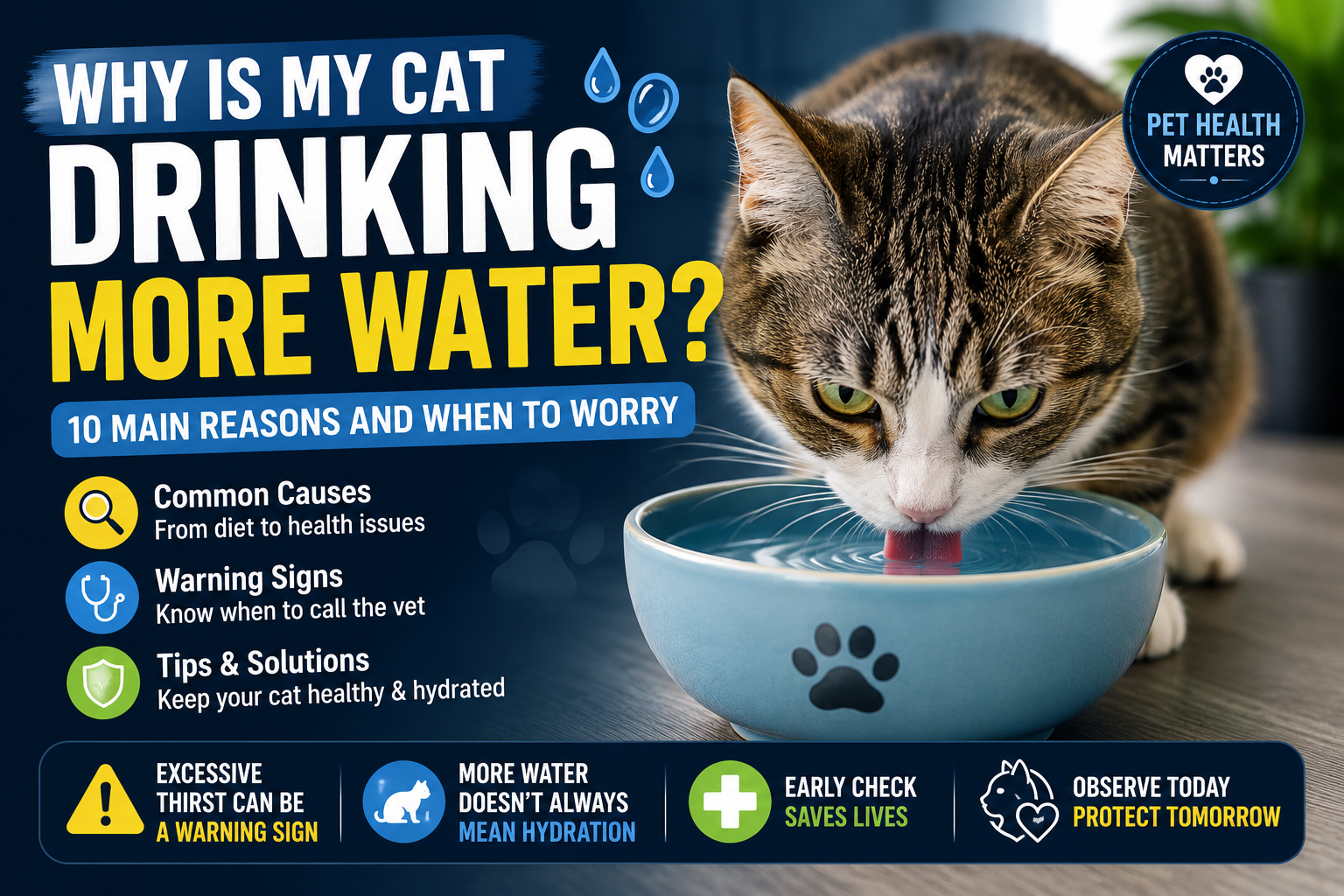

Quick Answer
A cat may drink more water for simple reasons such as eating more dry food spending time in warmer weather or becoming more active.
However a noticeable increase in thirst can also happen with medical problems including kidney disease diabetes mellitus hyperthyroidism urinary problems and some medications.
The most important clue is change. If your cat suddenly starts visiting the water bowl much more often or is also urinating more losing weight vomiting eating differently or acting unwell arrange a veterinary examination.
Do not restrict your cat's access to water while trying to figure out the cause.
Key Takeaways
- A sudden increase in drinking deserves attention.
- Dry food can make some cats drink more than wet food.
- Warm weather and increased activity can affect water intake.
- Increased thirst and increased urination often happen together.
- Kidney disease diabetes and hyperthyroidism are important possible causes.
- Never limit water to stop a cat from drinking.
- Watch for weight loss vomiting weakness and appetite changes.
- A veterinarian may need blood tests and urine testing to find the cause.
First Ask Whether Your Cat Is Actually Drinking More
It can be surprisingly difficult to judge how much a cat drinks.
Some cats take many small drinks during the day. Others drink only a few times but stay at the bowl longer.
If you recently changed to a larger bowl added a fountain or moved the water to a quieter place you may simply be noticing normal drinking more clearly.
Before assuming there is a problem look for a real change from your cat's usual pattern.
Examples include:
- Refilling the bowl much more often
- Your cat spending longer at the water bowl
- Drinking from sinks showers or glasses when this is new
- Seeking several different water sources
- Visiting the litter box more frequently
- Larger urine clumps in the litter
How Much Water Should a Cat Drink?
Water needs are not identical for every cat.
Body size diet temperature activity health status pregnancy and the moisture content of food can all change how much water a cat needs.
A cat eating mostly wet food may drink surprisingly little from a bowl because wet food already contains a large amount of moisture.
A cat eating dry kibble usually needs to obtain more water directly from drinking.
For a more detailed guide read how much water should a cat drink each day.
Common Non Medical Reasons a Cat May Drink More
1. A Change From Wet Food to Dry Food
This is one of the easiest explanations to miss.
Wet cat food contains far more moisture than dry kibble.
If you recently reduced wet food or switched completely to dry food your cat may compensate by drinking more from the bowl.
This does not automatically mean something is wrong.
However any major or unexplained increase should still be monitored.
2. Hot Weather
Cats can require more water during warm conditions.
Indoor temperature also matters even when a cat never goes outside.
Make sure clean fresh water is available in several comfortable locations during hot weather.
Excessive panting weakness drooling collapse or severe lethargy are not normal signs of simple thirst and require urgent attention.
3. Increased Activity
A more active cat may need slightly more water.
This could happen after:
- More play sessions
- A move to a larger home
- More outdoor activity where appropriate
- Introduction of another active pet
The increase should still be modest and the cat should otherwise look healthy.
4. A New Water Fountain
Some cats strongly prefer moving water.
If you recently introduced a fountain your cat may simply enjoy drinking more often because the water is fresher and easier to access.
This can be positive as long as the increase is not accompanied by concerning symptoms.
5. Salty Foods or Unsuitable Treats
Foods that contain more salt can increase thirst.
A cat should not regularly receive heavily salted human foods.
Use a nutritionally complete cat food as the main diet and keep treats appropriate and limited.
When Increased Thirst Can Be a Medical Sign
Veterinarians often take increased thirst seriously because several common feline diseases can affect water balance.
The medical term for excessive thirst is polydipsia.
It often occurs together with increased urination which is called polyuria.
A cat with these signs may drink more because the body is losing more water through urine.
Kidney Disease
Chronic kidney disease is an important cause of increased drinking and urination especially in older cats.
The kidneys normally help concentrate urine and regulate fluid balance.
When kidney function declines a cat may produce more dilute urine and drink more water to compensate.
Other possible signs include:
- Weight loss
- Reduced appetite
- Vomiting
- Poor coat condition
- Weakness
- Bad breath
- Larger amounts of urine
Kidney disease cannot be diagnosed from thirst alone.
Blood and urine testing are commonly needed.
Diabetes Mellitus
Diabetes can cause both increased thirst and increased urination.
When blood glucose becomes too high glucose may spill into the urine and pull additional water with it.
A diabetic cat may also:
- Lose weight despite eating well
- Seem unusually hungry
- Produce larger urine clumps
- Become weak
- Develop changes in the way the hind legs are carried
Diabetes requires veterinary diagnosis and treatment.
Hyperthyroidism
Hyperthyroidism is more common in older cats.
It occurs when the thyroid gland produces too much thyroid hormone.
Possible signs include:
- Weight loss
- Increased appetite
- Restlessness
- Increased thirst
- More frequent urination
- Vomiting or diarrhea
- A fast heart rate
Because several illnesses can produce similar signs testing is important.
Urinary Tract Problems
Some urinary disorders can change how often a cat visits the litter box.
However frequent attempts to urinate are not always the same as producing large amounts of urine.
This distinction is extremely important.
A cat that repeatedly enters the litter box but produces only tiny amounts or no urine may have a urinary blockage.
Urinary blockage is an emergency especially in male cats.
Seek urgent veterinary care if your cat:
- Strains without producing urine
- Cries while trying to urinate
- Repeatedly visits the litter box
- Licks the genital area excessively
- Has a painful abdomen
- Becomes weak or vomits
Liver Disease and Other Illnesses
Increased thirst can also occur with several less obvious medical problems.
Possible causes can include some liver disorders electrolyte abnormalities infections hormonal diseases and other systemic illnesses.
This is why guessing based on one symptom is unreliable.
Can Medication Make a Cat Drink More?
Yes.
Some medications can increase thirst or urination.
Corticosteroids are one example.
Never stop a prescribed medication suddenly without speaking to the veterinarian who prescribed it.
If increased drinking began after starting a new medicine call the clinic and ask whether it may be an expected side effect.
Why Increased Drinking and Urination Often Appear Together
Owners sometimes notice the water bowl first while others notice the litter box first.
The two changes may be connected.
If a cat produces unusually large amounts of urine the body needs to replace the lost fluid.
Look at the litter tray for changes such as:
- Much larger urine clumps
- More urine clumps each day
- Wet litter appearing sooner than normal
- A need to change litter more frequently
This information can be very useful to your veterinarian.
Should You Measure Your Cat's Water Intake?
Monitoring can be helpful if you are concerned.
One simple method is:
- Measure how much water you place in the bowl.
- Keep other water sources controlled when practical.
- Measure what remains after 24 hours.
- Repeat for several days.
Remember that evaporation spills multiple pets and water in wet food can make home measurements inaccurate.
If several cats share the same bowls it may be impossible to know which cat is drinking more.
Never Restrict Water
This is extremely important.
If a cat is drinking excessively do not take the water away to reduce urination.
The increased drinking may be the body's attempt to prevent dehydration.
Restricting water could make a medical problem more dangerous.
Keep clean water available while arranging veterinary advice.
Look at the Whole Cat Not Just the Water Bowl
The context around thirst matters.
Pay attention to:
- Appetite
- Body weight
- Energy level
- Vomiting
- Diarrhea
- Urination
- Coat condition
- Breathing
- Behavior
A drinking change combined with another symptom is more concerning than an isolated small increase after a predictable diet change.
Weight Loss Is an Important Clue
Unexplained weight loss should not be ignored.
Increased drinking combined with weight loss can occur with illnesses such as diabetes kidney disease and hyperthyroidism.
You may not notice slow weight loss visually especially in a long haired cat.
Regular weighing can help detect changes sooner.
What Your Veterinarian May Check
A veterinary visit usually starts with questions about:
- How long the drinking change has been present
- Diet
- Appetite
- Weight change
- Urination
- Medications
- Vomiting or diarrhea
- Previous medical conditions
The veterinarian may then recommend tests based on the examination.
Blood Testing
Blood tests can help evaluate kidney function blood glucose liver values electrolytes thyroid function and other health markers.
Urinalysis
Urine testing can provide information about urine concentration glucose infection blood crystals and other abnormalities.
Additional Tests
Depending on the findings the veterinarian may recommend:
- Urine culture
- Blood pressure measurement
- Thyroid testing
- Ultrasound
- X rays
- Other targeted tests
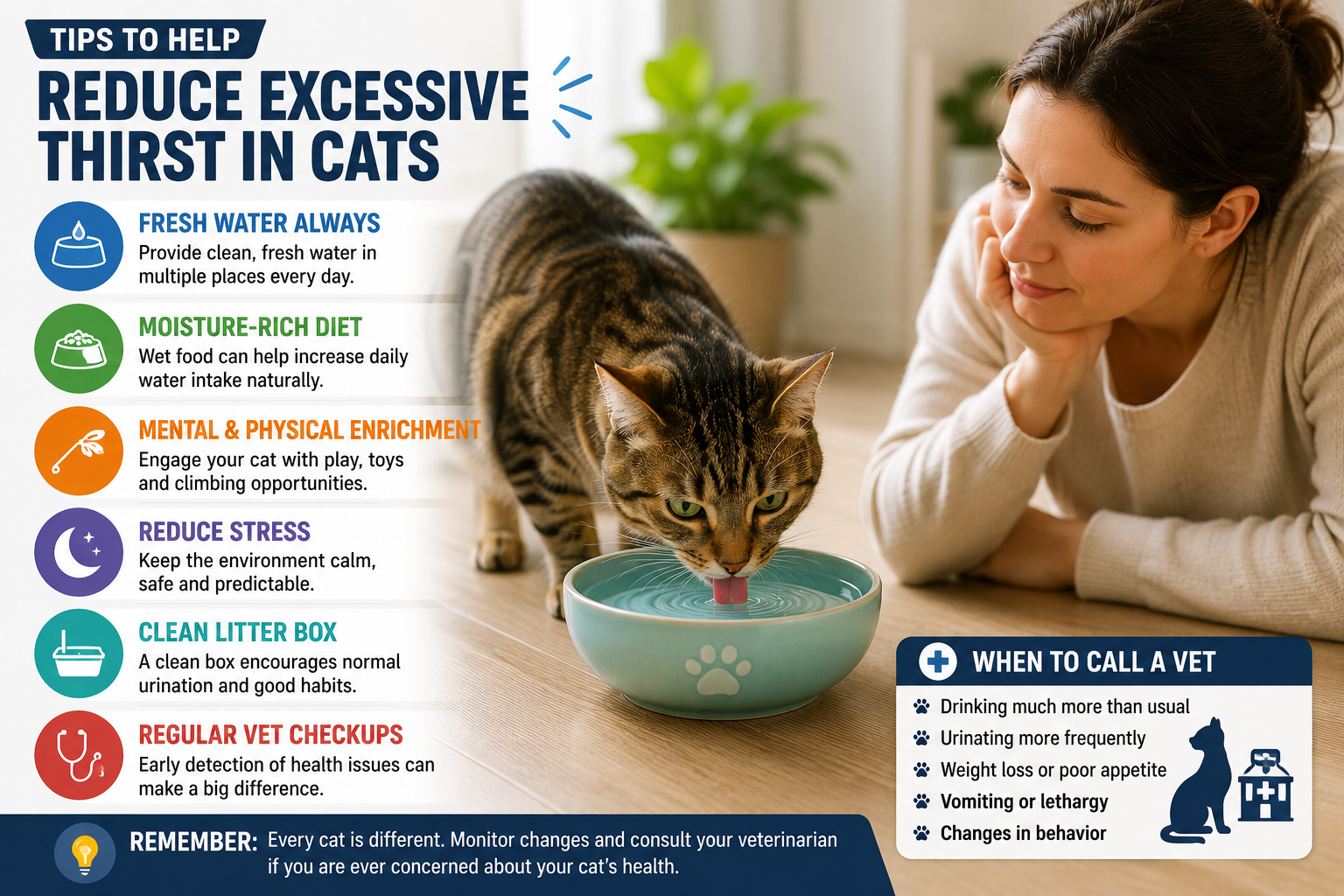
When to Book a Veterinary Appointment
Arrange a veterinary visit if your cat has a clear unexplained increase in thirst that persists or if increased drinking happens together with:
- Increased urination
- Weight loss
- Vomiting
- Reduced appetite
- Very strong appetite with weight loss
- Weakness
- Behavior changes
- Poor coat condition
- Changes in litter box habits
Older cats deserve particular attention because several diseases associated with increased thirst become more common with age.
When It Is an Emergency
Seek urgent veterinary care if your cat:
- Cannot urinate
- Repeatedly strains in the litter box with little or no urine
- Collapses
- Has severe weakness
- Has repeated vomiting and cannot keep water down
- Has difficulty breathing
- Appears severely dehydrated or disoriented
Do not wait for a routine appointment if your cat appears seriously ill.
How to Encourage Healthy Hydration
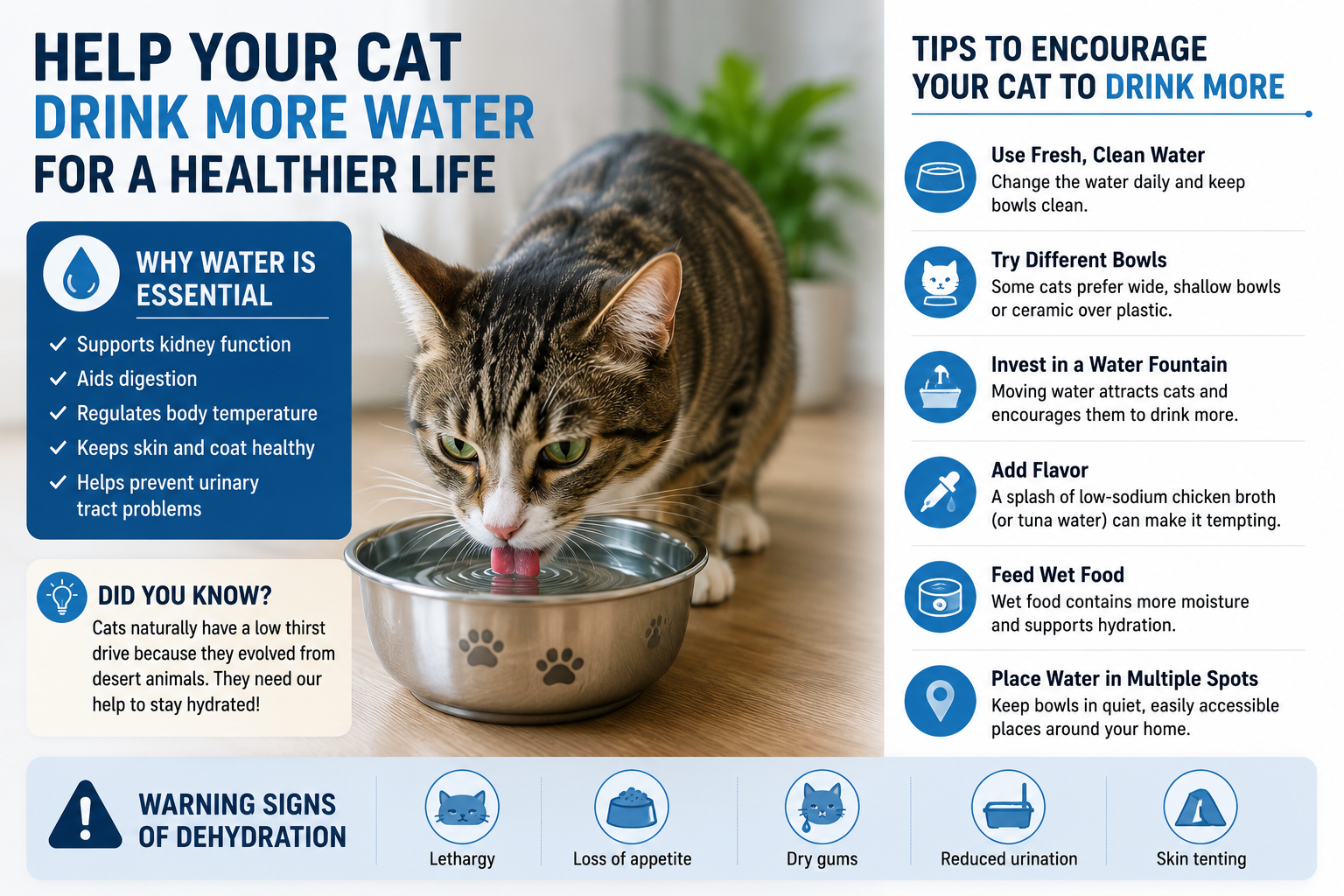
Even when a cat is healthy good access to water matters.
You can make drinking easier by providing:
- Fresh water every day
- More than one water station
- Wide clean bowls
- Water away from dirty litter areas
- A fountain if your cat prefers moving water
- Wet food when appropriate for your cat's diet
Wash bowls regularly because cats may avoid water that smells stale or contaminated.
Do Cats Prefer Water Away From Their Food?
Some cats appear to prefer drinking locations separate from their food bowls.
There is no harm in testing several safe locations around the home.
Your goal is simply to make clean water easy and comfortable to access.
Does Wet Food Help With Hydration?
Wet food contains substantially more moisture than dry food and can contribute significantly to total water intake.
However diet changes should still consider calories nutrition medical conditions and your veterinarian's recommendations.
Do not suddenly change the diet of a sick cat without advice.
Common Mistakes Owners Make
Assuming More Water Is Always Healthy
Good hydration is important but unexplained excessive thirst can be a medical symptom.
Removing the Water Bowl
Never restrict water because your cat is drinking too much.
Waiting for Severe Symptoms
Some diseases are easier to manage when identified earlier.
Ignoring the Litter Box
Changes in urine quantity can provide an important clue.
Blaming Age Alone
Older cats may drink more because disease becomes more common with age not simply because thirst is automatically normal in senior cats.
Trying to Diagnose the Disease at Home
Kidney disease diabetes and thyroid disease can share similar signs.
Testing is needed for a reliable diagnosis.
A Simple Home Observation Checklist
Before your veterinary appointment write down:
- When the increased drinking started
- Whether the cat drinks day and night
- Recent food changes
- Current medications
- Changes in appetite
- Any weight loss
- Vomiting or diarrhea
- Urine frequency and amount
- Any unusual behavior
This can help your veterinarian understand the pattern more quickly.
Frequently Asked Questions
Is It Normal for a Cat to Drink a Lot of Water?
Some variation is normal especially with dry food warm weather or increased activity. A clear unexplained increase from your cat's usual drinking pattern should be investigated.
Why Is My Older Cat Drinking More Water?
Older cats can develop conditions such as chronic kidney disease diabetes and hyperthyroidism that may increase thirst. A veterinary examination and testing are recommended for persistent changes.
Can Dry Cat Food Make a Cat Drink More?
Yes. Dry food contains much less moisture than wet food so cats eating mostly dry food may drink more directly from the bowl.
Does Kidney Disease Cause Cats to Drink More?
It can. Cats with kidney disease may lose the ability to concentrate urine normally which can lead to increased urination and compensatory drinking.
Can Diabetes Make a Cat Very Thirsty?
Yes. Increased thirst and urination are common signs of diabetes but testing is required for diagnosis.
Should I Take Water Away if My Cat Drinks Too Much?
No. Never restrict water unless a veterinarian gives a very specific medical instruction. Excessive drinking may be helping the cat compensate for fluid loss.
Why Is My Cat Drinking More But Acting Normal?
Early disease can exist before a cat appears obviously sick. If the increase is significant persistent and unexplained it is worth discussing with your veterinarian.
Why Is My Cat Drinking From the Tap Suddenly?
Your cat may simply prefer fresh moving water but a sudden increase in seeking water from multiple sources can also reflect increased thirst. Look for other changes and monitor the overall amount.
Related DailyPetTips Guides
- How Much Water Should a Cat Drink Each Day?
- More Cat Guides
- More Pet Health Guides
- Why Is My Cat Not Using the Litter Box?
Sources and References
- Cornell Feline Health Center
- Merck Veterinary Manual Cat Owner Resources
- American Veterinary Medical Association Pet Owner Resources
Pet Health Disclaimer
This article provides general educational information and is not a diagnosis. Increased thirst can have many causes and some require medical treatment. Contact a veterinarian for persistent excessive drinking or any associated illness signs. Inability to urinate severe weakness collapse or breathing difficulty requires urgent veterinary care.
Editorial Note
This guide focuses on recognizing meaningful changes in drinking behavior rather than diagnosing a disease from thirst alone. Medical conditions with similar symptoms require examination laboratory testing and veterinary interpretation.
About the Author
Ibrahim is a pet care writer at DailyPetTips. He creates practical easy to understand guides using established veterinary and animal welfare information with an emphasis on safe responsible pet care.



Pet parent notes