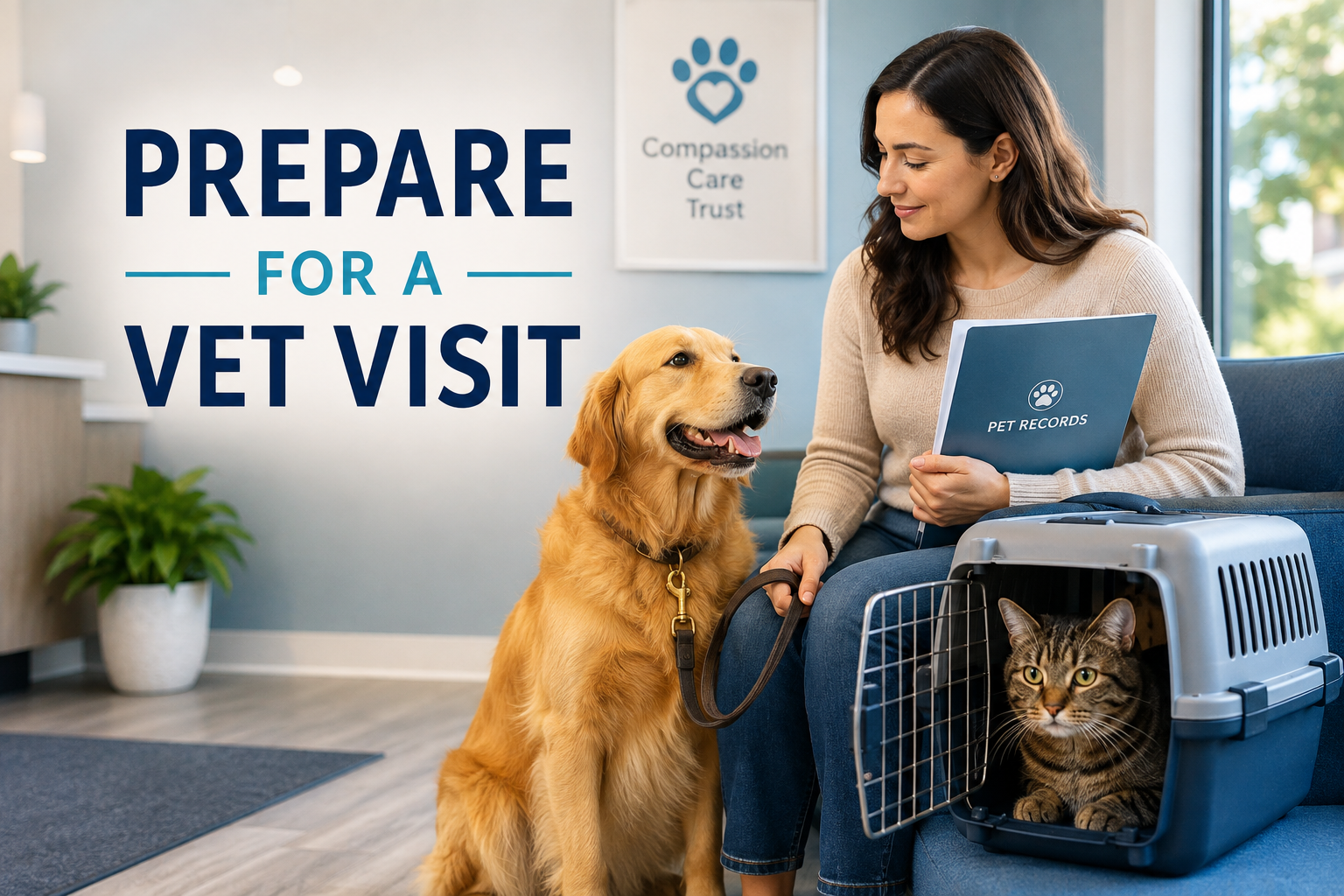

Quick Answer
A smoother veterinary visit starts before you leave home.
Write down your concerns bring an accurate medicine list and relevant records use a secure carrier or leash and allow extra travel time. For cats keep the carrier accessible at home instead of only bringing it out immediately before appointments.
If your pet becomes extremely fearful or difficult to handle tell the veterinary clinic before the visit. The team may be able to suggest a safer plan.
Key Takeaways
- Write down your main questions before the appointment.
- Bring a complete medicine and supplement list.
- Use secure transportation.
- Help cats become familiar with their carriers before appointment day.
- Keep your own behavior calm and predictable.
- Tell the clinic about severe fear or aggression before arrival.
- Do not give sedatives unless they are prescribed by a veterinarian.
- Take notes about appetite drinking bathroom habits and symptoms when relevant.
Before You Book the Appointment
Start by deciding why your pet needs to be seen.
A routine wellness visit is different from a visit for vomiting breathing problems injury or another urgent concern.
When calling the clinic explain the main reason clearly.
If your pet appears seriously unwell ask whether you should come immediately or go to an emergency facility.
For routine visits tell the clinic if your pet has significant fear aggression mobility problems or other needs that may affect handling.
Write Down Questions and Symptoms
It is easy to forget details once the appointment starts.
Write down the most important questions beforehand.
If your pet has a new problem note:
- When it started
- How often it happens
- What makes it better or worse
- Changes in appetite
- Changes in drinking
- Changes in stool or urination
- Changes in activity
- Any vomiting coughing or unusual behavior
Photos or short videos can sometimes help a veterinarian understand intermittent behavior that does not happen inside the clinic.
Bring Useful Records
If you are visiting a new clinic bring relevant medical history when possible.
This may include:
- Vaccination records
- Previous laboratory results
- Imaging reports
- Previous diagnoses
- Allergy information
- Surgery history
You do not always need a thick folder of every document.
The most relevant recent information is usually the most useful.
Make a Complete Medicine List
Tell the veterinarian about everything your pet receives.
This includes:
- Prescription medicine
- Over the counter products
- Supplements
- Flea and tick prevention
- Heartworm prevention when relevant
Include the dose and frequency if you know them.
A photo of the product label can be helpful.
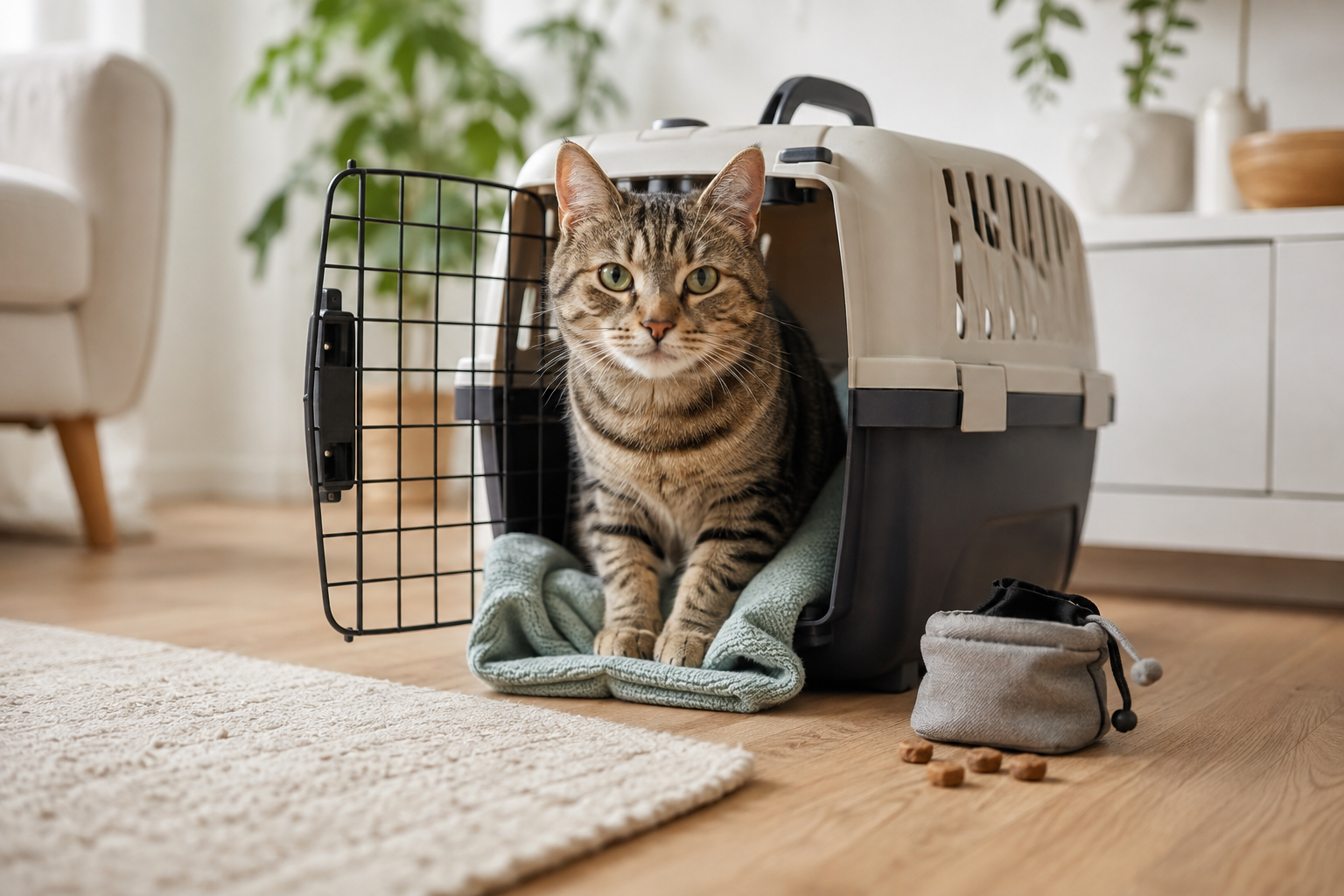
Prepare a Cat Carrier Before Appointment Day
Many cats learn that the carrier predicts an unpleasant trip because it only appears before veterinary visits.
Instead keep the carrier available in the home when practical.
Make it more familiar by adding:
- Soft bedding
- A familiar blanket
- Occasional treats
- Safe toys
Allow your cat to investigate the carrier without being forced inside every time.
A carrier with an easily removable top can make veterinary handling easier for some cats.
Prepare Your Dog
Use a secure leash collar or harness suitable for your dog.
Do not allow the dog to approach unfamiliar animals in the clinic unless staff say it is safe.
Simple handling practice at home can help some dogs become more comfortable with:
- Paw touching
- Ear checks
- Gentle body handling
- Standing on a non slip surface
Keep practice positive and short.
Do not force handling when the dog is showing significant fear.
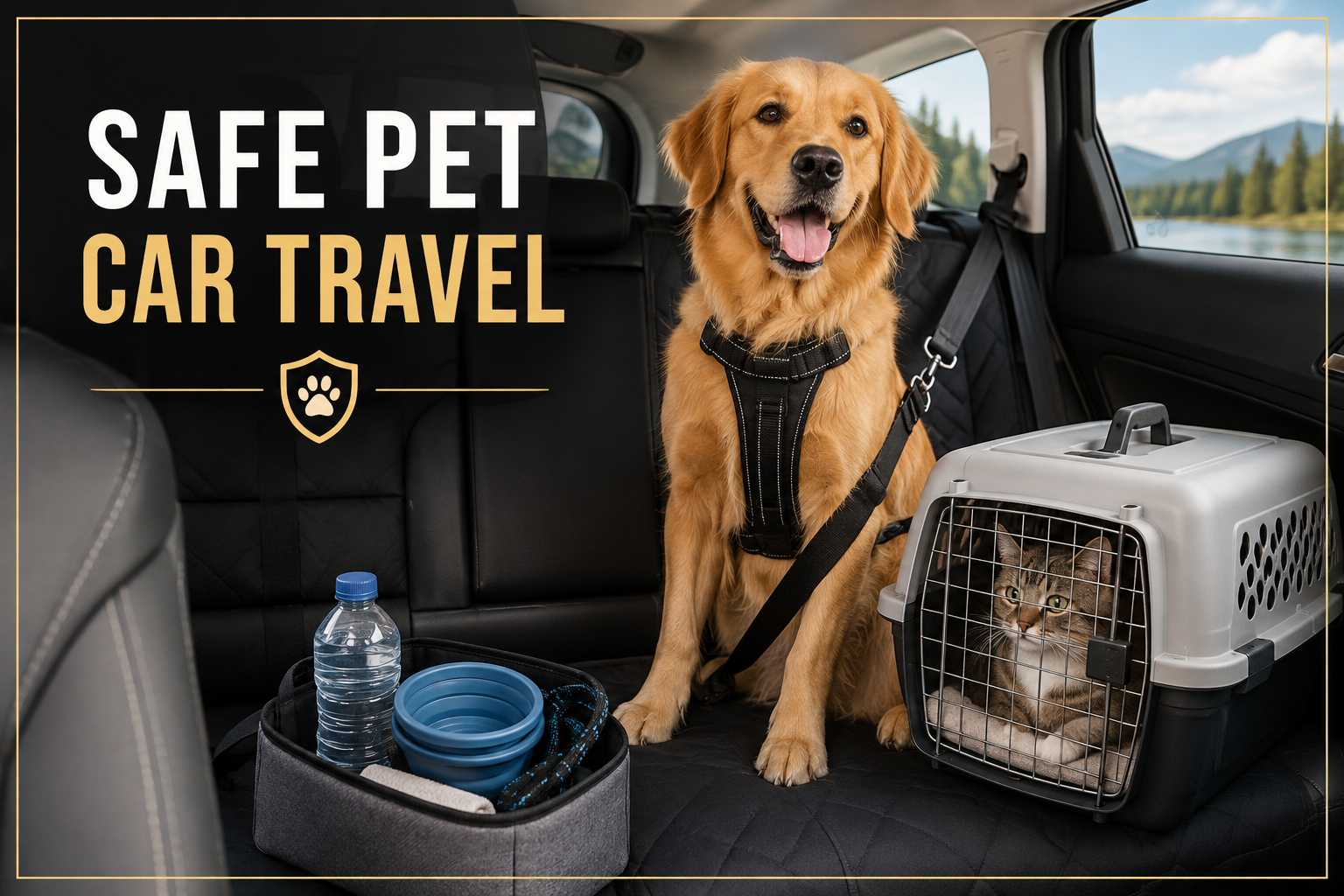
Make Travel Safer
Allow enough time so you are not rushing.
Pets should be transported securely.
Cats should generally remain inside a secure carrier.
Dogs should use appropriate restraint or secure transport arrangements.
Do not allow a pet to roam freely inside a moving vehicle.
Bring water for longer journeys and avoid excessive heat.
If your pet gets extremely anxious or motion sick in the car discuss the problem with your veterinarian before the next appointment.
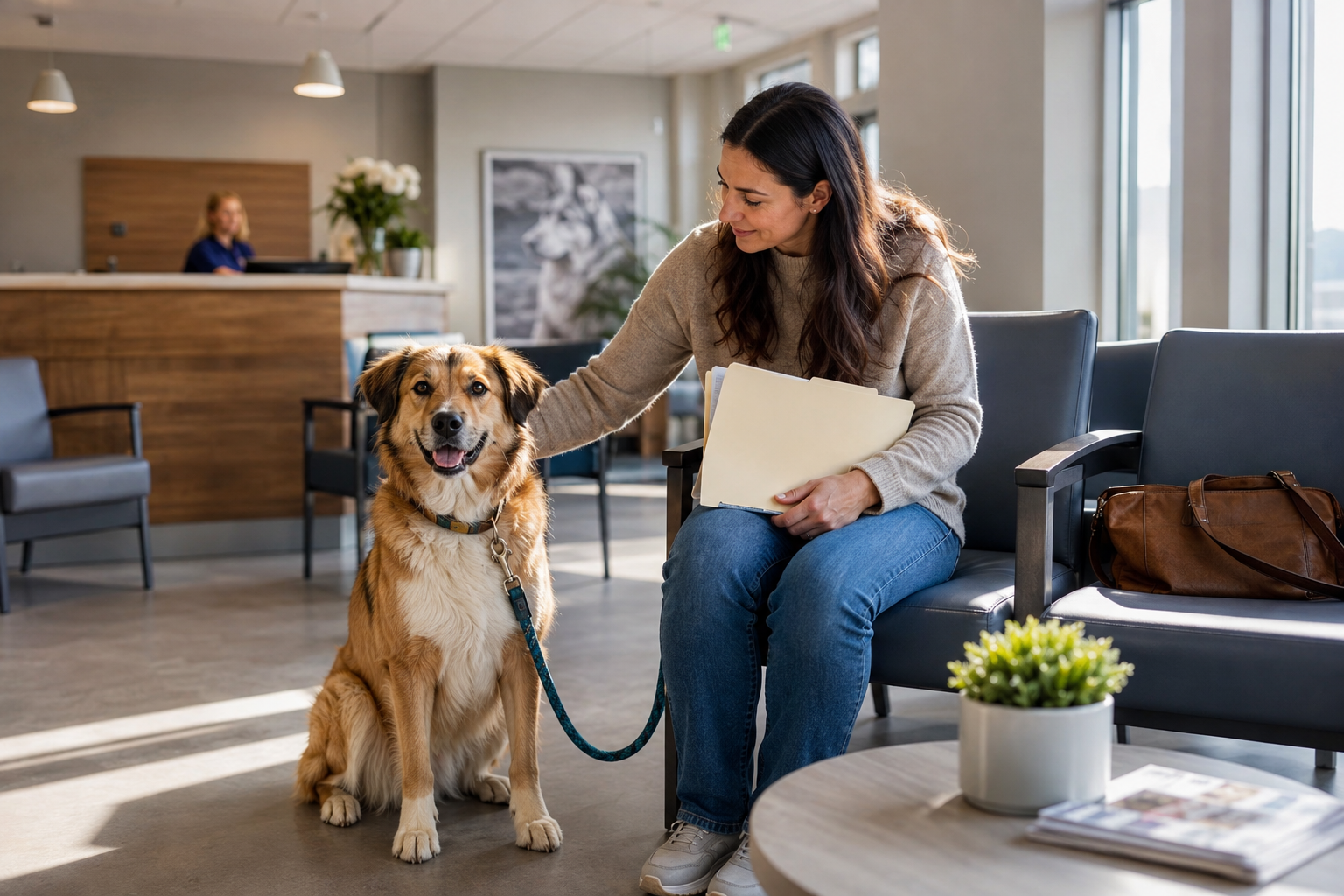
Reduce Stress at the Clinic
Veterinary waiting areas can contain unfamiliar animals smells sounds and people.
Keep some distance from other pets.
For cats avoid placing the carrier directly on the floor when a stable elevated location is available and safe.
A light familiar cover over part of the carrier may help some cats feel more protected while still allowing adequate ventilation.
Ask reception staff whether you can wait in the car or another quieter area if your pet is extremely stressed and conditions allow it.
Help With Safe Handling
Veterinary teams are trained to examine animals safely but your information is important.
Tell staff if your pet:
- Has bitten before
- Dislikes a particular type of handling
- Becomes frightened around other animals
- Has painful areas
- Has trouble standing or walking
Do not hide aggression or fear because you are embarrassed.
Accurate information helps protect your pet veterinary staff and you.
What About Calming Medication?
Some pets benefit from medication prescribed specifically to reduce fear or anxiety before appointments.
Only use medication according to veterinary instructions.
Never give a sedative or human medication without veterinary guidance.
After the Appointment
Before leaving make sure you understand:
- Any diagnosis discussed
- Medicine instructions
- Feeding instructions
- Activity restrictions
- Warning signs to watch for
- When follow up is needed
If instructions are unclear ask the clinic to explain them again.
At home give your pet time to settle.
A cat may want a quiet room while a dog may simply want to sleep after a stressful visit.
A calm resting area like the one described in our guide on creating a safe and comfortable pet space can help.
Common Vet Visit Mistakes
Waiting Until the Last Minute to Find the Carrier
This can create unnecessary stress for you and your cat.
Forgetting Medicine Information
The veterinarian needs to know what your pet already receives.
Allowing Pets to Greet Every Animal
Some animals are frightened sick or reactive.
Giving Unprescribed Calming Medicine
This can be dangerous and may interfere with medical assessment.
Leaving Without Understanding the Plan
Ask questions before you leave.
Frequently Asked Questions
Should I Feed My Pet Before a Vet Visit?
It depends on the reason for the appointment and planned procedures. Ask the clinic when booking if food should be withheld.
Should I Bring My Cat in a Carrier?
Yes. A secure carrier is much safer than carrying a cat loose through a parking lot or clinic.
What if My Dog Is Afraid of the Vet?
Tell the clinic before the appointment. They may recommend different scheduling handling strategies or veterinarian prescribed medication.
Can I Give My Pet a Human Sedative?
No. Never give human calming or sedative medicine unless a veterinarian specifically prescribes or instructs its use for your pet.
What Should I Bring to a New Veterinary Clinic?
Bring relevant records a medicine list identification and a clear summary of your main concerns.
Sources and References
- American Veterinary Medical Association Pet Owner Resources
- American Animal Hospital Association
- Cat Friendly Homes
Veterinary Disclaimer
This article provides general educational guidance and is not a substitute for veterinary diagnosis or treatment. If your pet has severe breathing difficulty collapse heavy bleeding repeated seizures suspected poisoning or another urgent problem contact a veterinarian or emergency veterinary facility immediately.
About the Author
Ibrahim is a pet care writer at DailyPetTips. He creates practical easy to understand guides using established veterinary animal welfare and educational sources where relevant. DailyPetTips content is reviewed for clarity usefulness and responsible pet care guidance before publication.


Pet parent notes