

Quick Answer
When bringing a new dog or cat home start slowly. Prepare a safe quiet area before the pet arrives and give them time to explore without pressure.
Keep food water bedding bathroom needs and important supplies easy to reach. If another pet already lives in the home use gradual supervised introductions rather than placing the animals together immediately.
The first goal is not instant friendship. The first goal is safety comfort and a predictable routine.
Key Takeaways
- Prepare a quiet safe area before the new pet arrives.
- Pet proof the home before allowing full access.
- Keep the first day calm and simple.
- Introduce resident pets gradually.
- Use separate food water and resting areas at first.
- Watch body language instead of forcing interaction.
- Build a predictable daily routine.
- Contact a veterinarian if the new pet appears ill or stops eating.
Prepare Before Your Pet Arrives
A smoother introduction starts before the pet reaches your home.
Walk through the areas the animal may use and remove obvious hazards.
Look for:
- Loose electrical cords
- Medicines
- Cleaning chemicals
- Small objects that could be swallowed
- Unsafe plants
- Open trash
- Weak window screens
- Doors that could become escape routes
Our detailed guide on how to pet proof your home for a dog or cat can help you check each room.
Buy only the basic supplies you need at first.
You can learn your pet's preferences before spending money on large amounts of beds toys bowls or other accessories.
Create a Safe Starter Area
A new home contains unfamiliar smells sounds people and objects.
Giving the pet a smaller calm space can make the environment easier to understand.
A starter area may include:
- A comfortable bed or blanket
- Fresh water
- Suitable food at meal times
- Safe toys
- A litter box for a cat
- Easy access to outdoor bathroom breaks for a dog
- A hiding option for a cat
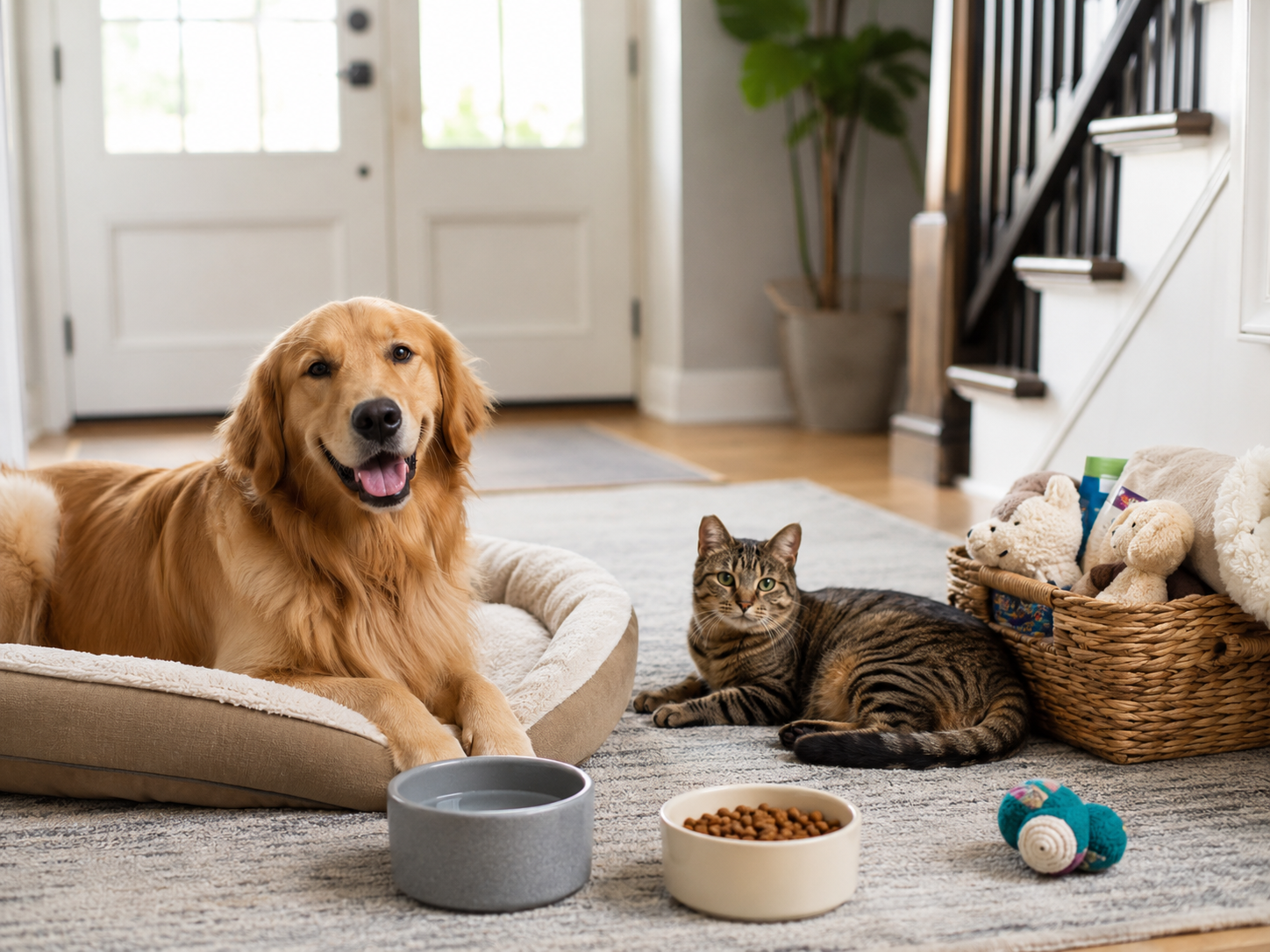
The area should not feel like punishment.
It should be somewhere the animal can relax without constant interruption.
You can use our guide on creating a safe and comfortable pet space at home when setting it up.
Keep the First Day Simple
It can be tempting to invite friends over and show the pet the entire house immediately.
That may be too much stimulation for some animals.
On the first day allow your new pet to:
- Drink
- Eat when ready
- Use the bathroom
- Explore a small safe area
- Sleep
- Observe the household
Stay nearby but avoid constantly touching or following the animal.
Some pets seek attention immediately while others need more time.
Set Up Food and Water Carefully
Keep fresh water available unless your veterinarian has given different instructions.
For the first few days it is usually easier to continue feeding the food the pet was already eating if that information is available.
A sudden food change can cause digestive upset in some dogs and cats.
If you plan to change diets read our guide on how to switch your pet to a new food safely.
Place food and water somewhere the pet can reach without being disturbed by other animals.
Introducing a New Dog to the Home
When a new dog arrives allow time for bathroom needs before asking for complicated interactions.
Keep the dog on a secure leash when appropriate during the first exploration.
Let the dog sniff and observe.
Do not immediately give unrestricted access to every room.
Watch for signs of stress such as:
- Repeated pacing
- Trying to hide
- Persistent barking
- Very heavy panting without heat or exercise
- Refusing interaction
- Growling when approached
Stress does not automatically mean the dog is aggressive.
Give the animal space and reduce pressure.
Introducing a New Cat to the Home
Cats often benefit from beginning in one quiet room.
Provide:
- A litter box
- Fresh water
- A comfortable resting place
- A hiding area
- A scratching surface
- A few safe toys
Do not pull a frightened cat out of a hiding place simply because you want the cat to explore.
Allow the cat to approach at its own pace.
As confidence increases you can gradually open access to more areas.
Introducing the New Pet to Resident Pets
Do not assume two friendly animals will immediately become friends.
A new animal entering the home changes territory routines and access to resources.
Start With Separation
Give the new pet and resident pet separate spaces at first.
This allows them to become aware of each other's smell and sounds without direct pressure.
Use Short Controlled Introductions
When both animals appear calm begin brief supervised introductions.
For dogs use secure leashes if needed.
For cats allow escape routes and elevated areas.
End the interaction before either animal becomes highly stressed.
Keep Important Resources Separate
At first provide separate:
- Food bowls
- Water locations
- Beds
- Resting spaces
- Litter resources when cats are involved

This reduces unnecessary competition.
Never Force Contact
Do not hold two animals together so they can smell each other.
Forced contact can make fear worse.
Progress may take hours days or longer depending on the animals.
Introducing Pets and Children
Children should be supervised around a new pet.
Teach children to avoid:
- Chasing the pet
- Hugging tightly
- Pulling ears or tails
- Taking food away
- Disturbing the pet while sleeping
- Following the pet into a hiding area
A pet that walks away is communicating that it needs space.
Adults should respect that signal and teach children to do the same.
Build a Predictable Daily Routine
Once the pet begins settling in start creating a simple schedule.
Include:
- Meals
- Fresh water
- Bathroom care
- Exercise
- Play
- Rest
- Basic grooming
Our guide on building a simple daily pet care routine provides a complete example.
A routine helps the pet learn what to expect and makes changes in normal behavior easier for you to notice.
Warning Signs to Watch
A new home can temporarily change appetite activity and behavior.
However you should not assume every problem is caused by stress.
Contact a veterinarian if your new pet has concerning signs such as:
- Repeated vomiting
- Severe diarrhea
- Difficulty breathing
- Collapse
- Significant weakness
- Persistent pain
- Inability to urinate
- Refusal to eat that concerns you
Cats that stop eating deserve particular attention because prolonged appetite loss can become medically serious.
Common New Pet Introduction Mistakes
Giving Full Access Immediately
A smaller safe area is often easier for a new pet to understand.
Inviting Too Many Visitors
The first day does not need to become a welcome party.
Forcing Resident Pets Together
Slow introductions are safer than trying to create instant friendship.
Changing Everything at Once
New food new people new rooms and new routines at the same time can be overwhelming.
Punishing Fear
A frightened pet needs safety and patient handling rather than punishment.
Ignoring Escape Risk
New pets may not yet understand where home is.
Be especially careful around exterior doors and open windows.
Frequently Asked Questions
How Long Does a New Pet Take to Settle In?
There is no exact timeline. Some pets become comfortable quickly while others may need days or weeks to adjust.
Should I Let a New Cat Explore the Entire House?
Starting with a smaller safe area is often easier. Increase access gradually as the cat becomes comfortable.
Should My New Dog Meet My Other Dog Immediately?
A calm controlled introduction is generally better than allowing uncontrolled contact as soon as the dog enters the home.
What if My Resident Pet Does Not Like the New Pet?
Slow the process down and increase separation. If aggression fear or conflict continues speak with your veterinarian or a qualified behavior professional.
When Should My New Pet See a Veterinarian?
Arrange veterinary care based on the pet's age medical history vaccination status adoption information and any symptoms. If you are unsure call your veterinary clinic for guidance.
Related DailyPetTips Guides
- How to Pet Proof Your Home for a Dog or Cat
- How to Create a Safe and Comfortable Space for Your Pet at Home
- How to Build a Simple Daily Pet Care Routine
Sources and References
Pet Health Disclaimer
This article provides general educational information and does not replace veterinary diagnosis treatment or individual behavior advice. Contact a veterinarian if your new pet appears ill develops severe symptoms or has behavior that creates a safety concern.
Editorial Note
This guide was prepared to provide practical pet owner information using established veterinary and animal welfare resources. Medical claims have been kept general and situations requiring professional care are clearly identified.
About the Author
Ibrahim is a pet care writer at DailyPetTips. He creates practical easy to understand guides for pet owners with a focus on responsible care safety and reliable educational sources.



Pet parent notes