Quick Answer
For many healthy dogs and cats, changing food gradually over about a week can reduce the chance of digestive upset.
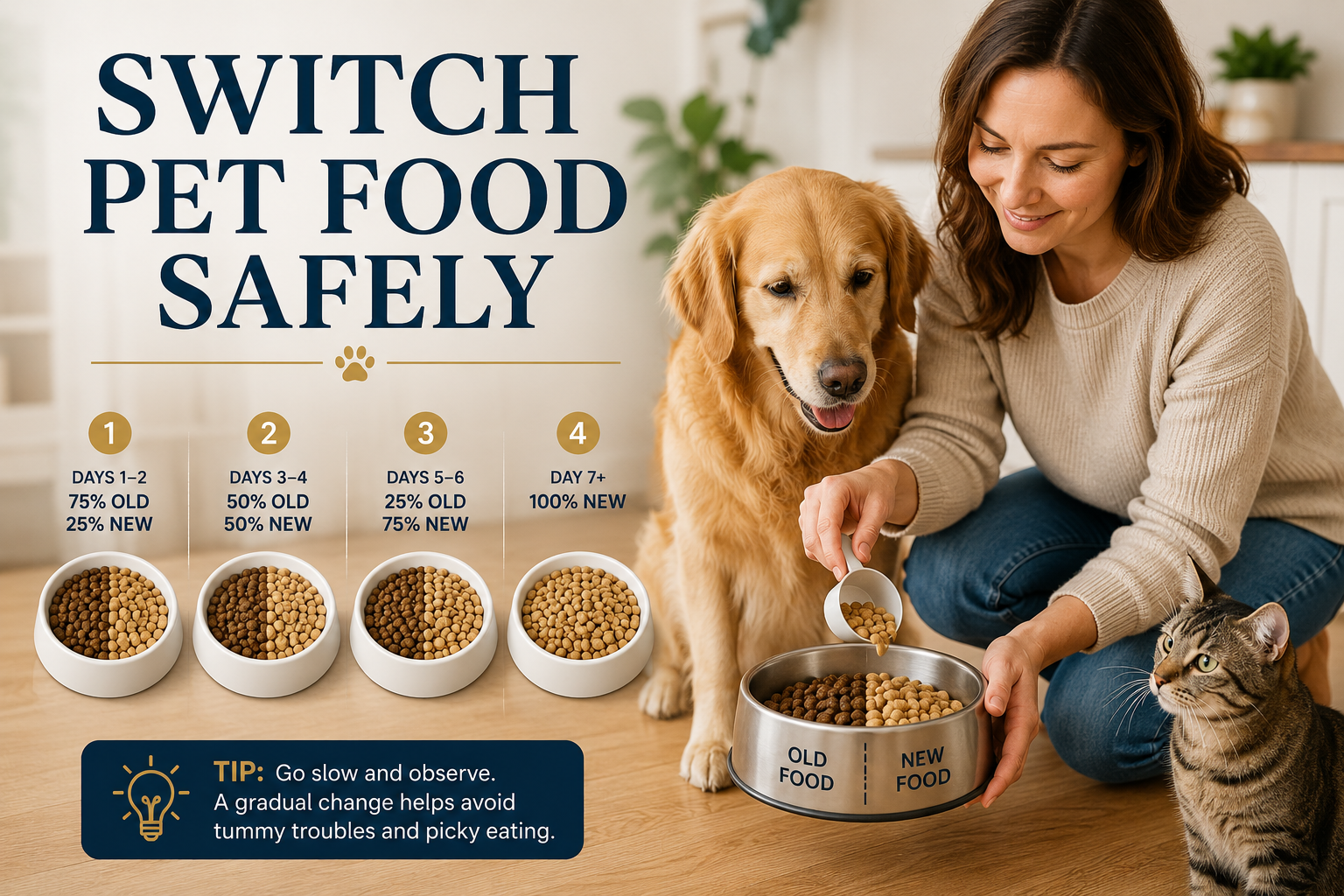
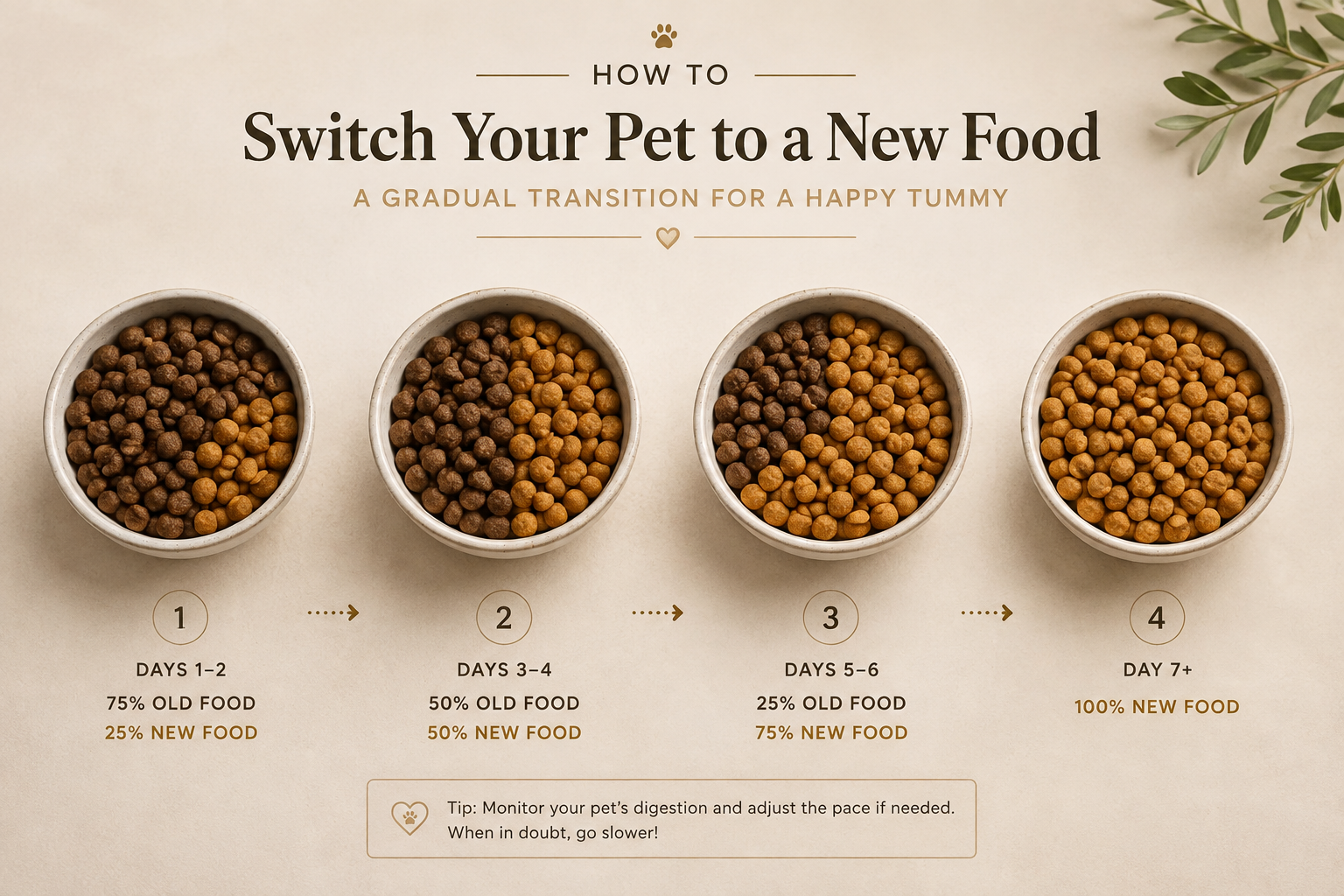
A common starting schedule is:
- Days 1 and 2: About 75 percent old food and 25 percent new food
- Days 3 and 4: About 50 percent old food and 50 percent new food
- Days 5 and 6: About 25 percent old food and 75 percent new food
- Day 7: New food
Some pets need a slower transition.
If your veterinarian gives different instructions, especially for a medical diet, follow the veterinary plan.
Key Takeaways
- Sudden diet changes can cause digestive upset in some pets.
- A gradual transition often works better for healthy dogs and cats.
- Sensitive pets may need 10 to 14 days or longer.
- Measure food rather than guessing.
- Avoid introducing many new treats at the same time.
- Watch stool, vomiting, appetite, energy and comfort.
- A cat that stops eating needs prompt attention.
- Severe or persistent symptoms require veterinary advice.
Why Changing Food Slowly Can Help
A new food may contain different:
- Protein sources
- Fat levels
- Fiber
- Ingredients
- Calorie density
- Texture
- Flavor
Your pet's digestive system may need time to adjust.
Some animals can change foods without a problem, while others develop loose stool, gas, vomiting or reduced appetite.
A gradual transition lets you introduce the new food in smaller amounts while watching how your pet responds.
Before choosing a new diet, our guide on how to read a pet food label can help you understand important package information.
A Simple Seven Day Transition Plan
For a healthy pet with no special veterinary instructions, this schedule can be a practical starting point.
Days 1 and 2
Feed approximately:
75 percent old food
25 percent new food
Watch your pet's appetite and stool.
Days 3 and 4
Move to approximately:
50 percent old food
50 percent new food
If your pet is doing well, continue.
Days 5 and 6
Feed approximately:
25 percent old food
75 percent new food
Continue monitoring digestion.
Day 7
If everything looks normal, move to:
100 percent new food
This schedule is not a strict medical rule.
Some pets transition faster and some need much longer.
When to Transition More Slowly
Consider a slower change if your pet:
- Has a history of sensitive digestion
- Has experienced diarrhea during previous food changes
- Is very selective about food
- Is changing between very different diet types
- Is older or medically fragile
- Has been advised by a veterinarian to transition slowly
A transition lasting 10 to 14 days may be easier for a sensitive pet.
If digestive symptoms appear during the transition, do not automatically keep increasing the amount of new food.
Pause and contact your veterinarian if you are concerned.
How Much Food Should You Give?
One common mistake is using the same cup measurement for the old and new food without checking calories.
Different foods can contain different calories per cup, can or pouch.
For example, one cup of the new diet may provide more calories than one cup of the old diet.
Read the calorie information and feeding directions on both products.
Your goal is to transition the diet, not accidentally increase or reduce daily calories by a large amount.
You can learn more in our guide on how to read a pet food label.
Keep Everything Else Simple
During a food transition, avoid changing several things at once.
If possible, do not introduce:
- Multiple new treats
- New table foods
- Several supplements
- Rich chews
- Large amounts of unfamiliar human food
If your pet develops stomach problems after several new foods were introduced together, it becomes difficult to know what caused the issue.
Keep the rest of the diet consistent while the main food changes.
Make Sure the New Food Is Fresh
Storage matters during a transition.
A pet may refuse food because it is stale or has been stored poorly rather than because the recipe itself is unsuitable.
Keep dry food sealed and protected from heat and moisture.
Opened wet food should be refrigerated according to manufacturer instructions.
For complete storage guidance, see how to store dry and wet pet food safely at home.
What Symptoms Can Happen During a Food Change?
Some pets may experience mild temporary changes such as:
- Slightly softer stool
- Mild gas
- Small changes in stool frequency
These should not become severe or continue getting worse.
Do not assume that repeated vomiting or significant diarrhea is a normal part of changing food.
Warning Signs to Contact a Veterinarian
Contact a veterinarian if your pet develops:
- Repeated vomiting
- Severe diarrhea
- Blood in vomit or stool
- Significant lethargy
- Signs of abdominal pain
- Weakness
- Dehydration
- Refusal to eat
- Symptoms that persist or worsen
Puppies, kittens, elderly animals and pets with existing medical conditions can become unwell more quickly.
Seek advice sooner for vulnerable pets.
What if Your Pet Refuses the New Food?
First, slow down.
Your pet may need more time to become familiar with the new smell or texture.
You can try:
- Using a smaller amount of new food
- Mixing it evenly with familiar food
- Serving meals at normal times
- Keeping the feeding environment calm
- Making sure the food is fresh
- Checking that the bowl is clean
Do not create a cycle in which refusal immediately results in increasingly rich treats or table food.
That can make the transition harder.
However, never try to starve a pet into accepting a food.
Special Advice for Cats
Cats deserve extra caution when appetite changes.
A cat that stops eating completely can develop serious health problems, especially if the cat is overweight or already unwell.
Do not wait for several days hoping that a cat will eventually accept a new food.
If your cat refuses food or eats very little, contact your veterinarian promptly.
A slow transition may be especially useful for cats that are sensitive to texture, smell or temperature.
Prescription and Veterinary Diets
If your veterinarian prescribed a special diet for:
- Kidney disease
- Urinary disease
- Diabetes
- Gastrointestinal problems
- Food allergy
- Weight management
- Another medical condition
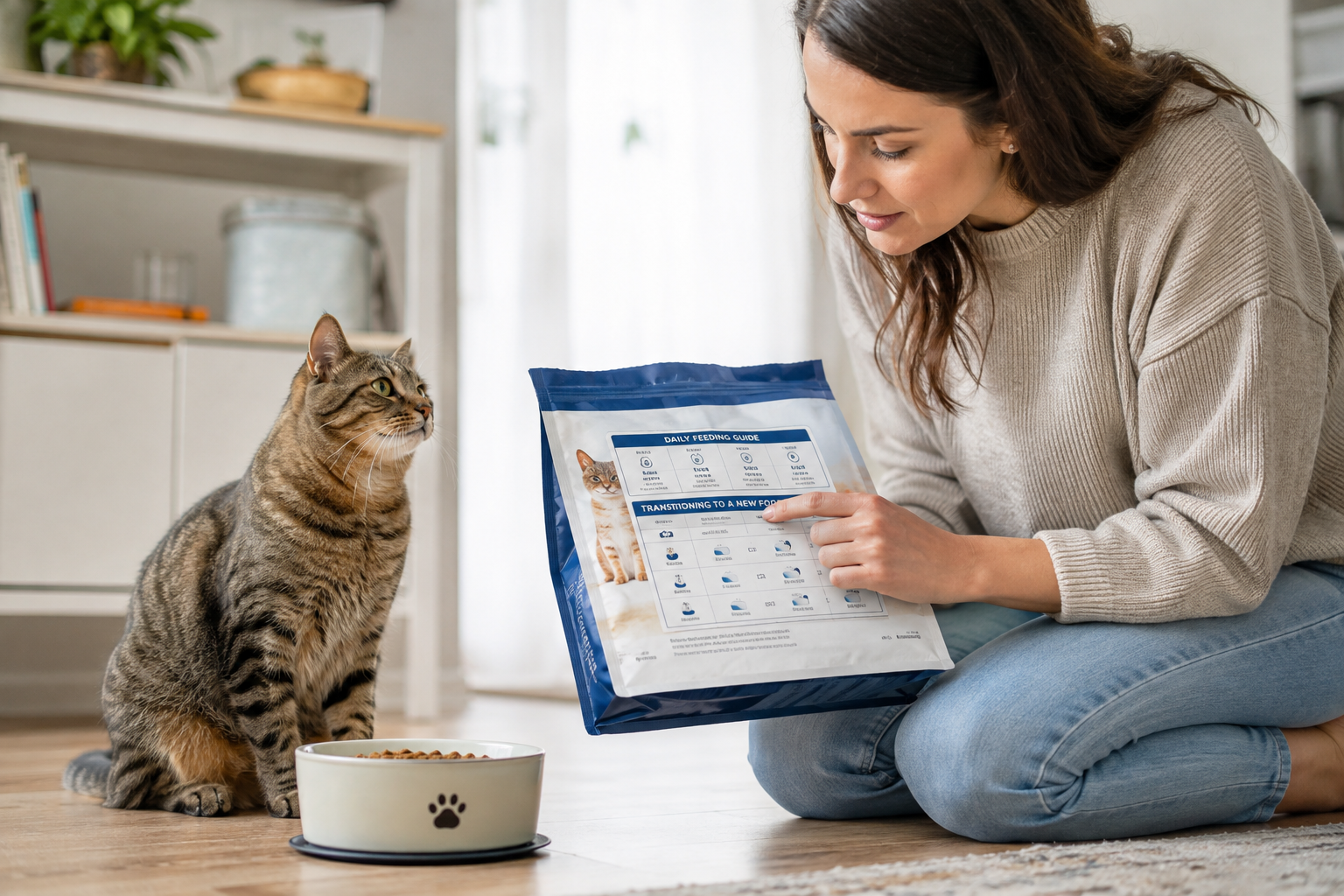
Follow the veterinarian's transition instructions.
There are situations where the medical need for a new diet changes the usual transition plan.
Do not delay a prescribed diet simply because a general online guide recommends seven days.
Your veterinarian knows why the food was prescribed.
Common Food Transition Mistakes
Changing the Diet Overnight
Some pets tolerate it, but others develop digestive upset.
Increasing Treats at the Same Time
This makes it harder to understand how the new food is affecting your pet.
Ignoring Calorie Differences
The same volume of two foods may not contain the same calories.
Switching Again Immediately After Mild Symptoms
Repeatedly changing foods can make the situation more confusing.
Assuming All Vomiting and Diarrhea Are Caused by the Food
Digestive symptoms can have many causes, including illness, parasites, toxins and foreign objects.
Waiting Too Long When a Cat Stops Eating
Loss of appetite in cats deserves prompt attention.
Frequently Asked Questions
How Long Should I Take to Change My Dog's Food?
About seven days is a common starting point for many healthy dogs, but sensitive dogs may need a slower transition.
How Long Should I Take to Change My Cat's Food?
Many cats also benefit from a gradual transition. Very selective cats may need more time because texture and smell can strongly affect acceptance.
Can I Switch Food Immediately?
Sometimes a veterinarian may specifically recommend an immediate change. Otherwise, gradual transition is often easier for healthy pets.
What if My Pet Gets Diarrhea During the Transition?
Stop increasing the new food and monitor closely. Contact your veterinarian if diarrhea is severe, persistent or accompanied by other symptoms.
Can I Mix Dry and Wet Food During the Transition?
Yes, if both foods are appropriate for your pet and the total calories are controlled. The transition plan may need to be adjusted based on the products.
What if My Cat Refuses to Eat the New Food?
Do not let a cat go for a prolonged period without eating. Contact your veterinarian promptly if your cat refuses food or eats very little.
Sources and References
- World Small Animal Veterinary Association Global Nutrition Guidelines
- U.S. Food and Drug Administration Animal and Veterinary
- Association of American Feed Control Officials
- American Veterinary Medical Association Pet Owner Resources
Veterinary Disclaimer
This article is for general educational purposes. It does not replace veterinary diagnosis, treatment or individualized nutritional advice.
Contact a veterinarian if your pet has significant vomiting, diarrhea, pain, dehydration, weakness, persistent loss of appetite or other concerning symptoms. Cats that stop eating should receive prompt veterinary attention.
About the Author
Ibrahim is a pet care writer at DailyPetTips. He creates practical and easy to understand guides for pet owners using reliable veterinary, animal welfare and educational sources where relevant. DailyPetTips content is reviewed for clarity, usefulness and responsible pet care guidance before publication.


Pet parent notes