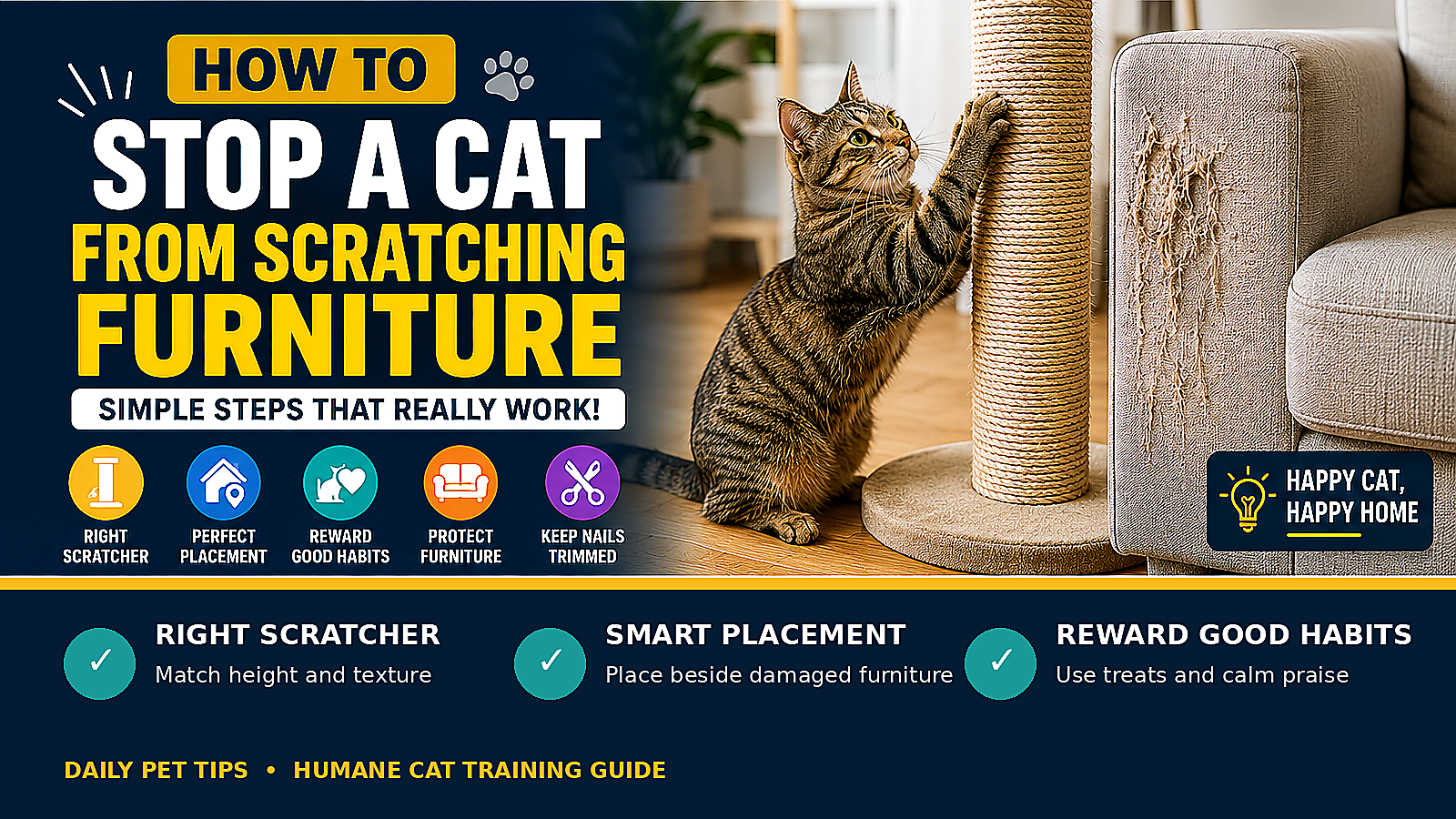

Scratching is normal cat behavior.
Cats scratch to stretch their body. Mark an area. Remove old nail layers. And release energy.
Your cat is not destroying furniture to make you angry.
The best solution is to protect the furniture while giving your cat a better place to scratch.
This guide explains why cats scratch. Which scratching post to choose. Where to place it. How to reward the correct behavior. And what mistakes can make the problem worse.
Quick Answer
Place a strong scratching post directly beside the furniture your cat uses.
Choose a post that matches your cat’s preferred direction and material. Reward the cat when it uses the post. Cover the furniture temporarily with a safe protector. Never hit. Shout. Spray water. Or punish the cat.
Why Do Cats Scratch?
Scratching has several natural purposes.
Cats may scratch to:
- Stretch the shoulders and back
- Remove old outer nail layers
- Leave a visual mark
- Leave scent from glands in the paws
- Release excitement
- Reduce stress
- Prepare for movement after sleep
This is why completely stopping scratching is not a realistic goal.
The goal is to move scratching from furniture to an acceptable surface.
Why Does My Cat Choose the Sofa?
A sofa may be attractive because it is:
- Stable
- Tall enough for stretching
- Covered in useful fabric
- Located in a busy room
- Near a sleeping place
- Already marked with scratches
A small weak scratching post in a hidden room may not compete with a large stable sofa.
What Type of Scratcher Does Your Cat Need?
Cats have different preferences.
| Scratching Style | Best Starting Option | Important Note |
|---|---|---|
| Vertical scratching | Tall scratching post | The cat should be able to stretch fully. |
| Horizontal scratching | Flat cardboard or sisal pad | Place it where the cat already scratches. |
| Corner scratching | Corner mounted scratcher | It must remain stable. |
| Carpet scratching | Horizontal textured mat | Use a surface different from valuable carpet when possible. |
What Makes a Good Scratching Post?
A useful scratching post should be:
- Stable
- Tall enough for a full stretch
- Covered in a material your cat likes
- Placed in a useful location
- Wide enough for comfortable use
- Safe from falling
A post that moves or falls can frighten your cat.
Check the base before use.
Which Scratching Materials Do Cats Like?
Common materials include:
- Sisal rope
- Sisal fabric
- Cardboard
- Wood
- Carpet
Offer more than one type when you do not know your cat’s preference.
Watch what material your cat already chooses.
Where Should You Place a Scratching Post?
Placement is extremely important.
Good locations include:
- Beside the scratched sofa
- Near a sleeping area
- Near the room entrance
- In a busy family area
- Near a window
- Beside another marked surface
Cats often scratch after waking.
A post near the sleeping place can be useful.
Do not hide the only post in a room your cat rarely visits.
How to Stop a Cat From Scratching Furniture
Step 1: Identify the Favorite Surface
Notice whether your cat scratches:
- Vertically
- Horizontally
- On fabric
- On carpet
- On wood
- In one specific location
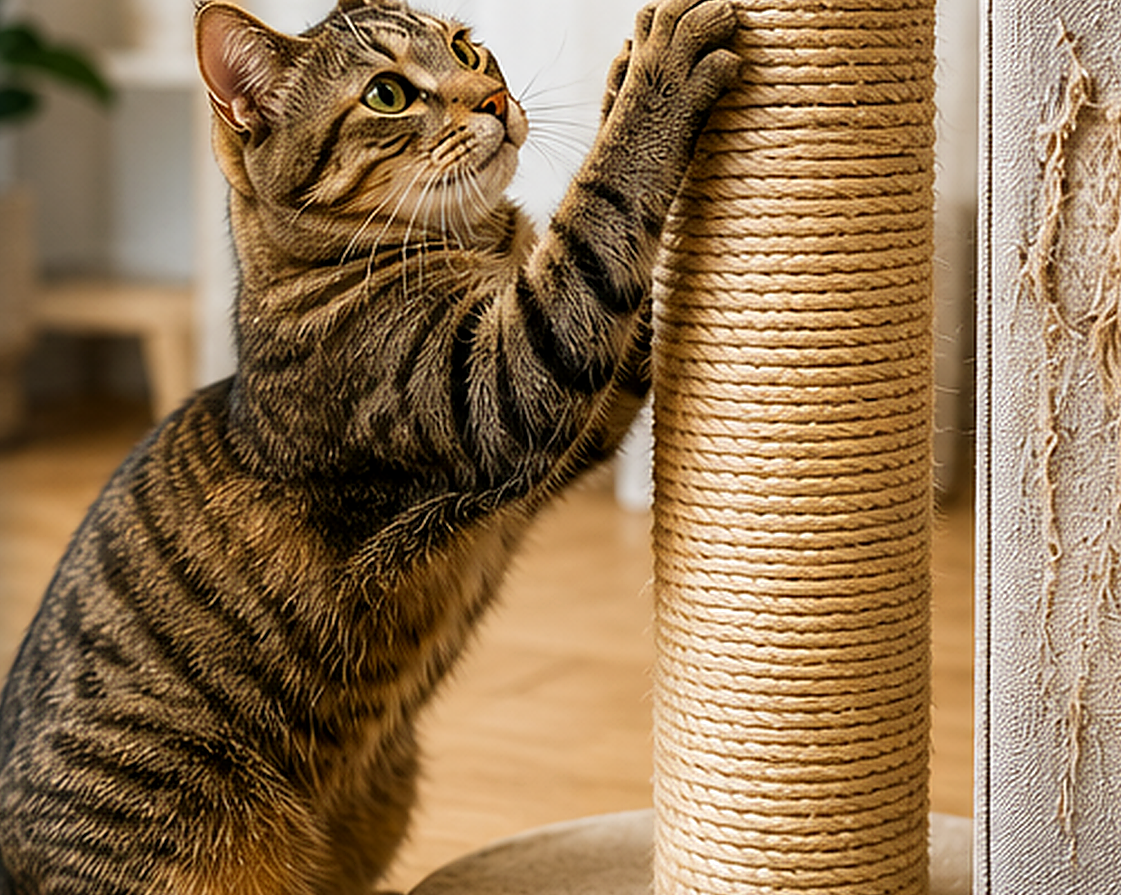
This tells you what type of scratcher to provide.
Step 2: Place the Scratcher Beside the Furniture
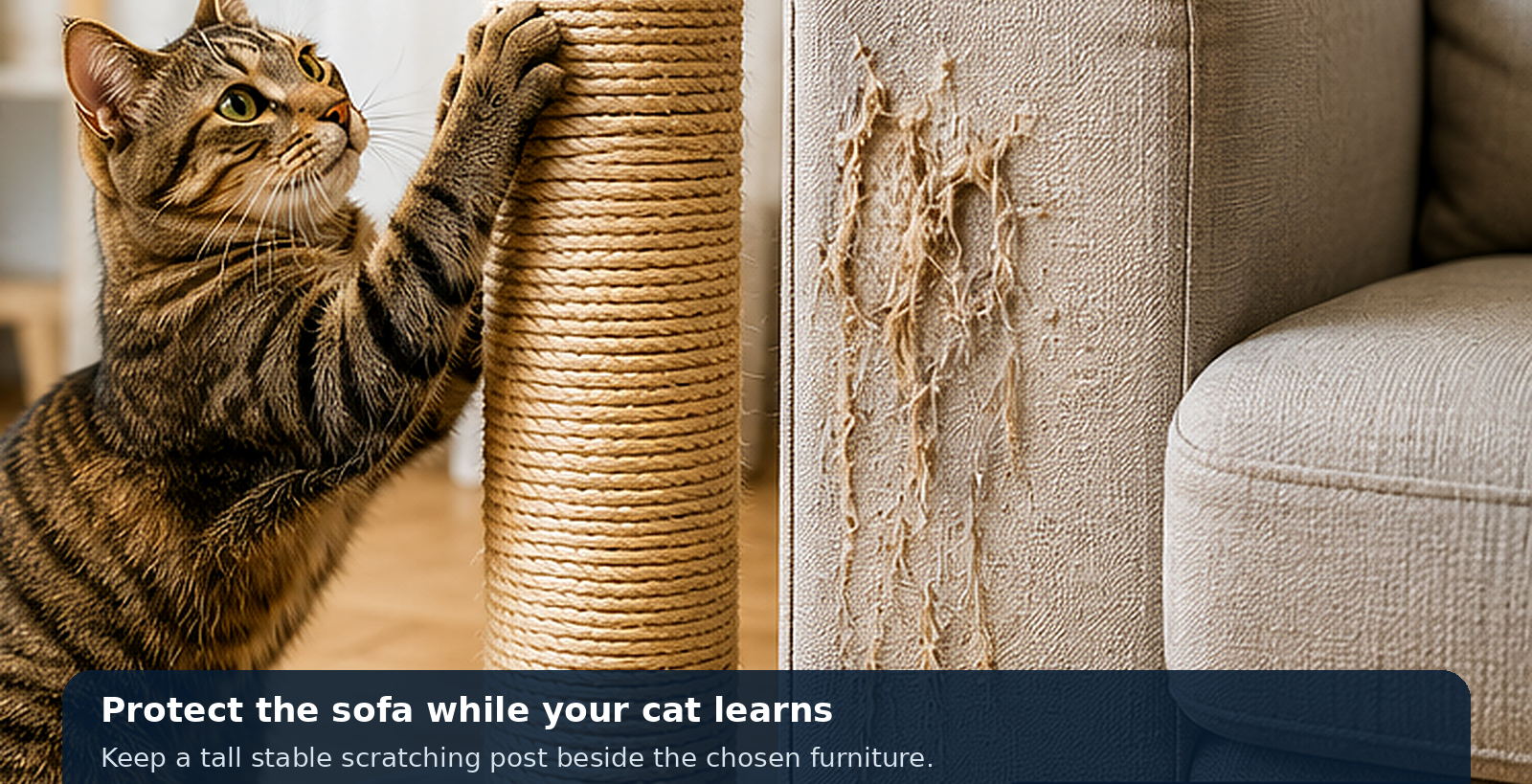
Place it directly beside the scratched area.
Do not begin several metres away.
Step 3: Make the Scratcher Interesting
Move a toy around the post.
Place a small amount of catnip on it when your cat responds to catnip.
Do not force your cat’s paws onto the surface.
Step 4: Reward Correct Scratching
Give praise. A treat. Or play immediately after your cat uses the scratcher.
Reward timing matters.
Step 5: Protect the Furniture
Use a temporary furniture cover.
You may also use a cat safe furniture protector or double sided pet tape.
Test any product on a hidden part of the furniture first.
Step 6: Keep the Post in Place
Do not remove the post after one successful day.
Your cat needs a permanent legal scratching area.
Step 7: Add More Scratching Areas
A large home may need several posts.
A multi cat home may also need more options.
Should You Move the Scratching Post Later?
You can move it slowly after your cat uses it regularly.
Move it only a small distance every few days.
Do not move it suddenly to a hidden room.
How to Protect a Sofa From Cat Scratching
Try:
- A fitted sofa cover
- A clear furniture guard
- Pet safe double sided tape
- A scratching post beside the sofa
- A horizontal pad near the sofa arm
- Regular nail trimming
Do not use a product that damages the fabric or leaves dangerous residue.
How to Stop Carpet Scratching
Place a wide horizontal scratching pad over or beside the chosen area.
Use a stable pad that does not slide.
Reward your cat for using it.
Block access to the damaged carpet temporarily when possible.
How to Stop Door Frame Scratching
Use a tall corner or wall scratcher.
Place it directly over or beside the used area.
Make sure it is firmly attached.
A door frame may be attractive because it is tall and stable.
Should You Trim a Cat’s Nails?
Regular nail trimming may reduce sharp damage.
It does not remove the need to scratch.
Use cat nail clippers.
Trim only the sharp transparent tip.
Avoid the pink quick inside the nail.
Ask a veterinarian or groomer for help when you are unsure.
Can Nail Caps Help?
Soft nail caps may reduce furniture damage for some cats.
They must fit correctly and be replaced regularly.
Some cats dislike them.
Ask a veterinarian or experienced groomer to show you safe use.
Nail caps do not replace scratching posts.
Should You Spray Water at a Scratching Cat?
No.
Spraying may frighten your cat.
It may also damage trust without teaching the correct place to scratch.
Your cat may simply wait until you leave the room.
Reward the correct surface instead.
Why Punishment Does Not Work Well
Punishment may increase stress.
It can also make your cat afraid of you.
A cat needs an acceptable scratching surface.
Shouting does not remove the natural need to scratch.
Never Hit or Physically Punish a Cat
Physical punishment can cause fear. Injury. Defensive biting. And a weaker relationship with your cat.
Should You Use Essential Oils as a Deterrent?
Do not apply essential oils around your cat without veterinary guidance.
Some essential oils are toxic to cats.
Use products clearly labeled as safe for cats.
Physical furniture protection is often safer.
How Play Can Reduce Problem Scratching
Scratching may increase when a cat has extra energy.
Provide daily play with:
- Wand toys
- Soft balls
- Toy mice
- Food puzzles
- Safe climbing areas
Allow your cat to chase and catch the toy.
Put string toys away after supervised play.
How Stress Affects Scratching
A cat may scratch more during:
- A house move
- A new pet introduction
- A change in routine
- Conflict with another cat
- Construction noise
- A new baby
- Visitors
Provide quiet spaces. Hiding places. High resting areas. And predictable routines.
Read our calm home checklist for pet parents.
How to Help a Kitten Use a Scratching Post
Place a small stable post near the kitten’s sleeping and play areas.
Use toys to guide attention toward it.
Reward every correct use.
Do not use your hands as toys.
Kittens can learn safe habits early.
How to Help an Older Cat
Older cats may have joint pain.
A very tall stretch may be uncomfortable.
Offer:
- A lower angled scratcher
- A horizontal pad
- A stable surface
- Easy access
- A warm nearby resting place
Contact a veterinarian when your older cat suddenly stops scratching or moving normally.
Why Did My Cat Suddenly Start Scratching More?
Possible reasons include:
- A new pet
- Stress
- A moved scratching post
- A damaged old post
- Changes in the home
- More outdoor cats near windows
- Reduced play
Look for the change that happened before the behavior increased.
Common Furniture Scratching Mistakes
Buying a Post That Is Too Short
Your cat may not be able to stretch fully.
Placing the Post Far Away
Begin beside the damaged furniture.
Using an Unstable Post
A moving post may feel unsafe.
Forcing the Cat’s Paws
This can create fear of the post.
Punishing the Cat
Teach the correct choice instead.
Removing the Old Post Too Soon
A worn post may still be valuable because it carries the cat’s scent.
Providing Only One Texture
Offer different materials when your cat ignores the first one.
Declawing Is Not a Simple Nail Trim
Declawing removes part of each toe.
It is not the same as trimming nails.
It can cause pain and long term problems.
Use scratching posts. Furniture protection. Nail care. And behavior guidance instead.
When Should You Contact a Veterinarian?
Contact a veterinarian when your cat:
- Suddenly stops scratching
- Cries while using a paw
- Has a damaged nail
- Has swelling
- Has bleeding
- Begins limping
- Licks one paw constantly
- Shows severe behavior change
- Becomes unusually aggressive
- May have joint pain
Frequently Asked Questions
Can I completely stop my cat from scratching?
No. Scratching is normal. Redirect it to safe surfaces.
What is the best scratching material?
Many cats like sisal or cardboard. Individual preferences differ.
Why does my cat ignore the new post?
It may be too short. Unstable. In the wrong location. Or covered in the wrong material.
Should I place catnip on the post?
You can try a small amount. Not every cat responds to catnip.
Does nail trimming stop scratching?
No. It may reduce damage but the natural behavior remains.
How many scratching posts do I need?
Provide several options in a large or multi cat home.
Why does my cat scratch after waking?
Scratching allows stretching and normal scent marking.
Can I cover the sofa permanently?
You can use a cover while training. Keep an acceptable scratching surface nearby.
Should I replace a damaged scratching post?
Replace it when it becomes unsafe. Some cats prefer a worn surface so place the new post beside the old one first.
Final Thoughts
Scratching is a normal and healthy cat behavior.
Do not punish your cat.
Choose a stable post that matches your cat’s preferred direction and material.
Place it directly beside the furniture.
Reward correct scratching.
Protect the furniture while the new habit develops.
Provide play. Resting spaces. And more than one scratching area when needed.
Related DailyPetTips Guides
- How to Brush a Cat at Home Safely
- How Often Should You Clean a Cat Litter Box?
- A Calm Home Checklist for Every Pet Parent
- Explore All Cat Guides
- Explore Pet Training Guides



Pet parent notes