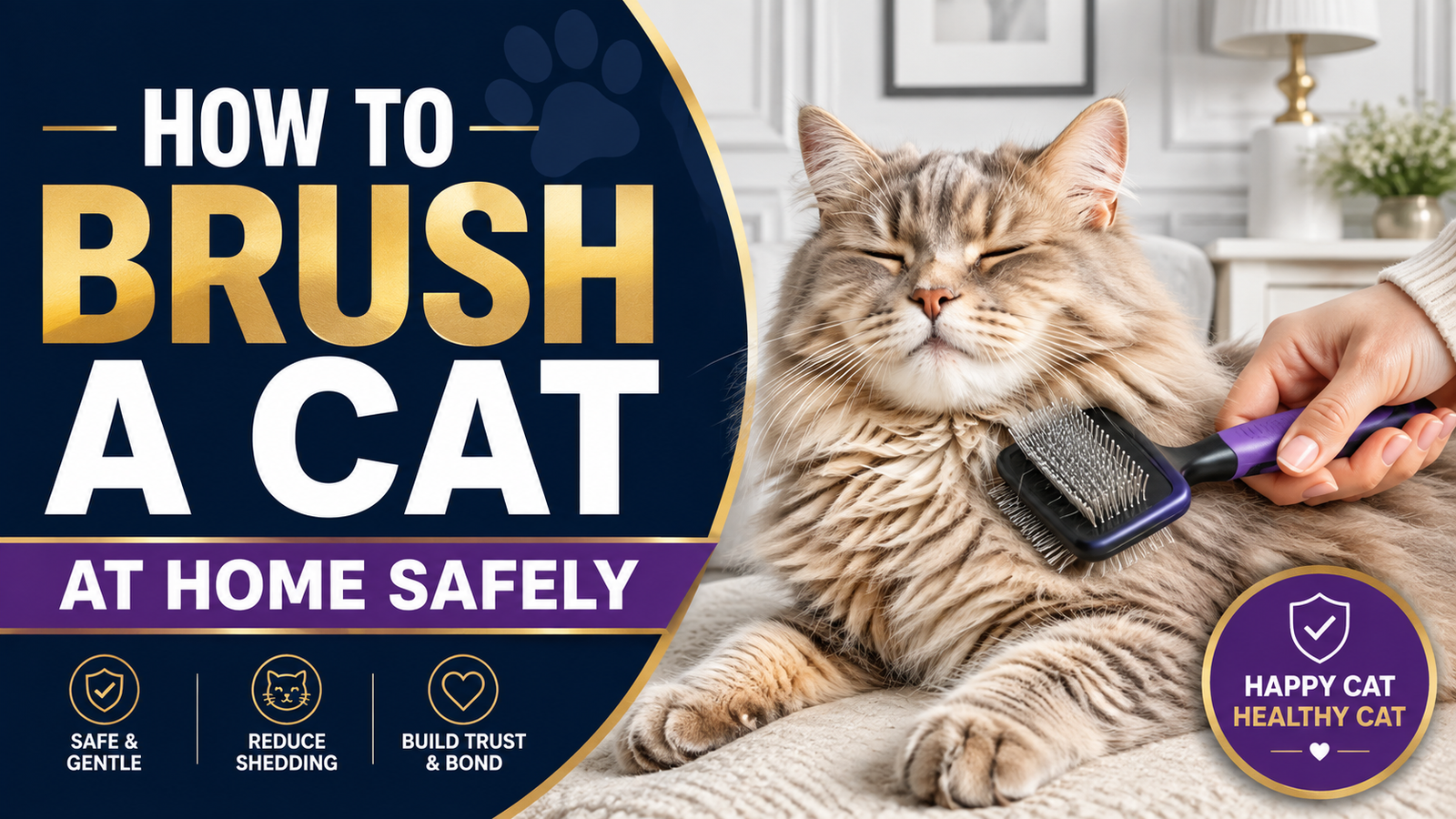

Regular brushing can help keep your cat’s coat clean and comfortable.
It removes loose hair. It can reduce small tangles. It also gives you a chance to check the skin for unusual changes.
Short haired cats may only need a quick brushing once or twice a week. Long haired cats may need brushing every day.
Brushing should be calm and gentle. Pulling hard on a mat can hurt the skin and make your cat afraid of future grooming.
This guide explains which brush to use. How often to brush. How to introduce grooming. How to handle small tangles. And when a veterinarian or professional groomer should help.
Quick Answer
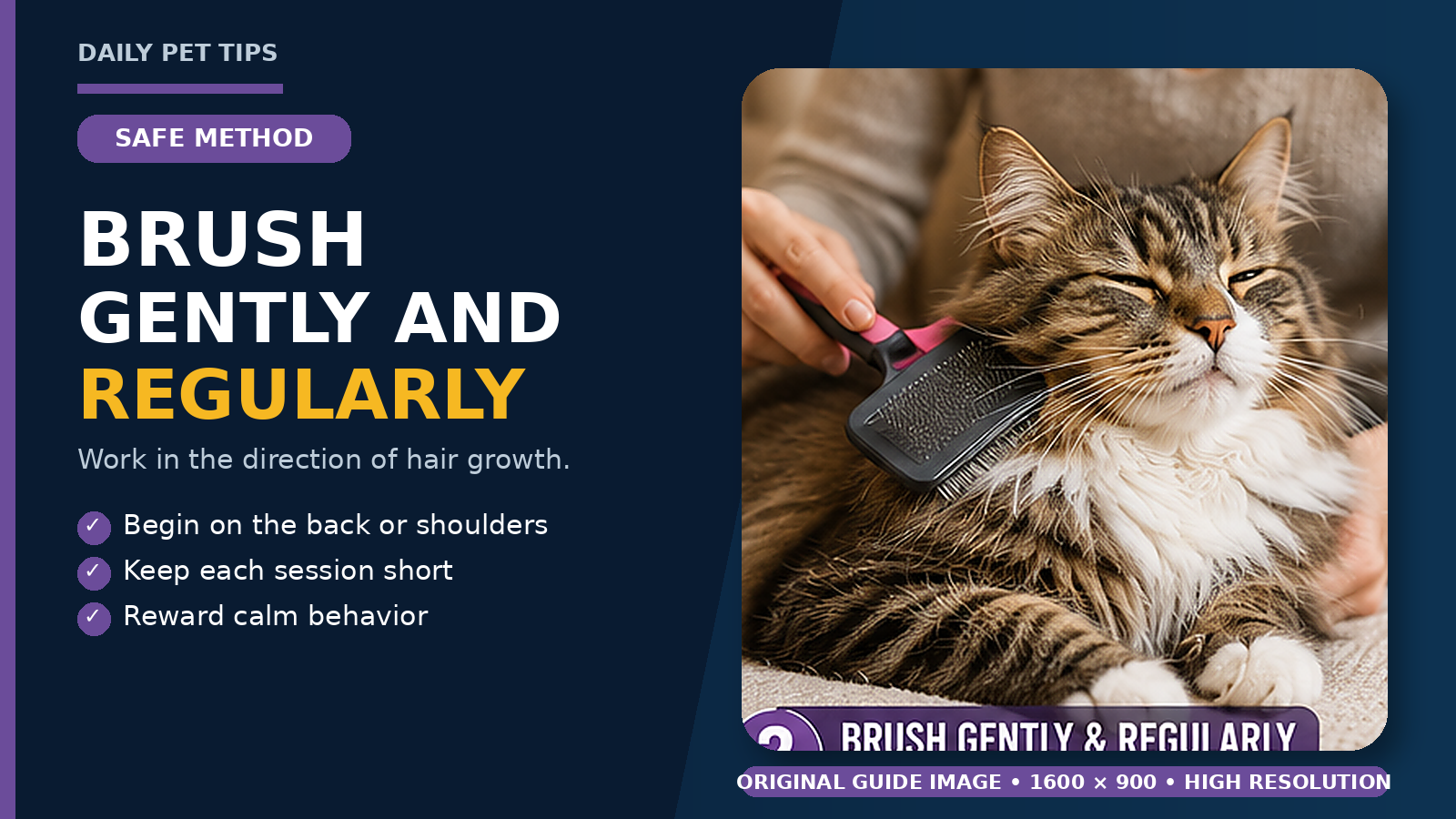
Brush in the direction of hair growth. Use short and gentle strokes. Begin on the back or shoulders where many cats feel comfortable.
Short haired cats may need brushing once or twice a week. Long haired cats may need it several times a week or every day. Stop when your cat shows pain or strong stress. Never pull hard on tight mats or cut close to the skin with household scissors.
Why Should You Brush a Cat?
Cats spend a lot of time cleaning themselves.
They still benefit from human help.
Brushing may help:
- Remove loose hair
- Reduce small tangles
- Prevent some mats
- Spread natural oils through the coat
- Reduce loose hair around the home
- Find fleas or ticks
- Find lumps or swelling
- Notice dry or irritated skin
- Help older cats that cannot groom easily
Brushing does not stop natural shedding.
It removes some hair before the cat swallows it or leaves it around the home.
How Often Should You Brush a Cat?
The correct routine depends on the coat.
| Coat Type | Possible Brushing Routine | Useful Tool |
|---|---|---|
| Short smooth coat | Once or twice a week | Soft brush or rubber grooming mitt |
| Medium coat | Two or three times a week | Soft slicker brush and comb |
| Long coat | Several times a week or daily | Pin brush. Slicker brush. Wide tooth comb |
| Thick undercoat | Two or three times a week | Comb or gentle undercoat tool |
| Older or overweight cat | Check the coat daily | Soft brush that is comfortable on sensitive skin |
Important: Increase brushing when the coat begins tangling or shedding heavily.
What Affects a Cat’s Brushing Schedule?
Consider:
- Hair length
- Coat thickness
- Amount of shedding
- Age
- Body weight
- Joint movement
- Skin health
- Outdoor activity
- How quickly tangles form
A healthy young short haired cat may manage most coat care alone.
An older long haired cat may need daily help.
How to Choose the Right Cat Brush
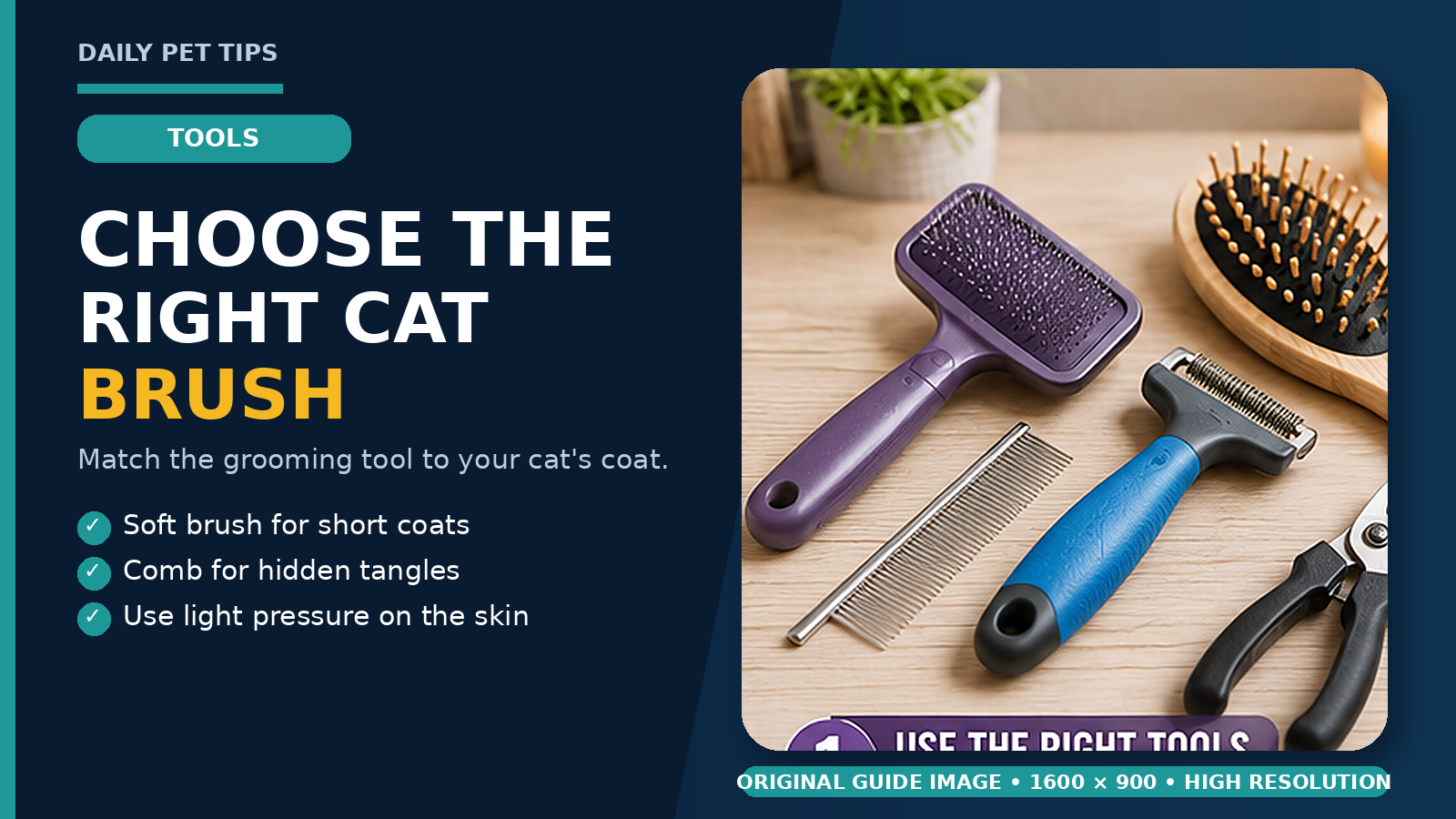
Soft Bristle Brush
A soft brush may work well for short smooth coats.
It removes surface hair and light dirt.
Rubber Grooming Mitt
A rubber mitt collects loose hair while feeling similar to petting.
It can be useful for cats that dislike normal brushes.
Slicker Brush
A slicker brush has many fine wires.
It can help with loose hair and small tangles.
Use very light pressure because the wires may scratch the skin.
Pin Brush
A pin brush may work well for longer coats.
It can move through hair without pulling as strongly as some other tools.
Metal Comb
A comb helps find tangles hidden near the skin.
Use a wide tooth comb first when the coat is thick.
Deshedding Tool
Some deshedding tools remove large amounts of undercoat.
They can damage the coat or skin when used too often or with too much pressure.
Ask a groomer which tool is suitable for your cat.
Test the Brush on Your Arm
Move the brush gently across your skin. A tool that feels sharp or painful on you may also be uncomfortable for your cat.
What You Need Before Brushing
Prepare:
- A suitable brush
- A comb if needed
- Small cat treats
- A non slip mat or towel
- Good lighting
- A quiet room
- A short grooming plan
Choose a time when your cat is calm.
A cat resting after play or food may be easier to brush.
How to Introduce a Cat to a Brush
Do not begin with a long full body session.
Step 1: Show the Brush
Place it near your cat.
Allow your cat to smell it.
Give a treat for calm behavior.
Step 2: Touch With Your Hand
Stroke your cat in a comfortable area.
This may be the shoulders. Back. Or cheeks.
Step 3: Make One Brush Stroke
Brush once in the direction of hair growth.
Give a treat.
Step 4: End Early
Stop after a small success.
Repeat later.
Several short sessions can build comfort better than one forced session.
How to Brush a Cat Safely
Step 1: Start on the Back
Begin on the shoulders or upper back.
Many cats are comfortable being touched there.
Step 2: Brush With the Hair
Move in the natural direction of hair growth.
Use short gentle strokes.
Step 3: Use Light Pressure
The brush should move through hair without scraping the skin.
Stop when your cat flinches or turns suddenly.
Step 4: Work in Small Sections
Brush one area at a time.
This is especially important for long coats.
Step 5: Check the Brush
Remove collected hair regularly.
A full brush may pull instead of moving smoothly.
Step 6: Check Common Tangle Areas
Look carefully:
- Behind the ears
- Under the front legs
- Around the chest
- On the stomach
- Around the back legs
- Near the tail
- Under a collar or harness
Step 7: Use a Comb
Move a comb gently through a long coat after brushing.
Do not force it through resistance.
Step 8: Reward Your Cat
Give a small treat or calm play.
End while your cat is still relaxed.
How to Brush a Short Haired Cat
Use a soft brush or rubber mitt.
Begin at the neck and move toward the tail.
Brush the back. Sides. Chest. And legs.
Use very gentle strokes on the stomach.
One or two short sessions each week may be enough for many short haired cats.
How to Brush a Long Haired Cat
Long hair can hide tangles near the skin.
Divide the coat into small sections.
Begin near the end of the hair.
Move closer to the skin only after the ends are smooth.
Use a pin brush or soft slicker brush.
Finish with a wide tooth comb.
Check behind the ears. Under the legs. And near the tail every day.
How to Handle a Small Tangle
Hold the hair close to the skin.
This reduces pulling.
Use your fingers to loosen the outside edge.
Brush from the end of the hair.
Move toward the skin slowly.
A detangling spray made for cats may help when your veterinarian or groomer recommends it.
Stop if your cat shows pain.
What Should You Do About a Tight Mat?
A mat is a tight group of tangled hair.
Mats pull on the skin.
They can trap moisture. Dirt. And waste.
They may hide sores or infection.
Do not cut a tight mat with household scissors.
Cat skin is thin and may be pulled inside the mat.
Ask a professional groomer or veterinarian for help when:
- The mat is close to the skin
- The mat is large
- Several areas are matted
- The skin looks red or wet
- Your cat shows pain
- The mat is near the eyes
- The mat is near the ears
- The mat is around the anus
Never Pull Hard on a Mat
Hard pulling is painful and may damage the skin. Severe mats need safe professional removal.
Can Brushing Reduce Hairballs?
Brushing removes some loose hair before your cat swallows it.
This may help reduce the amount of hair entering the stomach.
Brushing does not prevent every hairball.
Contact a veterinarian when your cat:
- Vomits repeatedly
- Tries to vomit without producing anything
- Stops eating
- Becomes weak
- Has constipation
- Has a swollen or painful stomach
Do not give a hairball product without checking whether it is suitable for your cat.
How to Brush a Cat During Shedding Season
Some cats shed more during seasonal changes.
Increase brushing slowly.
Short daily sessions may work better than one long weekly session.
Use gentle tools.
Heavy shedding with bald areas. Red skin. Or itching is not normal seasonal shedding and needs veterinary attention.
How to Help an Older Cat With Grooming
Older cats may have arthritis or reduced flexibility.
They may struggle to clean:
- The lower back
- The hips
- The stomach
- The back legs
- The area near the tail
Use a soft brush.
Support the body comfortably.
Do not force painful joints into a new position.
Greasy hair. Mats. Or reduced grooming can sometimes be an early sign of pain or illness.
How to Brush an Overweight Cat
An overweight cat may not reach every part of the body.
Pay attention to the lower back and tail area.
Keep sessions short.
Ask a veterinarian for a safe weight management plan.
Do not reduce food suddenly without guidance.
How to Brush a Cat That Hates Grooming
Begin with a tool that feels like petting.
A rubber mitt may be easier than a wire brush.
Try this plan:
- Show the brush.
- Give a treat.
- Touch the back with the brush.
- Give another treat.
- Make one gentle stroke.
- End the session.
Repeat over several days.
Watch your cat’s body language.
Stop when you see:
- Tail hitting the floor
- Ears turning back
- Skin moving sharply
- Growling
- Hissing
- Trying to bite
- Trying to escape
Do not punish these warnings.
They show that your cat needs more space or may be uncomfortable.
Should You Brush Before or After a Bath?
Most cats do not need regular baths.
When a bath is necessary remove small tangles before the coat becomes wet.
Water can make some mats tighter.
Allow the coat to dry before gentle final brushing.
Ask a veterinarian or groomer for help when the coat has a harmful substance or severe matting.
Can You Brush a Wet Cat?
Wet hair can stretch and break more easily.
Do not pull a brush through a dripping wet or tangled coat.
Dry the coat gently first.
Follow professional advice when your cat has a special coat type or medical bathing plan.
What Should You Check During Brushing?
Look for:
- Fleas
- Ticks
- Flea dirt
- Dry flakes
- Red skin
- Scabs
- Bald areas
- Lumps
- Swelling
- Open sores
- Pain
- Strong odor
Do not apply random flea or skin products.
Some dog products are dangerous for cats.
Common Cat Brushing Mistakes
Using Too Much Pressure
Sharp brush wires may scratch the skin.
Brushing Against the Hair
This can pull and make some cats uncomfortable.
Brushing Only the Top Layer
Long coats may hide mats near the skin.
Pulling Through Tangles
Hold hair near the skin and work slowly.
Making Sessions Too Long
End after a small success.
Ignoring Body Language
Tail movement. Ear position. And skin twitching can show stress.
Using Dog Products
Use products made for cats.
Cutting Mats With Scissors
Cat skin can be cut very easily.
When Should You Use a Professional Groomer?
A cat groomer may be helpful when:
- The coat has several mats
- Your cat has a very thick coat
- Your cat cannot groom because of age or weight
- Sanitary trimming is needed
- The coat contains something sticky
- You cannot groom safely
- Your cat becomes highly stressed
Choose a groomer experienced with cats.
Tell the groomer about medical conditions. Pain. Past behavior. And sensitive areas.
When Should You Contact a Veterinarian?
Contact a veterinarian when your cat has:
- Open sores
- Bleeding skin
- Severe itching
- Large bald areas
- Sudden heavy shedding
- Strong skin odor
- Wet or infected looking skin
- Pain when touched
- Many fleas or ticks
- A new or changing lump
- Sudden reduced grooming
- Repeated hairballs or vomiting
Skin problems can be caused by parasites. Allergies. Infection. Pain. Hormonal disease. And other health conditions.
Frequently Asked Questions
Can I brush my cat every day?
Yes. Daily gentle brushing may be useful for long haired cats and heavy shedders.
Can you brush a cat too much?
Yes. Too much pressure or repeated brushing in one area may irritate the skin.
Why does my cat bite the brush?
Your cat may be playing. Overstimulated. Afraid. Or in pain.
Why does my cat have dandruff?
Dry flakes may be caused by dry skin. Reduced grooming. Weight. Parasites. Or illness.
Does brushing stop shedding?
No. Brushing removes loose hair but does not stop natural shedding.
Can I use a human hairbrush?
A very soft brush may work for light surface grooming. A cat grooming tool is usually more effective.
Should I brush my kitten?
Yes. Use a very soft brush and short sessions to build a positive habit.
Can I cut a mat with scissors?
No. Tight mats can pull thin cat skin into the cutting area.
Why does my cat purr while being brushed?
Your cat may enjoy the attention. Purring can also happen during stress. Watch the full body language.
Final Thoughts
Brushing is a useful part of cat care.
Choose a tool that matches the coat.
Brush in the direction of hair growth.
Use light pressure and short sessions.
Short haired cats may need brushing once or twice a week.
Long haired cats may need brushing several times a week or daily.
Never pull hard on mats or cut them with household scissors.
Regular grooming can keep the coat more comfortable and help you notice skin or health changes early.
Related DailyPetTips Guides
- How Often Should You Clean a Cat Litter Box?
- A Calm Home Checklist for Every Pet Parent
- Explore All Cat Guides
- Explore Pet Grooming Guides
- Explore Pet Health Guides



Pet parent notes