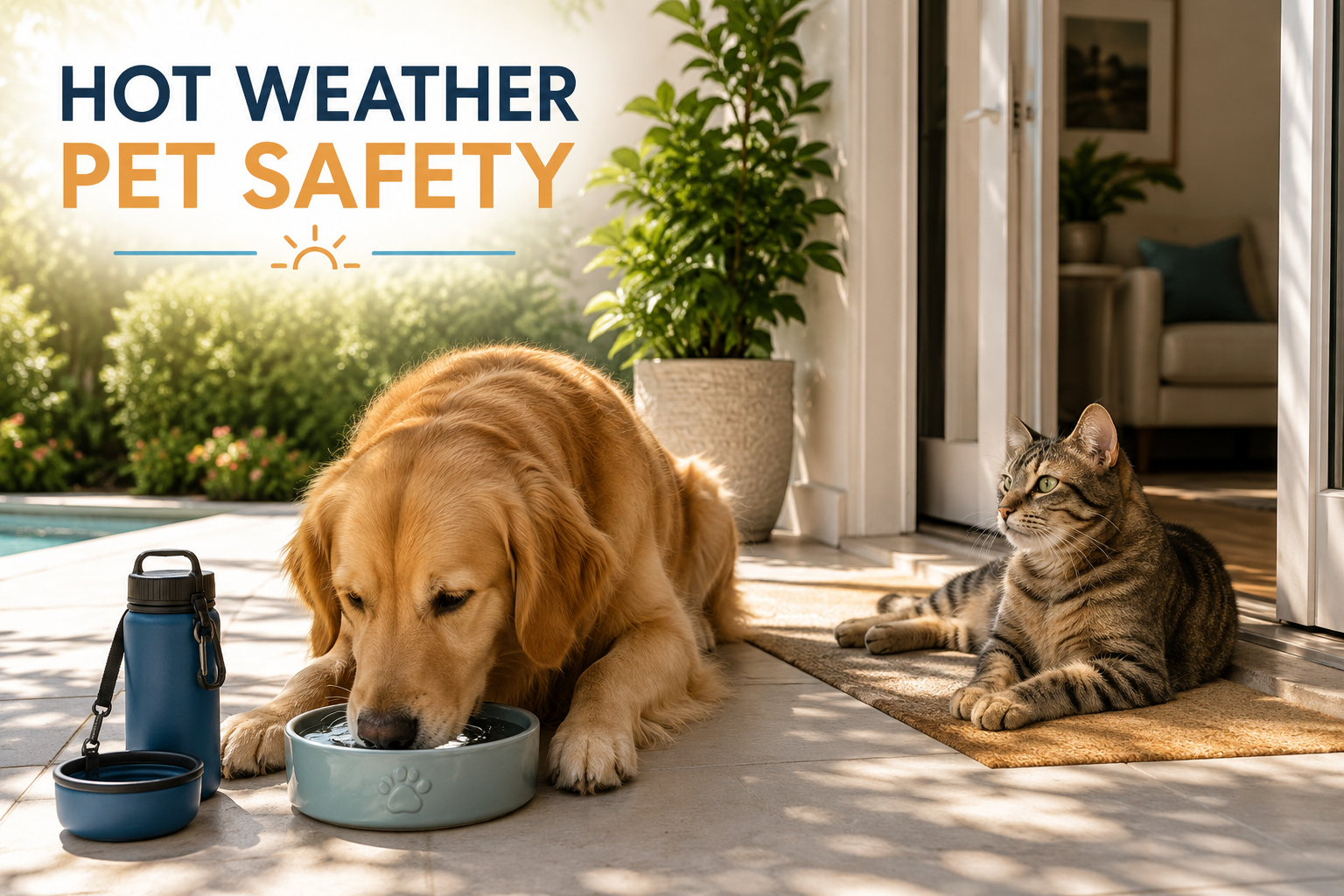

Quick Answer
During hot weather give pets constant access to fresh water and a cool shaded or air conditioned resting area. Avoid strenuous activity during the hottest part of the day and never leave a pet unattended inside a parked vehicle.
Watch carefully for heavy panting weakness confusion vomiting collapse or other signs that your pet may be overheating. Heat related illness can become an emergency quickly.
Key Takeaways
- Keep fresh water easily available.
- Provide shade and a cool resting area.
- Move walks to cooler parts of the day.
- Check pavement and other hot surfaces.
- Never leave a pet in a parked car.
- Take extra care with older overweight very young and medically vulnerable pets.
- Flat faced breeds may have greater difficulty cooling themselves.
- Know the warning signs of heat related illness.
Why Hot Weather Can Be Dangerous
Dogs and cats cannot manage heat in exactly the same way people do.
Dogs primarily rely on panting and other heat loss mechanisms rather than sweating over most of the body.
Cats can also become overheated even though they may hide discomfort until a problem becomes more serious.
High temperature humidity direct sun poor ventilation and intense activity can all increase heat stress.
Good prevention begins before your pet looks uncomfortable.
Keep Fresh Water Available
Make sure your pet can reach clean drinking water throughout the day unless a veterinarian has given different medical instructions.
On very warm days check bowls more often because water can spill become warm or run out faster.
If you have several pets consider more than one water location.
When leaving home carry water for your pet rather than assuming you will easily find a safe source.
Create a Cool Resting Area
Pets need a place where they can move away from heat.
Indoors this may mean:
- Air conditioning
- A fan used safely
- Closed curtains during intense sun
- A cool floor
- A quiet shaded room
Outdoors shade should remain available as the sun moves.
A small patch of shade at one time of day may disappear later.
Our guide on how to create a safe and comfortable pet space at home can help you build a reliable rest area.
Change Exercise Times
A normal walk can become much harder in hot weather.
Schedule activity during cooler parts of the day such as early morning or later evening when conditions are safer.
Reduce intensity when needed.
Instead of a long fast walk try:
- A shorter walk
- Gentle sniffing
- Indoor enrichment
- Short training sessions
- Calm play
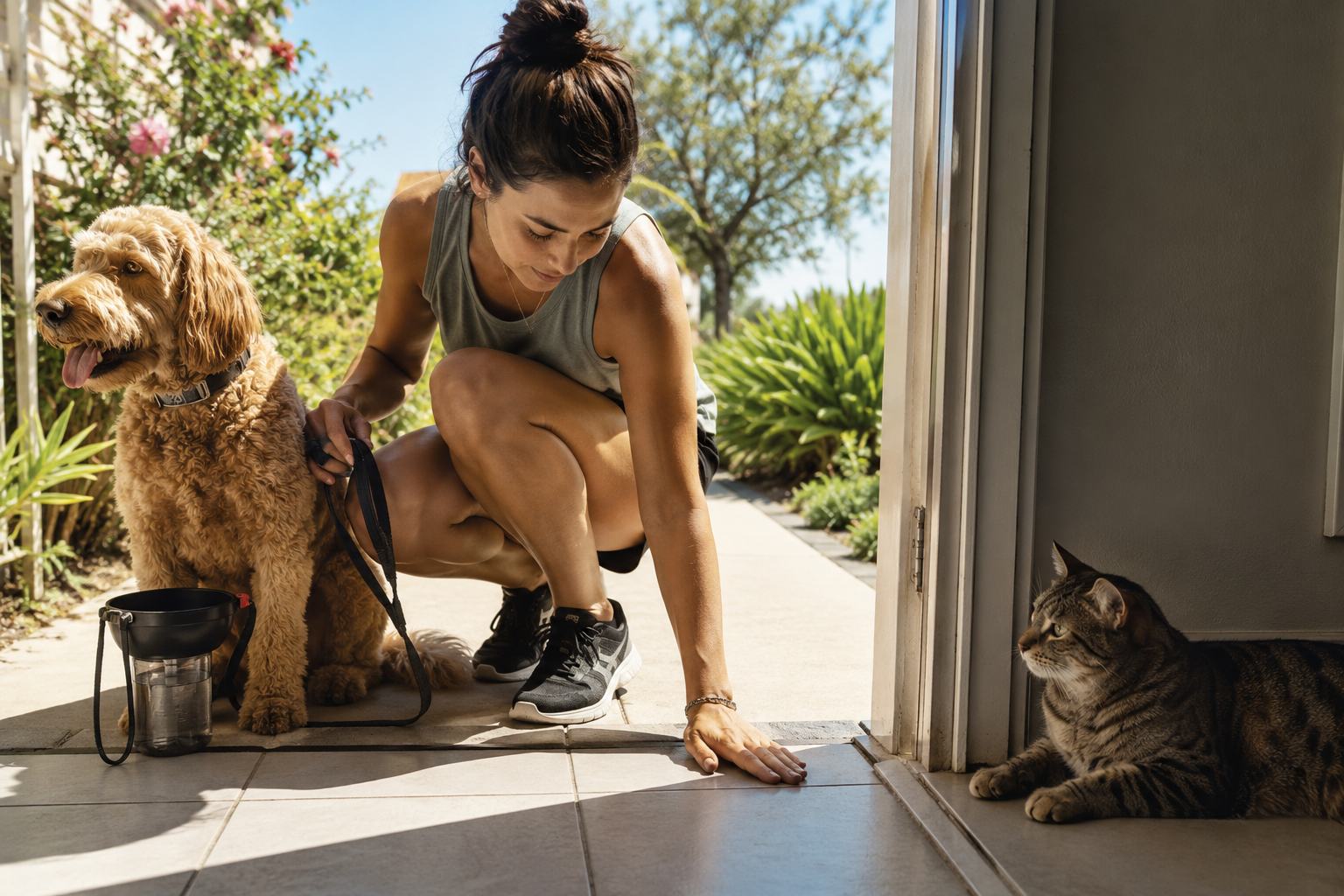
Do not force a dog to continue exercising when it is slowing down or struggling.
Check Hot Pavement and Surfaces
Pavement sand metal and artificial surfaces can become extremely hot in direct sun.
Dogs walking barefoot may develop painful paw injuries.
Choose shaded routes grassy areas or cooler times when possible.
Do not rely only on air temperature to judge surface temperature.
Never Leave Pets in Parked Cars
A parked vehicle can become dangerously hot very quickly.
Opening the windows slightly does not make it a safe environment for a pet.
If your trip includes stops where the pet cannot safely come with you arrange another plan.
The safest choice is to avoid leaving your pet unattended in the vehicle.
Hot Weather Care for Cats
Indoor cats also need protection during hot conditions.
Make sure they can reach:
- Fresh water
- Cool rooms
- Shaded resting places
- Areas away from direct afternoon sunlight
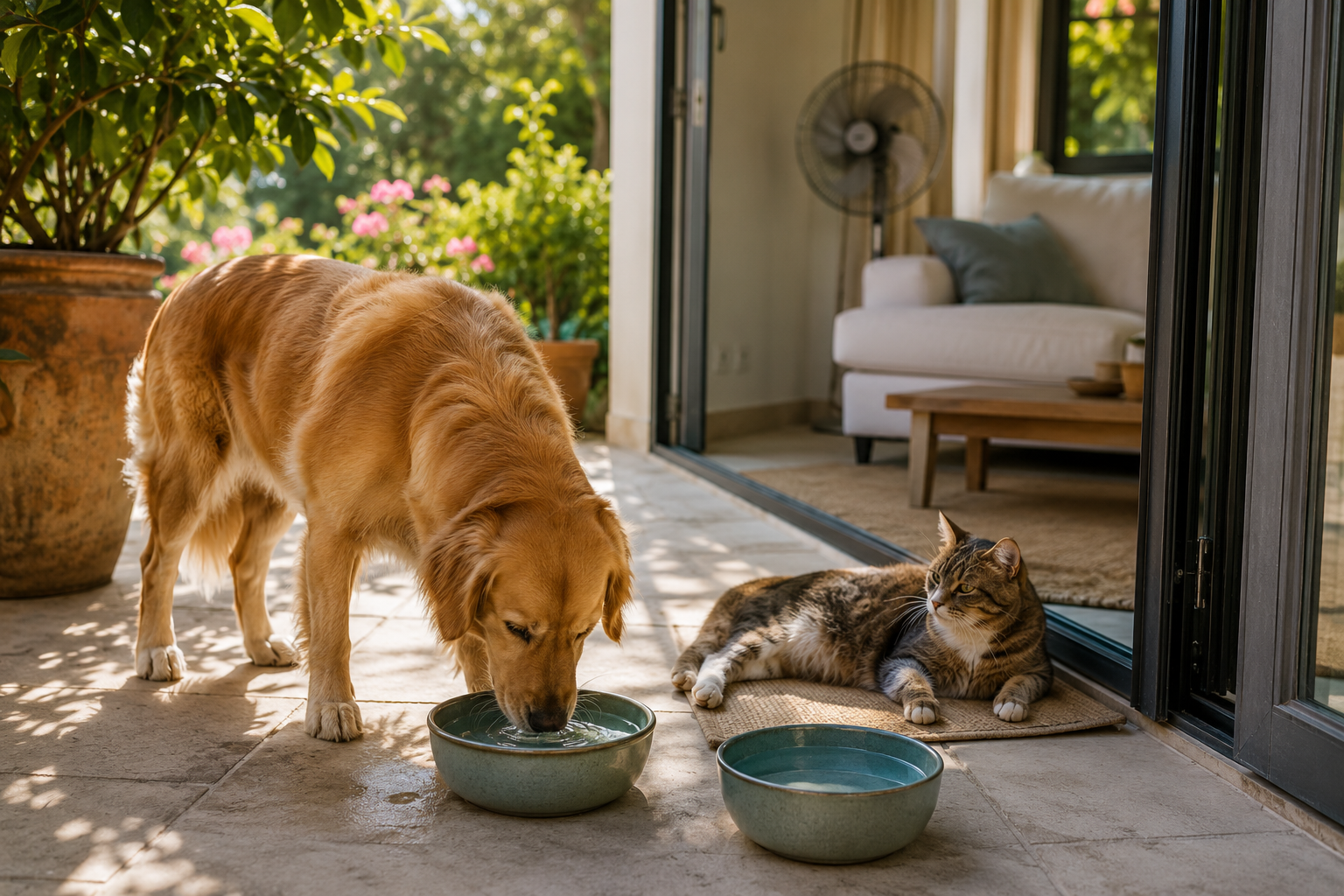
Some cats enjoy resting on tile or other cooler surfaces.
Do not force a cat to use cooling products if the cat finds them stressful.
Outdoor access during extreme heat can increase risk from hot surfaces dehydration and lack of reliable shade.
Which Pets Need Extra Care?
Some pets may be less able to cope with heat.
Extra caution is important for:
- Very young pets
- Older pets
- Overweight pets
- Pets with heart or breathing problems
- Pets with thick coats
- Flat faced dogs and cats
- Animals that are not used to hot weather
If your pet has a medical condition ask your veterinarian for specific hot weather advice.
Warning Signs of Overheating
Possible warning signs can include:
- Very heavy or persistent panting
- Excessive drooling
- Weakness
- Difficulty walking
- Vomiting
- Diarrhea
- Confusion
- Abnormal gum color
- Collapse
- Seizures
Not every pet will show the same signs.
If you believe your pet may have a heat related illness treat the situation seriously.
What to Do if You Think Your Pet Is Overheating
Move the pet away from the heat and contact a veterinarian or emergency veterinary clinic immediately.
While arranging professional care you can begin gentle cooling.
Use cool rather than ice cold water and improve air movement when possible.
Do not cover the pet with heavy wet towels that may trap heat.
Do not delay veterinary care because the pet appears slightly better after cooling begins.
Heat related illness can affect internal organs even when the animal initially seems to recover.
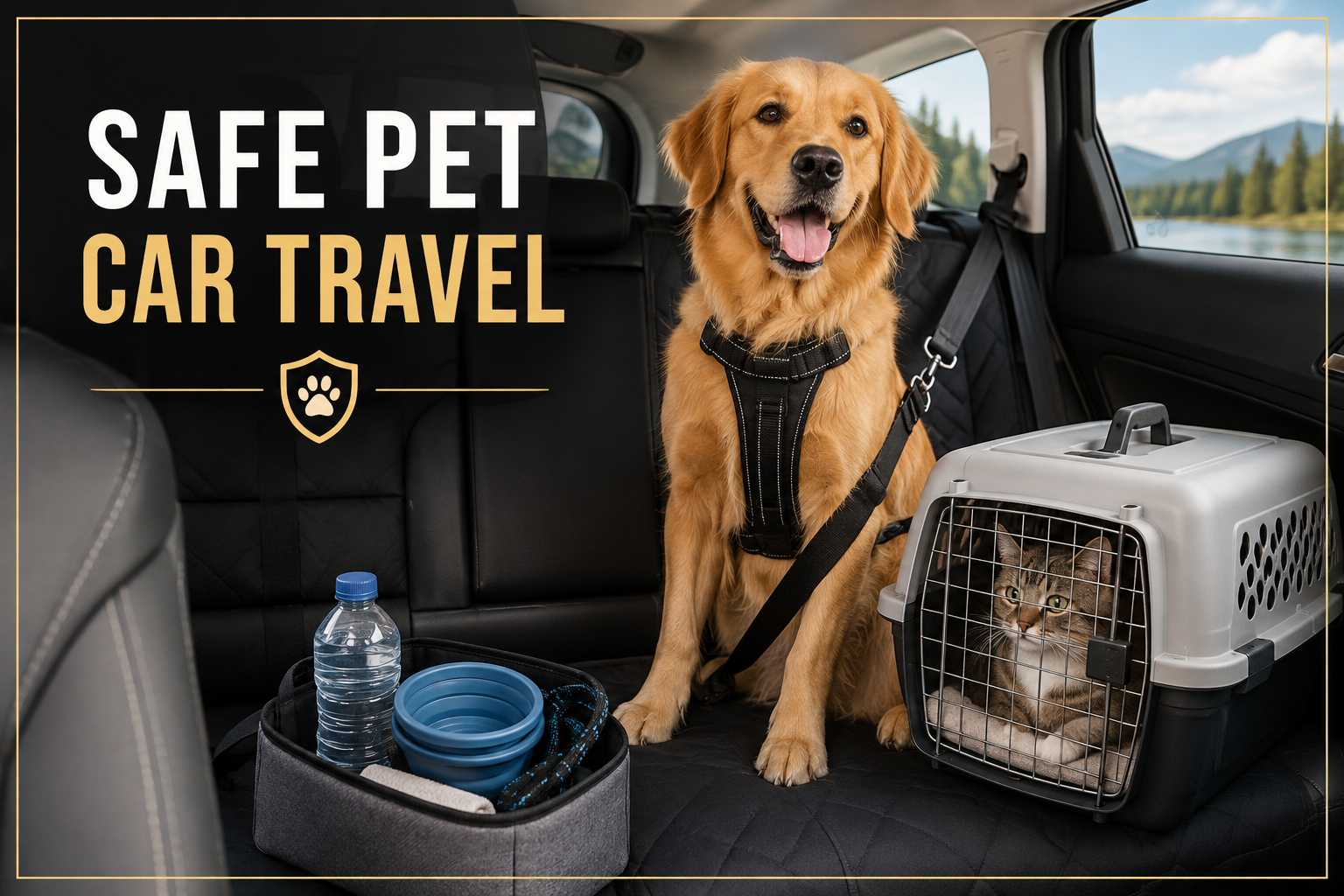
Hot Weather Travel
Plan ahead when driving with a pet.
Bring:
- Fresh water
- A secure carrier or restraint system
- Identification
- Necessary medicine
- A plan for safe stops
Keep the vehicle comfortably ventilated and temperature controlled.
If you travel regularly consider keeping part of your pet emergency kit in an easy to reach travel bag.
Common Hot Weather Mistakes
Walking at the Same Time as Winter
The normal midday walk may become unsafe in summer.
Assuming Shade Is Enough
Shade helps but pets still need water ventilation and appropriate temperatures.
Leaving a Pet in a Car for Only a Few Minutes
Dangerous heating can happen faster than many people expect.
Using Ice as the Main Cooling Method
Extreme cold can be counterproductive. Gentle cooling and urgent veterinary guidance are safer.
Ignoring Mild Looking Symptoms
Heat related illness can worsen quickly.
Frequently Asked Questions
Can Dogs Walk in Hot Weather?
Yes when conditions are suitable but adjust the time duration intensity and surface according to the weather and the individual dog.
Do Indoor Cats Get Too Hot?
Yes. Indoor environments can also become dangerously warm especially without ventilation or cooling.
Is a Fan Enough for a Hot Dog?
A fan may improve airflow but should not be treated as the only protection in dangerously hot conditions.
Should I Shave My Dog in Summer?
Do not automatically shave a coat. Coat type matters and shaving may not be appropriate. Ask a veterinarian or experienced groomer about your specific dog.
When Is Overheating an Emergency?
Collapse confusion severe weakness abnormal breathing seizures or other significant heat related symptoms require urgent veterinary attention.
Sources and References
- American Veterinary Medical Association Warm Weather Pet Safety
- ASPCA Hot Weather Safety Tips
- American Animal Hospital Association
Veterinary Safety Disclaimer
This article provides general educational information and does not replace veterinary diagnosis or treatment. Heat related illness can become life threatening. If your pet is weak confused collapsing having difficulty breathing or showing other serious symptoms contact an emergency veterinarian immediately.
About the Author
Ibrahim is a pet care writer at DailyPetTips. He creates practical easy to understand pet care guides using established veterinary animal welfare and public safety sources where relevant. DailyPetTips content is reviewed for clarity usefulness and responsible pet care guidance before publication.

Pet parent notes