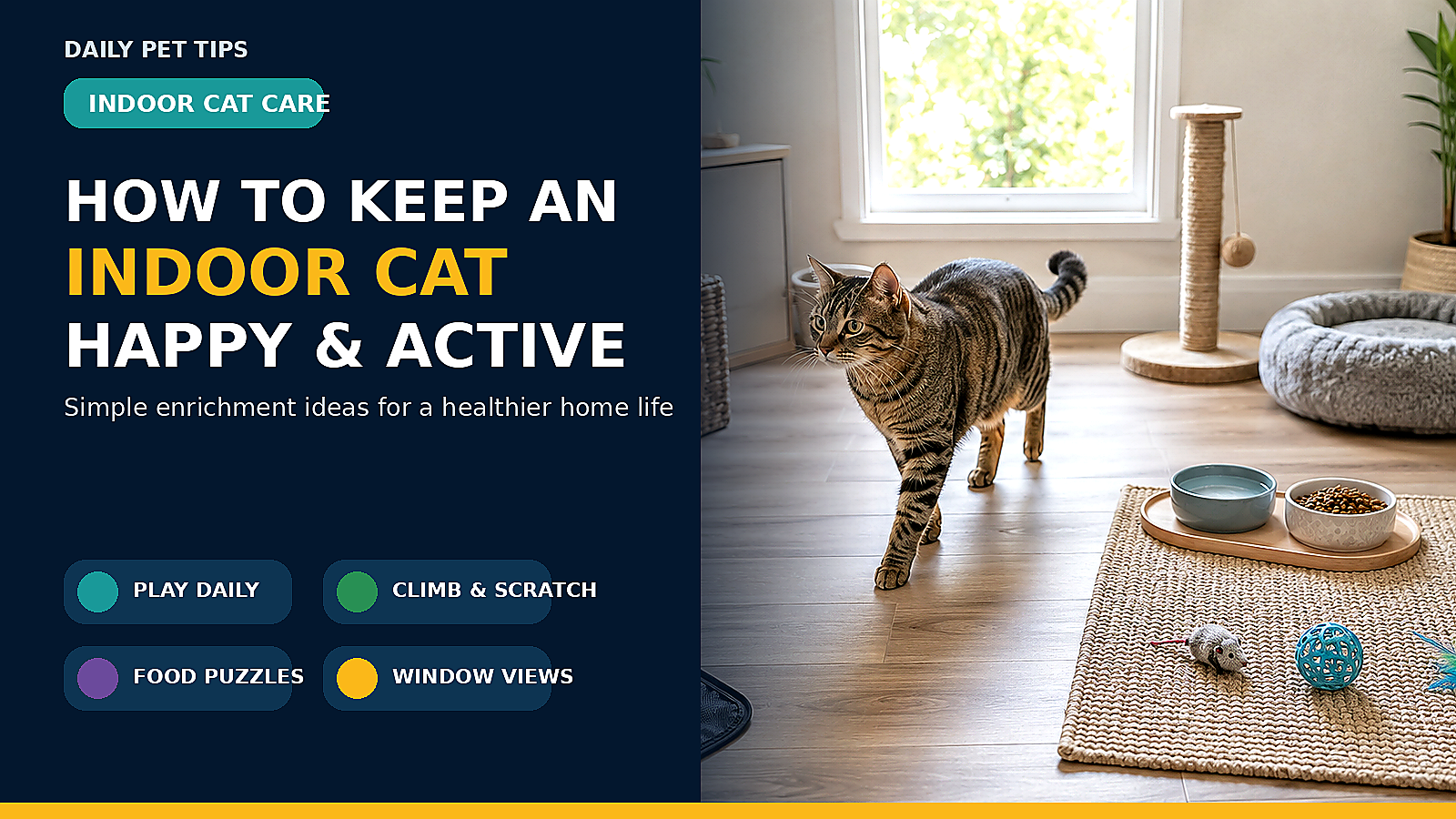
Indoor cats can live active and interesting lives.
However the home must provide opportunities for movement. Hunting style play. Climbing. Scratching. Resting. And exploration.
A cat that has very little to do may sleep more. Gain weight. Beg for food. Scratch furniture. Or disturb people during the night.
Enrichment does not need to be expensive.
Simple toys. Boxes. Food puzzles. High resting places. And short daily play sessions can make a major difference.
This guide explains how to create a safe and interesting indoor life for your cat.
Quick Answer
Give your indoor cat several short play sessions. Safe climbing areas. Scratching surfaces. Food puzzles. Hiding places. And window views.
Rotate toys so they remain interesting. Allow your cat to chase and catch toys. Keep string toys away after play. Monitor body weight. Appetite. Toileting. And behavior. Contact a veterinarian when activity changes suddenly.
Why Indoor Cats Need Enrichment
Outdoor environments naturally contain movement. Smells. Sounds. Surfaces. And places to explore.
An indoor home may be safer from traffic and some outdoor dangers.
However indoor cats still need ways to use natural behaviors.
Enrichment can support:
- Physical activity
- Mental stimulation
- Healthy body weight
- Confidence
- Better sleep routines
- Normal scratching
- Hunting style behavior
- A stronger relationship with people
Signs an Indoor Cat May Be Bored
Possible signs include:
- Constant food begging
- Waking people at night
- Attacking feet
- Scratching furniture
- Excessive meowing
- Overgrooming
- Long periods of inactivity
- Restless pacing
- Destroying household items
These behaviors can also have medical causes.
Contact a veterinarian when the change is sudden or severe.
How Much Play Does an Indoor Cat Need?
There is no exact amount for every cat.
Several short sessions often work better than one long session.
| Cat | Possible Play Style | Important Note |
|---|---|---|
| Kitten | Several short active sessions | Use safe toys and supervise closely. |
| Healthy adult cat | Short hunting style sessions daily | Allow the cat to catch the toy. |
| Senior cat | Gentle low impact play | Avoid painful jumps. |
| Overweight cat | Slowly increased movement | Use a veterinary weight plan. |
Use Hunting Style Play
Cats often enjoy toys that move like prey.
Use a wand toy to copy:
- A mouse moving along the floor
- A bird moving through the air
- An insect hiding behind furniture
Move the toy away from your cat.
Do not push it directly into the cat’s face.
Allow the cat to stalk. Chase. Pounce. And catch.
End the session with a successful catch.
Best Toys for Indoor Cats
Useful toys may include:
- Wand toys
- Soft toy mice
- Light balls
- Tunnels
- Food puzzles
- Cardboard boxes
- Paper bags without handles
- Cat springs
- Track toys
Choose toys large enough that they cannot be swallowed.
Remove damaged toys.
Toys That Need Supervision
Do not leave these items available without supervision:
- String
- Ribbon
- Thread
- Yarn
- Elastic bands
- Feather toys with loose parts
- Plastic pieces
Swallowed String Can Be Dangerous
Do not pull visible string from your cat’s mouth or anus. Contact a veterinarian immediately.
Rotate Toys to Keep Them Interesting
Do not leave every toy on the floor all the time.
Keep some toys stored away.
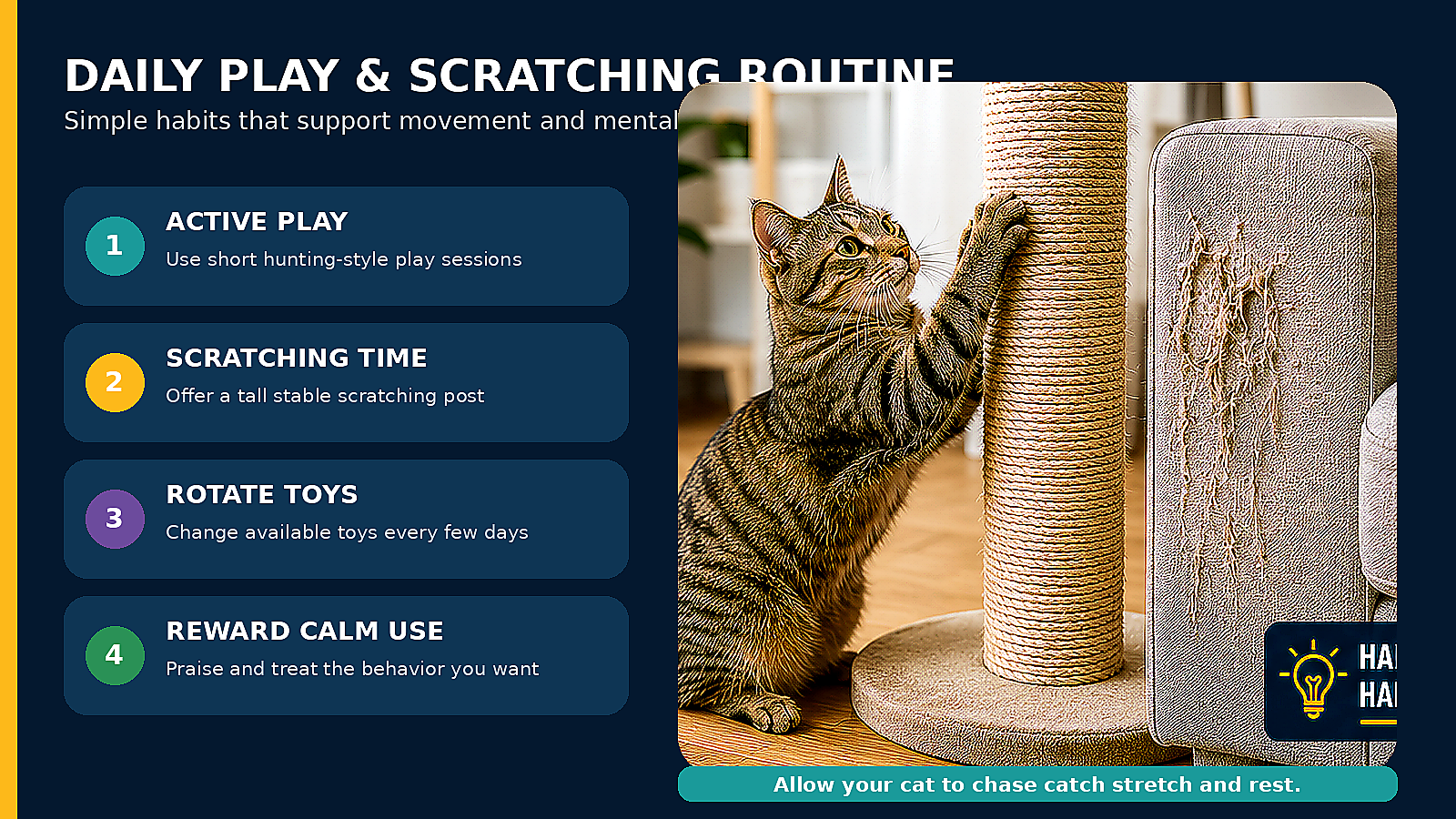
Change the available toys every few days.
An old toy may feel new after a break.
Use Food Puzzles
Food puzzles make the cat work for part of a meal.
They can provide mental and physical activity.
Start with an easy puzzle.
Your cat should succeed without becoming frustrated.
Use part of the normal daily food amount.
Do not add extra food only because it is inside a puzzle.
Create Safe Vertical Space
Many cats enjoy high resting areas.
Vertical space may include:
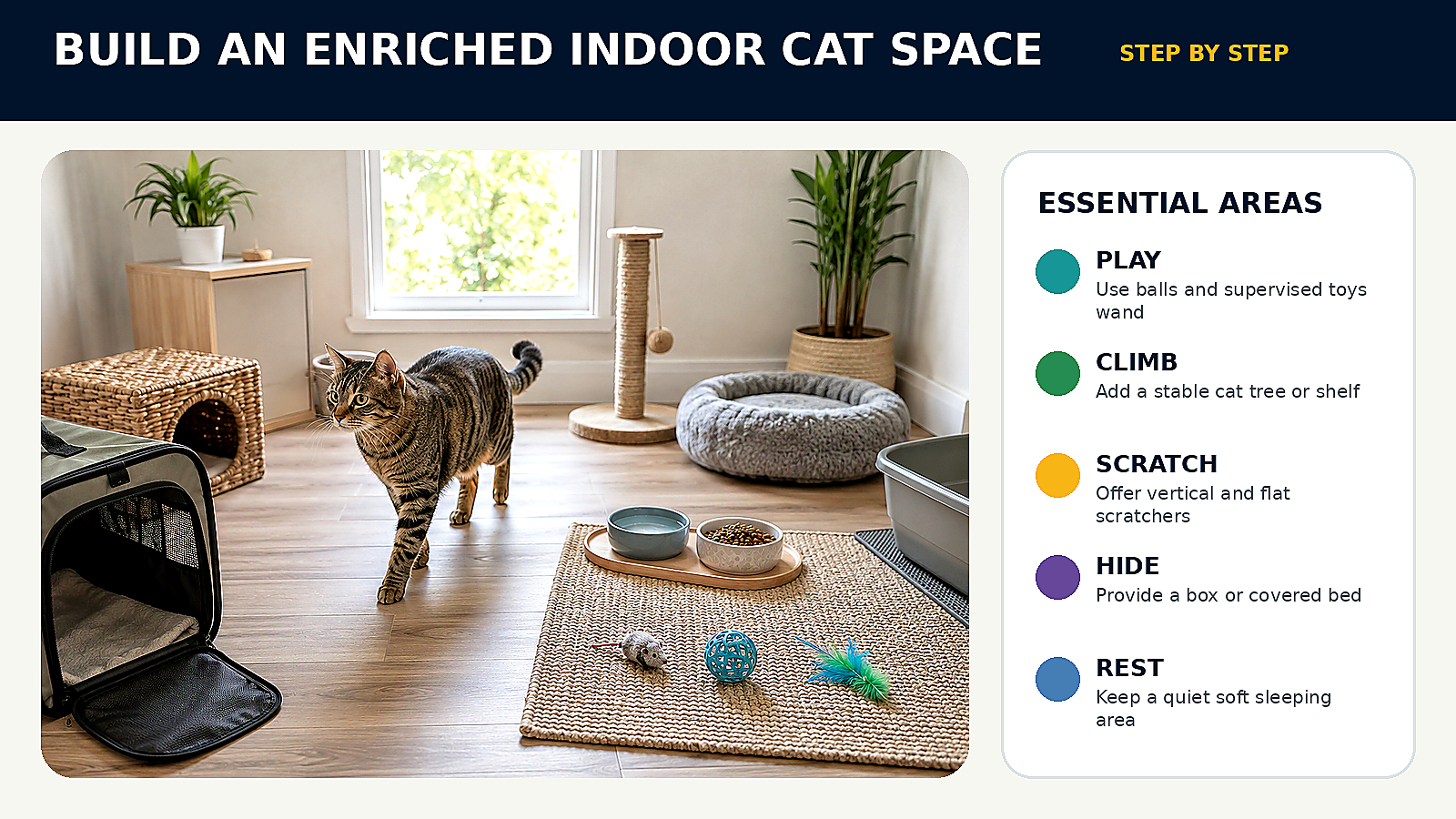
- Cat trees
- Strong window shelves
- Wall shelves designed for cats
- Stable furniture
- Raised beds
Make sure every area is secure.
Provide easy steps for kittens. Senior cats. And cats with joint pain.
Give Your Cat a Window View
A secure window can provide visual enrichment.
Your cat may watch:
- Birds
- People
- Leaves
- Rain
- Outdoor movement
Use a strong window screen.
Do not allow access to an open window without protection.
Provide Scratching Surfaces
Scratching supports stretching. Nail care. And scent marking.
Offer:
- A tall vertical post
- A horizontal cardboard pad
- A corner scratcher
- Different textures
Place scratchers near sleeping areas and furniture.
Read our guide on how to stop a cat from scratching furniture.
Use Boxes and Tunnels
Cardboard boxes provide hiding. Resting. And play opportunities.
Cut smooth entrance holes when needed.
Remove staples and tape.
Replace wet or damaged boxes.
Tunnels can support chasing and hiding.
Build a Safe Hiding Area
Every cat should have a place where it can rest without being disturbed.
Use:
- A covered bed
- An open carrier
- A cardboard box
- A quiet shelf
- A cat tree enclosure
Read why cats hide and when to worry.
Teach Simple Tricks
Cats can learn through reward based training.
You can teach:
- Touching a target
- Coming when called
- Sitting on a mat
- Entering a carrier
- Giving a paw
Use tiny treats and short sessions.
Never punish mistakes.
Make the Carrier Part of the Home
Do not keep the carrier hidden until a veterinary visit.
Leave it open with:
- Soft bedding
- Treats
- A familiar smell
- A safe location
Your cat may begin using it as a resting place.
Create a Daily Indoor Cat Routine
A simple routine may include:
Morning
- Measured breakfast
- Fresh water
- Short play session
- Litter box cleaning
Afternoon
- Food puzzle
- Window time
- Independent toys
Evening
- Active wand play
- Measured meal
- Calm grooming
- Quiet rest
How to Help an Indoor Cat Maintain a Healthy Weight
Measure every meal.
Use play and food puzzles.
Do not give food every time the cat asks for attention.
Read our guide on how often to feed a cat.
Ask a veterinarian for a safe plan when your cat is overweight.
Do not reduce food suddenly.
How to Enrich a Multi Cat Home
Provide several:
- Food stations
- Water bowls
- Litter boxes
- Scratching posts
- High resting areas
- Hiding places
Resources should be placed in different locations.
One cat should not be able to block everything.
How to Keep a Senior Indoor Cat Active
Use gentle play on the floor.
Offer low steps to favorite resting areas.
Choose soft toys that move slowly.
Keep food. Water. And litter boxes easy to reach.
Contact a veterinarian when activity decreases suddenly.
How to Keep a Kitten Busy Safely
Kittens need frequent supervision.
Use:
- Short play sessions
- Safe climbing structures
- Large lightweight balls
- Tunnels
- Food puzzles made for kittens
- Gentle handling practice
Remove electrical wires. Small objects. Toxic plants. And unsafe gaps.
Common Indoor Cat Enrichment Mistakes
Using Hands as Toys
This can teach biting and scratching.
Leaving String Out
String can be swallowed.
Adding Too Many Treats
Use part of the daily food amount.
Forcing Play
Allow your cat to choose whether to join.
Buying Unstable Cat Furniture
Check every structure before use.
Ignoring Sudden Inactivity
Reduced movement can be caused by pain or illness.
Providing Only One Resource
Multi cat homes need more options.
When Should You Contact a Veterinarian?
Contact a veterinarian when your cat:
- Suddenly becomes inactive
- Stops playing completely
- Stops eating
- Loses weight
- Gains weight quickly
- Begins limping
- Stops jumping
- Breathes with difficulty
- Vomits repeatedly
- Overgrooms one area
- Shows pain
- Has a major behavior change
Frequently Asked Questions
Can an indoor cat be happy?
Yes. Indoor cats can be happy when they have play. Climbing. Scratching. Resting. And exploration opportunities.
How many times should I play with my cat?
Several short daily sessions work well for many cats.
Why does my cat sleep all day?
Cats naturally sleep for long periods. Sudden extra sleeping with illness signs needs attention.
Is a laser pointer safe?
Use it carefully and never shine it into the eyes. End with a physical toy the cat can catch.
Do indoor cats need a cat tree?
A cat tree is useful but not required. Safe shelves or other stable raised areas may work.
Can I leave a wand toy out?
No. Store string and wand toys after supervised play.
How do I entertain a cat while working?
Use safe food puzzles. Window areas. Boxes. Track toys. And planned play breaks.
Should I get another cat?
Another cat is not always the best solution. Some cats prefer living alone.
Final Thoughts
Indoor cats need more than food and a litter box.
Provide daily play. Climbing areas. Scratching posts. Hiding places. Window views. And food puzzles.
Rotate toys so they remain interesting.
Use reward based training.
Measure food and monitor body weight.
Keep unsafe string and small objects away.
A simple daily enrichment routine can help your indoor cat remain active. Confident. And comfortable.
Related DailyPetTips Guides
- How Often Should You Feed a Cat?
- Why Is My Cat Hiding?
- How to Stop a Cat From Scratching Furniture
- How to Brush a Cat at Home Safely
- Explore All Cat Guides
- Explore Pet Care Guides



Pet parent notes