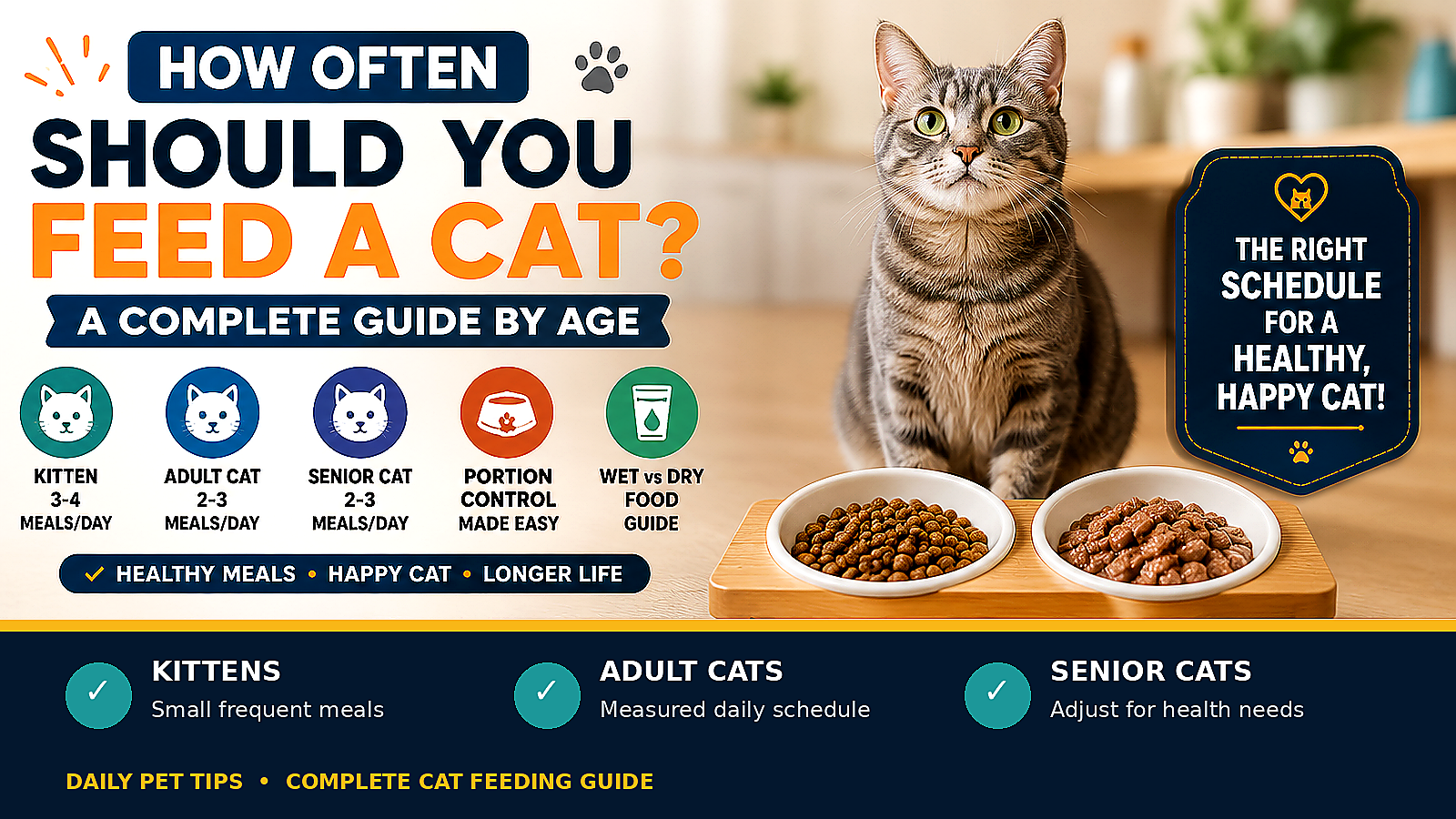
Feeding your cat on a regular schedule can support healthy digestion. Stable energy. And a healthy body weight.
However every cat does not need the same routine.
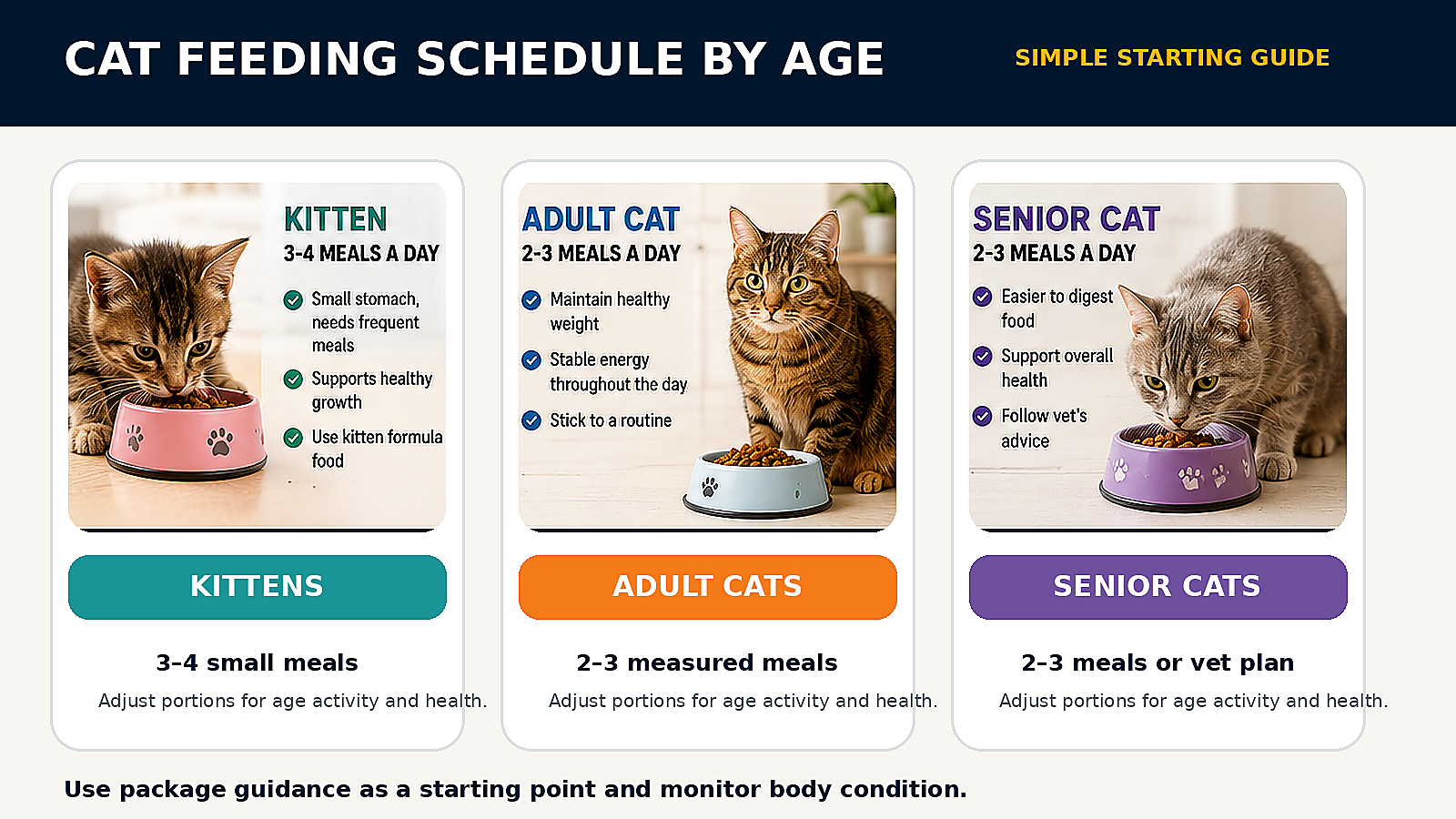
A kitten usually needs smaller and more frequent meals. A healthy adult cat may do well with two or more measured meals each day. A senior cat may need a feeding plan based on health and appetite.
The correct amount also depends on body size. Activity. Food type. Health. And whether the cat is gaining or losing weight.
This guide explains how often to feed cats at different life stages. How to use food labels. How to combine wet and dry food. How to prevent overfeeding. And when appetite changes need veterinary attention.
Quick Answer
Many healthy adult cats do well with at least two measured meals each day.
Young kittens usually need smaller meals more often because they are growing quickly. Senior cats and cats with medical conditions may need a special schedule from a veterinarian. Always follow the feeding guide on the food package and adjust the amount based on your cat’s body condition.
Why a Feeding Schedule Matters
A regular feeding routine can help you:
- Control the total daily amount
- Notice appetite changes early
- Reduce food competition in multi cat homes
- Make medication routines easier
- Support healthy body weight
- Create a predictable daily routine
- Reduce food that becomes stale
Scheduled meals also make it easier to know whether your cat has stopped eating.
A sudden loss of appetite can be an important health warning.
How Often Should You Feed a Kitten?
Kittens have small stomachs and high energy needs.
They usually benefit from smaller meals several times during the day.
| Life Stage | Possible Feeding Routine | Important Note |
|---|---|---|
| Very young kitten | Frequent small meals | Follow veterinary guidance when the kitten is not fully weaned. |
| Growing kitten | Three or more small meals | Use complete kitten food made for growth. |
| Older kitten | Two or three measured meals | Transition slowly toward an adult routine. |
Use food labeled as complete and balanced for kittens or growth.
Do not feed a young kitten only adult cat food unless a veterinarian recommends it.
How Often Should You Feed an Adult Cat?
Many adult cats do well with two measured meals each day.
Some cats may benefit from three or four smaller meals.
Smaller meals may help cats that:
- Eat too quickly
- Beg throughout the day
- Vomited after one large meal
- Need a more active feeding routine
- Use food puzzles
The total amount for the day should remain controlled.
Dividing one daily amount into more meals should not increase the total food.
How Often Should You Feed a Senior Cat?
Senior cats may continue eating two or more measured meals each day.
However age related changes can affect appetite and digestion.
An older cat may need a special plan when it has:
- Kidney disease
- Diabetes
- Dental pain
- Thyroid disease
- Arthritis
- Weight loss
- Digestive problems
Place food where the cat can reach it without climbing or walking far.
Use shallow bowls when bending the neck is uncomfortable.
How Much Food Should You Give?
Start with the feeding instructions on the package.
The package amount is a starting guide and not a perfect amount for every cat.
Consider:
- Current body weight
- Healthy target weight
- Age
- Activity
- Indoor or outdoor lifestyle
- Whether the cat is neutered
- Food calorie level
- Treats
- Health conditions
Measure food with a proper measuring cup or kitchen scale.
Do not estimate every meal by filling the bowl.
Wet Food or Dry Food?
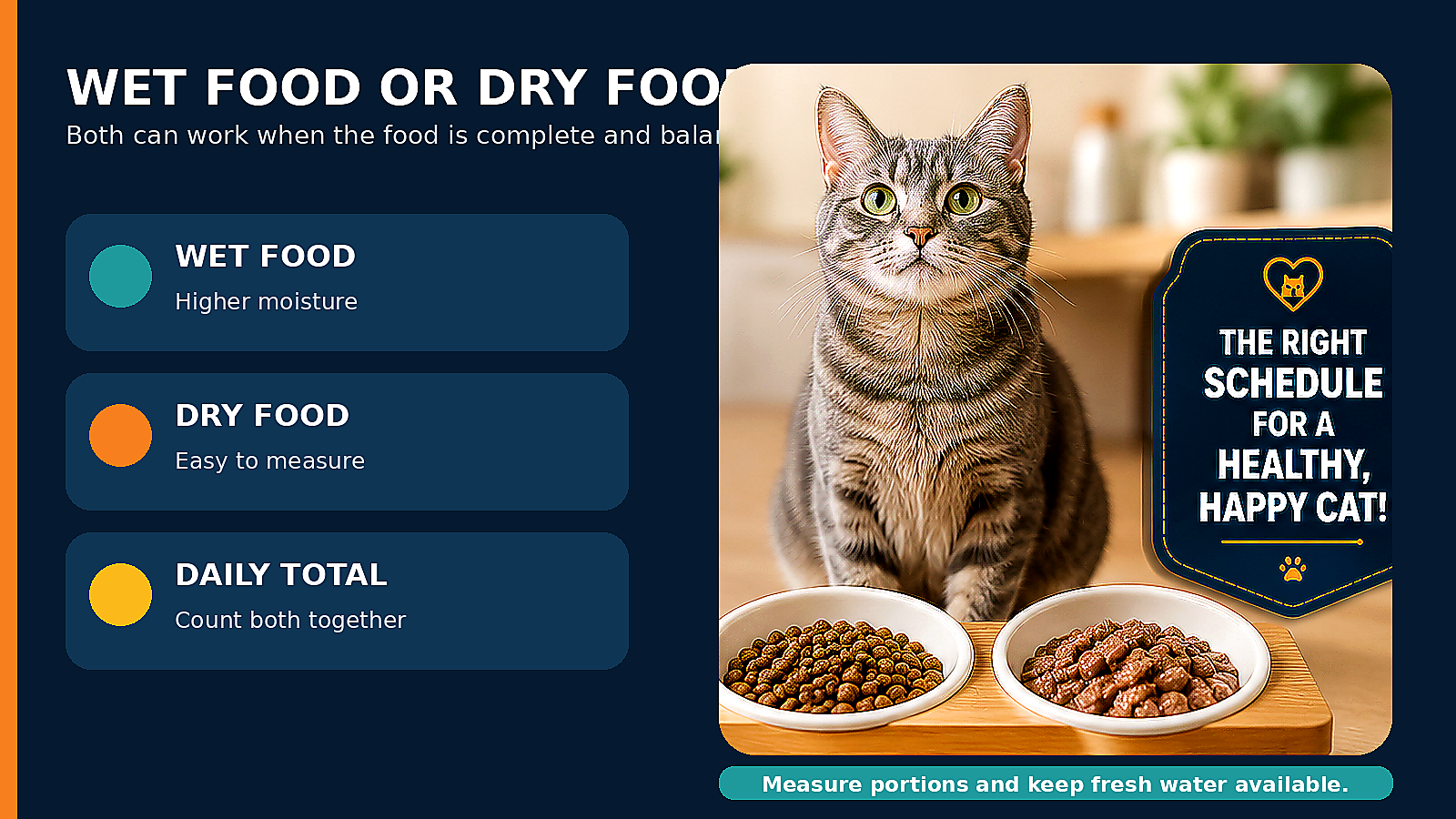
Both wet and dry cat food can be part of a healthy diet when the food is complete and balanced.
Wet Food
Wet food contains more moisture.
It may help increase total water intake.
It should not remain at room temperature for a long period.
Dry Food
Dry food is easy to measure and use in food puzzles.
It contains less moisture.
Fresh water should always remain available.
Read our guide on how much water a cat should drink each day.
Can You Feed Wet and Dry Food Together?
Yes.
You can use wet food for one meal and dry food for another.
You can also offer a measured combination.
The total daily calories from both foods must be counted together.
A common mistake is giving a full wet food amount and a full dry food amount on the same day.
This may lead to overfeeding.
Should You Leave Food Out All Day?
Free feeding means food remains available throughout the day.
It may work for some cats that control their own intake.
However it can make it harder to:
- Measure how much one cat eats
- Notice reduced appetite
- Prevent weight gain
- Control food in a multi cat home
- Keep food fresh
Measured meals provide better control for many cats.
How to Create a Healthy Feeding Schedule
Step 1: Choose Regular Meal Times
Select times that match your daily routine.
For example you may feed in the morning and evening.
Step 2: Measure the Full Daily Amount
Use the food label as a starting point.
Divide the daily amount between the planned meals.
Step 3: Feed in a Quiet Place
Keep the bowl away from the litter box.
Do not place food near loud machines.
Step 4: Remove Old Food
Remove wet food before it spoils.
Wash the bowl after meals.
Step 5: Monitor Body Condition
Check whether your cat is gaining or losing weight.
Ask a veterinarian to show you how to assess body condition.
Step 6: Adjust Slowly
Do not make a major food reduction without veterinary guidance.
How to Feed Multiple Cats
Separate feeding areas can reduce stress and food stealing.
You can feed cats:
- In different rooms
- At opposite sides of a room
- At different heights when safe
- Using microchip feeders
Watch whether one cat finishes quickly and takes food from another.
Each cat should have safe access to food and water.
How to Help a Cat That Eats Too Fast
Try:
- Smaller meals
- A slow feeder
- A food puzzle
- Spreading dry food across a wide tray
- Separating the cat from other pets during meals
Sudden fast eating can be linked with hunger. Stress. Food competition. Or illness.
Contact a veterinarian when the change is new or severe.
How Many Treats Can a Cat Have?
Treats should remain a small part of the total diet.
Too many treats can unbalance the diet and add extra calories.
Use very small pieces during training.
Do not feed:
- Onion
- Garlic
- Chocolate
- Alcohol
- Caffeinated drinks
- Food containing xylitol
- Cooked bones
How to Change Cat Food Safely
Change food gradually when possible.
A simple transition may take several days.
Begin with mostly old food and a small amount of new food.
Increase the new food slowly.
Watch for:
- Vomiting
- Diarrhea
- Reduced appetite
- Itching
- Refusal to eat
Follow veterinary instructions when changing a medical diet.
Why Is My Cat Always Hungry?
Some cats beg because they enjoy food or attention.
Other possible reasons include:
- Meals that are too small
- Food competition
- Boredom
- High activity
- Diabetes
- Thyroid disease
- Parasites
- Poor nutrient absorption
Contact a veterinarian when hunger increases suddenly or the cat loses weight while eating more.
Why Is My Cat Not Eating?
A cat may stop eating because of:
- Dental pain
- Nausea
- Stress
- Fever
- Blocked nose
- Digestive illness
- Kidney disease
- Food dislike
- A sudden food change
Do Not Ignore Appetite Loss
Cats can become seriously ill when they do not eat. Contact a veterinarian promptly when your cat refuses food or eats much less than normal.
Common Cat Feeding Mistakes
Guessing Portion Size
Measure every meal.
Refilling an Empty Bowl Automatically
An empty bowl does not always mean the cat needs more food.
Ignoring Treat Calories
Treats count toward the daily total.
Changing Food Suddenly
A sudden change may upset digestion.
Using One Bowl for Several Cats
Separate bowls help you monitor intake.
Feeding Near the Litter Box
Place food in a clean separate area.
Ignoring Weight Changes
Weight gain or loss may need a feeding adjustment or veterinary check.
When Should You Contact a Veterinarian?
Contact a veterinarian when your cat:
- Stops eating
- Eats much less than normal
- Is always hungry and losing weight
- Vomits repeatedly
- Has ongoing diarrhea
- Has trouble chewing
- Drools while eating
- Loses weight suddenly
- Gains weight quickly
- Becomes weak
- Shows pain
Frequently Asked Questions
Is feeding a cat twice a day enough?
Two measured meals work well for many healthy adult cats.
Can a cat eat once a day?
One large meal may not suit every cat. Smaller divided meals are often easier to manage.
Should kittens eat more often?
Yes. Kittens usually need smaller and more frequent meals.
Can I mix wet and dry food?
Yes. Count both foods as part of the total daily amount.
Should I leave dry food out overnight?
You can leave a measured amount when it fits the feeding plan. Avoid unlimited refilling.
Why does my cat wake me for food?
Your cat may have learned that waking you leads to feeding. A timed feeder may help.
Should food and water bowls be together?
Some cats prefer water in a separate location.
How often should I wash food bowls?
Wash wet food bowls after every meal. Clean dry food bowls regularly.
Final Thoughts
Many healthy adult cats do well with two or more measured meals each day.
Kittens usually need smaller meals more often.
Senior cats may need a schedule based on health and appetite.
Measure the full daily amount and divide it between meals.
Count wet food. Dry food. And treats together.
Monitor body condition and appetite.
Contact a veterinarian when eating habits change suddenly.
Related DailyPetTips Guides
- How Much Water Should a Cat Drink Each Day?
- How to Brush a Cat at Home Safely
- How Often Should You Clean a Cat Litter Box?
- Explore All Cat Guides
- Explore Pet Food Guides


Pet parent notes