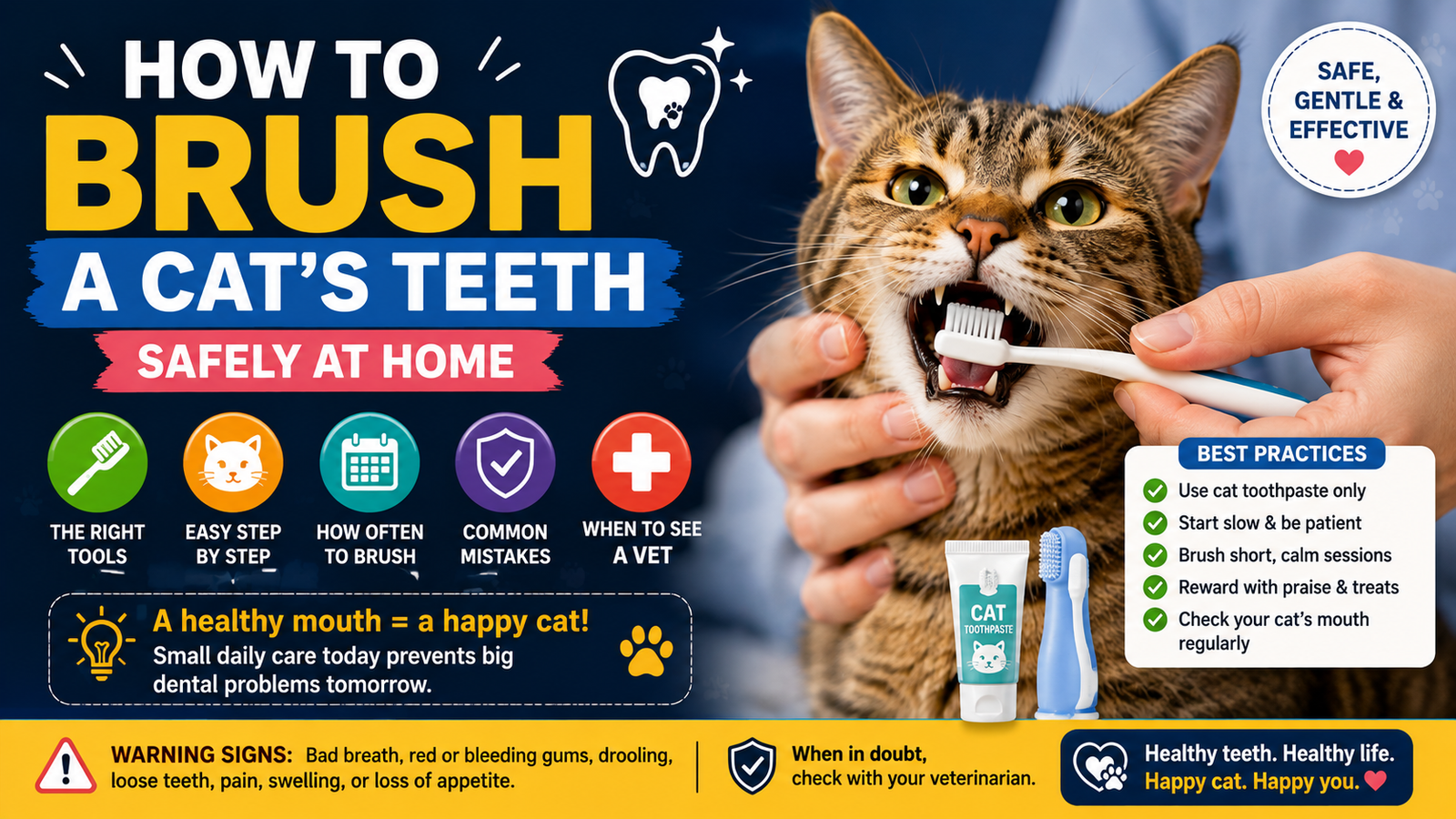

Brushing your cat’s teeth can be an important part of regular home care.
Food particles and bacteria can build up around the teeth and gums. Over time this may contribute to plaque. Tartar. Gum inflammation. Bad breath. And painful dental disease.
The safest approach is to introduce tooth brushing slowly.
You do not need to force your cat’s mouth open or brush every tooth during the first session.
This guide explains which products to use. How to introduce tooth brushing. How often to brush. What to do when your cat resists. Which common mistakes to avoid. And when a veterinary dental examination is needed.
Quick Answer
Use toothpaste made specifically for cats and a soft pet toothbrush or finger brush.
Start by allowing your cat to taste the toothpaste. Then gently touch the lips and gums. Progress to a few seconds of brushing along the outer surfaces of the teeth. Daily brushing is ideal when your cat accepts it. Never use human toothpaste and stop when the mouth appears painful or starts bleeding unexpectedly.
Why Cat Dental Care Matters
Dental problems are not only about bad breath.
A painful mouth can affect:
- Eating
- Chewing
- Grooming
- Play
- Comfort
- Normal behavior
Cats can hide mouth pain surprisingly well.
A cat may continue eating even when dental disease is present.
This is why regular home checks and veterinary dental examinations are important.
What You Need Before Brushing
Prepare:
- Cat toothpaste
- A soft cat toothbrush
- A finger brush if your cat prefers it
- Small treats
- A quiet room
- Good lighting
- A calm few minutes
Do not use a hard human toothbrush.
A very small soft pet toothbrush is easier to control.
Can You Use Human Toothpaste on a Cat?
No.
Human toothpaste is designed to be spit out.
Cats swallow toothpaste during brushing.
Some human dental products contain ingredients that should not be swallowed by pets.
Use Only Pet Toothpaste
Never use normal human toothpaste. Mouthwash. Whitening gel. Baking soda mixtures. Or essential oils inside your cat’s mouth unless your veterinarian specifically recommends a product.
What Does Cat Toothpaste Taste Like?
Pet toothpaste may come in flavors such as:
- Chicken
- Fish
- Malt
- Beef
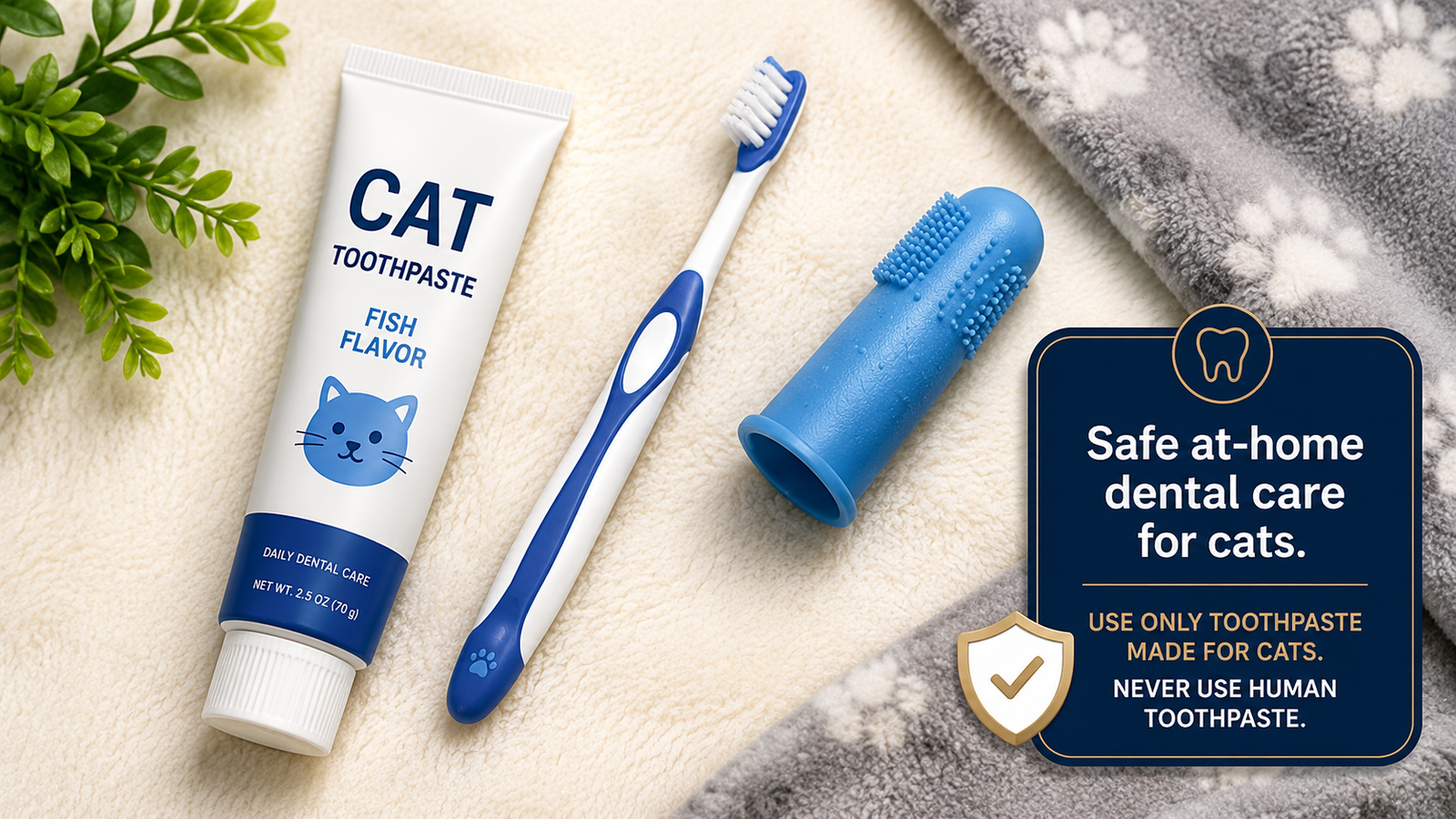
Choose a product labeled for cats.
A flavor your cat enjoys can make training easier.
How Often Should You Brush a Cat’s Teeth?
Daily brushing provides the most consistent plaque control when your cat accepts it.
If daily brushing is not possible then brush as regularly as you safely can.
Even short sessions can help build the habit.
| Stage | Goal | Typical Session |
|---|---|---|
| First introduction | Accept toothpaste | A few seconds |
| Lip handling | Allow gentle mouth touching | 10 to 20 seconds |
| Early brushing | Brush a few teeth | 10 to 30 seconds |
| Regular routine | Brush outer tooth surfaces | Short calm daily session |
How to Introduce Tooth Brushing
Step 1: Let Your Cat Taste the Toothpaste
Place a very small amount on your finger.
Allow your cat to lick it.
Do not force it into the mouth.
Repeat this for several short sessions.
Step 2: Touch the Cheeks
Gently stroke the side of your cat’s face.
Reward calm behavior.
Step 3: Lift the Lip Briefly
Lift the upper lip for one second.
Release immediately.
Give a treat.
Step 4: Touch One Tooth
Place a little pet toothpaste on your finger.
Touch the outer surface of one tooth.
Do not push deep into the mouth.
Step 5: Introduce the Toothbrush
Allow your cat to smell and lick the brush.
Place a little toothpaste on it.
Reward calm investigation.
How to Brush a Cat’s Teeth Step by Step
Step 1: Choose a Calm Time
Choose a time when your cat is relaxed.
After play or a meal may work well for some cats.
Step 2: Position Your Cat Comfortably
Your cat can sit beside you or face away from you.
A non slip towel can provide stability.
Step 3: Lift the Lip
You do not need to force the mouth open.
Lift the lip gently so you can see the outer surface of the teeth.
Step 4: Brush the Outside Surfaces
Use small gentle movements.
Focus on the area where the teeth meet the gums.
The outside surfaces are the most practical areas to brush at home.
Step 5: Start With Only a Few Teeth
Do not aim for a perfect full mouth cleaning on day one.
Brush for a few seconds.
Then stop.
Step 6: Increase Slowly
Add more teeth as your cat becomes comfortable.
Step 7: Reward Your Cat
Use praise. Gentle attention. Play. Or a small treat.
How Hard Should You Brush?
Use very light pressure.
Brushing should not hurt.
The goal is to move the bristles gently over the tooth and gum line.
Hard scrubbing can make the mouth sore.
Do You Need to Brush the Inside of Every Tooth?
No.
For most home brushing routines the outer surfaces are the main focus.
Trying to hold the mouth fully open can make the cat stressed and may increase the risk of being bitten.
What If Your Cat Hates the Toothbrush?
Return to an easier step.
Try:
- Pet toothpaste on your finger
- A soft finger brush
- A smaller toothbrush
- Shorter sessions
- Better rewards
- Training when your cat is sleepy
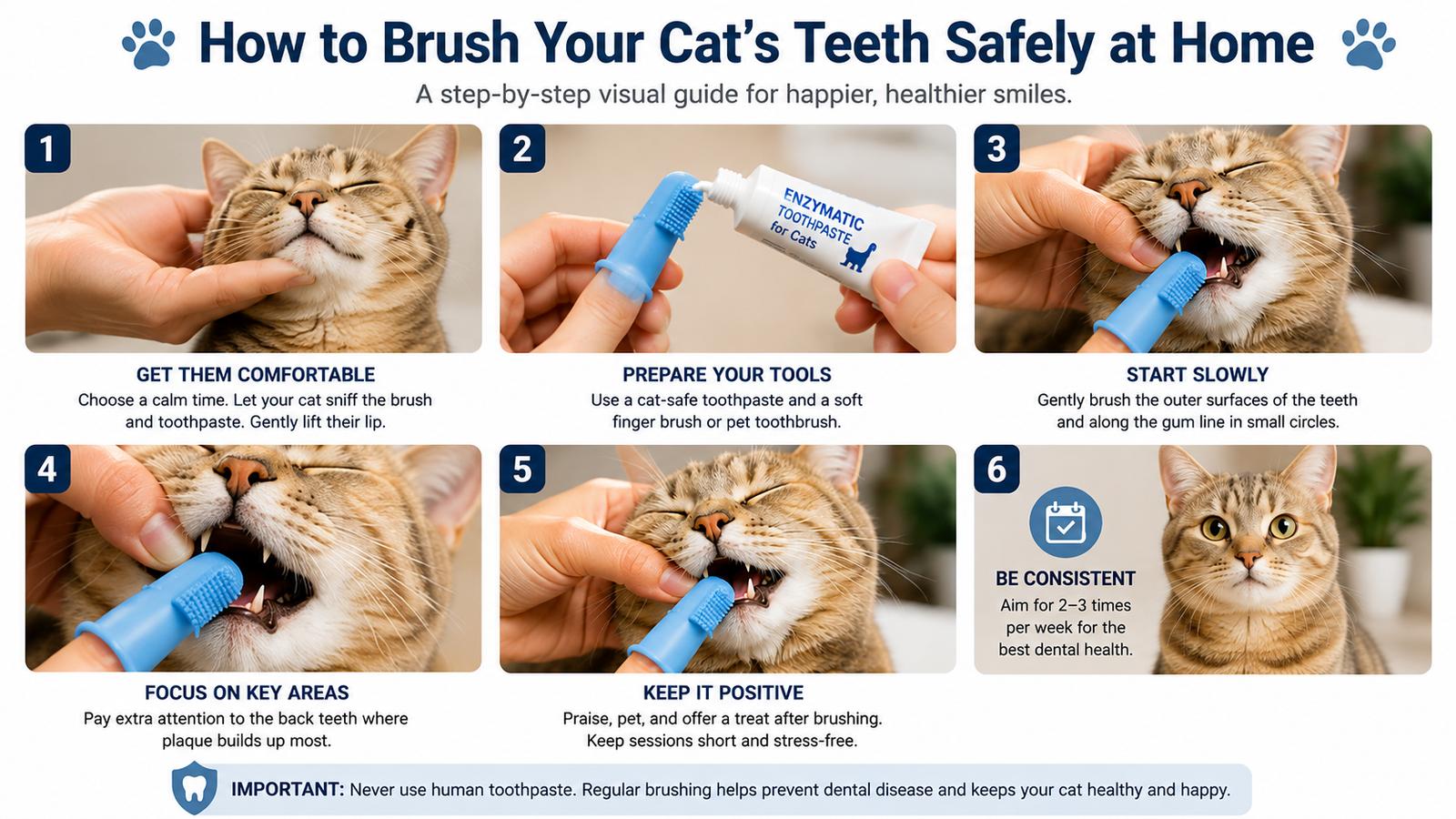
One successful five second session is better than a stressful two minute fight.
Signs Your Cat Needs a Break
Stop when your cat:
- Pulls away repeatedly
- Growls
- Hisses
- Tries to bite
- Flattens the ears
- Whips the tail
- Appears painful
- Starts bleeding unexpectedly
Do not punish resistance.
What Should Healthy Cat Gums Look Like?
Healthy gums are generally pink and should not be heavily swollen or bleeding.
Normal pigmentation can make some areas darker.
Look for changes rather than judging color alone.
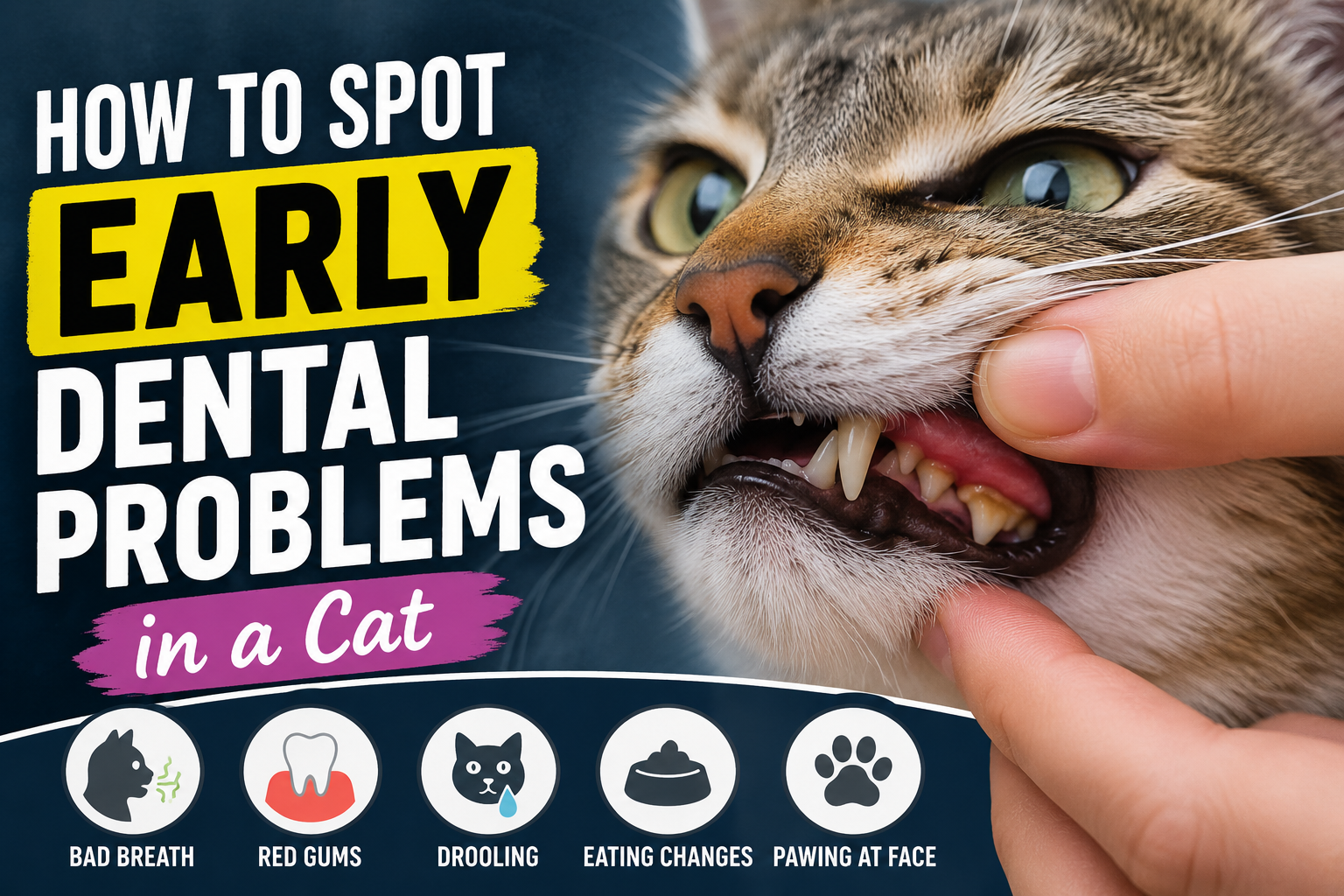
Signs of Dental Problems
Watch for:
- Bad breath that becomes strong
- Red gums
- Bleeding gums
- Drooling
- Dropping food
- Chewing on one side
- Difficulty eating dry food
- Pawing at the mouth
- Facial swelling
- Reduced grooming
- Weight loss
- Loose or broken teeth
These signs need veterinary attention.
Should You Brush Teeth That Already Have Heavy Tartar?
Do not try to scrape heavy tartar off at home.
Home brushing cannot safely replace a professional dental cleaning when significant disease is already present.
A veterinarian can examine the mouth and recommend the correct treatment.
Can Dental Treats Replace Brushing?
Dental treats may be useful as part of a complete dental care plan.
They do not automatically replace brushing.
Choose products designed specifically for cats.
Count treat calories as part of the normal diet.
Read our guide on how often to feed a cat.
Can Dental Water Additives Help?
Some veterinary dental products may help reduce plaque or odor.
Choose a product intended for cats.
Never add human mouthwash to your cat’s water.
Your cat must continue drinking normally.
Read how much water a cat should drink each day.
Dental Care for Kittens
Kittenhood is a useful time to introduce mouth handling.
Keep sessions extremely short.
Touch the cheeks.
Lift the lip.
Allow the kitten to taste cat toothpaste.
The main goal is building a positive habit.
Dental Care for Senior Cats
Older cats have a greater chance of existing dental problems.
Schedule veterinary checks before beginning aggressive home brushing when a senior cat has:
- Bad breath
- Difficulty chewing
- Weight loss
- Drooling
- Visible tartar
- Mouth pain
How Carrier Training Can Help With Dental Visits
Some dental problems require veterinary treatment.
A cat that is comfortable inside a carrier may have a less stressful trip.
Read our guide on how to get a cat comfortable with a carrier.
Common Tooth Brushing Mistakes
Using Human Toothpaste
Always use toothpaste designed for pets.
Forcing the Mouth Open
Lift the lips instead.
Starting With a Long Session
Build from a few seconds.
Brushing Too Hard
Use light pressure.
Ignoring Pain
A painful mouth needs veterinary assessment.
Trying to Scrape Tartar at Home
This can injure the gums and teeth.
Waiting Until Dental Disease Is Severe
Regular veterinary examinations help identify problems earlier.
When Should You Contact a Veterinarian?
Arrange veterinary care when your cat has:
- Strong bad breath
- Red or bleeding gums
- Loose teeth
- A broken tooth
- Facial swelling
- Difficulty chewing
- Drooling
- Loss of appetite
- Weight loss
- Visible mouth pain
Do Not Brush a Very Painful Mouth
When your cat cries. Refuses food. Has severe gum inflammation. Or has a broken tooth. Stop home brushing and arrange veterinary care.
Frequently Asked Questions
Do cats really need their teeth brushed?
Regular brushing can help reduce plaque and support dental health.
Is daily brushing safe?
Yes when the mouth is healthy and your cat accepts brushing calmly.
What toothpaste should I use?
Use toothpaste labeled specifically for cats or pets.
Can I use water only?
Mechanical brushing can still remove some plaque. Pet toothpaste makes the routine more effective and attractive for many cats.
Why does my cat’s breath smell bad?
Strong bad breath can be caused by dental disease and should be discussed with a veterinarian.
Should gums bleed during brushing?
Unexpected or repeated bleeding is not something to ignore.
Can I use a finger brush?
Yes. Some cats prefer a soft finger brush.
How long should brushing take?
A short calm session is enough. Quality and regularity matter more than forcing a long session.
Final Thoughts
Cat tooth brushing should be gentle and positive.
Use pet toothpaste.
Introduce mouth handling slowly.
Lift the lips instead of forcing the mouth open.
Brush the outer surfaces of the teeth with light pressure.
Keep sessions short.
Never punish resistance.
And remember that home brushing cannot treat painful dental disease that already exists.
Related DailyPetTips Guides
- How to Brush a Cat at Home Safely
- How to Get a Cat Comfortable With a Carrier
- How Often Should You Feed a Cat?
- How Much Water Should a Cat Drink Each Day?
- Explore All Cat Guides
- Explore Pet Health Guides

Pet parent notes