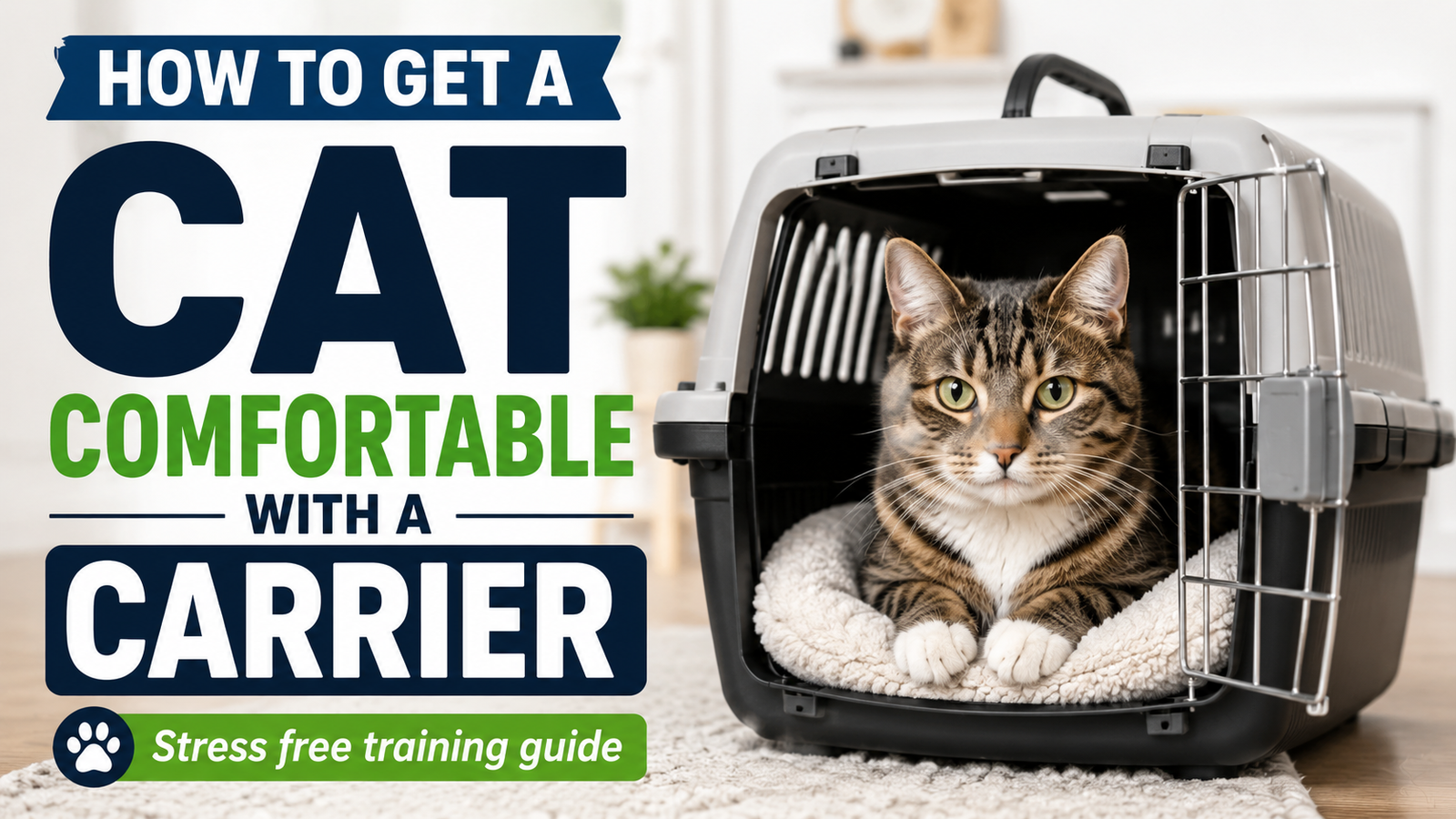

Many cats run away when the carrier appears.
This usually happens because the carrier only comes out before a veterinary visit. Car journey. Or another stressful event.
The good news is that a carrier can become a normal and safe part of your cat’s home.
The best training begins before you actually need to travel.
This guide explains how to choose a carrier. Where to place it. How to use treats. How to teach your cat to enter voluntarily. How to travel safely. And when stress may need veterinary help.
Quick Answer
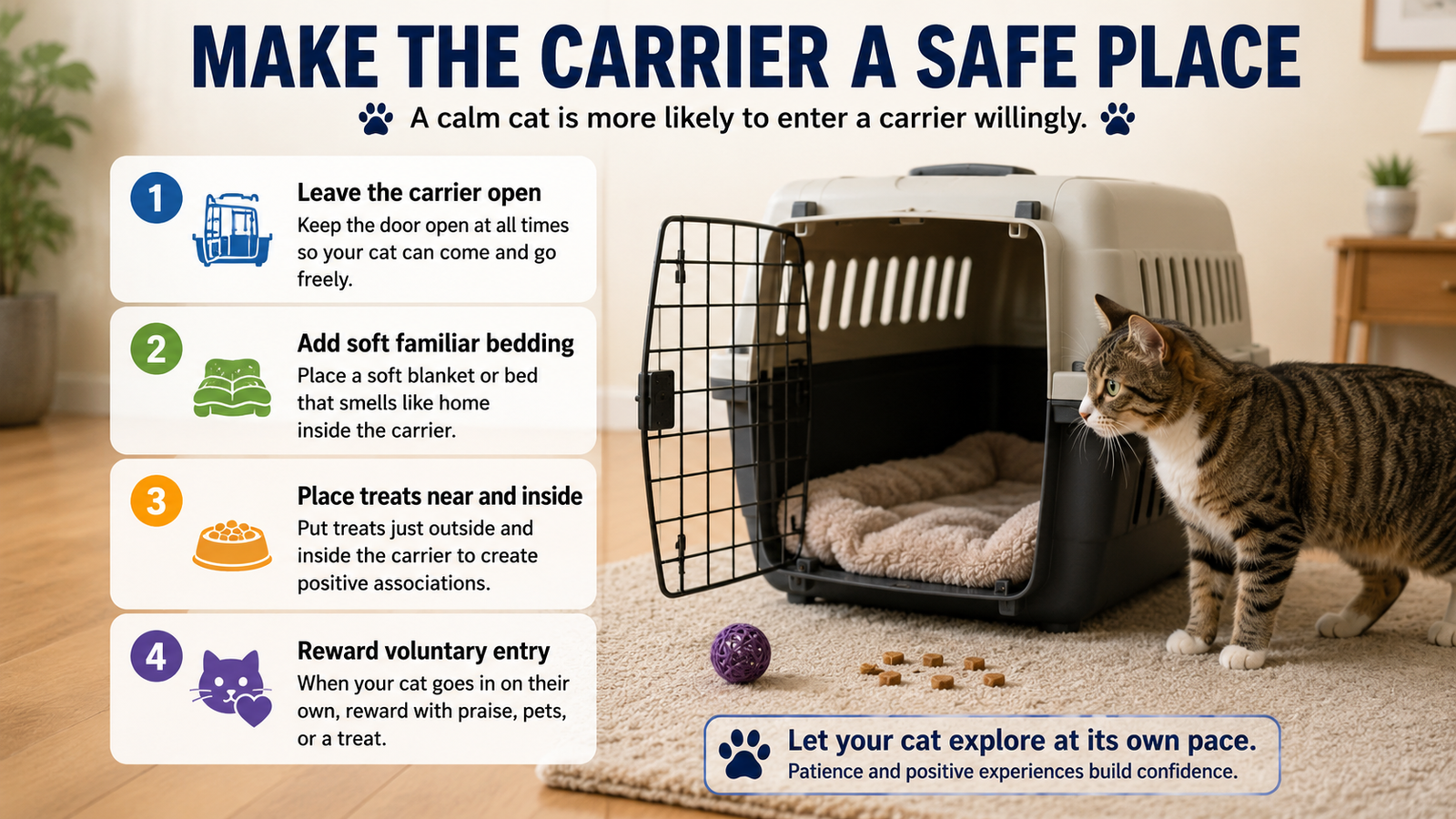
Leave the carrier open inside your home all the time.
Place soft bedding inside. Add treats or toys. Allow your cat to explore without closing the door. Once your cat enters comfortably begin closing the door for a few seconds. Increase the time slowly. Never force a frightened cat into long training sessions.
Why Are Cats Afraid of Carriers?
Many cats learn that the carrier predicts something unpleasant.
This may include:
- A veterinary visit
- A car ride
- A house move
- Medication
- Strange people
- New smells
- Leaving familiar territory
If the carrier stays hidden most of the year your cat never has a chance to build a positive relationship with it.
What Makes a Good Cat Carrier?
A useful carrier should be:
- Strong
- Secure
- Large enough for your cat to turn around
- Easy to clean
- Well ventilated
- Easy to open
- Stable when lifted
A carrier with a removable top can make veterinary handling easier.
| Carrier Type | Possible Benefit | Important Note |
|---|---|---|
| Hard plastic carrier | Strong and easy to clean | Choose one with secure locks. |
| Soft carrier | Lightweight and comfortable | Check that the base stays stable. |
| Top opening carrier | Easier access for some cats | Make sure the top locks securely. |
| Removable top carrier | Cat may remain in the bottom during examination | Useful for nervous cats. |


Pet parent notes