
Quick Answer
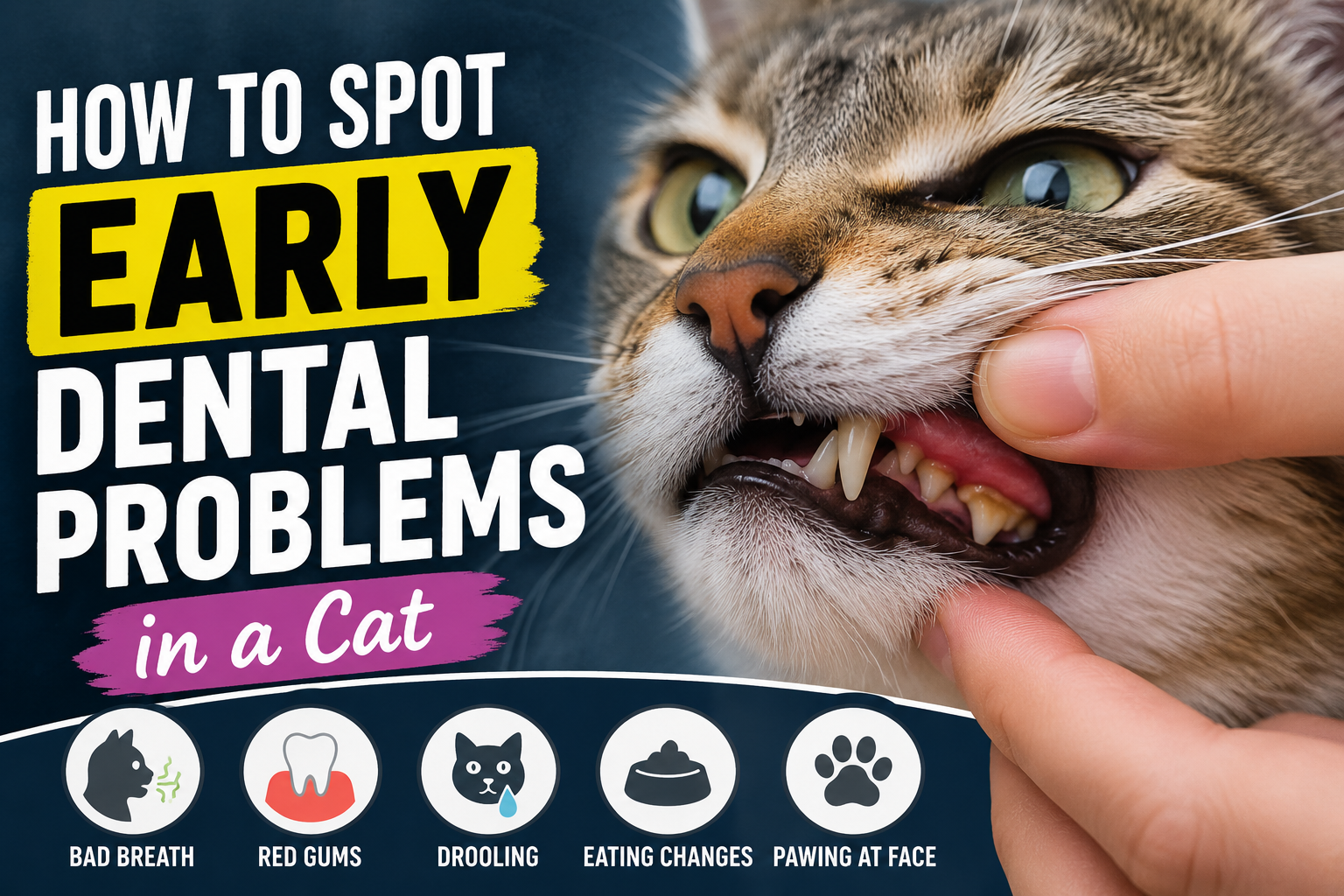
Early dental problems in cats can be easy to miss because many cats continue eating even when their mouth is uncomfortable.
Possible warning signs include persistent bad breath red or swollen gums drooling difficulty chewing dropping food from the mouth reduced interest in hard food and pawing at the face.
Dental disease can become painful and may get worse without treatment. If your cat shows mouth pain bleeding gums difficulty eating facial swelling or a sudden change in appetite contact a veterinarian.
Key Takeaways
- Bad breath can be an early sign of dental disease.
- Red swollen or bleeding gums need attention.
- Cats may hide mouth pain very well.
- Dropping food or chewing on one side can signal discomfort.
- Do not use human toothpaste on a cat.
- Home brushing can help prevent plaque but cannot remove hardened tartar.
- Professional dental treatment should be performed by a veterinarian.
- Sudden refusal to eat should never be ignored.
Why Cat Dental Health Matters
Healthy teeth and gums help a cat eat comfortably and use the mouth normally.
Over time plaque can build on teeth. If it is not removed it can harden into tartar and contribute to inflammation around the gums.
Dental problems can cause:
- Pain
- Difficulty eating
- Gum inflammation
- Loose or damaged teeth
- Infection
- Reduced quality of life
The challenge is that cats often hide discomfort. A cat may still walk to the food bowl and try to eat even when chewing hurts.
Persistent Bad Breath
A mild food smell after eating is normal.
Strong unpleasant breath that continues every day can be a sign of dental disease.
Bad breath may be associated with plaque tartar gum disease infected teeth or other medical conditions.
Do not try to cover the smell with dental sprays without understanding the cause.
If the odor is new strong or persistent ask your veterinarian to examine the mouth.
Red or Swollen Gums
Healthy gums are usually smooth and do not look severely inflamed.
Gums that appear:
- Bright red
- Swollen
- Bleeding
- Painful
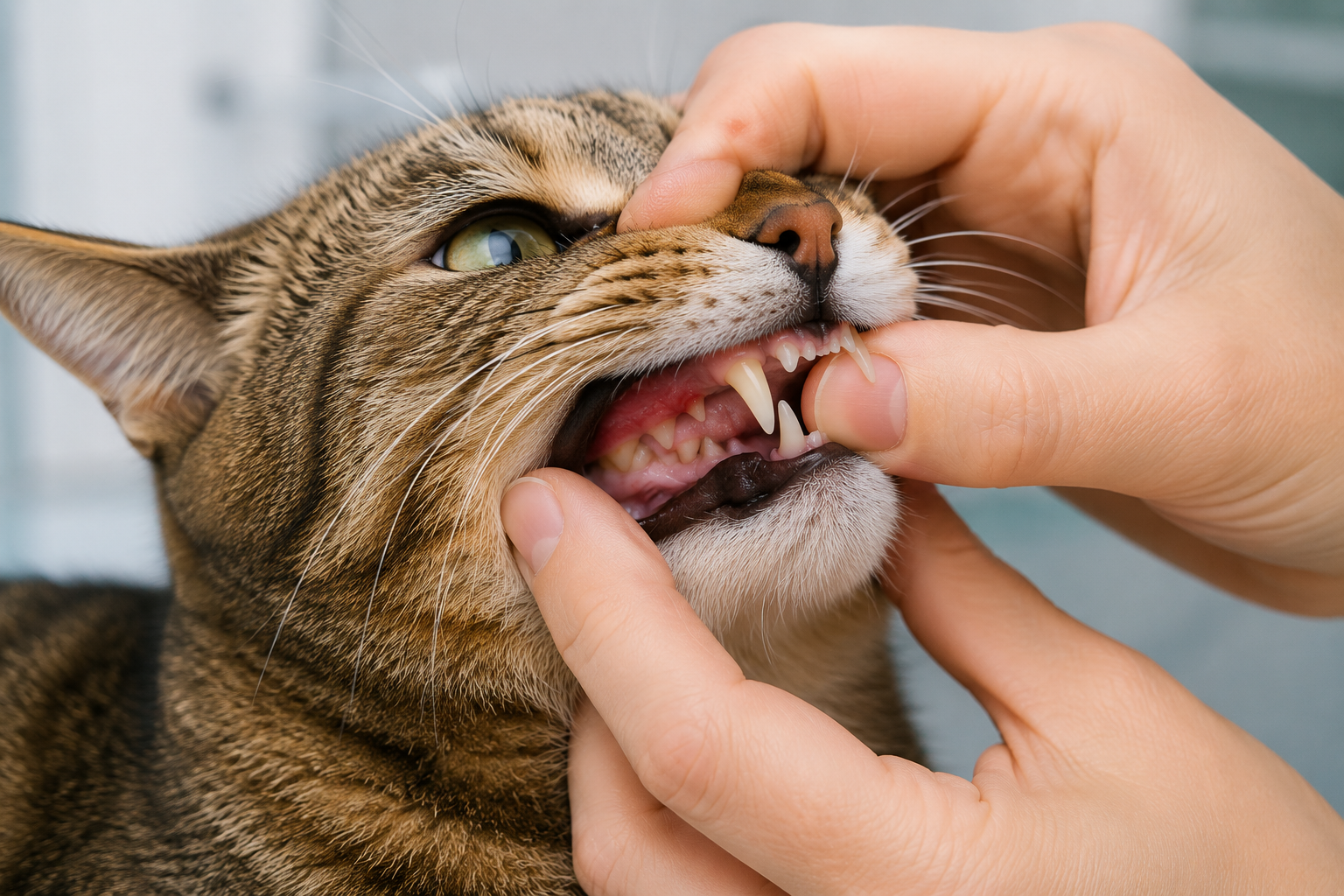
may indicate inflammation or another dental problem.
Do not press or poke irritated gums.
If your cat becomes upset when you try to look inside the mouth stop and let a veterinarian perform the examination safely.
Yellow or Brown Buildup on the Teeth
Plaque begins as a soft film on the tooth surface.
Once it hardens into tartar it may look yellow brown or rough.
Brushing can help control plaque before it hardens but a toothbrush cannot safely remove thick tartar that is already firmly attached to the teeth.
Professional veterinary cleaning may be needed.
Changes in the Way Your Cat Eats
Eating behavior can provide important clues.
Watch for changes such as:
- Dropping kibble from the mouth
- Chewing more slowly
- Chewing mostly on one side
- Walking away from the bowl
- Preferring softer food suddenly
- Approaching food but hesitating to eat
A cat may appear hungry but stop eating because the mouth hurts.
This should not be dismissed as being picky.
Drooling
Some cats drool when relaxed or happy.
However new excessive drooling can sometimes be associated with mouth pain dental disease oral injury nausea or other health problems.
Check for other signs such as:
- Bad breath
- Blood in saliva
- Difficulty eating
- Pawing at the mouth
- Reduced appetite
If drooling begins suddenly or your cat appears unwell contact your veterinarian.
Pawing at the Face or Mouth
A cat with oral discomfort may rub its face against objects or repeatedly paw near the mouth.
This behavior can also have other causes so it should not be used to diagnose dental disease by itself.
If the behavior is new frequent or combined with eating changes arrange a veterinary check.
Facial Swelling
Swelling around the cheek jaw or below the eye can be associated with dental infection or another serious problem.
Facial swelling is not something to treat at home.
Your cat should be examined by a veterinarian promptly.
Missing or Damaged Teeth
Adult cats can develop broken loose or diseased teeth.
A tooth that looks damaged may expose sensitive internal structures and cause significant pain.
Do not try to pull or move a loose tooth yourself.
Veterinary dental X rays and examination may be needed to understand what is happening below the gum line.
Why Cats Can Still Eat With Dental Pain
Many owners assume that a cat eating normally cannot have painful teeth.
Unfortunately this is not always true.
Cats are good at adapting. Some swallow food with very little chewing while others continue eating despite discomfort.
This is why routine veterinary examinations matter even when your cat seems normal.
Can You Check Your Cat's Mouth at Home?
You can make a simple visual check if your cat is calm and comfortable with handling.
Gently lift the lip without forcing the mouth open.
Look for:
- Red gums
- Visible tartar
- Broken teeth
- Bleeding
- Unusual swelling
Stop if your cat struggles becomes frightened or shows pain.
A home check cannot replace a veterinary dental examination because much of the tooth is below the gum line.
Can Brushing Prevent Dental Problems?
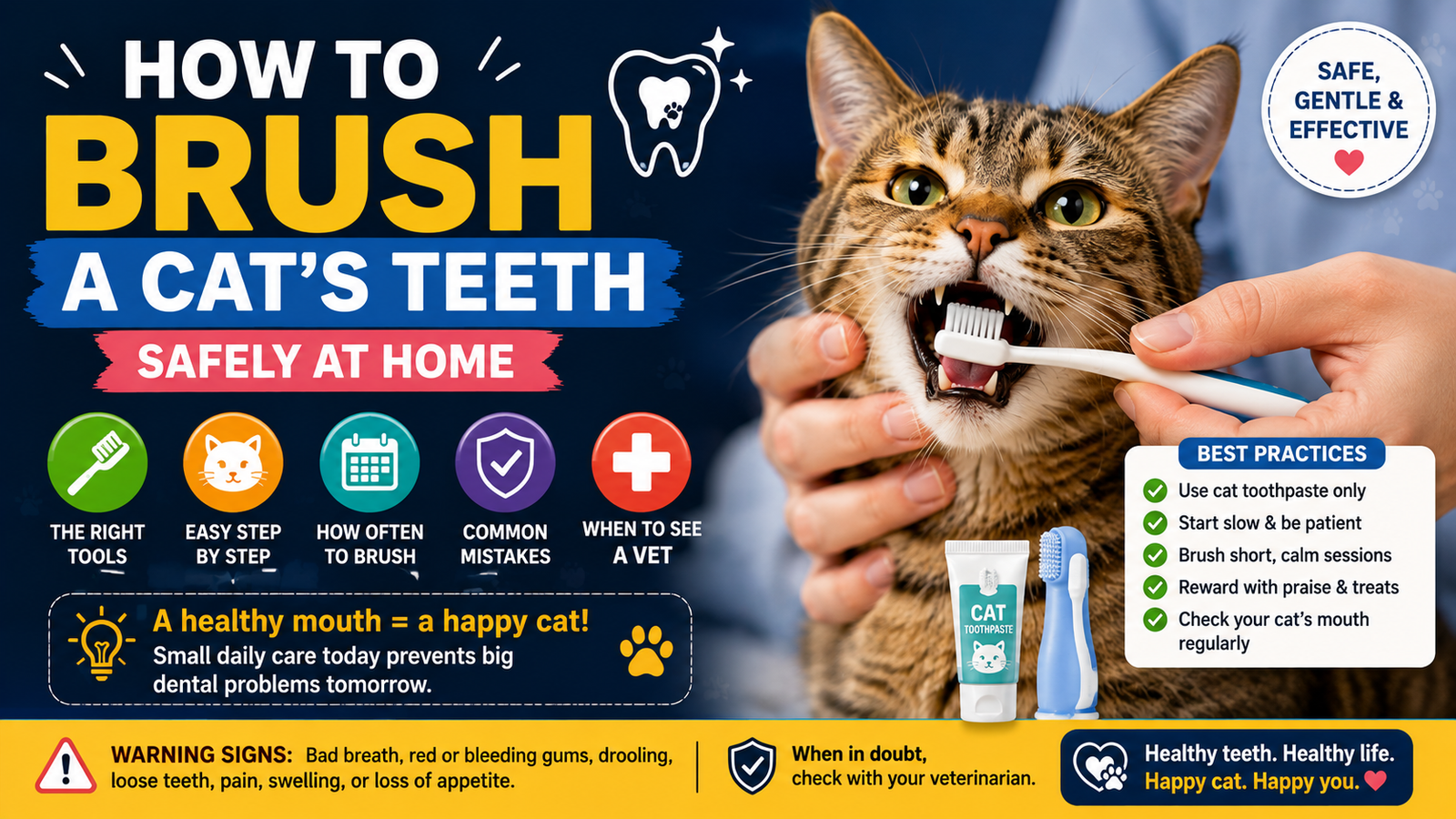
Regular tooth brushing with a product made specifically for cats can help reduce plaque buildup.
Never use human toothpaste because ingredients and foaming agents may not be appropriate for pets.
Introduce brushing gradually and keep early sessions short.
For a complete beginner routine read our guide on how to brush a cat's teeth safely at home.
Dental Treats and Dental Diets
Some veterinary dental products may help reduce plaque or tartar when used correctly.
However no treat can fix a broken tooth severe gum disease or an infected mouth.
If you want to add a dental product ask your veterinarian which type is suitable for your cat.
When Does a Cat Need Professional Dental Cleaning?
A veterinarian may recommend professional dental treatment when there is significant tartar gum disease painful teeth or another oral problem.
A proper veterinary dental procedure allows the team to examine areas that cannot be safely treated while a cat is awake.
Cleaning only the visible part of the tooth does not address disease below the gum line.
When to Contact a Veterinarian
Arrange veterinary care if you notice:
- Persistent bad breath
- Red or bleeding gums
- Loose or broken teeth
- Difficulty chewing
- Drooling
- Facial swelling
- Blood from the mouth
- Sudden appetite changes
- Visible signs of pain
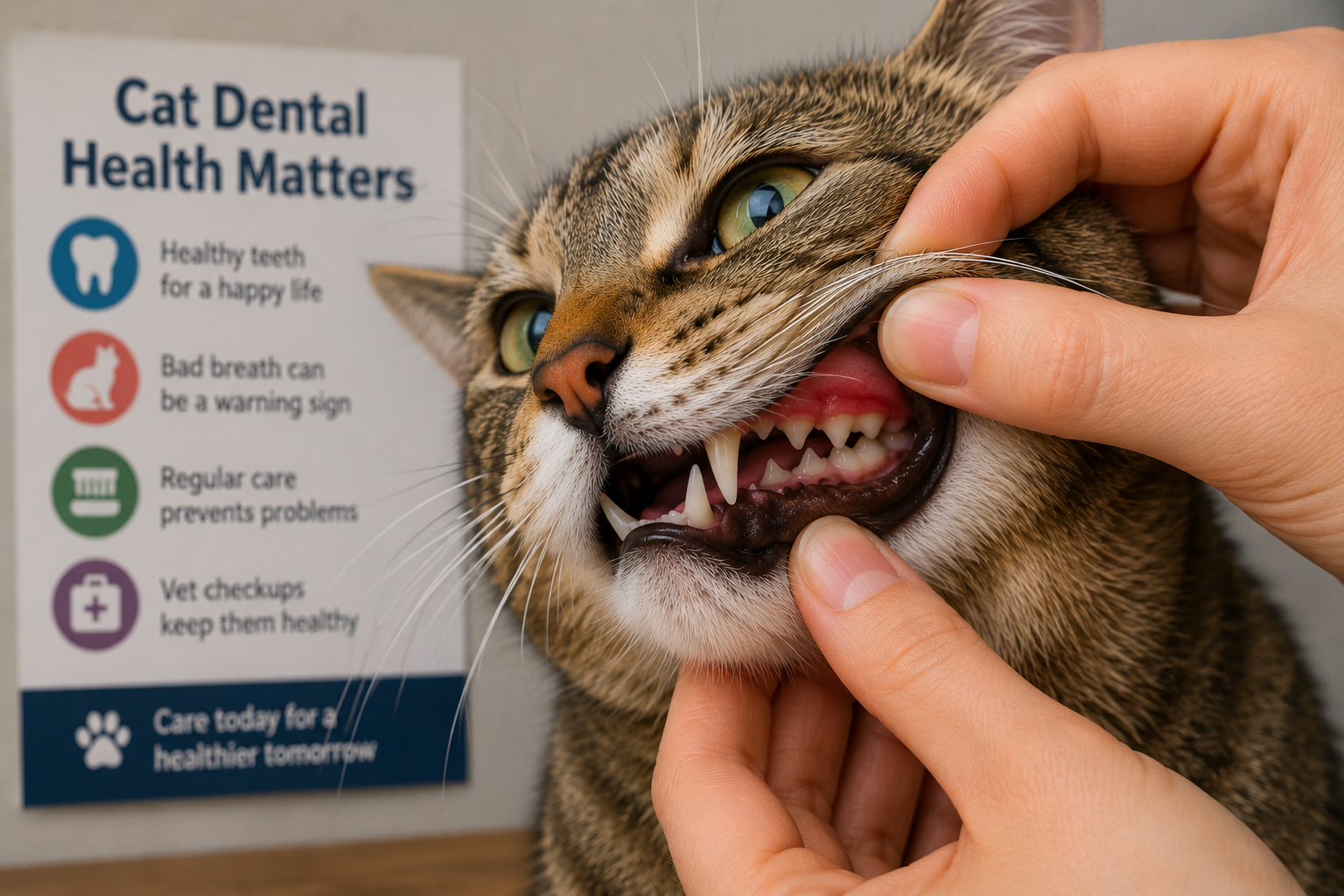
A cat that stops eating or is unable to eat needs prompt veterinary attention.
Common Cat Dental Care Mistakes
Waiting Until the Cat Stops Eating
Dental disease can be advanced before a cat completely refuses food.
Using Human Toothpaste
Only use products designed for cats and recommended for pet use.
Trying to Scrape Tartar at Home
Sharp tools can damage the gums or teeth.
Assuming Bad Breath Is Normal
Persistent strong odor deserves attention.
Forcing the Cat's Mouth Open
This can cause fear injury or biting.
Frequently Asked Questions
Is Bad Breath Normal in Cats?
Persistent strong bad breath is not something to ignore. Dental disease is one possible cause and a veterinary examination can help identify the problem.
Can Cats Get Cavities?
Cats can develop several forms of dental disease including tooth resorption and periodontal disease. A veterinarian can diagnose the exact condition.
Can I Remove Tartar From My Cat's Teeth at Home?
No. Hardened tartar and disease below the gum line should be handled professionally.
How Often Should a Cat Have a Dental Check?
Your veterinarian can check the mouth during routine health visits and recommend a schedule based on your cat's age and dental condition.
What if My Cat Will Not Let Me Brush?
Do not force brushing. Ask your veterinarian about alternative dental care options and gradual handling training.
Related DailyPetTips Guides
Sources and References
Pet Health Disclaimer
This article provides general educational information and does not diagnose dental disease. Mouth pain appetite loss facial swelling bleeding or other concerning symptoms should be assessed by a veterinarian.
Editorial Note
This guide focuses on early warning signs owners may notice at home. It does not recommend scraping tartar treating painful teeth or replacing professional dental examination with home care.
About the Author
Ibrahim is a pet care writer at DailyPetTips. He creates practical easy to understand guides using established veterinary animal welfare and pet care sources.

Pet parent notes