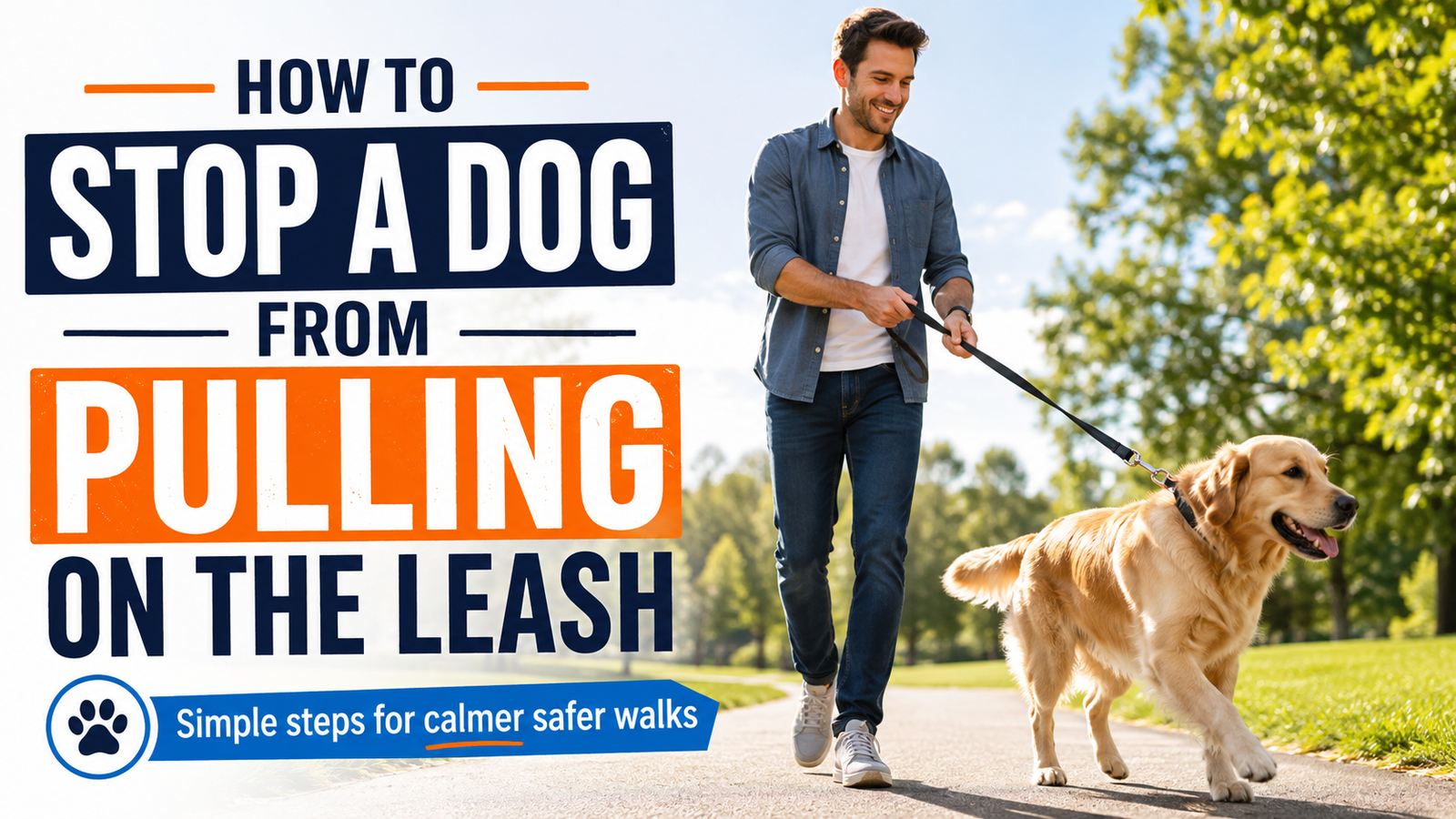
A dog that pulls on the leash can make every walk difficult.
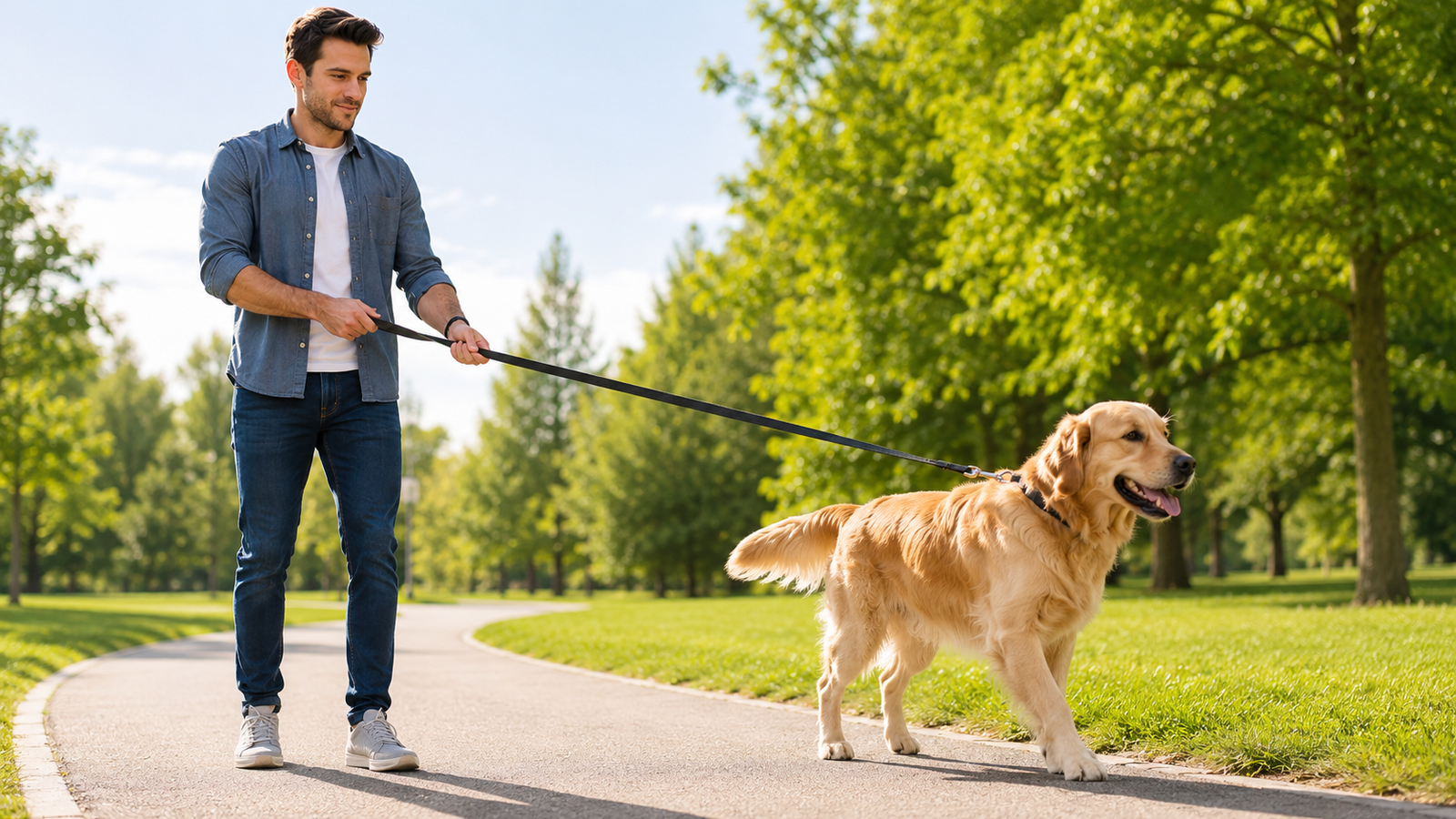
Pulling may hurt your hands. It may place pressure on your dog. It can also make busy streets and crowded places harder to manage.
Most dogs do not pull because they are trying to control their owner. They usually pull because they are excited. Curious. Frightened. Or eager to reach something.
Loose leash walking is a skill. Dogs need clear training and regular practice before they understand it.
This guide explains why dogs pull. Which equipment can help. How to train step by step. What mistakes to avoid. And when professional support may be needed.
Quick Answer
Stop moving when the leash becomes tight. Wait for your dog to return attention to you. Reward the dog when the leash becomes loose. Then continue walking.
Practice first in a quiet place. Use small treats. Reward your dog beside you. Keep sessions short. Do not pull the leash back. Do not punish your dog. Add distractions slowly after the dog understands the skill.
Why Do Dogs Pull on the Leash?
Dogs naturally walk faster than many people.
They also use their nose to explore the world. Smells. Animals. People. Food. Cars. And movement can quickly take their attention away from the person holding the leash.
Common reasons for leash pulling include:
- Excitement about going outside
- Wanting to reach a smell
- Trying to greet another dog
- Trying to greet a person
- Fear of something nearby
- Lack of previous training
- Too much energy
- A walk that is too difficult
- A habit that has been rewarded
If pulling helps the dog reach a tree. Dog. Person. Or smell then the pulling behavior may become stronger.
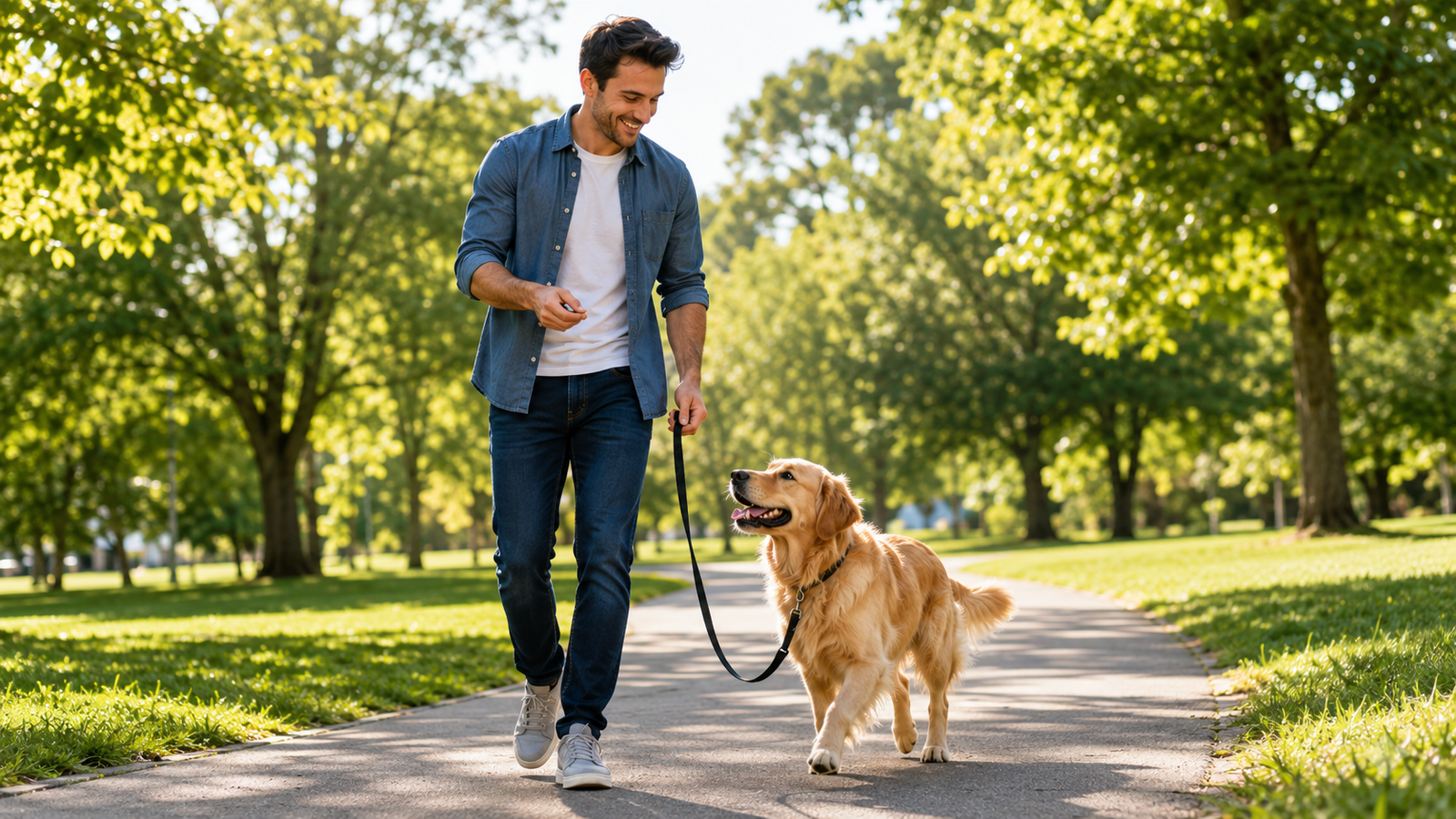
The goal is to teach your dog that a loose leash makes the walk continue.
What Is Loose Leash Walking?
Loose leash walking means the leash has some slack.
Your dog does not need to walk in a perfect competition position.
The dog may walk beside you or slightly ahead. The important point is that the leash stays loose and both of you remain safe.
A relaxed walk should allow your dog to:
- Move comfortably
- Look around
- Sniff safe areas
- Respond to your voice
- Change direction with you
- Walk without constant pressure
What Equipment Do You Need?
Safe equipment makes training easier.
| Equipment | Possible Use | Important Note |
|---|---|---|
| Standard leash | Daily training | Choose a comfortable length that gives control without constant tension. |
| Well fitted harness | Comfortable body control | The harness should not rub the skin or block natural shoulder movement. |
| Front attachment harness | May reduce forward pulling | Training is still needed. The harness does not teach the skill by itself. |
| Treat pouch | Fast rewards | Use small treats so your dog can eat quickly. |
| Long line | Safe practice in open spaces | Use only in a safe area away from roads and moving vehicles. |
Important: Equipment should fit correctly. Check the skin under straps after walks.
Should You Use a Collar or Harness?
A flat collar may work for a dog that already walks calmly.
A well fitted harness may be more comfortable for a dog that pulls strongly.
Pressure around the neck can be uncomfortable. This may be more concerning for small dogs. Puppies. Dogs with breathing problems. Or dogs with neck pain.
Ask a veterinarian or qualified trainer when your dog has a medical condition.
Never leave a harness on for long periods when it rubs the skin or becomes wet.
What to Prepare Before Training
Choose:
- A quiet training area
- A standard leash
- A comfortable harness or collar
- Small high value treats
- Comfortable shoes
- A short training plan
Use treats that your dog enjoys.
Cut treats into very small pieces. Large treats can slow training and add unnecessary calories.
Train before your dog becomes very tired or overexcited.
How to Stop a Dog From Pulling on the Leash
Step 1: Begin Inside the Home
Attach the leash in a quiet room.
Stand still.
Reward your dog for looking at you and staying near you.
Do not begin with a busy outdoor walk.
Step 2: Reward the Position You Want
Choose which side you want your dog to walk on.
Hold a treat near your leg.
Reward your dog beside you.
This helps your dog understand where rewards are available.
Step 3: Take One or Two Steps
Walk one or two steps.
If the leash stays loose say a marker word such as Yes.
Give a treat beside your leg.
Repeat several times.
Step 4: Stop When the Leash Becomes Tight
Stop moving as soon as the leash becomes tight.
Do not pull your dog backward.
Wait quietly.
The moment your dog turns back or moves toward you mark the behavior and reward it.
Continue walking when the leash is loose.
Step 5: Change Direction
Walk in another direction before your dog reaches the end of the leash.
Use a happy voice or simple cue such as This way.
Reward your dog for following.
Frequent direction changes help your dog pay attention to your movement.
Step 6: Add More Steps Slowly
Begin with two loose leash steps.
Then try four steps.
Then six steps.
Do not expect a long perfect walk during the first session.
Step 7: Practice Near the Door
Doors can make dogs excited.
Ask your dog to wait while the door opens.
If the dog rushes forward close the door gently.
Open it again when the dog is calmer.
Reward calm movement through the doorway.
Step 8: Move to a Quiet Outdoor Area
Practice in a quiet garden. Driveway. Or empty street.
Keep the first outdoor session short.
Reward your dog more often outside because the environment is harder.
Step 9: Add Distractions Slowly
Begin with distant distractions.
This may include:
- A person far away
- A parked car
- A quiet dog at a distance
- A bird on the ground
- A mild new smell
Reward your dog for noticing the distraction and then looking back at you.
Move farther away when your dog cannot focus.
Step 10: Allow Safe Sniffing
Sniffing is an important part of a dog’s walk.
Use sniffing as a reward.
Ask for a few loose leash steps.
Then use a release phrase such as Go sniff.
This teaches your dog that calm walking can lead to something enjoyable.
How Long Should Training Sessions Be?
Begin with three to five minutes.
You can practice several short times during the day.
A young puppy may only manage one or two minutes.
Stop before your dog becomes tired or frustrated.
Short successful sessions are better than long difficult sessions.
Where Should You Practice?
Begin in easy places.
- Inside the home
- Quiet hallway
- Garden
- Driveway
- Quiet street
- Calm park
- Busier public area
Move to the next place only when your dog can focus in the current place.
What Should You Do When Your Dog Pulls Toward a Smell?
Stop walking.
Wait for the leash to become loose.
Reward your dog for returning attention to you.
Then walk toward the smell together.
The smell becomes a reward for loose leash walking.
Do not allow pulling to be the fastest way to reach every smell.
What Should You Do When Your Dog Pulls Toward Another Dog?
Create more distance.
Your dog may be too excited or worried to learn at close range.
Move to the side of the path.
Reward your dog for looking at the other dog calmly.
Reward again when your dog looks back at you.
Do not force a greeting.
Not every dog wants to meet other dogs.
Distance Helps Learning
Move farther away when your dog cannot take treats. Cannot hear you. Barks constantly. Lunges. Or becomes very stiff.
What Should You Do When Your Dog Pulls Toward People?
Ask the person to wait.
Approach only while the leash stays loose.
Stop when your dog pulls.
Move forward again when the leash becomes loose.
The greeting happens only after calm behavior.
Do not allow every person to excite your dog.
What Should You Do When Your Dog Pulls Because of Fear?
Do not drag your dog toward the frightening thing.
Move to a safer distance.
Allow your dog to look without forcing contact.
Reward calm behavior.
Fear based pulling may include trying to escape. Running home. Hiding behind you. Or moving away from a sound.
A qualified reward based trainer or veterinary behavior professional may help when fear is severe.
How to Train a Puppy to Walk on a Loose Leash
Puppies have short attention spans.
Keep sessions very short.
Use tiny treats.
Practice indoors before outdoor walks.
Reward your puppy for:
- Following you
- Looking at you
- Standing calmly while the leash is attached
- Walking one or two steps beside you
- Waiting at the door
Do not expect a young puppy to walk calmly through a busy area.
Can an Adult Dog Learn Loose Leash Walking?
Yes.
Adult dogs can learn new walking habits.
An adult dog may need more time if pulling has worked for several years.
Use the same calm and consistent method.
Reward small improvements.
How to Help a Strong Dog That Pulls
Use equipment that you can hold safely.
Practice before entering a busy area.
Choose wide paths with room to move away from distractions.
Keep both hands available when needed.
Do not wrap the leash around your hand.
A front attachment harness may help some owners manage a strong dog while training continues.
Ask a qualified trainer for in person help when you cannot control your dog safely.
How to Hold the Leash Safely
Hold the handle securely.
Keep the leash loose enough for natural movement.
Do not wrap the leash around your wrist. Fingers. Or hand.
A sudden pull can cause injury.
Keep extra leash folded in your hand without creating tight loops around the skin.
Should You Use a Retractable Leash?
A retractable leash may create constant tension.
It can also give a dog more speed before reaching the end.
This can make loose leash training more difficult.
A standard leash usually gives clearer feedback and better control during training.
Retractable leashes may also be risky near roads. Dogs. Bicycles. Or crowded paths.
Common Leash Training Mistakes
Pulling the Leash Back
Pulling against your dog can create more tension.
Stop. Change direction. Or move away calmly.
Walking Forward While the Dog Pulls
This teaches the dog that pulling works.
Starting in a Busy Park
Begin in a quiet place.
Using Treats Too Late
Reward while the leash is loose and your dog is near you.
Expecting a Perfect Walk
Training takes time.
Making Every Walk a Strict Lesson
Allow safe sniffing and exploration.
Punishing Excitement
Teach calm behavior instead of frightening your dog.
Using the Wrong Reward
A normal biscuit may not be valuable enough in a busy environment.
Training for Too Long
End after a small success.
Why Punishment Can Make Walking Harder
Fear and pain may reduce trust.
Punishment may also create a negative connection with people. Dogs. Or the walking environment.
The American Veterinary Society of Animal Behavior supports reward based training and advises against methods that depend on pain or fear.
Avoid Pain Based Equipment
Do not use equipment that causes pain or fear. Ask a reward based trainer for safer options when normal training is difficult.
How Exercise Affects Leash Pulling
A dog with extra energy may find it harder to focus.
Physical exercise can help. Mental activity is also useful.
Before leash practice you can try:
- A short game
- Food puzzle
- Simple training exercises
- Calm sniffing in the garden
- Searching for small treats
Do not exhaust your dog before every walk.
The goal is calm focus. Not extreme tiredness.
How Grooming and Paw Care Support Better Walks
Pain can make leash walking harder.
Check your dog’s paws and nails regularly.
Long nails. Paw injuries. Hot pavement. And something stuck between the toes may change how your dog walks.
Read our guide on how often to trim a dog’s nails.
Regular coat care can also help you notice skin problems and sore areas. Read how to brush a dog at home.
When Should You Contact a Veterinarian?
Contact a veterinarian when your dog:
- Suddenly refuses to walk
- Begins limping
- Cries when the harness is fitted
- Has trouble breathing
- Coughs during walks
- Shows neck pain
- Has a paw injury
- Becomes weak
- Cannot walk normally
- Shows a sudden major behavior change
A medical problem can sometimes look like a training problem.
When Should You Ask a Dog Trainer for Help?
Ask a qualified reward based trainer when:
- Your dog pulls so strongly that walks are unsafe
- Your dog lunges at people or animals
- Your dog shows strong fear
- Your dog tries to escape the harness
- Your dog redirects biting toward the leash or person
- You are not making progress
- You do not feel confident handling the dog
Choose a trainer who uses humane reward based methods.
Frequently Asked Questions
How long does it take to stop leash pulling?
Some dogs improve within a few sessions. Reliable loose leash walking around distractions may take several weeks or longer.
Should I stop every time my dog pulls?
Yes. Consistency helps your dog understand that pulling does not make the walk continue.
Can treats make my dog dependent on food?
Treats help teach the skill. You can reduce food rewards slowly after the behavior becomes reliable.
Should my dog always walk beside me?
No. A relaxed walk can allow some movement and safe sniffing while the leash remains loose.
Why does my dog walk well at home but pull outside?
Outdoor environments have more smells. Sounds. Movement. And distractions.
Is a harness better for leash pulling?
A well fitted harness may improve comfort and control. Training is still needed.
Can I train without treats?
You can use praise. Toys. Sniffing. Or permission to move forward. Food is often useful during early training.
Why does my dog pull more on the way home?
Your dog may be tired. Excited about returning. Or following a familiar route.
Why does my dog bite the leash?
Leash biting may come from excitement. Frustration. Play. Stress. Or discomfort.
Should I let my dog greet every dog?
No. Frequent leash greetings can increase pulling and may not be safe or comfortable for every dog.
Final Thoughts
Loose leash walking is a skill that needs practice.
Begin in a quiet place. Reward your dog beside you. Stop when the leash becomes tight. Continue when the leash becomes loose.
Keep training sessions short and positive.
Add distractions slowly.
Allow safe sniffing so walks remain enjoyable.
Do not punish your dog or use pain based equipment.
With clear rewards and regular practice your dog can learn to walk more calmly and safely.
Related DailyPetTips Guides
- How to Brush a Dog at Home
- How Often Should You Trim a Dog’s Nails?
- How Often Should You Bathe a Dog?
- 7 Everyday Ways to Help Your Dog Feel Happier
- Explore Pet Training Guides
- Explore All Dog Guides

Pet parent notes