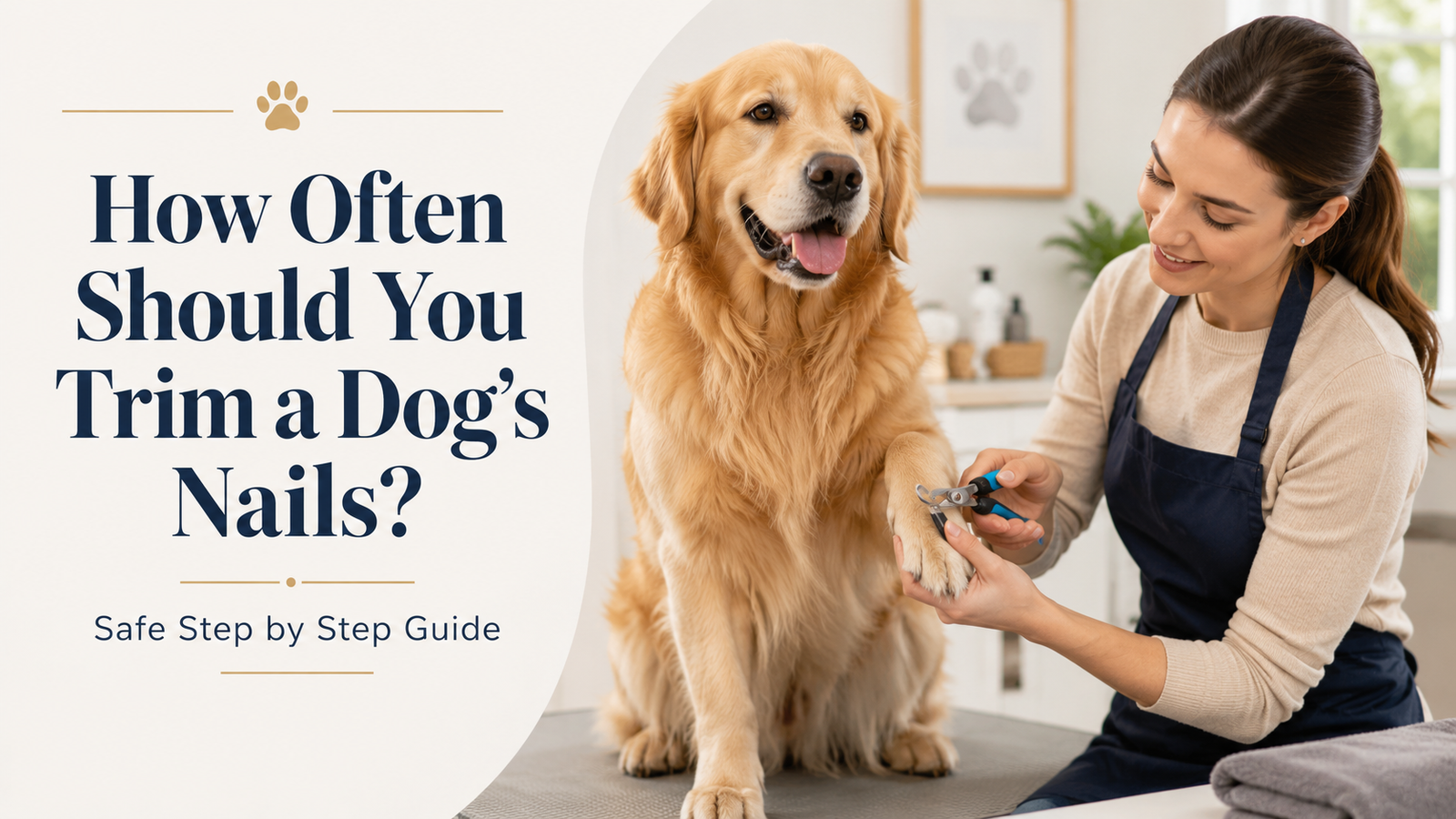
Regular nail care helps your dog walk comfortably. Long nails can press against the floor. They can change the way a dog stands and walks. They can also catch on carpets or other surfaces.
There is no exact trimming schedule for every dog. Some dogs need nail care every two or three weeks. Other dogs naturally wear their nails down and need trimming less often.
The right schedule depends on your dog’s activity level. It also depends on the walking surface. Nail growth. Age. Health. And the shape of the paws.
This guide explains how often to trim dog nails. How to choose safe tools. How to avoid the quick. What to do when a nail bleeds. And when a veterinarian or professional groomer should help.
Quick Answer
Many dogs need their nails checked every two weeks and trimmed about every three to four weeks.
Your dog may need trimming sooner when the nails touch the floor or make a clicking sound while walking. Do not follow the calendar alone. Check each nail. Trim only a small amount at one time. Stop before reaching the quick inside the nail.
Why Is Dog Nail Care Important?
A dog’s nails continue to grow throughout life.
Some nails wear down naturally during walks. This happens more often when dogs regularly walk on firm surfaces. Dogs that spend more time on grass or soft ground may not wear their nails down as quickly.
Regular nail care can help:
- Support comfortable walking
- Reduce slipping on smooth floors
- Prevent nails from catching on fabric
- Reduce the risk of broken nails
- Keep dewclaws from growing into the skin
- Make paw checks easier
- Help your dog become comfortable with handling
Long nails may change how the paw touches the ground. This can make walking less comfortable. A badly overgrown nail may also curl toward the paw pad.
How Often Should You Trim a Dog’s Nails?
Many dogs need nail trimming every three to four weeks.
This is only a general starting point.
Check your dog’s nails every one or two weeks. This helps you notice growth before the nails become too long.
| Dog or Lifestyle | Possible Nail Care Routine | Important Note |
|---|---|---|
| Indoor dog | Check every 1 to 2 weeks | Soft indoor floors may not wear nails down. |
| Dog that walks on pavement | Check every 2 weeks | Some nails may wear naturally. Dewclaws still need checking. |
| Older dog | Check every 1 to 2 weeks | Lower activity can allow nails to grow faster. |
| Small dog | Check every 1 to 2 weeks | Light body weight may create less natural nail wear. |
| Very active outdoor dog | Check every 2 weeks | Do not assume all nails wear evenly. |
| Dog with overgrown nails | Small trims more often | Ask a vet or groomer for a safe plan. |
Important: Do not cut a large amount from an overgrown nail in one session. The quick may have grown farther toward the end of the nail.
Signs That Your Dog’s Nails Are Too Long
Your dog may need a nail trim when:
- The nails make a clicking sound on hard floors
- The nails touch the floor while the dog is standing
- The toes appear pushed upward
- The dog slips more often on smooth floors
- A nail curves toward the paw pad
- The dog licks or chews at the paws
- A dewclaw looks long or curved
- The dog avoids normal walking
- A nail catches on blankets or carpet
Not every clicking sound means the nails are dangerously long. Paw shape and nail position can vary. Look at the whole paw and watch how your dog walks.
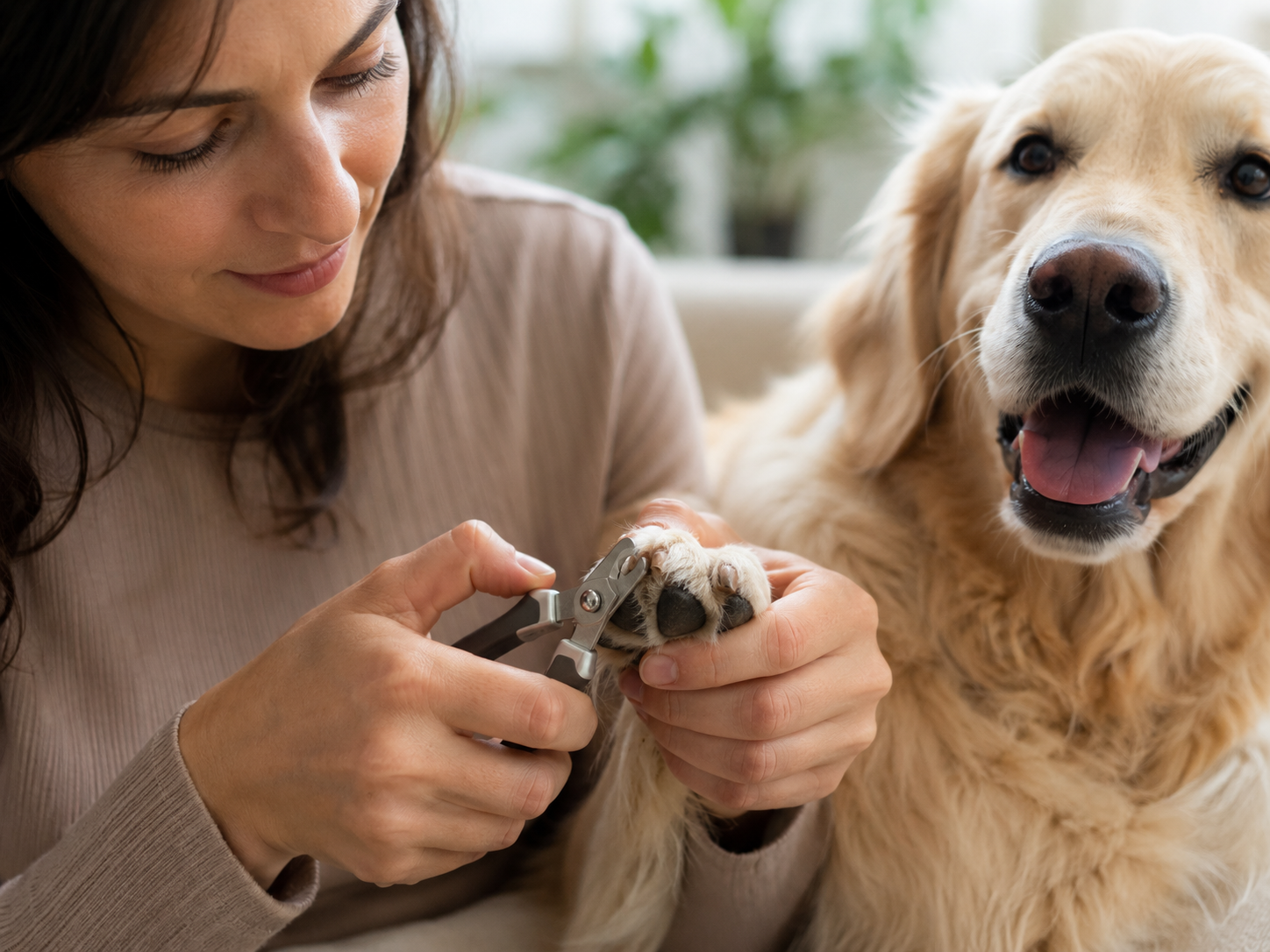
Do Not Ignore a Curled Nail
A nail that is touching or entering the paw pad needs prompt professional attention. Do not pull it out or cut it deeply at home. Contact a veterinarian.
What Is the Quick Inside a Dog’s Nail?
The quick is the living tissue inside the nail.
It contains blood vessels and nerves. Cutting into the quick causes pain and bleeding.
The quick is often easier to see in light colored nails. It may look like a pink area inside the nail.
The quick can be difficult to see in black nails. This is why black nails should be trimmed in very small amounts.
What Tools Do You Need?
Prepare your tools before beginning.
- Dog nail clippers
- A dog nail grinder if preferred
- Styptic powder
- Small treats
- A non slip mat
- Good lighting
- A towel if your dog needs extra support
Choose clippers that match the size of your dog’s nails.
Small clippers may not cut a thick nail cleanly. Very large clippers may be difficult to control on a small dog.
Dog Nail Clippers or Nail Grinder?
Nail Clippers
Clippers remove part of the nail in one cut.
They are quick and quiet. Some dogs prefer them because the session is short.
Dull clippers may crush or split the nail. Replace or sharpen the tool when it no longer cuts cleanly.
Nail Grinder
A grinder removes the nail slowly.
It can smooth sharp edges and may offer more control. It also makes noise and vibration. Some dogs need time to become comfortable with it.
Do not hold a grinder against one spot for too long. Friction can create heat and discomfort.
Both tools can work well when they are used safely.
How to Prepare Your Dog for Nail Trimming
Do not begin by forcing your dog to stay still for a full nail trim.
First help your dog become comfortable with paw handling.
Practice these steps over several short sessions:
- Touch one leg and give a treat.
- Touch one paw and give a treat.
- Hold the paw for one second and reward calm behavior.
- Touch one nail without trimming it.
- Let the dog see and smell the tool.
- Open and close the clippers away from the paw.
- Touch the tool to one nail without cutting.
Move to the next step only when your dog remains calm.
For more calm handling ideas read 7 everyday ways to help your dog feel happier.
How to Trim a Dog’s Nails Safely
Step 1: Choose a Calm Time
Trim nails when your dog is relaxed.
A quiet room works better than a busy area. Use a non slip surface so your dog feels secure.
Step 2: Position Your Dog Safely
Your dog can stand. Sit. Or lie down.
Choose the position that keeps the dog comfortable and gives you a clear view of the paw.
Do not twist the leg into an unnatural position.
Step 3: Hold One Paw Gently
Support the paw without squeezing it.
Use your fingers to separate one toe from the others.
Check the nail for cracks. Swelling. Redness. Or other problems before cutting.
Step 4: Find a Safe Cutting Point
For a light colored nail look for the pink quick.
Leave space between your cut and the quick.
For a dark nail remove only a thin piece from the tip.
Step 5: Cut a Small Amount
Make one small cut.
Do not try to reach the perfect length in one step.
Small cuts reduce the risk of reaching the quick.
Step 6: Check the Nail After Every Cut
Look at the center of the cut surface.
In dark nails a lighter center may begin to appear as you move closer to the quick.
Stop when you are unsure.
Step 7: Reward Your Dog
Give praise and a small treat after each successful nail.
You do not need to finish every paw in one session.
One or two nails can be enough for a nervous dog.
How to Trim Black Dog Nails
Black nails need extra care because the quick is difficult to see.
Trim only a very thin piece from the tip.
Check the center of the nail after every cut.
Stop when:
- The center begins to look softer
- A small dark spot appears in the center
- You are no longer sure where the quick is
- Your dog suddenly becomes sensitive
It is safer to leave a nail slightly longer than to cut too deeply.
What Are Dewclaws?
Dewclaws are nails that sit higher on the inside of the leg.
They may not touch the ground. This means they may not wear down during normal walks.
Check dewclaws every time you check the other nails.
A long dewclaw may curve toward the skin. It may also catch on fabric or plants.
What Should You Do If a Nail Bleeds?
Stay calm.
A small cut into the quick can bleed more than expected. It can still be managed in many cases.
- Stop trimming.
- Apply styptic powder to the end of the nail.
- Use gentle pressure with clean gauze.
- Keep your dog calm.
- Prevent licking while the bleeding stops.
Contact a veterinarian if the bleeding does not stop. Also contact a veterinarian when the nail is badly split or partly torn away.
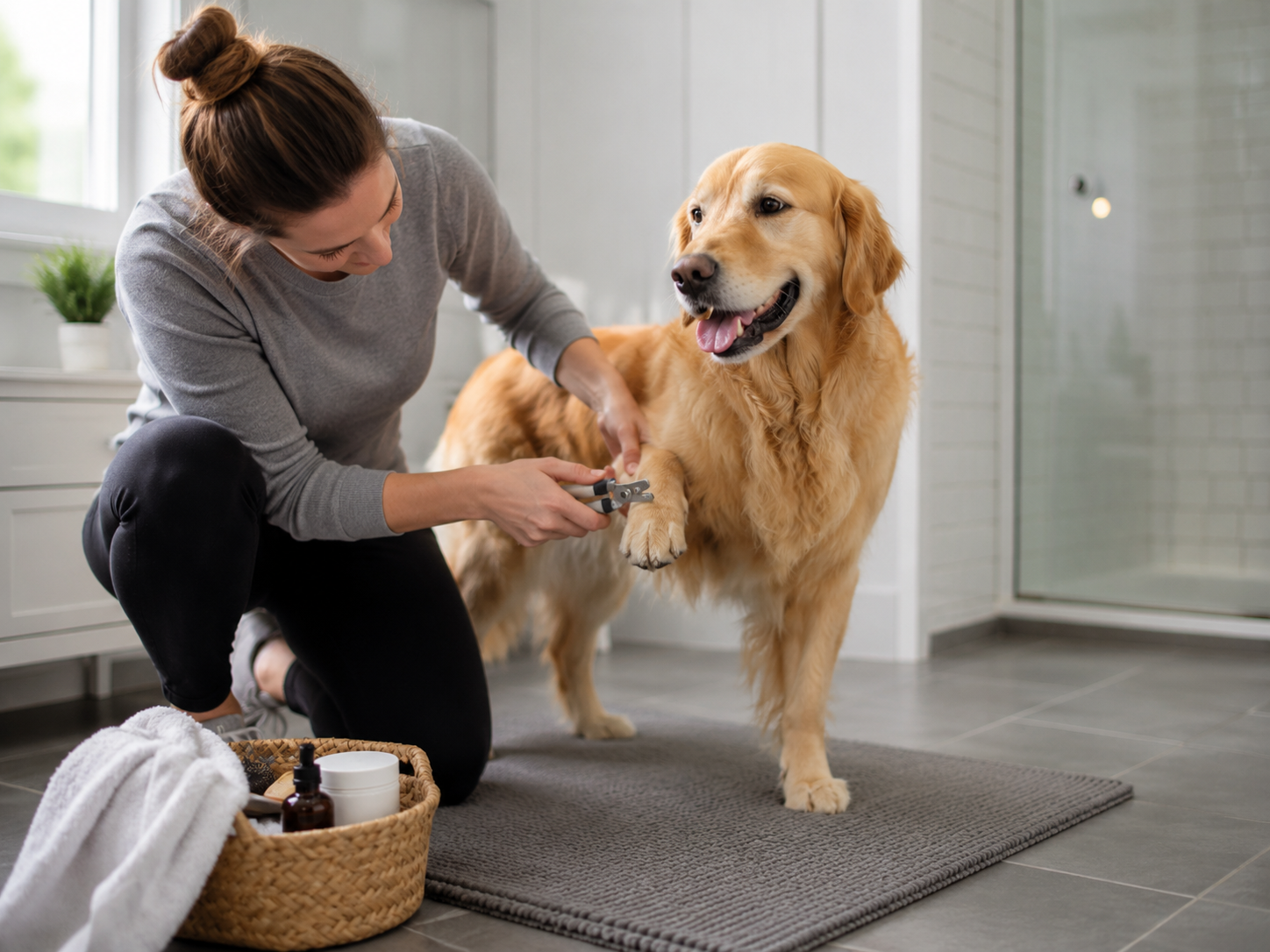
Prepare Before You Start
Keep styptic powder beside you before trimming the first nail. Do not wait for an accident before finding it.
Can You Use Cornstarch on a Bleeding Nail?
Styptic powder is designed for minor nail bleeding and is a better item to keep in your grooming kit.
Some people use cornstarch when styptic powder is not available. This may help with light bleeding. It is not a replacement for veterinary help when bleeding continues or the nail is badly injured.
How to Help a Dog That Hates Nail Trimming
A dog may dislike nail care because of fear. Pain. Noise. Paw sensitivity. Or a bad past experience.
Use very small training steps.
- Show the tool and give a treat
- Touch one paw and reward calm behavior
- Hold one toe for one second
- Touch the tool to one nail
- Trim one nail and end the session
Do not punish growling or struggling.
These behaviors may be warnings that the dog is afraid or uncomfortable.
Stop when safety becomes a concern.
Can Walking Replace Nail Trimming?
Walking on firm ground can help wear some nails down.
It does not always wear every nail evenly.
Dewclaws do not normally touch the ground. Front and back nails may also wear at different rates.
Continue checking all nails even when your dog walks on pavement every day.
Should You Trim Nails Before or After a Bath?
You can trim nails before or after a bath.
Some nails may feel slightly softer after bathing. Wet paws may also be harder to hold.
Choose the time when your dog is calm and the paw is easy to control.
Read our guide on how often you should bathe a dog.
Should You Brush Your Dog Before Nail Care?
Brushing is not required before trimming nails.
A short brushing session may help some dogs relax. It also gives you a chance to check the legs and paws.
Learn more in our guide on how to brush a dog at home.
Common Dog Nail Trimming Mistakes
Cutting Too Much at One Time
Large cuts increase the risk of reaching the quick.
Trim in small steps.
Ignoring the Dewclaws
Dewclaws may grow longer because they do not touch the ground.
Using Dull Clippers
Dull clippers may crush or split the nail.
Forcing a Frightened Dog
Forcing can increase fear and make future grooming more difficult.
Trimming in Poor Light
Good lighting helps you see the nail and the cutting surface.
Holding the Leg in an Uncomfortable Position
Support the paw without twisting the joints.
Trying to Finish Every Nail
A short successful session is better than a long stressful one.
Ignoring Pain or Swelling
Pain may come from an injury. Infection. Joint problem. Or damaged nail.
When Should You Use a Professional Groomer?
A professional groomer may be helpful when:
- Your dog is very nervous
- The nails are very dark
- The nails are thick
- Your dog is difficult to hold safely
- The nails are badly overgrown
- You are not confident
- Your dog has had a painful nail trim before
Tell the groomer about health conditions. Pain. Past injuries. And behavior concerns.
When Should You Contact a Veterinarian?
Contact a veterinarian when:
- A nail has entered the paw pad
- A nail is badly cracked
- A nail is partly torn away
- Bleeding does not stop
- The paw is swollen
- The paw has discharge or a bad smell
- Your dog cannot place weight on the paw
- Your dog cries when the paw is touched
- The nail looks infected
- Your dog suddenly refuses normal walking
Do not attempt deep trimming when nails are severely overgrown.
A veterinarian can check for infection. Injury. Pain. Or another health problem.
Frequently Asked Questions
How do I know when my dog’s nails need cutting?
Check whether the nails touch the ground. Listen for clicking on hard floors. Look for curling nails. Also watch for slipping or changes in walking.
How short should dog nails be?
The nails should not press heavily against the floor while the dog is standing. The safe length varies because the position of the quick is different in every dog.
Can I trim only one nail at a time?
Yes. This can be a good choice for a nervous dog.
Does trimming dog nails hurt?
Cutting the hard outer nail should not hurt. Cutting the quick causes pain and bleeding.
Why are my dog’s nails still long after trimming?
The quick may be long. Small frequent trims can sometimes allow the quick to move back over time. Ask a groomer or veterinarian for a safe plan.
Can I use human nail clippers?
Human nail clippers are not suitable for most dog nails. Use a tool designed for dogs.
How often should puppy nails be trimmed?
Check puppy nails every week. Puppy nails can be sharp and may need very small trims more often.
Why does my dog limp after a nail trim?
A nail may have been cut too short. The paw may be sore. Or there may be another injury. Contact a veterinarian when limping continues or the paw looks painful.
Can overgrown nails be fixed in one session?
Not always. The quick may have grown longer. A series of small trims may be safer.
Final Thoughts
Dog nail care should be calm. Careful. And regular.
Check the nails every one or two weeks. Many dogs need trimming about every three to four weeks. Your dog may need a different schedule.
Trim only a small amount at one time. Stop before reaching the quick. Keep styptic powder ready.
Do not force a frightened dog. Do not cut deeply into badly overgrown nails. Ask a groomer or veterinarian for help when you are unsure.
A simple nail care routine can help your dog walk more comfortably and reduce the risk of broken or curled nails.
Related DailyPetTips Guides
- How to Brush a Dog at Home
- How Often Should You Bathe a Dog?
- 7 Everyday Ways to Help Your Dog Feel Happier
- Explore Pet Grooming Guides
- Explore All Dog Guides



Pet parent notes