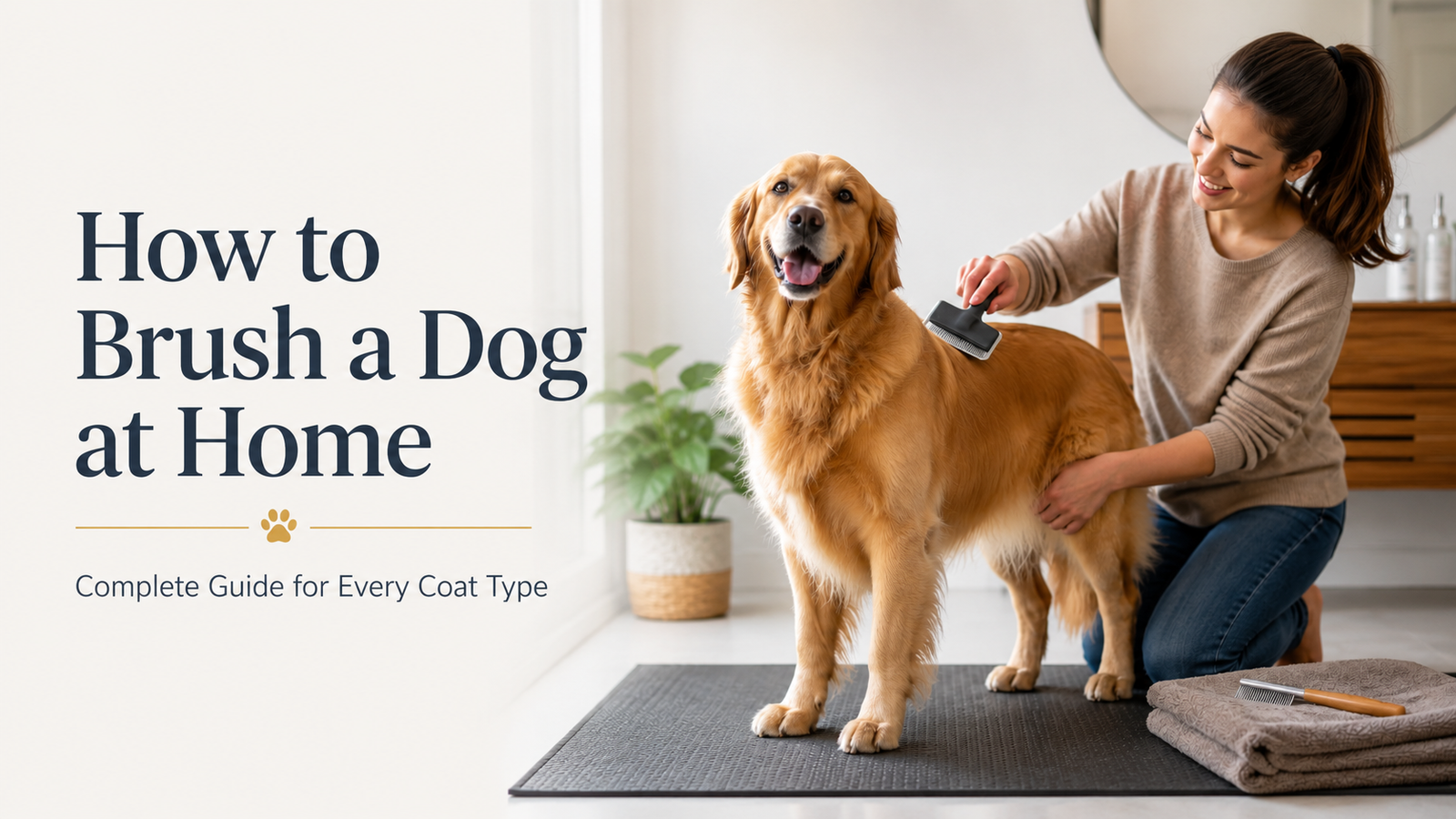
Regular brushing helps keep your dog clean and comfortable. It removes loose hair. It can reduce tangles. It also gives you a chance to check the skin and coat for unusual changes.
Brushing is not only for long haired dogs. Short haired dogs also benefit from regular coat care.
The correct routine depends on your dog’s coat type. Some dogs need quick brushing once or twice a week. Other dogs need careful brushing every day.
This guide explains how to choose the right brush. How to brush a dog safely. How often to brush different coat types. And when a mat or skin problem needs professional help.
Quick Answer
Brush your dog in the direction of hair growth. Start with short gentle strokes. Work through the coat one small section at a time.
Short haired dogs may need brushing once or twice a week. Long haired and curly coated dogs may need brushing several times a week or every day. Stop if your dog shows pain. Never pull hard on mats or scrape the skin.
Why Is Brushing Important for Dogs?
Brushing removes loose hair and surface dirt. It may also help spread natural oils through the coat.
A regular brushing routine can help with:
- Removing loose hair
- Reducing small tangles
- Preventing some mats
- Keeping the coat cleaner between baths
- Finding ticks or fleas
- Checking for lumps or swelling
- Finding dry or irritated skin
- Helping the dog become comfortable with handling
The ASPCA recommends regular grooming because it gives owners a chance to check the coat and skin for changes.
Brushing can also reduce the amount of loose hair around your home. It will not completely stop shedding. Shedding is a normal process for many dogs.
How Often Should You Brush a Dog?
There is no single brushing schedule for every dog.
The right routine depends on:
- Coat length
- Coat thickness
- How much the dog sheds
- Activity level
- Weather and season
- Skin health
- How quickly the coat becomes tangled
| Coat Type | Possible Brushing Routine | Useful Tool |
|---|---|---|
| Short smooth coat | Once or twice a week | Rubber grooming mitt or soft bristle brush |
| Medium coat | Two or three times a week | Slicker brush and comb |
| Long coat | Several times a week or daily | Pin brush. Slicker brush. Wide tooth comb |
| Curly coat | Several times a week or daily | Slicker brush and metal comb |
| Double coat | Two or three times a week. More during heavy shedding | Undercoat rake and slicker brush |
| Wire coat | Once or twice a week | Slicker brush and metal comb |
Important: This table gives general starting points. Your dog may need more or less brushing.
How to Choose the Right Dog Brush
Using the wrong brush can make grooming uncomfortable. It can also fail to reach loose hair hidden inside the coat.
Soft bristle brush: This may work well for short smooth coats. It removes surface hair and light dirt.
Rubber grooming mitt: This is useful for many short haired dogs. It can collect loose hair while giving a gentle massage.
Slicker brush: This brush has many fine wires. It can help with loose hair and small tangles. Use light pressure because the wires may scratch the skin.
Pin brush: This may work well for long flowing coats. It can move through longer hair without pulling as much as some other brushes.
Metal comb: A comb helps find small tangles that a brush may miss. It is also useful for checking whether a section is fully brushed.
Undercoat rake: This tool can reach loose undercoat hair in some double coated dogs. It should be used carefully. Too much pressure may hurt the skin.
Do Not Use Sharp Tools Carelessly
Blades and strong deshedding tools can damage the coat or skin when used incorrectly. Ask a professional groomer which tool is safe for your dog.
What You Need Before Brushing
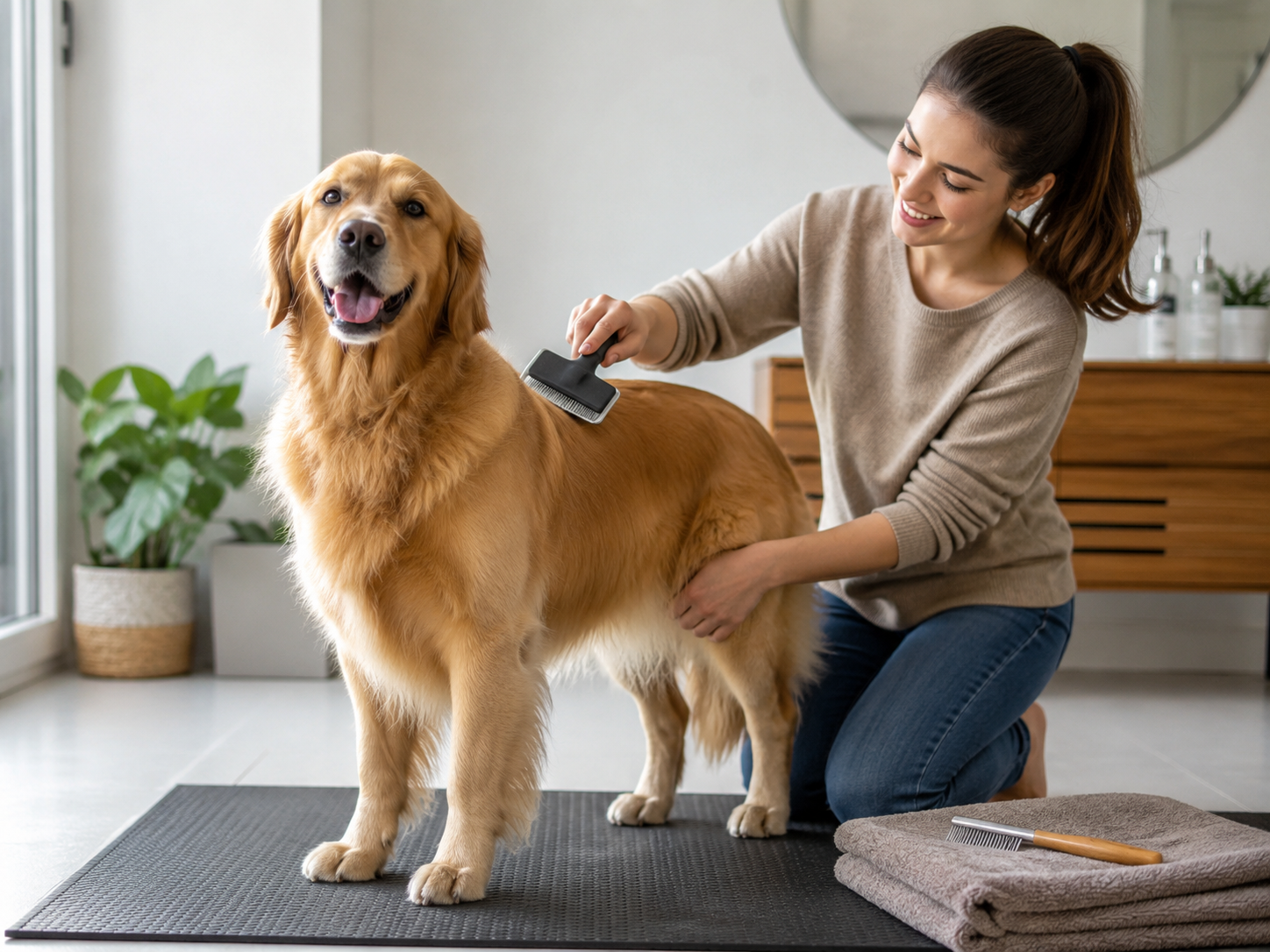
Prepare everything before starting.
- A brush suitable for the coat
- A metal comb if needed
- Small treats
- A non slip mat
- Good lighting
- A calm room
- A towel for muddy paws
Choose a time when your dog is calm. Avoid brushing immediately after very active play if the dog is still excited.
Start with a short session. Two or three minutes may be enough for a dog that is new to brushing.
How to Brush a Dog Safely
Step 1: Let Your Dog See the Brush
Place the brush near your dog. Allow the dog to smell it.
Give a small treat when the dog remains calm. Do not immediately begin brushing a nervous dog.
Step 2: Start in an Easy Area
Begin on the shoulders or upper back. Many dogs are comfortable being touched in these areas.
Avoid starting near the paws. Tail. Face. Or stomach if your dog is sensitive.
Step 3: Brush in the Direction of Hair Growth
Move the brush in the same direction that the hair naturally lies.
Use short gentle strokes. Do not scrape the skin.
Step 4: Work in Small Sections
Do not rush through the whole coat.
Separate the hair into small sections. Brush one section before moving to the next.
This is especially useful for long thick or curly coats.
Step 5: Use One Hand to Support the Hair
Hold the hair close to the skin when brushing a small tangle.
This reduces pulling on the skin.
Never pull hard. Stop when the dog shows pain.
Step 6: Check Common Tangle Areas
Tangles often form in places where the hair rubs together.
Check carefully:
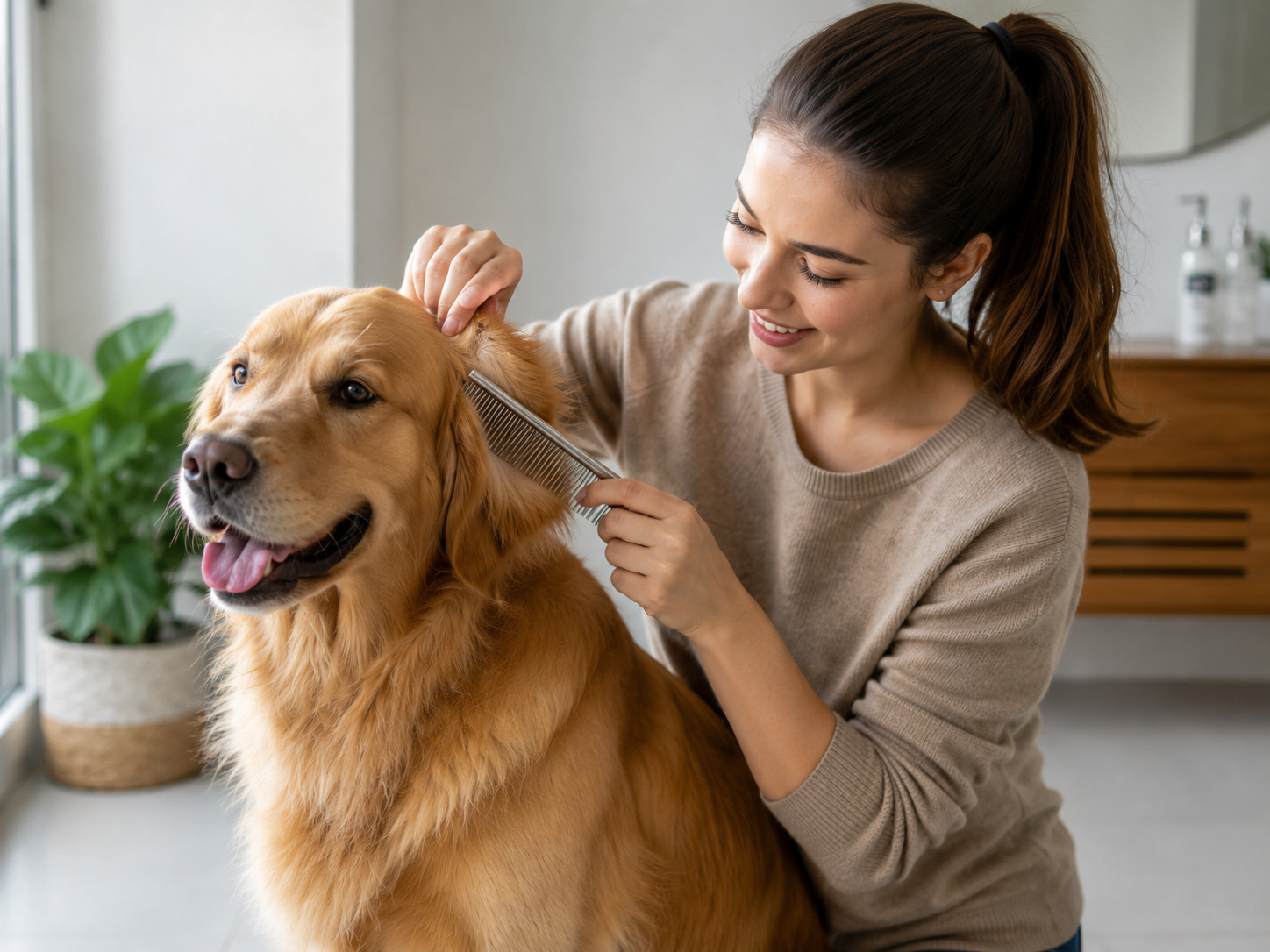
- Behind the ears
- Under the collar
- Under the front legs
- Between the back legs
- Around the tail
- On the chest
- Under harness straps
Step 7: Use a Comb to Check Your Work
After brushing a long or curly coat gently move a metal comb through each section.
Do not force the comb through resistance. A hidden tangle may still be present.
Step 8: Reward Calm Behavior
Give praise and small treats during the session.
Finish before your dog becomes frustrated.
How to Brush a Short Haired Dog
Short haired dogs often need less coat care than long haired dogs. They still shed and collect dirt.
Use a rubber grooming mitt or soft brush.
Move from the neck toward the tail. Brush the sides and chest. Use light pressure on the stomach and legs.
One or two short sessions each week may be enough for many short haired dogs.
How to Brush a Long Haired Dog
Long coats can hide tangles near the skin.
Separate the hair into small sections. Brush the lower part of each section first. Then move closer to the skin.
Use a pin brush or slicker brush. Finish with a metal comb.
Pay extra attention behind the ears. Under the legs. Around the tail. And under collars or harnesses.
How to Brush a Double Coated Dog
Double coated dogs have a soft undercoat and a stronger outer coat.
Loose undercoat can build up during seasonal shedding.
Use a suitable brush on the outer coat. An undercoat rake may help remove loose inner hair.
Do not repeatedly scrape the same area. This can irritate the skin or damage the coat.
Double coated dogs may need more brushing during heavy shedding seasons.
How to Brush a Curly Coated Dog
Curly coats may form mats close to the skin.
Use a slicker brush in small sections. Check each section with a comb.
Dogs with fast growing curly coats may need daily or near daily brushing.
Regular professional grooming may also be needed.
Should You Brush Before or After a Bath?
Brush your dog before a bath.
Water can make existing mats tighter and harder to remove.
Remove loose hair and small tangles before getting the coat wet.
After the bath wait until the coat is mostly dry. Then brush gently if the coat type needs it.
Read our complete guide on how often you should bathe a dog.
How to Handle Small Tangles
Hold the hair near the skin so the tangle does not pull on your dog.
Use your fingers to loosen the outside of the tangle.
Brush from the end of the hair. Slowly move closer to the skin.
You may use a dog safe detangling spray if it is suitable for your dog.
Stop if the dog shows pain.
What Should You Do About a Tight Mat?
A mat is a tight group of tangled hair.
Mats can pull on the skin. They can trap moisture. They can also hide sores or parasites.
Do not cut a tight mat with household scissors.
Dog skin can be pulled into the mat. It may be cut without being easy to see.
Ask a professional groomer or veterinarian for help when:
- The mat is close to the skin
- The mat is large
- The dog shows pain
- The skin looks red or wet
- The mat is near the eyes or ears
- Many areas of the coat are matted
Never Pull Hard on a Mat
Hard pulling can hurt your dog and damage the skin. Severe mats need safe professional removal.
How to Help a Dog That Hates Brushing
Some dogs are afraid of the brush. Others may have pain or a bad past experience.
Start slowly.
- Show the brush without using it
- Give a treat for calm behavior
- Touch the dog with your hand first
- Make one gentle brush stroke
- Reward the dog
- End the session after a small success
Repeat this process over several days.
Do not force the dog to remain still for a long session.
For more calm care ideas read 7 everyday ways to help your dog feel happier.
Common Dog Brushing Mistakes
Using the wrong brush: A tool designed for another coat type may pull hair or fail to remove loose undercoat.
Using too much pressure: Brush wires can scratch the skin.
Brushing only the top layer: Long and curly coats can hide tangles close to the skin.
Pulling through mats: Hard pulling is painful and may injure the skin.
Making sessions too long: Short successful sessions are better for nervous dogs.
Ignoring sensitive areas: Check under collars. Behind the ears. Under the legs. And near the tail.
Brushing damaged skin: Do not brush directly over open sores or painful areas.
Waiting until the coat is badly tangled: Regular brushing makes grooming easier.
When Should You Use a Professional Groomer?
A professional groomer may be helpful when your dog has:
- A long or difficult coat
- Many tight mats
- A curly coat that grows quickly
- Heavy seasonal shedding
- Strong fear of brushing
- Difficulty standing
- Special breed grooming needs
Tell the groomer about skin problems. Health conditions. Pain. Allergies. And behavior concerns.
When Should You Contact a Veterinarian?
Stop brushing and contact a veterinarian if your dog has:
- Open sores
- Bleeding skin
- Sudden pain when touched
- Large bald areas
- Severe itching
- Swelling
- A strong skin smell
- Heavy dandruff
- Wet or infected looking skin
- Many fleas or ticks
- Lumps that are new or changing
Do not try to diagnose a skin problem only by looking at the coat.
Allergies. Parasites. Infections. Hormonal conditions. And other health problems can cause similar signs.
Frequently Asked Questions
Can I brush my dog every day?
Yes. Many long haired and curly coated dogs benefit from daily brushing. Use the correct brush and gentle pressure.
Can you brush a dog too much?
Yes. Too much pressure or repeated brushing in one area may irritate the skin or damage the coat.
Why does my dog bite the brush?
Your dog may be afraid. Excited. Uncomfortable. Or in pain. Use shorter sessions and reward calm behavior. Stop if touching one area causes pain.
Should I brush my dog when the coat is wet?
Do not brush a dripping wet coat unless a professional has shown you the correct method for that coat type. Wet hair can stretch and break. Mats can also become tighter.
How do I know which brush my dog needs?
Choose a brush based on coat length and thickness. Ask a professional groomer when you are unsure.
Does brushing stop shedding?
No. Brushing removes loose hair before it falls around the home. It does not stop the natural shedding process.
Can I cut a mat with scissors?
Do not cut tight mats with household scissors. Skin can be pulled into the mat and cut accidentally.
Why does my dog have dandruff after brushing?
Dry flakes may become more visible after brushing. Dandruff can have many causes. Contact a veterinarian if it is heavy or comes with itching. Redness. Hair loss. Or odor.
Final Thoughts
Brushing is a simple part of responsible dog care.
Choose a brush that suits the coat. Use gentle pressure. Work in small sections. And stop when your dog shows pain or fear.
Short haired dogs may need brushing once or twice a week. Long haired and curly coated dogs may need brushing several times a week or every day.
Do not pull hard on mats. Do not cut tight mats with household scissors. Ask a professional when the coat is badly tangled.
A regular brushing routine can keep the coat cleaner. Reduce small tangles. And help you notice skin or coat changes early.
Related DailyPetTips Guides
- How Often Should You Bathe a Dog?
- 7 Everyday Ways to Help Your Dog Feel Happier
- A Calm Home Checklist for Every Pet Parent
- Explore All Dog Guides
- Explore Pet Care Guides



Pet parent notes