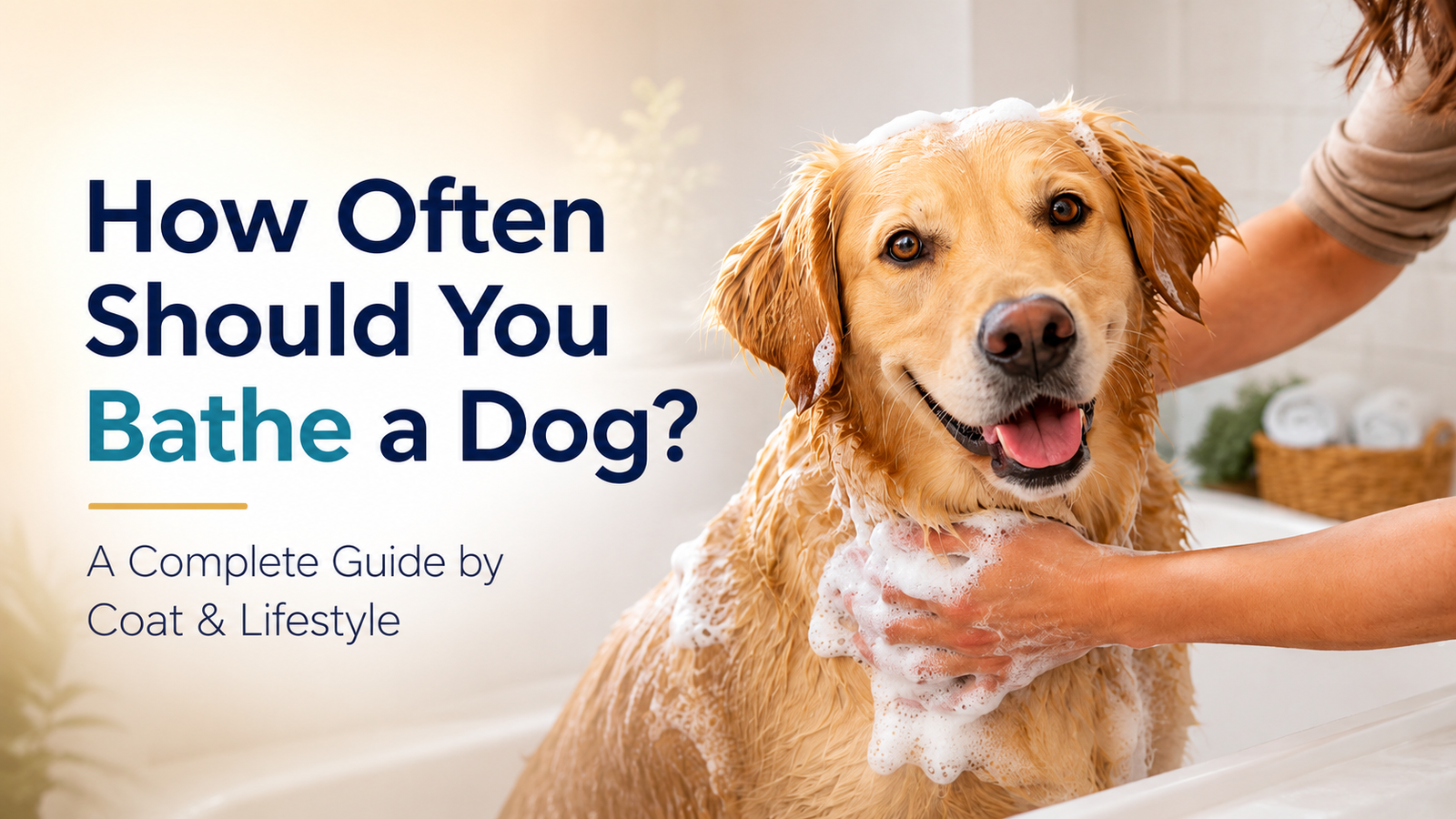

Bathing keeps your dog clean removes dirt and can help control unpleasant smells. Bathing too often can remove natural oils that protect the skin and coat.
There is no single bathing schedule that is right for every dog. The best routine depends on coat type activity level living environment skin health and grooming needs.
Some dogs need a bath after every muddy adventure. Other dogs can remain clean for several weeks with regular brushing paw cleaning and coat care.
This guide explains how often you should bathe your dog how to choose a safe shampoo how to give a dog a bath at home and when a skin or coat problem needs veterinary attention.
Quick Answer
Many healthy dogs can be bathed about once every four to six weeks. This is only a starting point.
A dog that swims plays in mud spends a lot of time outdoors or has an oily coat may need baths more often. Dogs with sensitive skin thick double coats or medical skin conditions may need a different schedule. Bathe your dog when it is dirty smells unpleasant or has something harmful on its coat.
Why Do Dogs Need Baths?
Dogs naturally produce oils that help protect their skin and keep their coat healthy. These oils support the natural skin barrier and help the coat stay soft.
A well timed bath can remove:
- Dirt and mud
- Dust and loose hair
- Pollen and outdoor debris
- Unpleasant smells
- Sticky substances
- Residue from dirty or salty water
- Substances that may irritate the skin
Bathing is only one part of a complete grooming routine. Dogs also need brushing nail care dental care ear checks clean bedding and regular skin checks.
Regular brushing can remove dirt and loose hair while spreading natural oils through the coat. The ASPCA also explains that brushing gives owners a chance to look for irritation fleas lumps or other changes.
For more general care advice read our calm home checklist for pet parents.
How Often Should You Bathe a Dog?
Many healthy dogs can start with a bath about every four to six weeks. The correct frequency may be shorter or longer for your dog.
The American Kennel Club explains that bathing needs vary according to breed lifestyle coat length coat care and health. An active outdoor dog may need more baths than a clean indoor dog even when both dogs have a similar coat.
| Dog Type or Lifestyle | Possible Starting Point | Important Notes |
|---|---|---|
| Healthy indoor dog | About every 4 to 6 weeks | Regular brushing and paw cleaning may allow longer gaps. |
| Active outdoor dog | Whenever noticeably dirty | Mud swimming dust and outdoor smells may require an earlier bath. |
| Short haired dog | About every 4 to 6 weeks | A damp cloth and regular brushing may control light dirt. |
| Long haired dog | Every few weeks as needed | Frequent brushing is important for preventing mats and tangles. |
| Thick or double coated dog | Less often unless dirty | Too many baths may remove protective oils. Brush the undercoat regularly. |
| Hairless dog | Often more regularly | Oil can build up directly on the skin. Ask a veterinarian or groomer for a suitable routine. |
| Dog with a skin condition | Only as directed | Follow the bathing and shampoo instructions from your veterinarian. |
Important: This table gives general starting points. Your dog may need a different schedule based on health and individual needs.
Signs Your Dog May Need a Bath
Your dog may need a bath when:
- The coat has a noticeable unpleasant smell
- Mud or dirt is clearly visible
- The coat feels greasy or sticky
- Your dog has rolled in something dirty
- Your dog has been swimming in dirty or salty water
- Dust pollen or outdoor debris has collected on the coat
- The paws legs belly or tail area are heavily soiled
- Your dog has touched a substance that may irritate the skin
A Bad Smell Is Not Always a Bathing Problem
A strong or unusual smell can come from the ears mouth skin anal glands infection or another health problem. A bath may hide the odor for a short time without treating the cause. Contact a veterinarian if the smell is strong unusual or returns soon after bathing.
What Affects a Dog Bathing Schedule?
Coat Length
Long haired dogs can collect dirt leaves and debris more easily. They may need regular baths but brushing is equally important.
Bathing a badly tangled coat can make mats tighter. Brush out small tangles before the bath. Tight mats close to the skin should be handled by a professional groomer because pulling or cutting them incorrectly can injure the dog.
Coat Type
Different coats have different grooming needs.
Thick and double coats can trap loose hair and moisture. Regular brushing and complete drying are especially important. Dogs with oily coats may develop noticeable odors more quickly and may need more frequent care.
Activity Level
A dog that spends most of the day indoors usually stays cleaner than a dog that hikes swims works outdoors digs or plays in mud.
Do not bathe an active dog only because the calendar says it is bath day. Bathe according to the condition of the coat and the actual needs of the dog.
Skin Health
Dogs with dry sensitive itchy infected or inflamed skin may need a special bathing plan.
A veterinarian may recommend a medicated shampoo a specific bathing frequency and a required contact time. Medicated products should not be selected randomly because different skin conditions can look similar but require different treatment.
Allergies
Some dogs with environmental allergies may benefit from rinsing or bathing after contact with grass pollen or dust. Frequent bathing can also irritate some dogs.
Ask a veterinarian to recommend the right product and schedule when allergies are suspected.
Age and Mobility
Puppies older dogs and dogs with joint or mobility problems may find bathing stressful or physically difficult.
Use a non slip mat. Keep the bath short. Support the dog carefully. Do not force the body into an uncomfortable position.
Can You Bathe a Dog Too Often?
Yes. Too many baths may remove natural oil from the skin and coat.
Possible signs of overbathing include:
- Dry or flaky skin
- Increased itching
- A dull coat
- Skin redness
- Increased sensitivity
- A coat that feels unusually dry
The Merck Veterinary Manual notes that excessive bathing and wetting may worsen some skin diseases. Avoid increasing bath frequency without veterinary advice when your dog has an ongoing skin problem.
Some medical conditions require frequent medicated baths. These baths should follow veterinary instructions.
Can You Use Human Shampoo on a Dog?
Human shampoo is not the best choice for routine dog bathing.
Some human shampoos contain fragrance or ingredients that may irritate dog skin. The ASPCA recommends choosing a shampoo made for the correct animal species. Ask a veterinarian for help when your dog has sensitive skin or another medical concern.
Choose a dog shampoo that is:
- Clearly labeled for dogs
- Suitable for the age of your dog
- Suitable for the coat type
- Gentle and easy to rinse
- Free from unnecessarily strong fragrance when possible
- Recommended by a veterinarian when skin problems are present
Do Not Use Medicated Shampoo Without Guidance
Flea shampoo antibacterial shampoo antifungal shampoo and other medicated products are designed for specific problems. The wrong product may irritate the skin or delay correct treatment.
What You Need Before Bathing Your Dog
Prepare everything before bringing your dog into the bathing area.
- Dog safe shampoo
- Two or more absorbent towels
- A non slip rubber mat
- A brush or comb suitable for the coat
- A cup or gentle spray attachment
- Small training treats
- A soft damp cloth for the face
- A dryer with a cool or low setting if needed
Keep the room warm and close doors before starting. A wet dog may try to leave the bathing area and shake water around the home.
How to Bathe a Dog Safely
Step 1: Brush Before the Bath
Brush your dog before getting the coat wet.
This removes loose hair dirt and small tangles. Water may make mats tighter especially in long haired dogs.
Do not use scissors close to the skin to remove tight mats unless you have professional grooming experience. Dog skin can be pulled into a mat and cut accidentally.
Step 2: Prepare a Non Slip Surface
Place a rubber mat or securely folded towel in the bathtub or washing area.
A slippery surface can frighten your dog and increase the risk of falls or joint strain.
Step 3: Check the Water Temperature
Use lukewarm water.
Hot water may irritate or burn the skin. Very cold water can make the bath uncomfortable and stressful.
Test the water with your hand before wetting your dog.
Step 4: Wet the Coat Slowly
Begin at the shoulders or neck and move toward the body.
Use a gentle water flow and speak calmly. Avoid spraying water directly into the:
- Eyes
- Ears
- Nose
- Mouth
Use a soft damp cloth to clean the face instead of spraying it.
Step 5: Apply Dog Shampoo
Follow the instructions on the shampoo label. Some products must be diluted before use.
Massage the shampoo gently through the coat. Pay attention to commonly dirty areas such as:
- Paws and lower legs
- Chest
- Belly
- Under the tail
- Neck and collar area
Do not scrub inflamed painful or broken skin.
Step 6: Rinse Thoroughly
Rinse until the water runs clear and the coat no longer feels soapy.
Shampoo residue may cause itching or irritation. Thick and long coats often require extra rinsing.
Check under the front legs around the chest beneath the belly and near the tail where shampoo can remain trapped.
Step 7: Dry Your Dog Carefully
Use towels to remove as much water as possible.
For long or tangled coats press and squeeze the coat gently instead of rubbing it aggressively.
A hair dryer can be used on a cool or low setting if your dog is comfortable with the sound. Keep the dryer moving and never hold it close to one area of skin.
Make sure your dog is dry before going outdoors in cold weather.
.png)
How to Make Bath Time Less Stressful
Some dogs are nervous around water slippery floors running taps or grooming tools.
You can make the experience easier by:
- Letting your dog explore the empty bathing area first
- Giving treats near the bathtub before bath day
- Using a non slip mat
- Keeping early sessions short
- Using calm praise
- Avoiding sudden spraying or loud water pressure
- Rewarding calm behavior throughout the bath
- Taking a break if the dog becomes overwhelmed
Do not shout punish or physically force a frightened dog. A scared dog may attempt to escape or may bite in self defense.
The RSPCA recommends patient reward based handling and warns against forcing dogs through grooming experiences they cannot tolerate.
For more ideas about creating a calm routine read 7 everyday ways to help your dog feel happier.
Should You Bathe a Puppy?
Yes. Puppies can be bathed when needed. The experience should be gentle warm and short.
For a small dirty area a damp cloth may be enough. When a full bath is necessary:
- Keep the room warm
- Use lukewarm water
- Use puppy safe shampoo
- Keep water away from the face and ears
- Support the puppy on a non slip surface
- Dry the puppy completely
- Never leave the puppy unattended
Young puppies can lose body heat more quickly than adult dogs. Use calm praise and small treats to make the first baths positive.
How to Keep a Dog Clean Between Baths
A full bath is not always necessary.
Between baths you can:
- Brush the coat regularly
- Wipe muddy paws with a damp cloth
- Rinse only the legs and belly after a dirty walk
- Clean the dog bedding
- Wash collars and harnesses
- Use wipes made specifically for dogs
- Rinse the coat after swimming when appropriate
- Check the skin while brushing
Regular brushing may help control light dirt and reduce the need for unnecessary full baths.
Common Dog Bathing Mistakes
Bathing Too Often
More bathing does not always mean better hygiene. Frequent bathing may dry the skin or worsen some skin conditions.
Using Human Shampoo
Choose shampoo made for dogs. Products designed for people may contain ingredients or fragrance that irritate dog skin.
Leaving Shampoo in the Coat
Shampoo residue can cause discomfort and itching. Rinse all areas carefully.
Getting Water Inside the Ears
Do not pour or spray water into the ear canals. Water trapped in the ears can cause discomfort and may contribute to ear problems.
Using Hot Water
Use lukewarm water and test it before beginning.
Skipping Brushing
Bathing a tangled or matted coat may make the problem worse.
Using a Hot Dryer
High heat can burn or overheat a dog. Use cool or low airflow and keep the dryer moving.
Ignoring Fear or Pain
Do not force a frightened or painful dog through a bath. Stop and seek professional help when safety becomes a concern.
When Should You Use a Professional Groomer?
A qualified groomer may be helpful when your dog has:
- A very thick or difficult coat
- Tight mats close to the skin
- A coat that needs specialist clipping
- Heavy seasonal shedding
- Difficulty standing safely
- Strong fear of home bathing
- A large body size that is difficult to manage
- Breed specific grooming needs
Tell the groomer about allergies skin problems injuries medical conditions behavior concerns and areas the dog dislikes having touched.
A responsible groomer should use safe equipment suitable products calm handling and proper drying methods.
When Should You Contact a Veterinarian?
Contact a veterinarian if your dog has:
- Constant or severe itching
- Red inflamed or painful skin
- Open sores
- Hair loss or bald patches
- Scabs or crusting
- A strong smell that returns quickly
- Very greasy skin
- Heavy dandruff
- Pain when touched
- Ear redness discharge or odor
- Swelling
- A sudden change in the coat
- Low energy appetite changes or other signs of illness
Do Not Treat Ongoing Skin Problems With Extra Baths
Skin problems can be caused by allergies parasites bacterial or fungal infections hormonal conditions irritation and other illnesses. Many conditions look similar. Correct diagnosis is important.
Frequently Asked Questions
Is it okay to bathe a dog once a week?
Some dogs can tolerate weekly bathing with a suitable dog shampoo. Other dogs may develop dryness or irritation. Weekly bathing may be recommended for certain allergies or medical conditions. Ask a veterinarian before starting a frequent bathing routine.
How often should an indoor dog be bathed?
Many healthy indoor dogs can start with a bath about every four to six weeks. Regular brushing and paw cleaning may allow some dogs to go longer between baths.
How often should an outdoor dog be bathed?
Outdoor dogs may need baths more often because they collect mud dust pollen and odors. Bathe according to the actual condition of the dog rather than following a strict weekly schedule.
Should I bathe my dog after swimming?
It can be helpful to rinse your dog after swimming in salty dirty or chemically treated water. Dry the coat and ears carefully. Contact a veterinarian if your dog develops itching redness ear discomfort vomiting weakness or another unusual symptom after swimming.
Can I use baby shampoo on my dog?
Baby shampoo is made for human skin. Use a gentle shampoo made specifically for dogs instead.
Why does my dog still smell after a bath?
The smell may come from the ears mouth skin anal glands bedding collar or a medical problem. Contact a veterinarian when the smell is strong or returns quickly.
Should I clean my dog ears during a bath?
Do not pour water or cleaning products into the ears. Use an ear cleaner only when it is suitable for your dog and you know how to use it safely. Ask a veterinarian if the ears are painful red swollen smelly or producing discharge.
How can I stop my dog from shaking water everywhere?
Keep towels ready and remove as much water as possible before allowing your dog to leave the bathing area. Shaking is a normal way for dogs to remove water. It cannot be prevented completely.
Can I bathe a dog that has a skin rash?
Do not apply random shampoo to a rash. Ask a veterinarian to identify the cause and recommend the correct product. Bathing may help some conditions but worsen or hide others.
Final Thoughts
There is no perfect bathing schedule for every dog.
Many healthy dogs can start with a bath every four to six weeks. Coat type lifestyle skin health environment and activity level can change this schedule.
Bathe your dog when the coat is genuinely dirty has an unpleasant smell or has picked up something that should be removed.
Use lukewarm water dog safe shampoo a non slip surface and a calm approach. Brush before bathing. Rinse thoroughly. Dry the coat carefully.
Do not increase bathing simply because your dog has ongoing itching hair loss redness or odor. These problems may require professional diagnosis and treatment.
A thoughtful grooming routine keeps your dog clean while protecting the natural oils and skin barrier that help maintain a healthy coat.
Related DailyPetTips Guides
- 7 Everyday Ways to Help Your Dog Feel Happier
- A Calm Home Checklist for Every Pet Parent
- Explore All Dog Guides
- Explore Pet Care Guides



Pet parent notes