
Quick Answer
Taming a hamster is mainly about helping the animal learn that your presence and hands are safe.
Start by allowing a new hamster several quiet days to settle into its habitat. Then spend time nearby speak softly offer small safe food rewards and gradually introduce your hand without chasing or grabbing.
Some hamsters become comfortable quickly while others may need several weeks. Progress should be measured by calm voluntary behavior rather than how fast you can pick the hamster up.
Key Takeaways

- Give a new hamster time to settle before handling.
- Interact during the hamster's natural waking hours.
- Move slowly and speak quietly.
- Use small safe food rewards.
- Let the hamster approach your hand voluntarily.
- Begin handling close to the floor.
- Never wake a sleeping hamster just to train.
- Do not punish biting or fearful behavior.
What Does Taming a Hamster Really Mean?
A tame hamster is not necessarily a hamster that enjoys being held for long periods.
The real goal is trust.
A comfortable hamster may:
- Stay relaxed when you approach
- Take food from your fingers
- Walk onto your hand
- Allow brief gentle handling
- Explore around you without panic
Individual personality matters.
Some hamsters become very interactive while others prefer shorter contact.
Start With a Proper Habitat
Training is harder when the hamster does not feel secure in its environment.
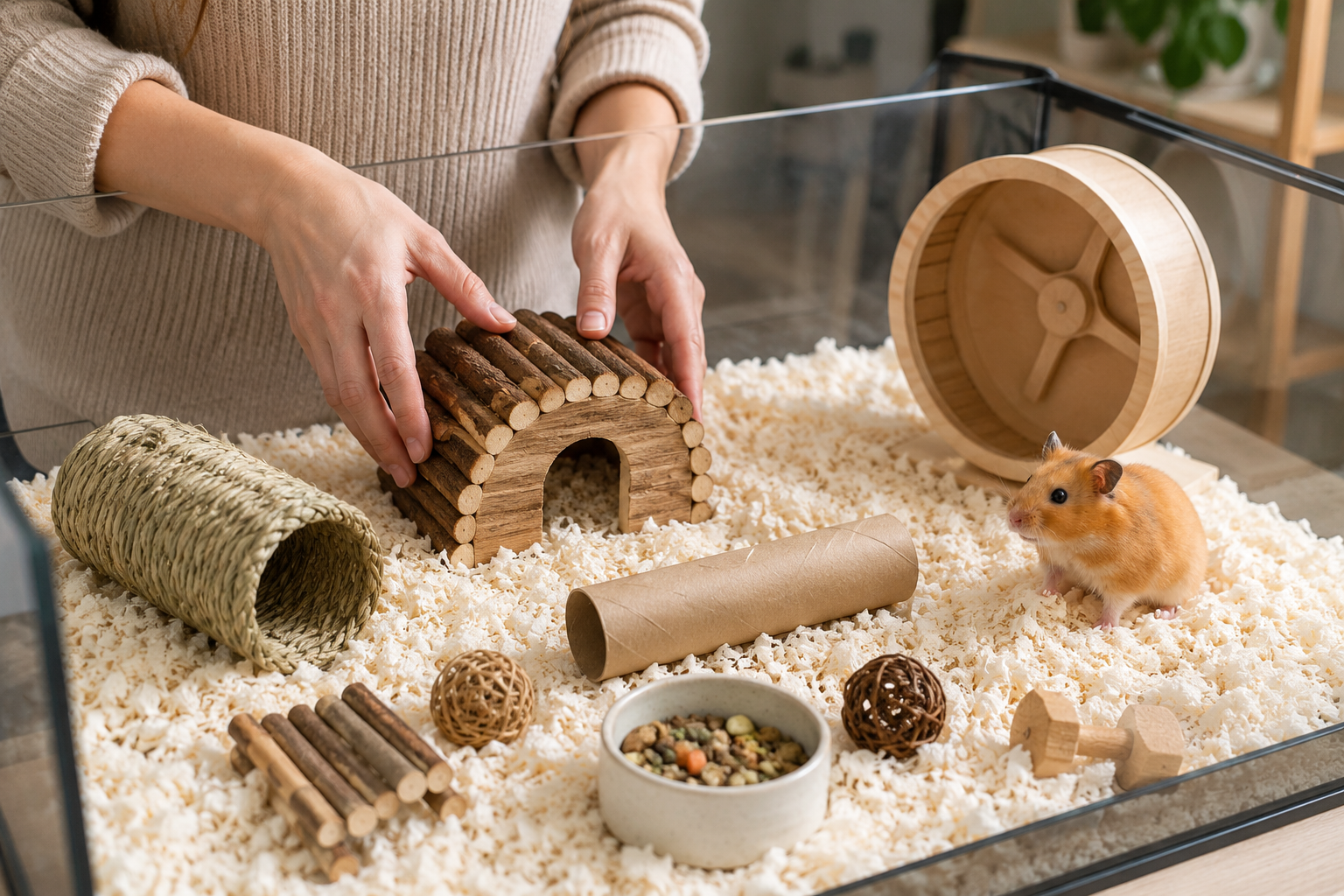
A good habitat should provide:
- Generous floor space
- Deep bedding for burrowing
- A correctly sized solid wheel
- Hiding places
- Food and fresh water
- Chewing and foraging opportunities
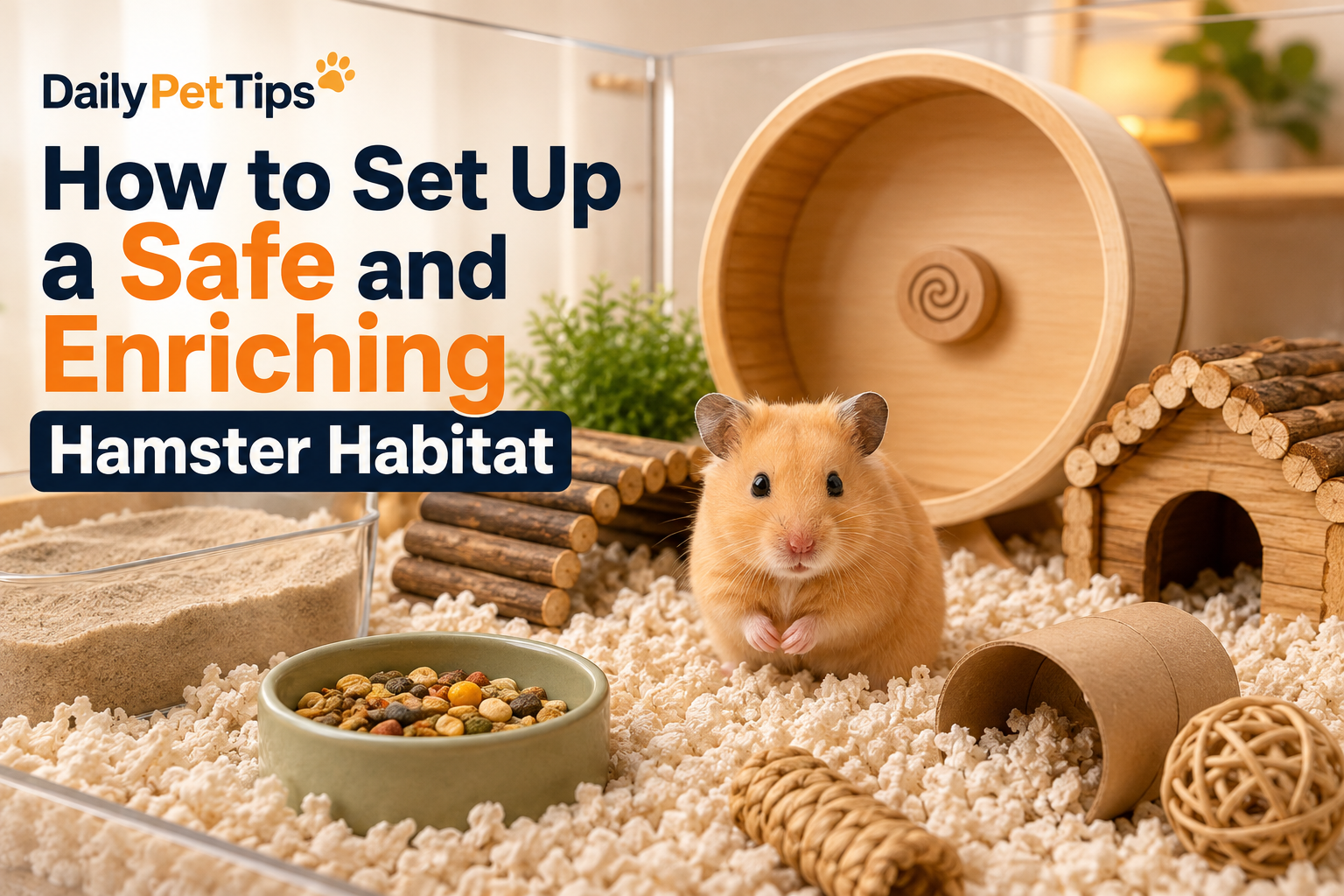
Our guide on how to set up a safe and enriching hamster habitat explains the basic environment in detail.
Give a New Hamster Time to Settle
Moving to a new home is a major change.
The hamster is suddenly surrounded by unfamiliar smells sounds people and objects.
During the first few days focus on basic care.
Provide:
- Food
- Fresh water
- Quiet
- Deep bedding
- Safe hiding places
Avoid repeatedly lifting houses or digging through bedding to find the hamster.
Let the animal begin creating its own nest and routine.
Train During the Hamster's Waking Hours
Hamsters are generally most active during the evening and night.
Waking a sleeping hamster and immediately trying to pick it up can cause fear and defensive biting.
Wait until the hamster naturally wakes and begins exploring.
Even then give it a few minutes before starting interaction.
Let Your Hamster Get Used to Your Voice
Before putting your hand into the habitat spend time sitting nearby.
Speak quietly so the hamster becomes familiar with your voice.
You can do this while replacing food or water.
Avoid loud sudden sounds.
Introduce Your Scent
Hamsters rely heavily on smell.
Wash your hands before handling but avoid heavily scented lotions or perfumes.
Place your hand calmly inside the enclosure without moving toward the hamster.
Let the hamster investigate if it wants to.
At first the hamster may ignore you completely.
That is fine.
Start With Treats From a Distance
Choose a tiny amount of a safe food your hamster enjoys.
Place the reward near your hand rather than immediately trying to hand feed.
When the hamster confidently approaches the area you can begin offering the reward from your fingertips.
Keep portions small so training does not add too many calories.
Hand Feed Without Grabbing
Hold the treat between your fingers and keep your hand still.
Let the hamster approach.
Do not follow the animal around the enclosure with the treat.
When it takes the food allow it to move away.
This teaches the hamster that coming near your hand does not result in being trapped.
Place the Treat on Your Palm
Once the hamster comfortably takes food from your fingertips place a reward on your open palm.
Keep your hand flat against the bedding.
The hamster may put only its front paws on your hand at first.
Reward this progress.
Over time it may climb fully onto your palm.
Do Not Lift Immediately
One of the easiest ways to lose trust is to lift the hamster the first time it steps onto your hand.
For several sessions simply let the hamster climb on eat and leave.
This helps your palm become a safe surface rather than a trap.
Begin With Tiny Lifts
When the hamster is confidently standing on both hands you can begin very small lifts.
Keep your hands:
- Close to the bedding
- Cupped gently
- Stable
Lift only a few centimeters at first and lower the hamster again.
Do not suddenly stand up while holding a hamster that has never been lifted before.
Use Two Hands for Better Security
A hamster can move quickly.
Cupping both hands together creates a larger stable surface.
Allow the hamster to walk from one hand to the other rather than squeezing it.
Keep fingers relaxed but positioned so the hamster cannot suddenly jump from height.
Practice Handling Close to the Floor
Falls can injure small animals.
Early handling sessions should happen close to the floor or above a secure play area.
Sit on the floor if practical.
Do not hold a beginner hamster while standing over a hard surface.
Try a Safe Playpen for Trust Building
A secure playpen can create a larger neutral area for interaction.
Add:
- Hides
- Tunnels
- Cardboard boxes
- Safe chew items
Sit inside or beside the area and allow the hamster to explore around you.
Check that the enclosure is escape proof before starting.
How Long Should Training Sessions Be?
Short sessions are usually better.
Five to ten minutes can be enough for a beginner.
Stop while the hamster is still calm rather than waiting until it becomes frustrated.
You can make progress through frequent gentle interactions instead of one long handling session.
Signs Your Hamster Is Becoming Comfortable
Positive signs may include:
- Approaching your hand
- Taking treats calmly
- Normal grooming in your presence
- Walking onto your palm
- Exploring instead of hiding immediately
Remember that one confident day does not mean the hamster will never become nervous again.
Signs Your Hamster Needs More Space
Stop or slow down if the hamster:
- Runs away repeatedly
- Freezes when you approach
- Squeaks defensively
- Rolls onto its back in fear
- Bites repeatedly
- Tries desperately to escape your hands
Return to an easier step for several sessions.
What if Your Hamster Bites?
A bite does not mean your hamster is bad.
Possible reasons include:
- Fear
- Being awakened
- Feeling trapped
- Food smell on your fingers
- Pain or illness
Do not shout hit blow in the hamster's face or punish it.
Place the animal down safely and think about what happened immediately before the bite.
Wash Food Smells From Your Hands
A hamster may mistake fingers for food if your hands smell strongly of fruit seeds or other treats.
Wash with mild unscented soap before handling.
Dry your hands thoroughly.
Never Chase a Hamster Around the Habitat
Hands coming rapidly from above can resemble a predator.
If you need to move an untamed hamster use a tunnel mug or small container the animal can walk into voluntarily.
This is usually less stressful than chasing and grabbing.
Do Not Remove Hides to Force Interaction
A hiding place gives the hamster control over social contact.
Removing every hide may make the animal more fearful rather than more tame.
Allow the hamster to come out when it feels safe.
Can Children Tame a Hamster?
Children can participate but should always be supervised.
Teach them to:
- Keep voices quiet
- Move slowly
- Handle near the floor
- Avoid squeezing
- Leave sleeping hamsters alone
Adults should manage interactions until both the child and hamster are consistently calm.
Different Hamsters May Progress Differently
Species and individual personality can influence behavior.
Some Syrian hamsters become comfortable with handling quickly.
Some dwarf hamsters are extremely fast and may require more careful low level handling.
Do not compare your hamster with videos online.
When Fear May Be a Health Problem
A sudden behavior change can sometimes be related to illness or pain.
Contact an exotic animal veterinarian if a normally friendly hamster suddenly becomes defensive and also shows:
- Reduced appetite
- Weight loss
- Difficulty moving
- Breathing changes
- Eye or nose discharge
- Diarrhea
- Unusual inactivity
Common Hamster Taming Mistakes
Trying to Hold the Hamster on Day One
Give a new hamster time to settle first.
Waking the Hamster for Training
Wait until the animal wakes naturally.
Chasing With Your Hand
Let the hamster approach voluntarily.
Lifting Too High Too Soon
Begin close to the bedding or floor.
Making Sessions Too Long
Short successful sessions are more useful.
Punishing Biting
Fear based punishment can damage trust.
Expecting Every Hamster to Love Being Held
Individual preferences should be respected.
Frequently Asked Questions
How Long Does It Take to Tame a Hamster?
It varies from several days to several weeks or longer. Personality and previous experiences matter.
When Can I Start Handling a New Hamster?
Allow the hamster several quiet days to settle before beginning gentle trust building unless veterinary care requires handling sooner.
Why Does My Hamster Bite My Fingers?
Fear food smells being awakened or feeling trapped are common reasons.
Should I Wear Gloves to Tame a Hamster?
Thick gloves can make gentle handling difficult. If biting is severe return to non contact trust building rather than forcing handling.
Can I Pick Up a Sleeping Hamster?
Avoid waking and grabbing a sleeping hamster. Wait until it naturally becomes active.
What if My Hamster Never Likes Being Held?
You can still build trust through hand feeding interaction and safe exploration. Not every hamster enjoys prolonged handling.
Related DailyPetTips Guides
Sources and References
Small Pet Health Disclaimer
This article provides general behavior and handling information. Sudden aggression reduced appetite weakness breathing problems pain or other concerning changes should be assessed by an exotic animal veterinarian.
Editorial Note
This guide uses gradual voluntary trust building and avoids chasing grabbing punishment or forced handling. Progress should be based on the hamster's comfort rather than a fixed training deadline.
About the Author
Ibrahim is a pet care writer at DailyPetTips. He creates practical easy to understand guides using responsible animal care principles and established veterinary and animal welfare resources.

Pet parent notes