Quick Answer
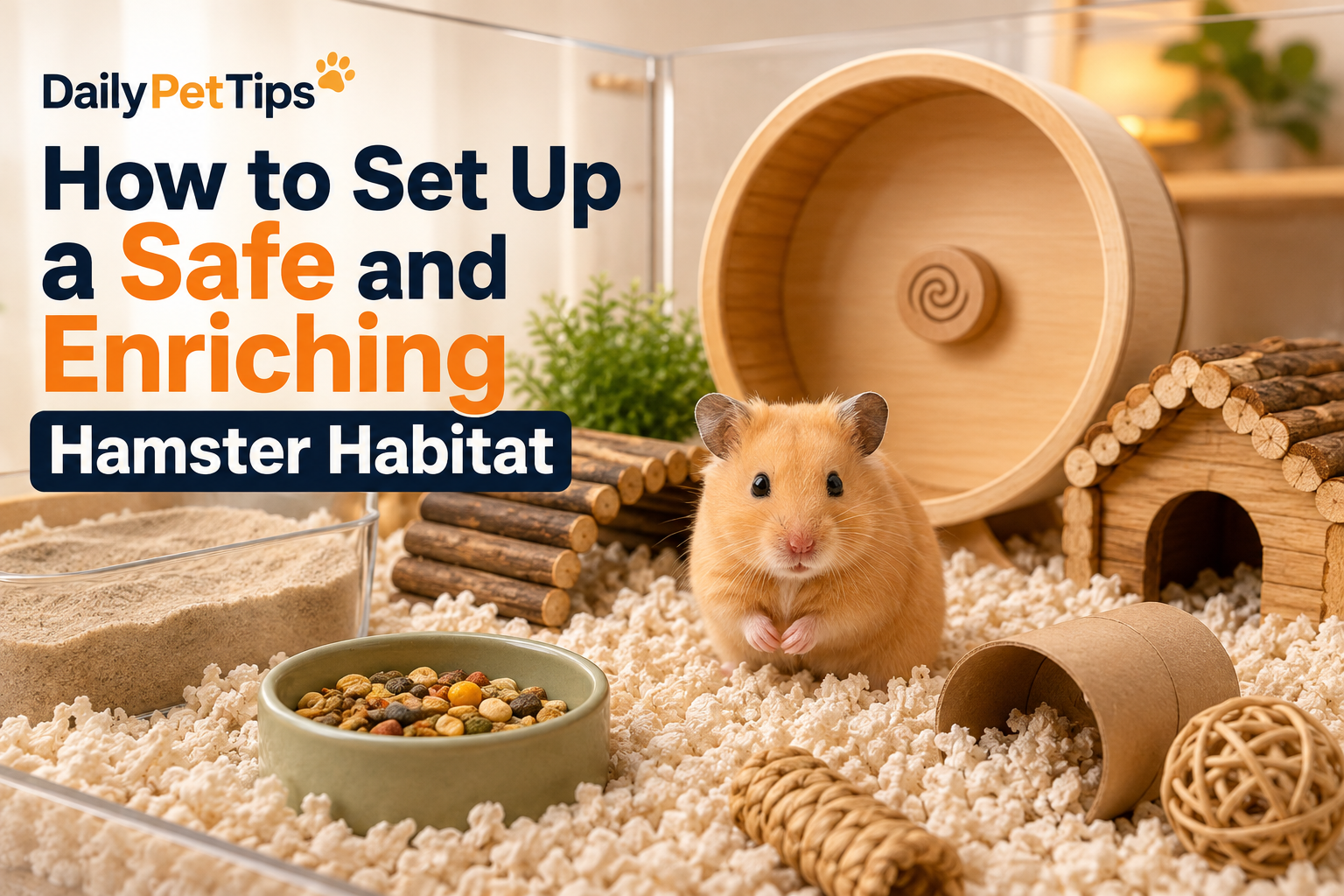
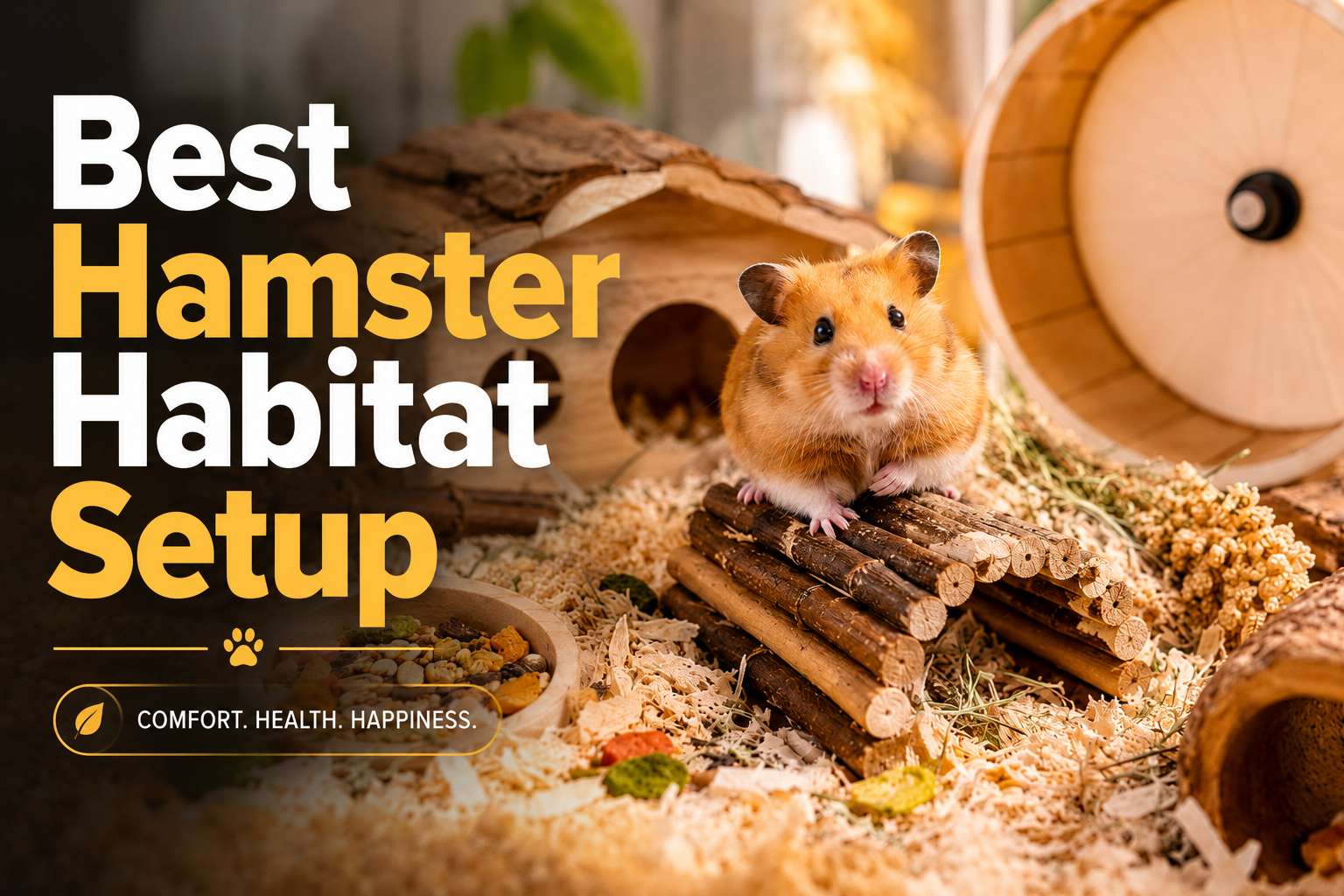
A good hamster habitat needs much more than a tiny cage and a wheel.
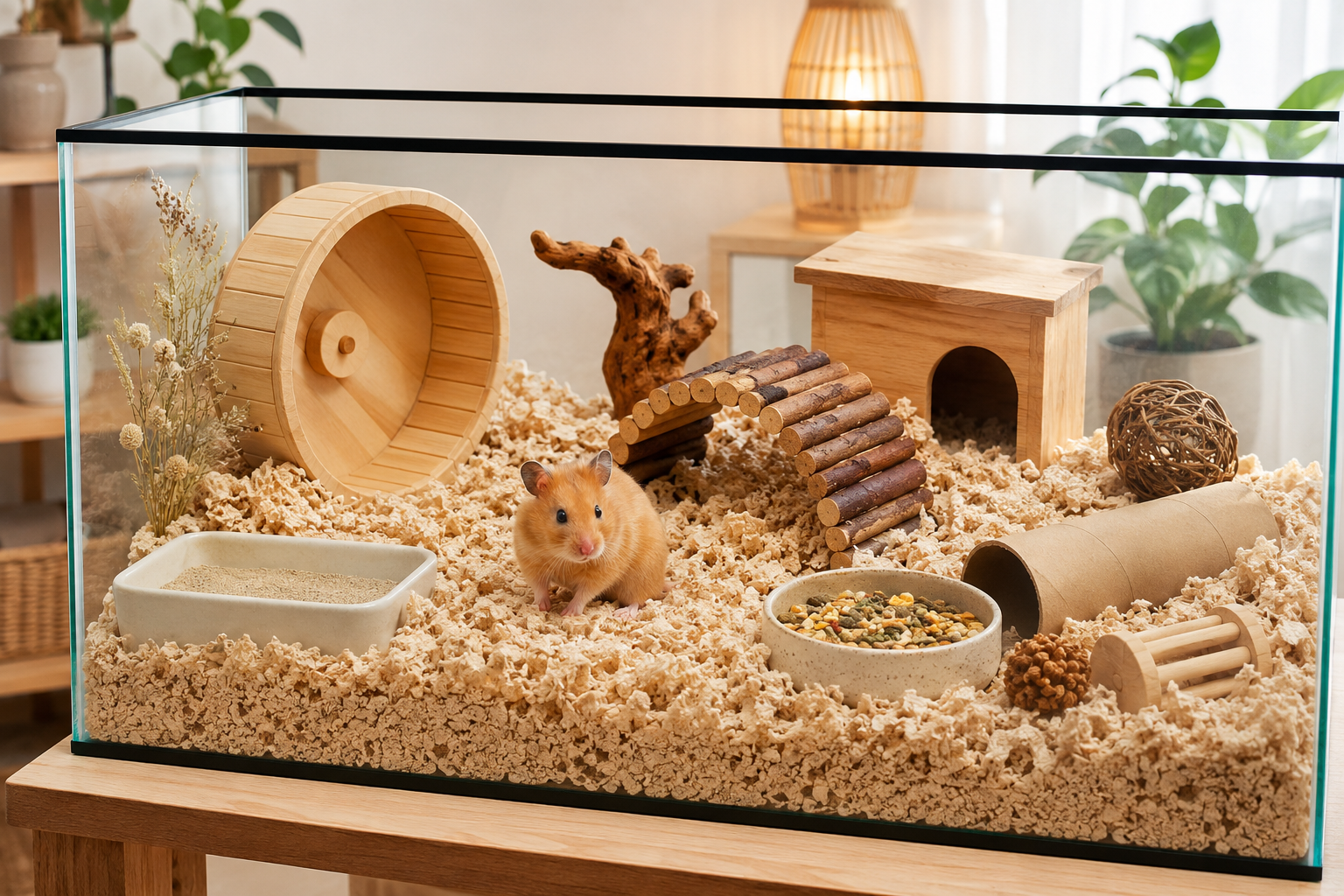
Provide generous unbroken floor space deep burrow friendly bedding a correctly sized solid running wheel secure hiding places a safe sand bath chewing materials food water and opportunities to search for food.
The enclosure should be secure well ventilated and protected from direct sun strong drafts and other pets.
Key Takeaways
- Choose a large escape proof habitat with good ventilation.
- Provide deep bedding that can hold tunnels.
- Use a solid wheel large enough to keep the hamster's back comfortable.
- Provide several hides and covered areas.
- Use safe hamster sand rather than dusty bathing powder.
- Avoid fluffy cotton style nesting material.
- Give hamsters opportunities to dig chew and forage.
- Most pet hamsters should be housed individually.
Choose a Better Hamster Habitat Size
Many small pet shop cages provide very little usable space.
A hamster needs room to create burrows run explore hide and search for food.
Prioritize large continuous floor space rather than several tiny levels connected by steep tubes.
Exact minimum recommendations vary between welfare organizations and countries so check current guidance for your hamster species.
When possible choose more space than the minimum.
Extra floor area allows you to provide deeper bedding a larger wheel and more useful enrichment without crowding the hamster.
Make the Habitat Escape Proof
Hamsters can squeeze through surprisingly small openings.
Check:
- Bar spacing
- Lid security
- Door locks
- Ventilation holes
- Tubes and connectors
- Damaged corners
A secure lid is especially important for tank style habitats because hamsters may climb toys or houses to reach the top.
Good ventilation is still necessary.
Never seal an enclosure completely.
Add Deep Burrow Friendly Bedding
Burrowing is a normal hamster behavior.
Provide a deep section of bedding rather than only a thin layer across the floor.
The bedding should be able to hold tunnels reasonably well.
Paper based bedding and other hamster safe substrates may work depending on the product.
Avoid highly dusty bedding and products made from unsafe materials.
Avoid Fluffy Cotton Nesting Material
Fluffy fiber bedding marketed as soft nesting material can wrap around legs or be swallowed.
Plain unscented toilet tissue or suitable paper based nesting material is a safer simple option.
Choose a Proper Running Wheel
Hamsters may run long distances during their active hours.
A wheel is therefore an important part of the habitat.
Choose a solid running surface rather than an open wire wheel.
The wheel should be large enough that the hamster can run without its back being forced into an uncomfortable curve.
Syrian hamsters normally need a larger wheel than dwarf species.
Make sure the wheel turns smoothly and cannot trap feet or tails.
Provide Several Hiding Places
Hamsters are prey animals and naturally seek covered spaces.
Useful options include:
- A multi chamber hide
- Small wooden houses made from safe materials
- Cork tunnels
- Cardboard hides
- Buried tunnels
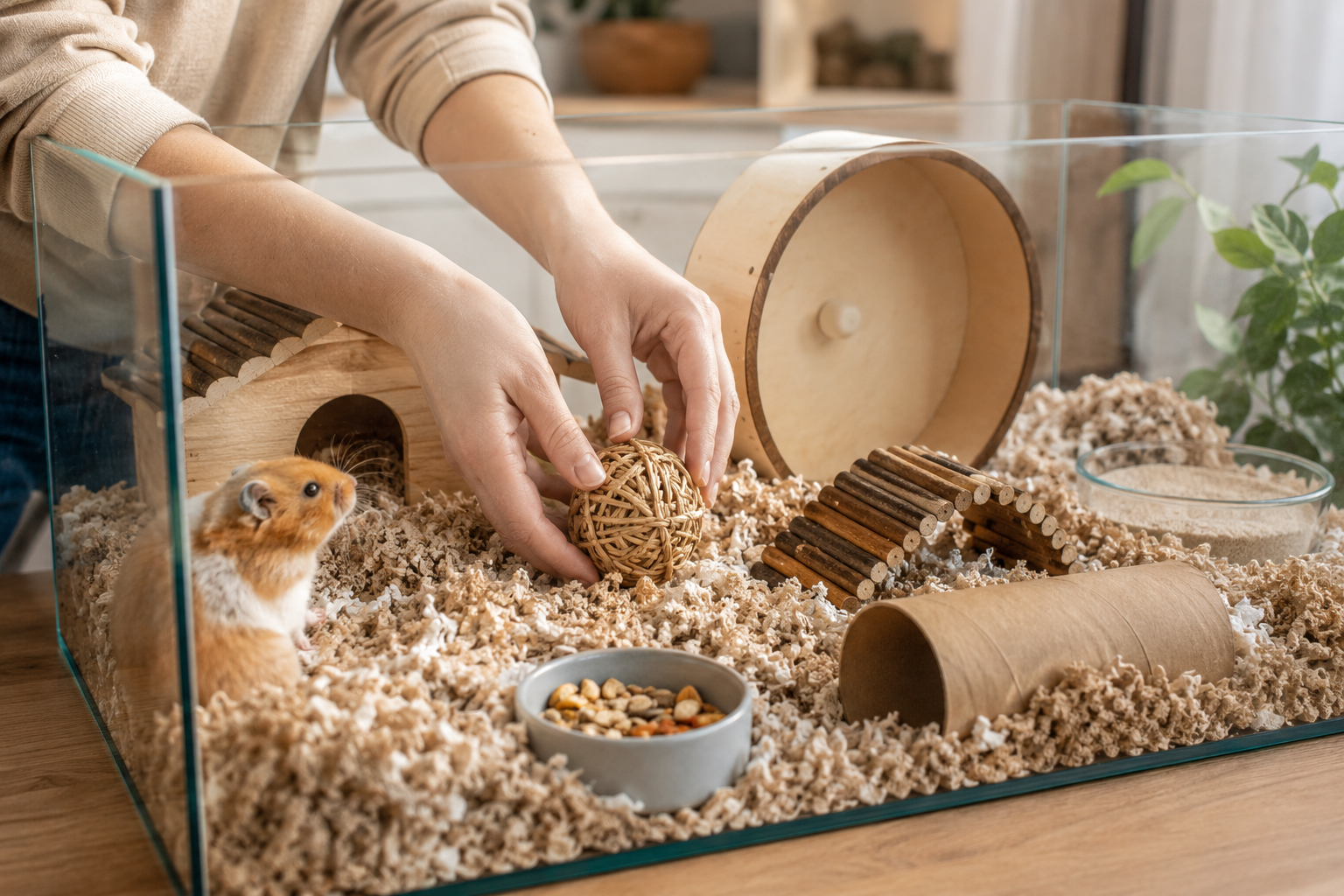
A hide should be large enough for the hamster to turn around and store nesting material.
Providing more than one option lets the hamster choose where to sleep or hide food.
Add a Safe Sand Bath
Many hamsters use sand to help maintain their coat.
Provide a shallow container filled with hamster safe sand.
Avoid very dusty powders that can irritate the respiratory system.
The container should be large enough for the hamster to roll and move comfortably.
Some hamsters may also use the sand bath as a toilet area which can make spot cleaning easier.
Set Up Food and Water
Provide a nutritionally appropriate hamster diet based on veterinary and reliable welfare guidance.
Fresh clean water should always be available.
You can use:
- A secure water bottle
- A stable shallow water bowl
Check bottles daily because the drinking tube can become blocked.
If using a bowl choose one that is difficult to tip over and keep bedding from burying it.
Scatter Feeding Can Add Enrichment
Instead of putting every piece of dry food into a bowl you can scatter part of the daily ration around safe areas of the habitat.
This encourages natural searching behavior.
Monitor how much food is being stored so you do not repeatedly add large amounts that may spoil.
Add Useful Enrichment
Hamster enrichment should encourage natural behavior rather than simply fill the enclosure with colorful plastic.
Good options may include:
- Cardboard tubes
- Safe wooden chews
- Cork tunnels
- Digging areas
- Foraging activities
- Branches from confirmed safe sources
- Different safe textures
Rotate a few items occasionally but avoid completely rearranging the entire habitat every few days.
Hamsters rely heavily on scent and familiar routes.
Choose a Safe Room Location
Place the habitat somewhere quiet and stable.
Avoid:
- Direct sunlight
- Radiators
- Strong air conditioning
- Constant loud speakers
- Busy doorways
- Areas accessible to cats or dogs
Hamsters are often most active in the evening and overnight.
A bedroom may not be ideal if the wheel noise disturbs sleep or if daytime activity constantly wakes the hamster.
Clean Without Removing Every Familiar Scent
A hamster habitat needs cleaning but complete stripping can be stressful.
Spot clean wet or heavily soiled areas regularly.
Remove spoiled food when you find it.
When deeper cleaning is necessary keep some clean familiar nesting material when safe so the habitat does not suddenly smell completely unfamiliar.
Do not allow waste or moisture to build up simply to preserve scent.
The goal is a balance between hygiene and environmental stability.
Should Hamsters Live Together?
Most pet hamsters are safest when housed individually.
Syrian hamsters are solitary and should not share an enclosure.
Some dwarf species are sometimes described as social but serious fighting can still occur.
For typical pet homes individual housing avoids many preventable injuries.
Never place unfamiliar adult hamsters together simply because they appear lonely.
Watch for Health Changes
Learn what is normal for your hamster.
Changes worth noticing include:
- Reduced eating
- Reduced drinking
- Weight loss
- Diarrhea
- Difficulty breathing
- Unusual lumps
- Eye or nose discharge
- Difficulty walking
- Sudden inactivity during normal waking hours
Hamsters are small animals and can become seriously ill quickly.
Contact an exotic animal veterinarian when you notice concerning changes.
Common Hamster Habitat Mistakes
Using a Tiny Cage
Hamsters need meaningful floor space for burrowing and exploration.
Providing Only a Thin Layer of Bedding
Deep bedding allows more natural burrowing behavior.
Using a Wheel That Is Too Small
The hamster should be able to run in a comfortable posture.
Using Cotton Fluff as Nesting Material
Loose fibers can create entanglement and ingestion risks.
Keeping Two Syrian Hamsters Together
Syrian hamsters should live alone.
Cleaning Everything Too Aggressively
Removing every familiar scent can cause unnecessary stress.
Leaving the Habitat in Direct Sun
Enclosures can overheat quickly.
Frequently Asked Questions
How Deep Should Hamster Bedding Be?
Provide a substantial deep area that can support tunnels. More depth is generally more useful than a thin decorative layer.
Does a Hamster Need a Wheel?
Yes. A correctly sized solid wheel provides an important way for hamsters to run during their active hours.
Can I Use a Hamster Ball?
Many welfare organizations discourage exercise balls because the hamster cannot freely leave the ball and may have limited control over the environment. A secure play area with normal exploration is a better option.
Do Hamsters Need a Sand Bath?
Many hamsters benefit from access to suitable low dust hamster sand for normal coat care.
Can Two Hamsters Share a Cage?
Syrian hamsters should be housed alone. Even dwarf hamsters can fight so individual housing is the safer standard for most pet homes.
Related DailyPetTips Guides
Sources and References
Small Pet Health Disclaimer
This article provides general educational information. Hamster needs vary by species age and health. Contact an exotic animal veterinarian for individual care advice and whenever your hamster shows concerning health changes.
Editorial Note
This guide prioritizes natural hamster behaviors including burrowing running hiding chewing and foraging rather than focusing only on decorative cage accessories.
About the Author
Ibrahim is a pet care writer at DailyPetTips. He creates practical easy to understand guides using responsible pet care principles and trustworthy veterinary and animal welfare sources.

Pet parent notes