Your dog’s paws touch the ground during every walk. They may collect mud. Dust. Grass. Small stones. Road salt. Chemicals. And other outdoor material.
A quick paw cleaning routine can help keep your home cleaner. It also gives you a chance to check your dog’s feet for cuts. Cracks. Swelling. Or anything stuck between the toes.
You do not need to wash the paws fully after every normal walk. Light dirt may only need a damp cloth. Mud. Salt. Sticky material. Or an unknown substance may need a more complete cleaning.
This guide explains how to clean a dog’s paws safely. What products to use. What mistakes to avoid. And when a paw problem needs veterinary care.
Quick Answer
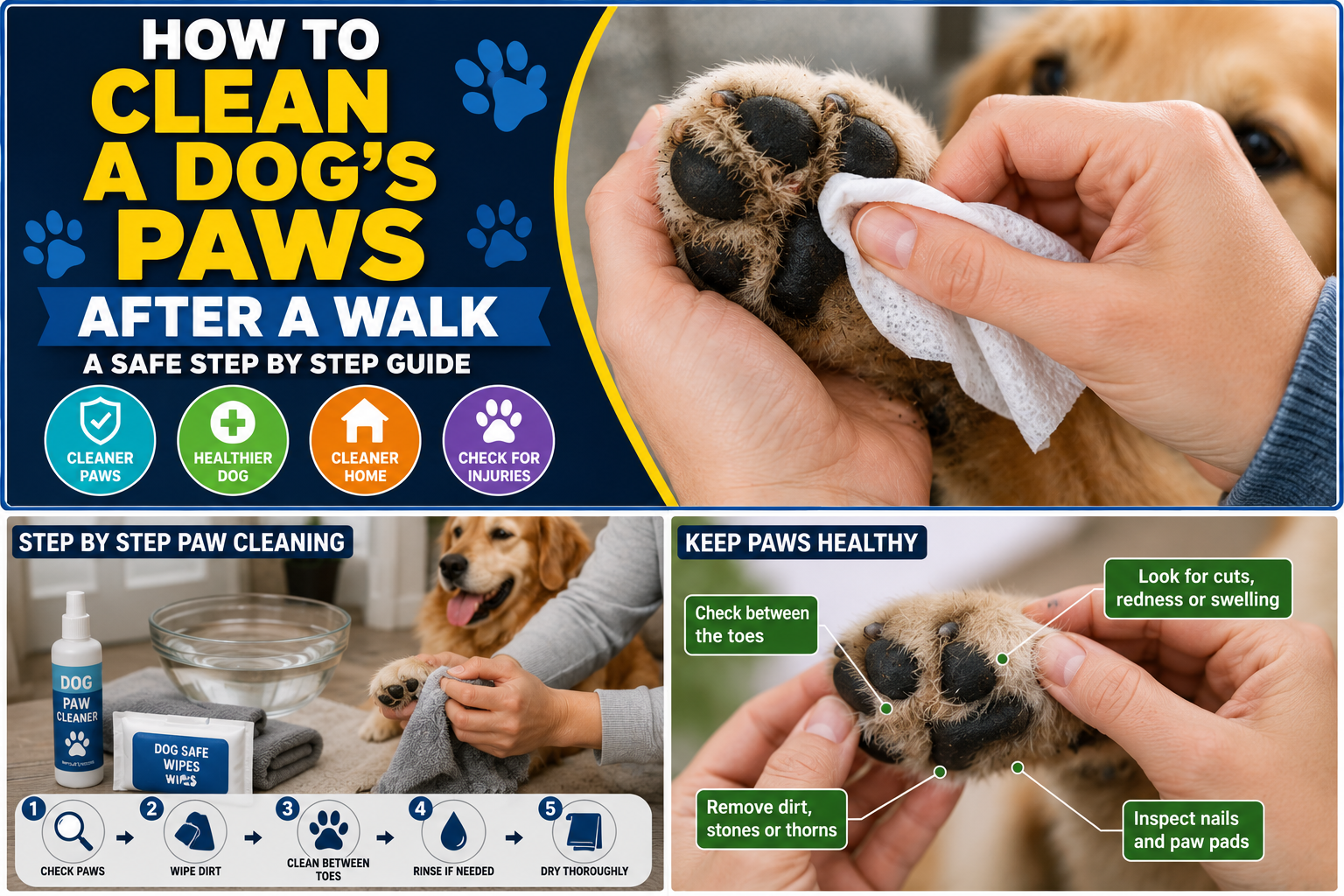
After a normal walk wipe your dog’s paws with a damp cloth or dog safe wipe. Clean between the toes and around the paw pads. Dry every paw carefully.
Use lukewarm water when the paws are muddy or have touched road salt. Do not use harsh soap. Bleach. Alcohol. Or strongly scented human wipes. Contact a veterinarian when you find a deep cut. Strong swelling. Bleeding. Severe pain. Or a substance that may be toxic.
Why Should You Clean Your Dog’s Paws?
Paw cleaning removes outdoor material before your dog licks it or carries it into the home.
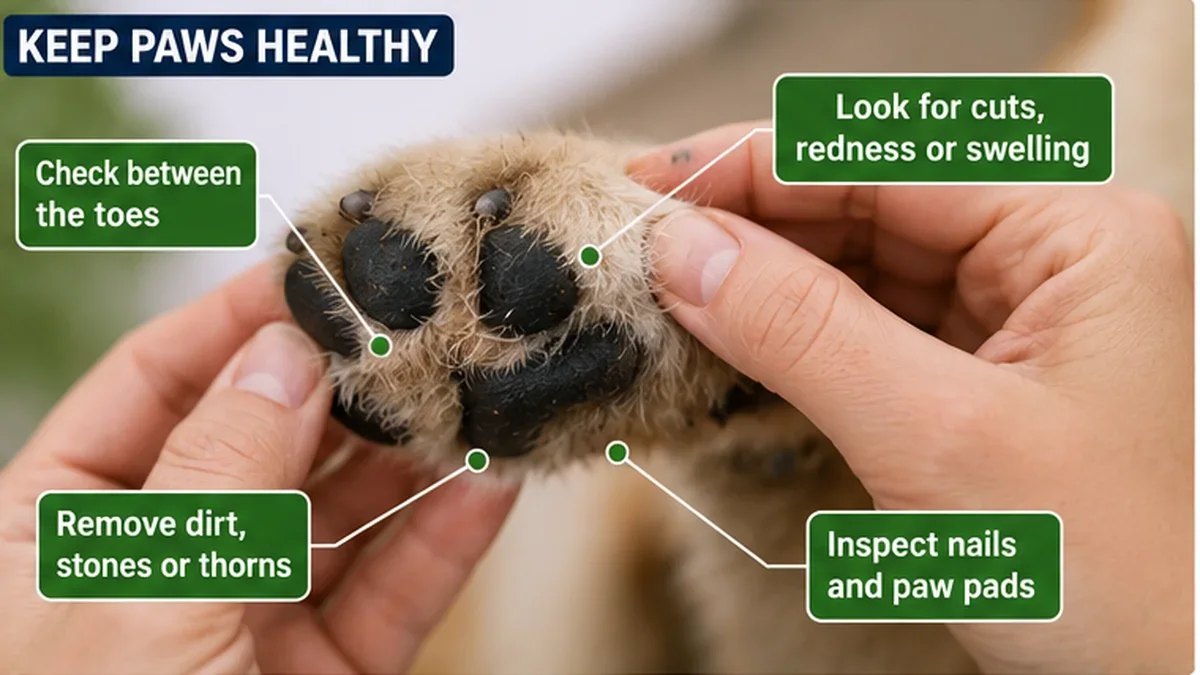
A simple paw check can help you find:
- Mud and dirt
- Small stones
- Grass seeds
- Road salt
- Sticky substances
- Broken glass
- Thorns
- Cuts and cracks
- Red skin
- Swelling
- Damaged nails
- Ticks between the toes
Dogs often lick their feet. Cleaning the paws may reduce the chance that your dog swallows something collected from the ground.
Paw checks are especially useful after walks through parks. Mud. Snow. Long grass. Construction areas. Or dirty streets.
Do You Need to Clean the Paws After Every Walk?
Not every walk needs a full paw wash.
Use the condition of the paws to decide what is needed.
| Paw Condition | Cleaning Method | Important Note |
|---|---|---|
| Clean and dry | Quick visual check | No washing may be needed. |
| Light dust | Dry or slightly damp cloth | Dry the paws after wiping. |
| Mud | Lukewarm water | Clean between the toes and pads. |
| Road salt | Rinse with lukewarm water | Do not allow the dog to lick salty paws. |
| Sticky or oily material | Contact a veterinarian if unknown | Some substances need special removal. |
| Cut or bleeding paw | Gentle first aid and veterinary advice | Do not scrub an injured paw. |
What You Need Before Cleaning
Keep a simple paw cleaning kit near the door.
- A clean towel
- A soft cloth
- Lukewarm water
- A shallow bowl
- Dog safe wipes
- Small treats
- Good lighting
- Clean gauze for small injuries
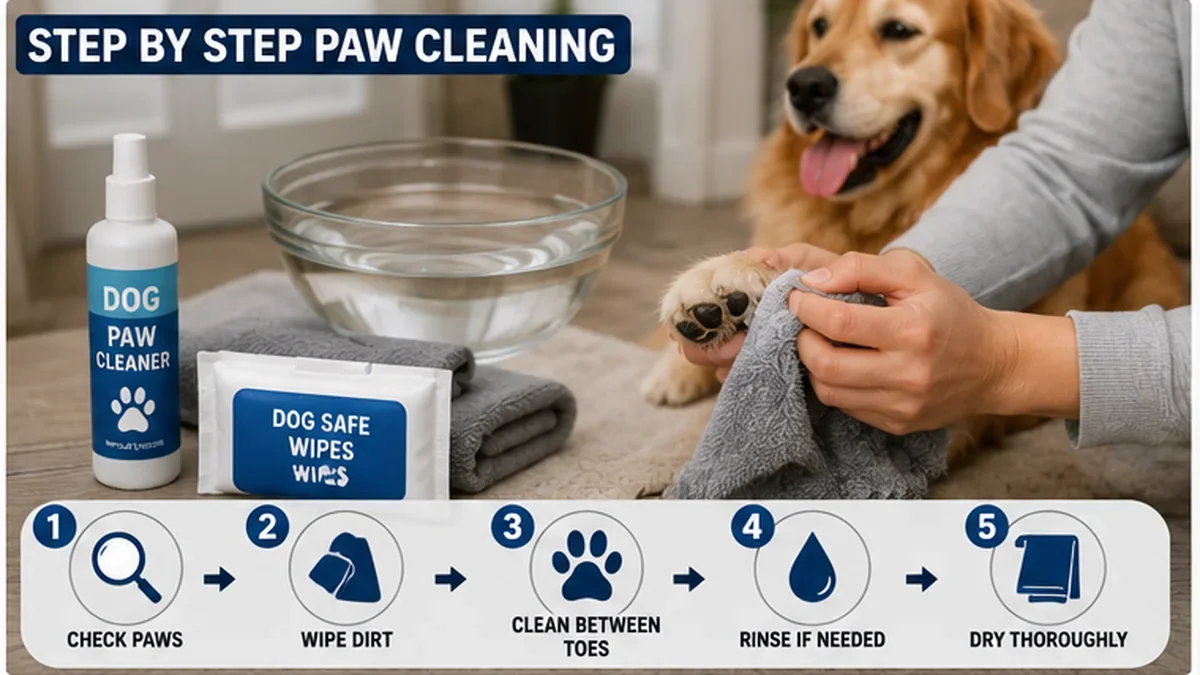
Use wipes made for dogs. Human wipes may contain perfume. Alcohol. Or other ingredients that irritate the skin.
How to Clean a Dog’s Paws After a Walk
Step 1: Ask Your Dog to Wait
Choose one place near the door for paw cleaning.
Ask your dog to stand or sit on a non slip mat.
Give a small treat when your dog stays calm.
Step 2: Check Each Paw
Lift one paw gently.
Look at the top. Bottom. Nails. Paw pads. And skin between the toes.
Check for:
- Cuts
- Redness
- Swelling
- Small stones
- Thorns
- Grass seeds
- Broken nails
- Ticks
Stop if your dog shows strong pain.
Step 3: Remove Loose Dirt
Use a dry towel or soft brush to remove loose dust and dried mud.
Do not pull hard on material stuck in the hair.
Step 4: Wipe Light Dirt
Use a damp cloth or dog safe wipe.
Wipe the paw pads. Toes. Nails. And the top of the paw.
Use a clean area of the cloth for each paw.
Step 5: Rinse Muddy Paws
Place one paw in shallow lukewarm water.
Move the paw gently through the water.
You can also pour lukewarm water over the paw with a cup.
Do not use very hot or very cold water.
Step 6: Clean Between the Toes
Spread the toes gently.
Use your fingers and a soft cloth to remove dirt.
Do not push a sharp tool between the toes.
Step 7: Dry Every Paw
Use a clean towel.
Dry the paw pads. Nails. Hair. And spaces between the toes.
Moisture left between the toes can irritate the skin.
Step 8: Reward Your Dog
Give praise and a small treat.
A positive routine makes future paw cleaning easier.
How to Clean Road Salt From Dog Paws
Road salt and ice melting products may irritate paw pads.
They may also cause problems if your dog licks a large amount from the feet.
After walking on treated roads:
- Stop your dog from licking the paws.
- Rinse every paw with lukewarm water.
- Clean between the toes.
- Dry the paws completely.
- Check for redness or cracks.
Dog boots may help protect the paws when your dog accepts wearing them.
Unknown Chemical on the Paw
Do not use another chemical to remove an unknown substance. Prevent licking. Rinse with water when it is safe to do so. Contact a veterinarian or animal poison service for instructions.
How to Clean Mud From Long Paw Hair
Long hair around the feet can hold more mud.
Allow thick mud to soften in lukewarm water.
Remove it gently with your fingers or a wide tooth comb.
Do not pull hard on dried clumps.
Do not cut close to the paw skin with household scissors.
A professional groomer can safely trim long hair around the feet when needed.
Should You Use Soap on Dog Paws?
Plain lukewarm water is enough for many dirty paws.
If soap is needed use a gentle product made for dogs.
Do not use:
- Bleach
- Disinfectant spray
- Floor cleaner
- Rubbing alcohol
- Strong hand soap
- Human shampoo
- Essential oils
Rinse all soap from the paw.
Stop using a product when redness or itching appears.
Can You Use Baby Wipes?
Human baby wipes are not designed for dog paws.
Some may contain fragrance or other ingredients that irritate the skin.
Use wipes made specifically for dogs.
A damp cloth is also a simple option.
Should You Use Paw Balm?
A dog safe paw balm may help protect dry paw pads.
It does not replace cleaning or veterinary care.
Choose a product made for dogs because dogs may lick it.
Do not apply balm over:
- Deep cuts
- Bleeding skin
- Infected areas
- Unknown rashes
- Something stuck inside the paw
Ask a veterinarian before using balm on damaged or painful skin.
How to Check for Paw Pad Burns
Hot pavement can damage paw pads.
Signs may include:
- Red or darkened pads
- Blisters
- Peeling skin
- Limping
- Refusing to walk
- Constant paw licking
- Pain when touched
Move your dog away from the hot surface.
Contact a veterinarian when burns are suspected.
Do not place ice directly on burned skin.
What Should You Do About Something Stuck in the Paw?
A loose small stone may be removed gently.
Do not pull deeply stuck material from the paw.
Contact a veterinarian when:
- Glass is inside the paw
- A thorn is deeply stuck
- The object breaks during removal
- The paw is bleeding
- The dog shows strong pain
- The area becomes swollen
Do Not Dig Into the Paw
Using needles. Knives. Or sharp tools can push an object deeper and cause more injury.
How to Help a Dog That Hates Paw Cleaning
Some dogs dislike having their feet touched.
Start with very small steps.
- Touch one leg and give a treat.
- Touch the top of one paw.
- Hold the paw for one second.
- Touch the paw with a dry towel.
- Wipe one paw.
- End the session after a small success.
Do not force your dog through a long session.
Sudden paw sensitivity may mean pain or injury.
For more calm handling advice read 7 everyday ways to help your dog feel happier.
Common Paw Cleaning Mistakes
Using Harsh Cleaning Products
Strong chemicals can irritate paw skin.
Forgetting Between the Toes
Dirt and moisture often collect in these spaces.
Leaving the Paws Wet
Dry every paw carefully.
Pulling Hard on Stuck Dirt
Soften mud with water before removing it.
Ignoring Limping
Limping may be caused by pain. Injury. A damaged nail. Or something stuck in the paw.
Using One Dirty Cloth for Every Paw
Use a clean section of cloth for each paw.
Cutting Paw Hair Carelessly
Skin can be hidden inside long hair.
When Should You Contact a Veterinarian?
Contact a veterinarian when your dog has:
- A deep cut
- Bleeding that does not stop
- Strong swelling
- A badly broken nail
- Severe limping
- A foreign object stuck deeply
- Burned paw pads
- Pus or a bad smell
- Skin that looks infected
- Constant paw chewing
- Pain when the paw is touched
- An unknown chemical on the paws
Do not cover a serious wound with random cream or household medicine.
Frequently Asked Questions
Should I wash my dog’s paws every day?
You can wipe or rinse dirty paws when needed. Full washing is not necessary after every clean walk.
Can I use normal hand soap?
Hand soap may dry or irritate the skin. Use plain water or a gentle product made for dogs.
Why does my dog lick its paws after a walk?
Your dog may be cleaning dirt. It may also have irritation. Allergies. Pain. Or something stuck in the paw.
Can I use a paw washing cup?
Yes. Use it gently. Keep it clean. And dry the paws afterward.
How do I clean between my dog’s toes?
Spread the toes gently. Use a damp soft cloth. Do not push sharp tools into the spaces.
Should I trim the hair between the paw pads?
Some dogs benefit from careful trimming. Ask a professional groomer when the hair is long or matted.
Can road salt hurt dog paws?
Yes. Road salt may irritate the pads and can be harmful when licked in large amounts.
Why are my dog’s paws red?
Redness may be caused by irritation. Allergies. Infection. Injury. Or licking. Contact a veterinarian when redness continues.
Final Thoughts
Cleaning your dog’s paws after a walk should be simple and gentle.
Use a damp cloth for light dirt. Use lukewarm water for mud or road salt. Clean between the toes. Then dry every paw.
Check for cuts. Cracks. Swelling. Broken nails. Ticks. And objects stuck in the feet.
Do not use harsh household cleaners. Do not dig into the paw with sharp tools.
A short paw care routine can help keep your dog comfortable and help you notice small problems early.
Related DailyPetTips Guides
- How Often Should You Trim a Dog’s Nails?
- How to Brush a Dog at Home
- How Often Should You Bathe a Dog?
- Explore Pet Care Guides
- Explore All Dog Guides

Pet parent notes