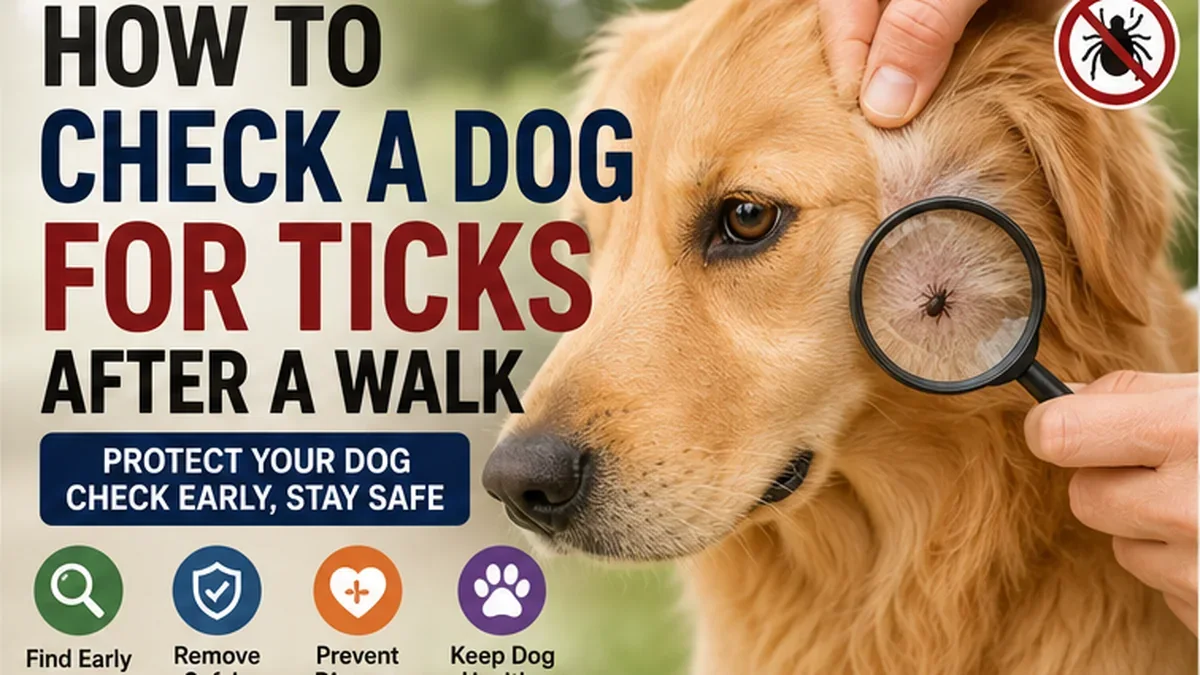
Ticks are small parasites that attach to animals and feed on blood.
Your dog may collect a tick while walking through grass. Bushes. Wooded areas. Parks. Or places visited by wildlife.
A quick tick check after outdoor activity can help you find and remove a tick before it remains attached for a long time.
This guide explains when to check your dog. Where ticks often hide. How to remove a tick safely. What mistakes to avoid. And when your dog needs veterinary care.
Quick Answer
Check your dog after walks through grass. Bushes. Woods. Or areas with wildlife. Use your hands and a comb to inspect the whole body.
Pay extra attention around the ears. Neck. Face. Armpits. Groin. Tail. And between the toes. Remove an attached tick with fine tipped tweezers or a tick removal tool. Pull upward with steady pressure. Contact a veterinarian when your dog becomes sick or the tick cannot be removed safely.
Why Are Tick Checks Important?
Ticks can cause skin irritation and may spread disease.
The risk depends on the type of tick. The area where you live. How long the tick remains attached. And your dog’s health.
Regular tick checks can help you:
- Find ticks early
- Remove attached ticks safely
- Notice skin irritation
- Find bites or small wounds
- Check whether prevention is working
- Reduce the chance of ticks entering the home
A tick can be very small. Some may look like a dark seed or tiny bump.
When Should You Check Your Dog?
Check your dog after outdoor activity in places where ticks may live.
This includes:
- Long grass
- Bushes
- Wooded areas
- Hiking trails
- Parks
- Farms
- Areas with deer or wildlife
- Leaf covered ground
During active tick seasons you may need to check your dog after every outdoor walk.
Ticks can be present during more than one season in some climates.
What Does a Tick Look Like?
Ticks can vary in size and color.
An unfed tick may be:
- Very small
- Flat
- Brown
- Black
- Reddish
- Similar to a small seed
A tick that has fed may become rounder and larger.
Do not confuse a tick with:
- A skin tag
- A nipple
- A scab
- A small lump
- A piece of dirt
Look closely before pulling anything from the skin.
Not Sure if It Is a Tick?
Do not pull hard on an unknown skin bump. Ask a veterinarian or professional groomer to check it.
What You Need for a Tick Check
Prepare:
- Good lighting
- A fine tooth comb
- Fine tipped tweezers
- A tick removal tool
- Disposable gloves
- A small sealed container
- Rubbing alcohol for the removed tick container
- Antiseptic recommended for dogs
- Small treats
Keep a tick removal tool in your dog care kit.
How to Check a Dog for Ticks
Step 1: Choose a Bright Area
Use natural light or a bright lamp.
Ask your dog to stand. Sit. Or lie down.
Use a non slip surface.
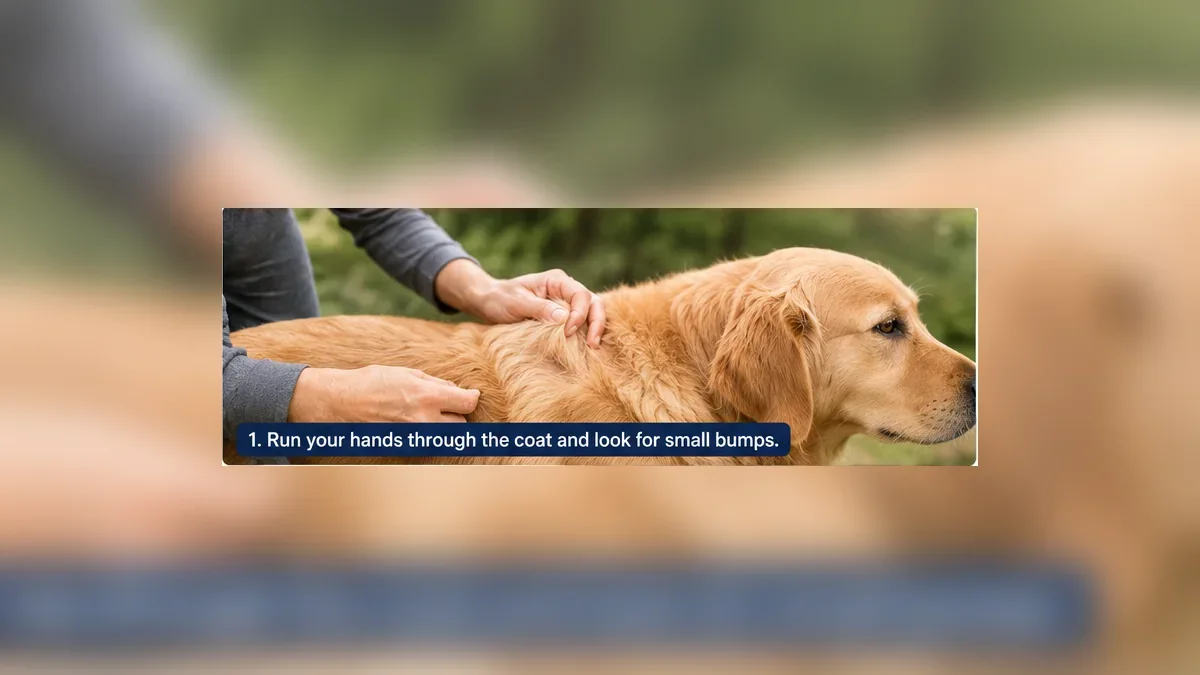
Step 2: Run Your Hands Over the Body
Move your hands slowly over the coat.
Feel for small bumps.
Check both with and against the direction of hair growth.
Step 3: Separate the Hair
When you feel a bump separate the hair with your fingers.
Look directly at the skin.
A tick may be attached by its mouth and may have visible legs.
Step 4: Check the Head and Face
Look around:
- The eyes
- The lips
- The chin
- The ears
- Inside the outer ear flap
- Under the collar
Do not push tools into the ear canal.
Step 5: Check the Neck and Chest
Remove the collar or harness.
Look under straps and around the chest.
Step 6: Check the Legs and Armpits
Ticks often hide in warm protected areas.
Check:
- Under the front legs
- Inside the back legs
- Around the elbows
- Around the knees
Step 7: Check the Paws
Look between every toe.
Check around the nails and paw pads.
Read our guide on how to clean a dog’s paws after a walk.
Step 8: Check the Belly and Groin
Look through thinner hair on the stomach.
Check carefully around the groin.
Step 9: Check the Tail
Look around the base of the tail.
Check under the tail and around the back legs.
Step 10: Use a Comb
Run a fine tooth comb through the coat.
Stop when the comb catches on a bump.
Do not pull the comb through an attached tick.
Common Places Where Ticks Hide
| Body Area | Why Ticks May Hide There | How to Check |
|---|---|---|
| Ears | Warm and protected | Lift the ear flap and inspect visible skin. |
| Under the collar | Hidden from normal view | Remove the collar during checks. |
| Armpits | Warm and thin skinned | Lift the leg gently. |
| Between the toes | Protected spaces | Spread the toes gently. |
| Groin | Warm area with thinner hair | Check carefully with good lighting. |
| Base of the tail | Easy to miss | Separate the hair and inspect the skin. |
How to Remove a Tick Safely
Step 1: Put on Gloves
Wear disposable gloves when possible.
Step 2: Calm Your Dog
Ask another adult to help hold your dog gently if needed.
Do not squeeze the dog tightly.
Step 3: Separate the Hair
Move the hair away from the tick.
Make sure you can see where the tick enters the skin.
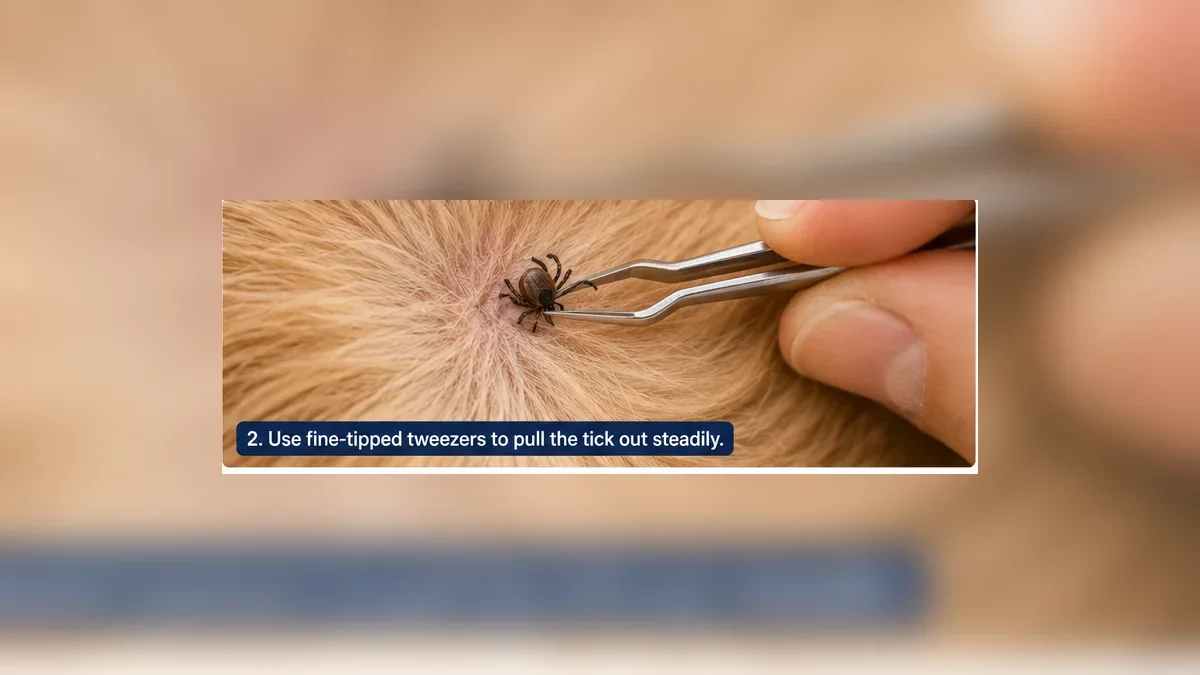
Step 4: Grip Close to the Skin
Use fine tipped tweezers.
Grip the tick as close to the dog’s skin as possible.
Do not squeeze the round body.
Step 5: Pull Up With Steady Pressure
Pull upward slowly and evenly.
Do not twist sharply.
Do not crush the tick.
Step 6: Check the Skin
Look at the bite area.
A small amount of redness may appear.
Contact a veterinarian if part of the tick remains and you cannot remove it safely.
Step 7: Clean the Area
Use a dog safe antiseptic recommended by your veterinarian.
Wash your hands after removing the gloves.
Step 8: Store or Dispose of the Tick
Place the tick inside a sealed container.
You may add rubbing alcohol to the container.
Do not crush the tick with bare fingers.
Your veterinarian may want to know what the tick looked like.
What Should You Never Put on an Attached Tick?
Do not try to remove an attached tick with:
- Petroleum jelly
- Nail polish
- Glue
- Essential oils
- Gasoline
- Bleach
- A hot match
- Burning tools
These methods may hurt your dog or delay safe removal.
Do Not Burn an Attached Tick
Heat can burn your dog and may cause the tick to release more material into the bite.
What If the Tick’s Mouth Part Remains?
Do not dig deeply into the skin with a needle or knife.
The area may become irritated.
Contact a veterinarian when:
- A visible part remains deeply stuck
- The area becomes swollen
- Pus appears
- The skin becomes painful
- Your dog keeps licking the bite
What Should You Watch After Removing a Tick?
Check the bite area daily for several days.
Watch your dog for:
- Low energy
- Loss of appetite
- Fever
- Limping
- Joint pain
- Weakness
- Swollen lymph nodes
- Unusual bruising
- Vomiting
- Behavior changes
These signs can have many causes.
Tell your veterinarian that a tick was found.
Should You Save the Tick?
Saving the tick for a short time may be useful.
Place it in a sealed container.
Write the date and where you found it.
Your veterinarian can tell you whether the tick needs examination.
How to Help Prevent Ticks
Tick prevention should be chosen with veterinary guidance.
Options may include:
- Oral medicine
- Topical medicine
- Tick collars
- Sprays made for dogs
- Regular checks
- Yard care
The best option depends on:
- Your dog’s age
- Weight
- Health
- Lifestyle
- Location
- Other pets in the home
Never give your dog a tick medicine made for another animal.
Follow the product label and veterinary instructions.
Can Dogs Still Get Ticks While Using Prevention?
Yes.
Some products kill ticks after they attach. Other products reduce attachment or feeding.
No product removes the need for regular tick checks.
Contact your veterinarian when you repeatedly find live ticks despite using prevention.
How to Reduce Ticks Around the Home
You may reduce tick hiding areas by:
- Cutting long grass
- Removing leaf piles
- Keeping shrubs trimmed
- Cleaning outdoor dog bedding
- Checking garden edges
- Keeping wildlife food away from the yard
Use yard chemicals carefully.
Choose products that are safe for pets and follow the instructions.
Can a Tick Enter Your Home?
Yes.
A tick may enter on a dog. Person. Clothing. Or outdoor equipment.
After walks you can:
- Check your dog
- Check your clothing
- Wash outdoor blankets
- Inspect collars and harnesses
- Vacuum areas where your dog rests
How to Help a Dog That Hates Tick Checks
Use short sessions.
- Touch one area of the body.
- Give a treat.
- Part a small section of hair.
- Check for two seconds.
- End after calm behavior.
Repeat this routine regularly.
Sudden pain during a body check may mean injury or another health problem.
Common Tick Check Mistakes
Checking Only the Back
Ticks often hide around the ears. Paws. Armpits. And groin.
Leaving the Collar On
Remove collars and harnesses during the check.
Pulling an Unknown Skin Bump
Make sure it is a tick before removal.
Squeezing the Tick Body
Grip close to the skin instead.
Using Fire or Chemicals
These methods can harm your dog.
Stopping Prevention After One Check
Tick control often needs a regular schedule.
Ignoring Symptoms
Illness can appear after the tick is removed.
When Should You Contact a Veterinarian?
Contact a veterinarian when:
- You cannot remove the tick safely
- Part of the tick remains deeply stuck
- The bite becomes swollen
- Pus or a bad smell appears
- Your dog develops a fever
- Your dog becomes weak
- Your dog stops eating
- Your dog begins limping
- Your dog has unusual bruising
- Many ticks are attached
- Your dog is a very young puppy
- Your dog has another serious health condition
Tell the veterinarian when the tick was found and where your dog had been walking.
Frequently Asked Questions
How soon should I check my dog after a walk?
Check your dog as soon as practical after returning home.
Can ticks hide under long hair?
Yes. Use your fingers and a comb to inspect the skin under the coat.
Are ticks always easy to see?
No. Young ticks can be very small.
Can I remove a tick with normal tweezers?
Fine tipped tweezers may work. Grip close to the skin and pull upward steadily.
Should I twist the tick?
With normal tweezers use steady upward pressure. Follow the instructions when using a special tick tool.
Can a tick bite make a dog limp?
Some tick related illnesses may cause joint pain or limping. Limping can also have many other causes.
Does every tick carry disease?
No. Disease risk depends on the tick type. Location. And other factors.
Can ticks live between a dog’s toes?
Yes. Always check between the toes.
Should I use tick medicine without asking a vet?
Choose prevention with veterinary advice. Some products are not suitable for every dog.
Can I crush a removed tick?
Do not crush it with bare fingers. Seal it in a container.
Final Thoughts
Checking your dog for ticks after outdoor walks is a useful health habit.
Inspect the whole body. Pay extra attention to the ears. Neck. Armpits. Groin. Tail. And paws.
Remove an attached tick with fine tipped tweezers or a proper tick tool.
Do not use fire. Petroleum jelly. Or harsh chemicals.
Continue watching the bite area and your dog’s health after removal.
Regular tick checks. Veterinary approved prevention. And safe outdoor habits can work together to protect your dog.
Related DailyPetTips Guides
- How to Clean a Dog’s Paws After a Walk
- How to Brush a Dog at Home
- How to Clean a Dog’s Ears Safely at Home
- Explore Pet Health Guides
- Explore All Dog Guides

Pet parent notes