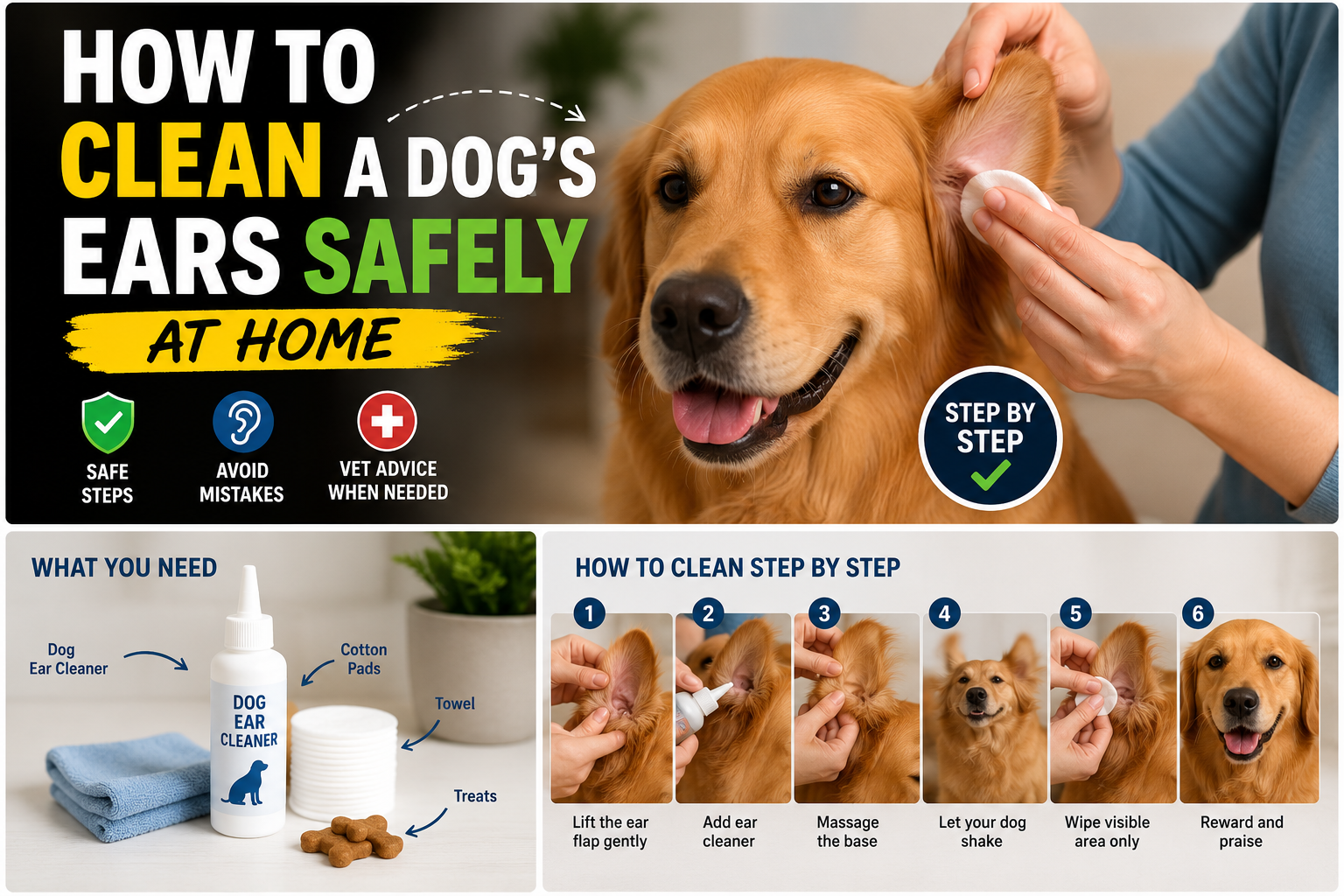
Clean ears are an important part of dog grooming. However not every dog needs frequent ear cleaning.
Some dogs naturally have clean and healthy ears. Other dogs collect more wax or moisture. Dogs with long floppy ears may also need more regular checks.
Cleaning too often can irritate the ear canal. Using the wrong product can also make an ear problem worse.
This guide explains how to check your dog’s ears. How to choose a safe ear cleaner. How to clean the ears step by step. And when you should stop and contact a veterinarian.
Quick Answer
Check your dog’s ears once a week. Clean them only when you can see light wax or dirt and the ears are not painful or inflamed.
Use a dog ear cleaner recommended by a veterinarian. Fill the ear canal as directed. Massage the base of the ear. Let your dog shake. Then wipe only the parts you can see with soft gauze or cotton. Never push cotton swabs deep into the ear canal.
Why Dog Ear Care Is Important
A dog’s ear canal has a different shape from a human ear canal. Dirt and moisture can become trapped deeper inside the ear.
Regular ear checks can help you notice changes early.
A simple ear care routine may help you find:
- Extra wax
- Redness
- Swelling
- Unusual discharge
- A strong smell
- Ticks or other debris
- Pain when the ear is touched
Healthy ears should not have a strong smell. They should not look very red. Your dog should also allow gentle ear handling without pain.
Ear cleaning is only one part of a complete grooming routine. Read our guides on how to brush a dog at home and how often to bathe a dog.
How Often Should You Clean a Dog’s Ears?
There is no fixed cleaning schedule for every dog.
Many healthy dogs only need regular checks. They may not need cleaning every week.
Some dogs need cleaning more often because they produce more wax or spend a lot of time swimming.
| Dog or Lifestyle | Ear Check Routine | Important Note |
|---|---|---|
| Healthy dog with clean ears | Check once a week | Clean only when wax or dirt is visible. |
| Dog with floppy ears | Check once or twice a week | Floppy ears can hold more warmth and moisture. |
| Dog that swims | Check after swimming | Do not pour random drying products into the ear. |
| Dog with allergies | Follow veterinary advice | Allergies can cause repeated ear problems. |
| Dog with an ear infection | Only as directed by a vet | Cleaning at the wrong time may cause pain or reduce treatment success. |
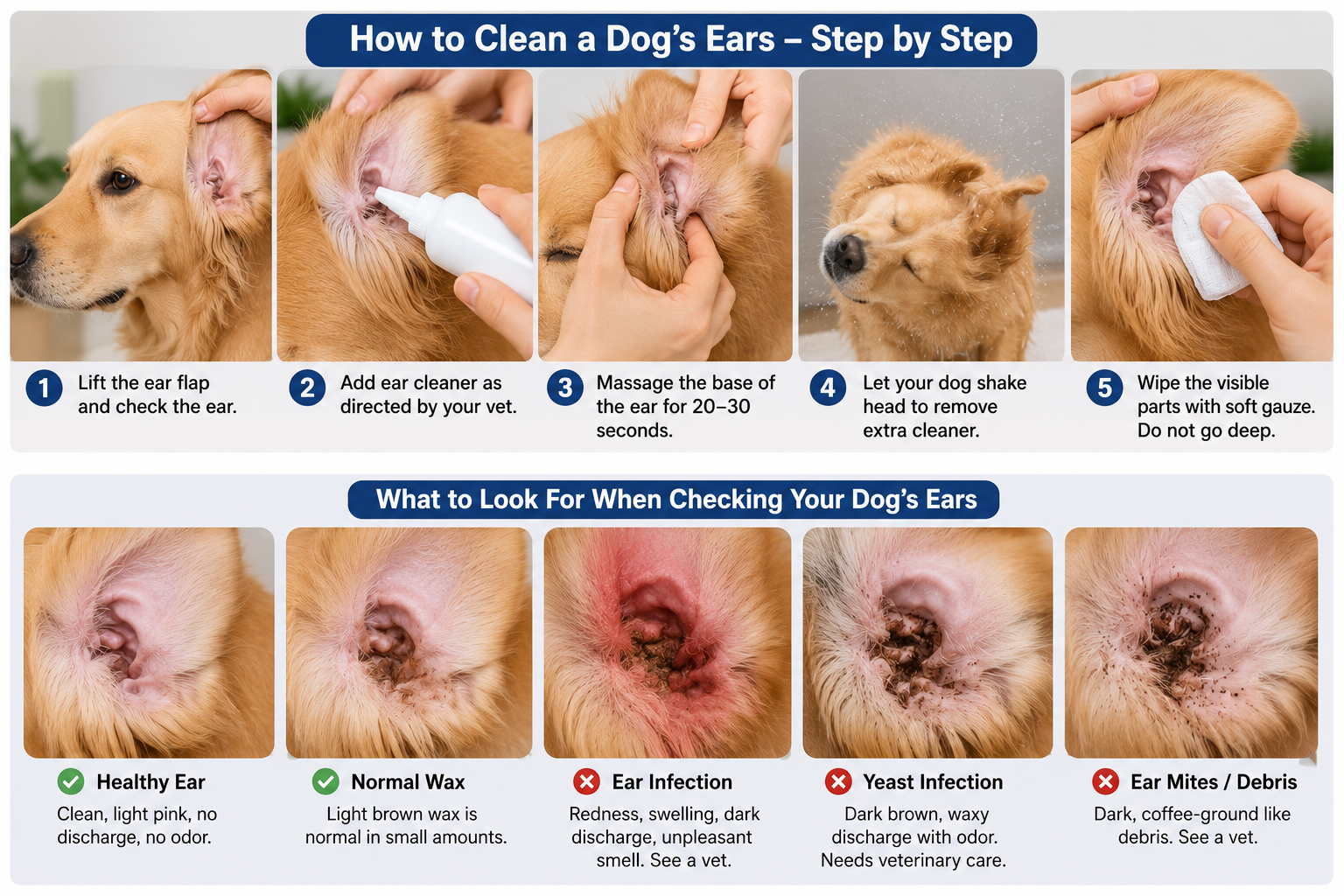
Important: Check the ears regularly. Do not clean them only because a calendar says it is cleaning day.
Signs That a Dog’s Ears Need Cleaning
Your dog may need a gentle ear cleaning when:
- You can see a small amount of light brown wax
- There is light dirt inside the visible ear
- The ears look healthy but slightly dirty
- Your veterinarian has recommended regular cleaning
- Your dog has finished swimming and needs a vet approved routine
A small amount of wax can be normal. You do not need to make the ear completely free from every sign of wax.
Stop and contact a veterinarian when the ear looks painful or unhealthy.
Do Not Clean a Painful Ear at Home
Do not continue cleaning when the ear is very red. Swollen. Bleeding. Producing thick discharge. Or painful when touched. These signs may need veterinary examination and treatment.
Signs of a Possible Ear Problem
Contact a veterinarian if your dog has:
- A strong or unpleasant ear smell
- Dark heavy discharge
- Yellow or green discharge
- Blood inside the ear
- Red or swollen skin
- Constant head shaking
- Frequent ear scratching
- Pain when the ear is touched
- A head tilt
- Loss of balance
- Sudden hearing changes
- One ear held lower than the other
Ear infections can have different causes. Bacteria. Yeast. Allergies. Parasites. Moisture. Foreign material. And other health problems can produce similar signs.
Do not try to choose treatment only by looking at the ear.
What You Need Before Cleaning
Prepare everything before bringing your dog into the cleaning area.
- A dog ear cleaner recommended by a veterinarian
- Soft gauze or cotton pads
- Small treats
- A towel
- Good lighting
- A quiet room
Use a product made specifically for dogs.
Read the label before use. Some products are made for routine cleaning. Other products are made for specific medical problems.
What Should You Never Put in a Dog’s Ears?
Do not place random household products inside your dog’s ears.
Avoid using:
- Hydrogen peroxide
- Rubbing alcohol
- Undiluted vinegar
- Essential oils
- Human ear drops
- Soapy water
- Unapproved homemade mixtures
These products may irritate sensitive skin. They may also cause pain when the ear canal is inflamed.
Only use a homemade mixture when your veterinarian has given you an exact recipe and clear instructions.
Avoid Cotton Swabs Inside the Ear Canal
A cotton swab can push wax and debris deeper into the ear. It may also injure the ear canal. Only wipe the parts of the ear that you can clearly see.
How to Clean a Dog’s Ears Safely
Step 1: Choose a Calm Time
Clean the ears when your dog is relaxed.
Choose a quiet room. Place a towel under your dog because ear cleaner may splash when the dog shakes.
Step 2: Check the Ear First
Lift the ear flap and look inside.
Do not continue if you see:
- Heavy redness
- Swelling
- Blood
- Thick discharge
- An object inside the ear
- Severe pain
Contact a veterinarian when any of these signs are present.
Step 3: Hold the Ear Flap Gently
Lift the ear flap with one hand.
Do not pull hard. Keep the ear in a natural and comfortable position.
Step 4: Add the Ear Cleaner
Place the cleaner opening near the ear canal.
Do not push the bottle tip deep into the ear. Avoid touching the ear with the tip because this may spread bacteria between ears.
Use the amount recommended on the product label or by your veterinarian.
Step 5: Massage the Base of the Ear
Gently massage the base of the ear for about 20 to 30 seconds.
You may hear a soft liquid sound. This helps the cleaner move through wax and debris.
Stop if your dog shows pain.
Step 6: Let Your Dog Shake
Release the ear and step back.
Your dog will probably shake its head. This helps move cleaner and loosened debris toward the outside of the ear.
Use the towel to protect your clothes and nearby walls.
Step 7: Wipe the Visible Ear
Use soft gauze or a cotton pad to wipe the inside of the ear flap and the visible entrance of the ear canal.
Do not push your finger or cleaning material deep inside.
Use a fresh piece of gauze when the first one becomes dirty.
Step 8: Reward Your Dog
Give calm praise and a small treat.
Positive rewards can make future ear checks easier.
Step 9: Repeat on the Other Ear
Use fresh gauze for the other ear.
Do not use the same dirty material for both ears.
How to Help a Dog That Hates Ear Cleaning
Some dogs dislike having their ears touched.
This may be caused by fear. Pain. Sensitivity. Or a bad past experience.
Use small training steps:
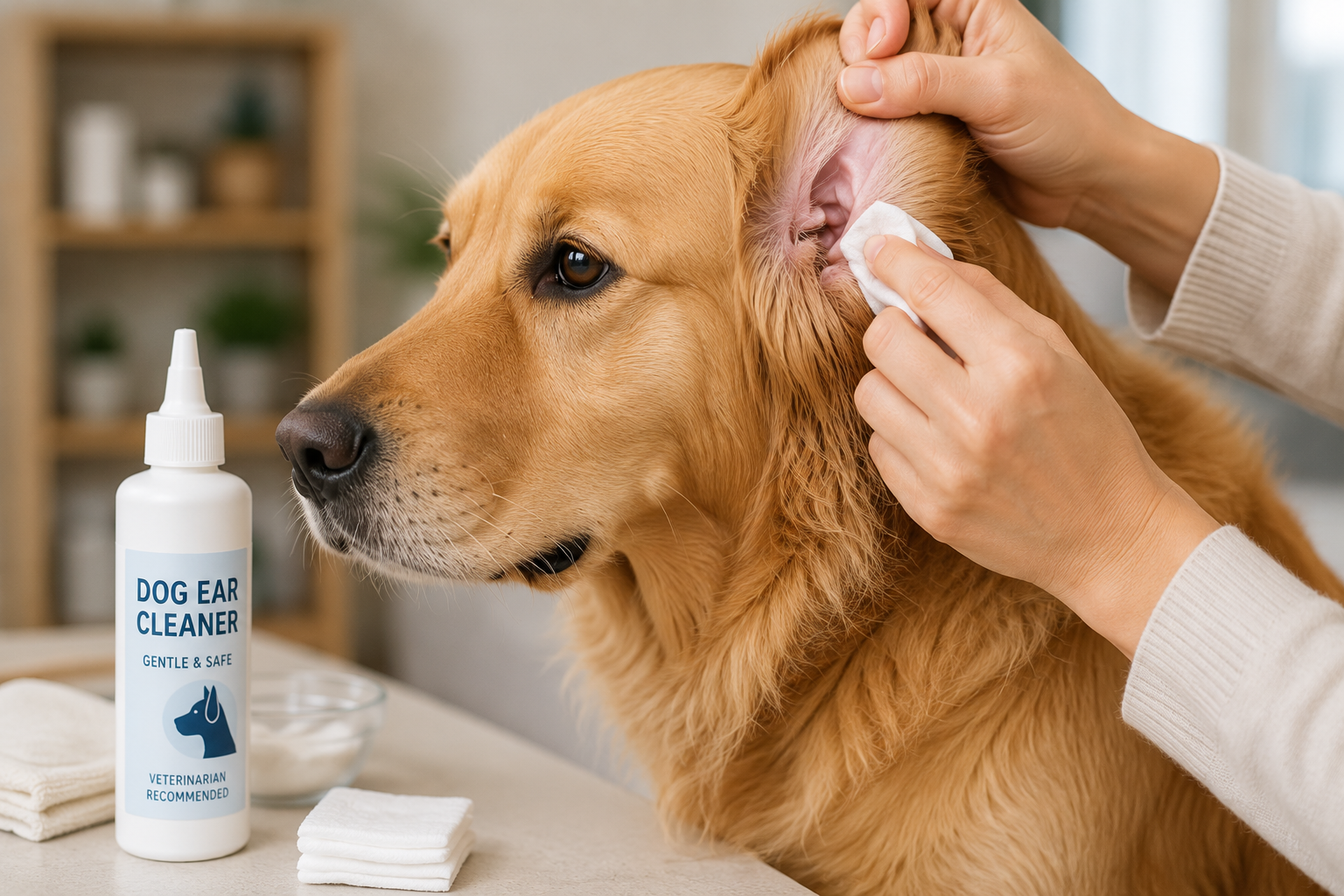
- Touch the shoulder and give a treat.
- Touch the outside of the ear and reward calm behavior.
- Lift the ear flap for one second.
- Show the cleaner bottle.
- Touch the bottle near the ear without adding liquid.
- End the session after a small success.
Do not force a frightened dog through a full cleaning session.
Growling. Snapping. Trying to escape. Or crying may mean the dog is afraid or in pain.
Contact a veterinarian when your dog suddenly becomes sensitive around the ears.
For more calm care ideas read 7 everyday ways to help your dog feel happier.
Should You Clean a Dog’s Ears After Swimming?
Check the ears after swimming.
Moisture can remain around the ear opening. Gently dry the outside of the ear with a soft towel.
Do not pour a drying product into the ear unless your veterinarian has recommended it.
Dogs that swim often may benefit from a special ear care routine. The correct product depends on the dog’s health and history.
Also read our guide on how often you should bathe a dog.
Should You Clean Ears Before or After a Bath?
You can check the ears before a bath.
Keep water and shampoo out of the ear canals during bathing.
After the bath gently dry the outside of the ears. Do not insert a towel or cotton deep into the canal.
If your dog already has ear pain or discharge ask a veterinarian before bathing.
Common Dog Ear Cleaning Mistakes
Cleaning too often: Frequent cleaning can irritate healthy ears.
Using the wrong product: Human ear drops and harsh household liquids may cause pain or irritation.
Pushing cotton swabs deep inside: This can move wax deeper or injure the ear canal.
Ignoring pain: A painful ear may have an infection or injury.
Touching the bottle tip to the ear: This may contaminate the cleaner.
Using the same gauze for both ears: Use clean material for each ear.
Cleaning an ear with heavy discharge: Thick discharge and strong odor need veterinary attention.
Forcing a frightened dog: Stop when the dog becomes unsafe to handle.
When Should You Use a Professional Groomer?
A professional groomer may help with basic outer ear cleaning when:
- Your dog is comfortable with grooming
- The ears are healthy
- Only light visible dirt is present
- You need help with a regular grooming routine
A groomer should not diagnose or treat an ear infection.
Contact a veterinarian when the ear is painful. Smelly. Swollen. Very red. Or producing unusual discharge.
When Should You Contact a Veterinarian?
Contact a veterinarian when your dog has:
- Constant head shaking
- Frequent scratching
- A strong ear smell
- Dark heavy discharge
- Yellow or green discharge
- Blood
- Redness or swelling
- Pain when touched
- A head tilt
- Loss of balance
- Hearing changes
- A foreign object inside the ear
Do not place medicine inside the ear unless it was prescribed for your dog’s current problem.
A damaged eardrum can change which products are safe. Veterinary examination is important before treatment.
Frequently Asked Questions
How do I know if my dog’s ears are healthy?
Healthy ears should not have a strong smell. They should not look badly red or swollen. Your dog should allow gentle handling without pain.
Can I clean my dog’s ears every week?
You can check the ears every week. Clean them only when needed or when your veterinarian has recommended a schedule.
Can I use water to clean dog ears?
Do not pour plain water into the ear canal. Water may remain trapped. Use a dog ear cleaner recommended by a veterinarian.
Why does my dog shake its head after cleaning?
Head shaking helps remove cleaner and loosened debris. Continued shaking after the ear is dry may mean irritation or an ear problem.
Is brown wax normal in dog ears?
A small amount of light brown wax can be normal. Heavy dark wax. Strong odor. Pain. Or itching may need veterinary attention.
Can I use baby wipes on my dog’s ears?
Do not use scented human wipes inside the ear canal. A soft damp cloth may be used only on the outside of a healthy ear.
Why does one ear get dirtier than the other?
One ear may produce more wax. It may also have irritation. Infection. A foreign object. Or another problem. Contact a veterinarian when the difference continues.
Should I remove hair from inside my dog’s ears?
Do not pull ear hair without professional guidance. Hair removal can irritate the ear canal. Ask a veterinarian or experienced groomer whether it is needed for your dog.
Can an ear infection go away with cleaning alone?
Do not assume cleaning will treat an infection. Ear infections often need proper diagnosis and medication.
Final Thoughts
Dog ear care should be gentle and based on need.
Check the ears once a week. Clean only when light wax or dirt is present and the ear looks healthy.
Use a dog ear cleaner recommended by a veterinarian. Massage the base of the ear. Let your dog shake. Then wipe only the visible parts.
Never push cotton swabs deep inside the ear. Do not use harsh household products or random homemade mixtures.
Stop cleaning and contact a veterinarian when the ear is painful. Smelly. Swollen. Very red. Or producing heavy discharge.
A simple ear checking routine can help you notice small changes before they become more serious.
Related DailyPetTips Guides
- How to Brush a Dog at Home
- How Often Should You Bathe a Dog?
- 7 Everyday Ways to Help Your Dog Feel Happier
- Explore Pet Grooming Guides
- Explore All Dog Guides



Pet parent notes