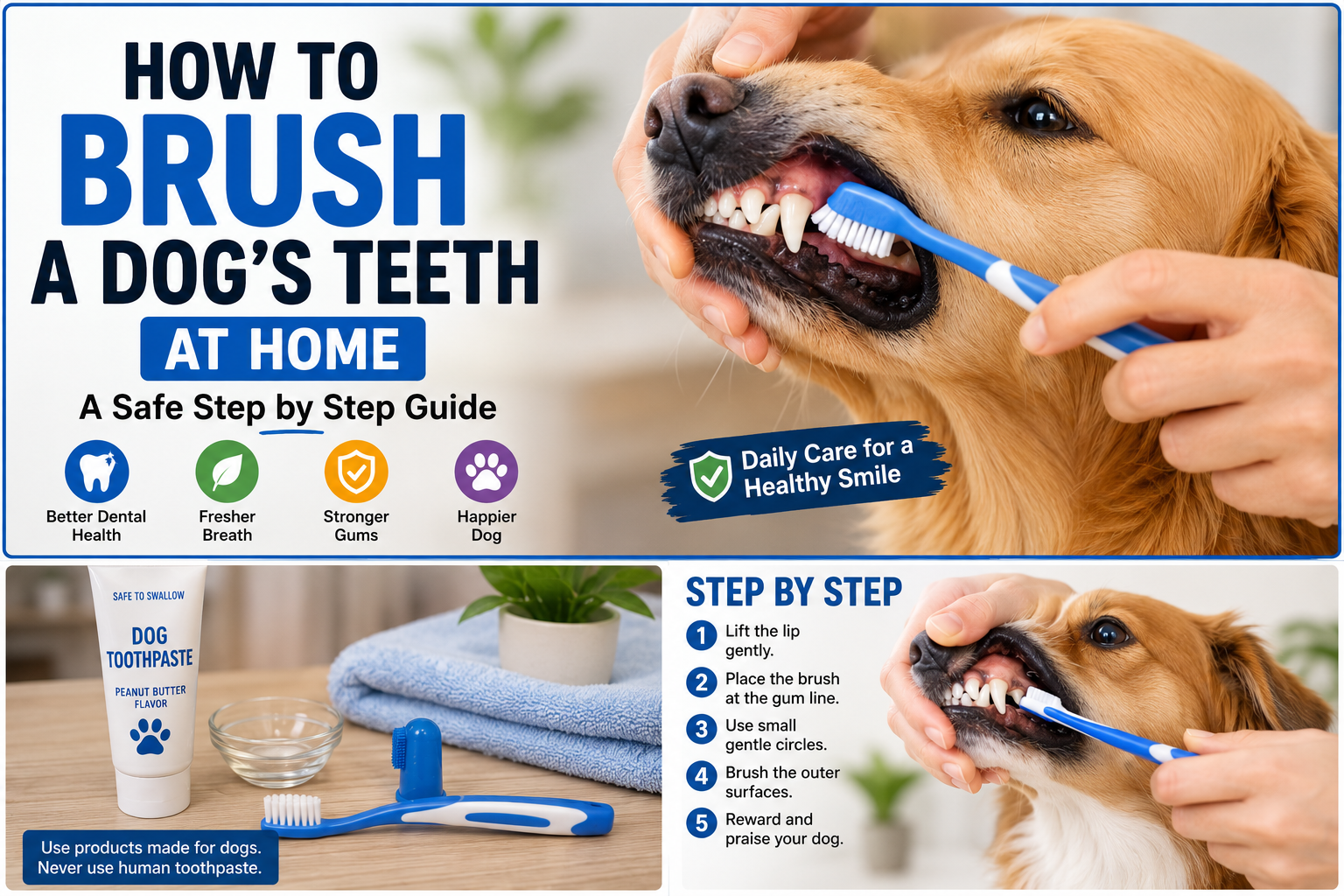
Dental care is an important part of keeping your dog healthy and comfortable.
Food and bacteria can collect on the teeth. Over time this can form plaque and hard tartar. It can also lead to bad breath. Sore gums. Loose teeth. And other dental problems.
Brushing your dog’s teeth at home can help reduce plaque before it becomes harder to remove.
The process should be slow. Gentle. And positive. Many dogs need several short practice sessions before they accept a toothbrush.
This guide explains how often to brush a dog’s teeth. Which toothpaste is safe. How to introduce a toothbrush. How to brush step by step. And when your dog needs professional veterinary care.
Quick Answer
Brush your dog’s teeth every day when possible. Use a toothbrush and toothpaste made specifically for dogs.
Start slowly. Let your dog taste the toothpaste first. Lift the lips gently. Brush the outer surfaces of the teeth with small movements. Focus on the gum line. Never use human toothpaste. Stop if your dog shows pain or heavy bleeding.
Why Is Dental Care Important for Dogs?
Dogs use their mouths for eating. Playing. Carrying toys. And exploring the world.
Healthy teeth and gums help a dog eat comfortably and enjoy normal daily activities.
Regular dental care can help you notice:
- Bad breath
- Red or swollen gums
- Broken teeth
- Loose teeth
- Heavy tartar
- Pain while eating
- Bleeding inside the mouth
- Lumps or swelling
The American Veterinary Medical Association explains that dental disease can affect a pet’s comfort and overall health. Regular home care and veterinary dental checks are both important.
Brushing does not replace professional dental care. It is one part of a complete dental routine.
How Often Should You Brush a Dog’s Teeth?
Daily brushing is the best goal for many dogs.
If daily brushing is not possible then brush as often as you can. A regular routine is more useful than brushing only once every few weeks.
Plaque can begin building again soon after the teeth are cleaned. Frequent brushing helps remove soft plaque before it becomes hard tartar.
| Situation | Suggested Routine | Important Note |
|---|---|---|
| Healthy adult dog | Daily when possible | Use dog toothpaste and gentle brushing. |
| Puppy | Short practice every day | Focus on creating a positive habit. |
| Dog new to brushing | Practice for a few seconds at first | Do not force a full brushing session. |
| Dog with dental disease | Follow veterinary advice | Brushing a painful mouth may make the problem worse. |
| Dog after professional cleaning | Follow the veterinary plan | Wait until the veterinarian says brushing is safe. |
Important: Do not brush a painful or bleeding mouth without veterinary guidance.
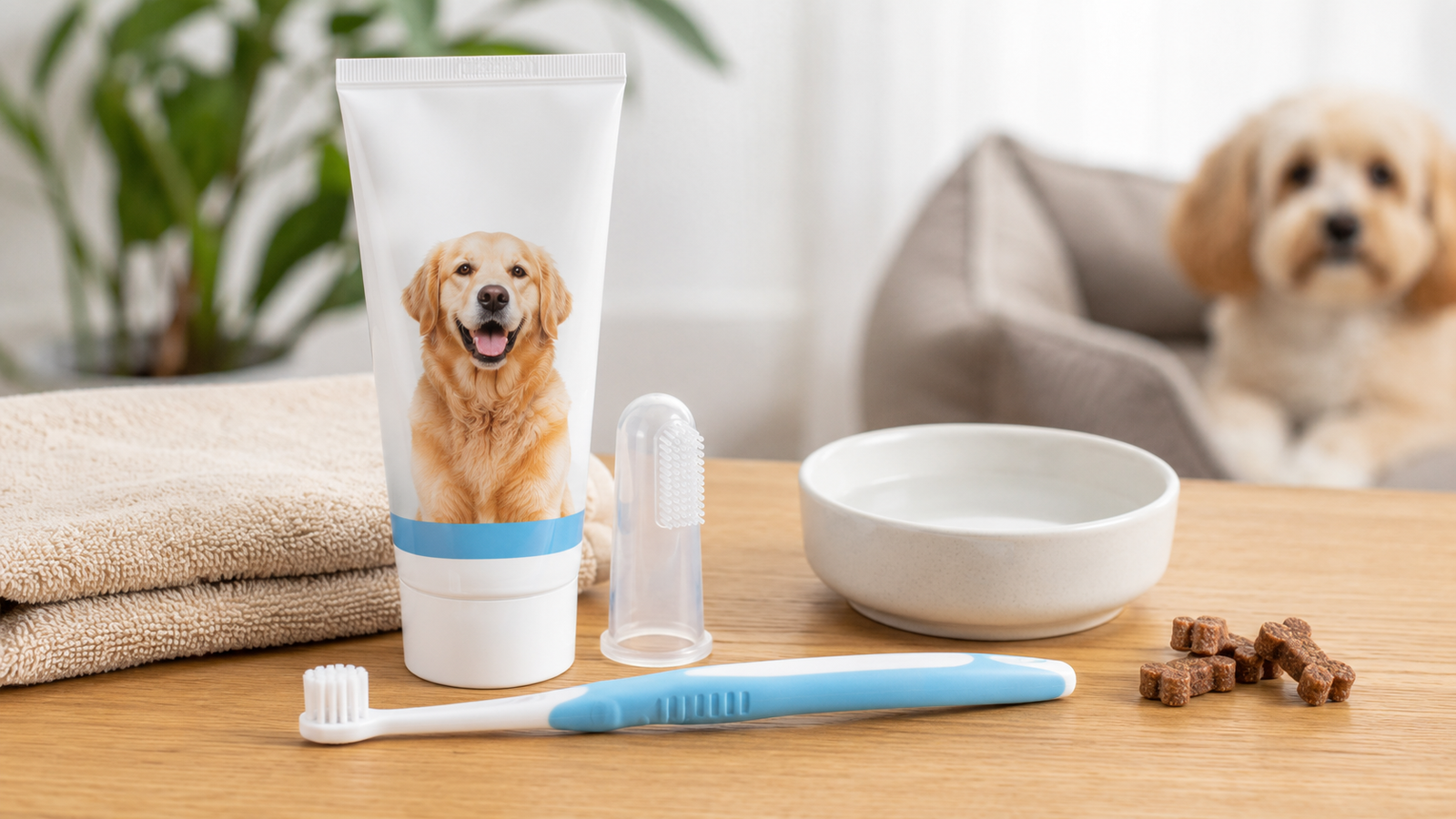
What Do You Need to Brush a Dog’s Teeth?
Prepare the correct items before starting.
- A toothbrush made for dogs
- Dog toothpaste
- Small treats
- A quiet room
- Good lighting
- A calm and patient approach
You do not need to hold your dog tightly.
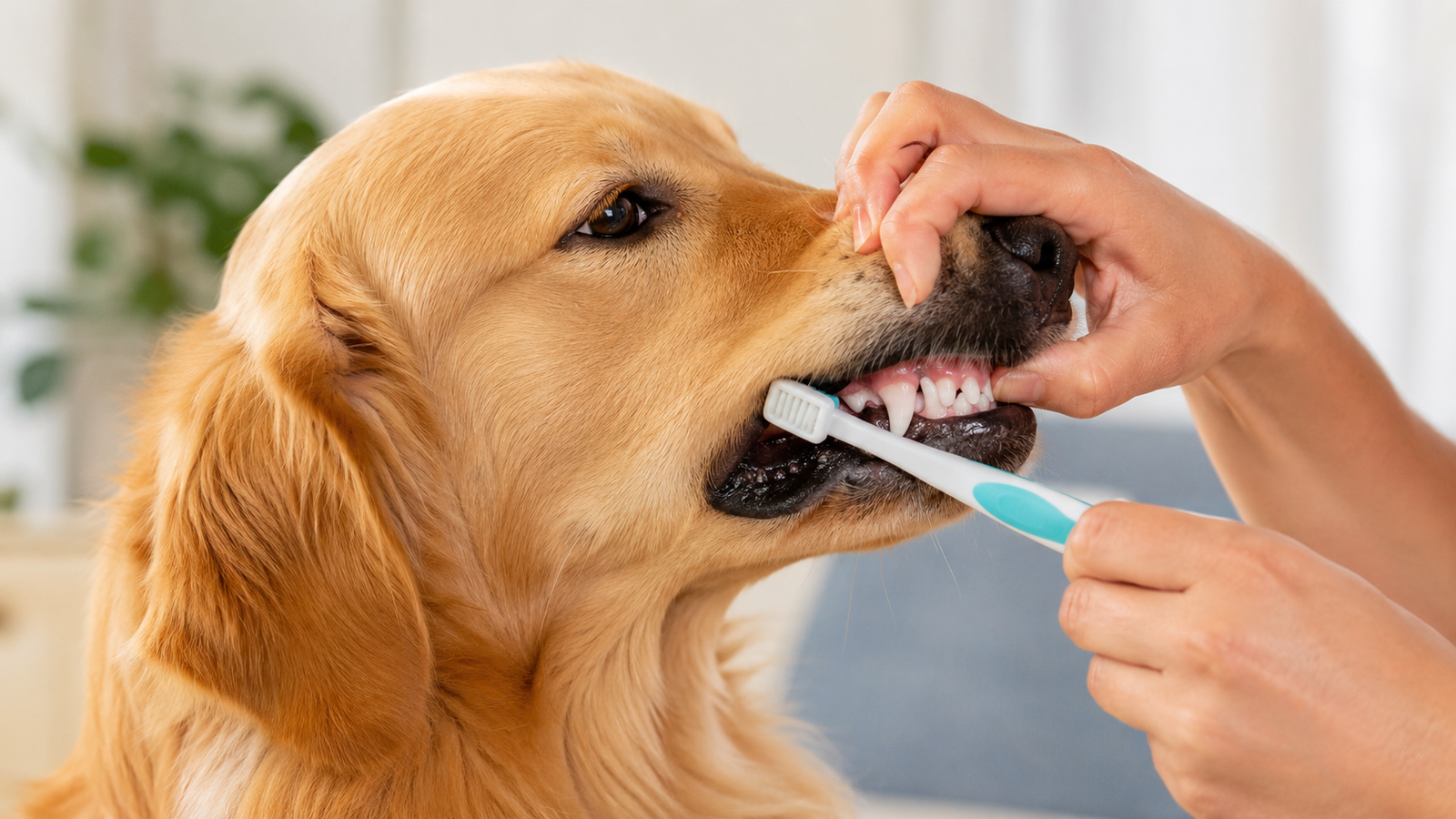
The goal is to help your dog feel safe and comfortable with the routine.
What Type of Toothbrush Should You Use?
Choose a toothbrush that matches the size of your dog’s mouth.
Dog Toothbrush
A dog toothbrush usually has soft bristles and a handle designed for pet dental care.
A small brush may be easier to control for small dogs. A larger brush may work better for a large dog.
Finger Brush
A finger brush fits over your finger.
It may be easier for some beginners. It also places your finger close to the teeth.
Do not use a finger brush when your dog may bite or strongly resists mouth handling.
Soft Gauze
Some veterinarians may recommend soft gauze for early training.
Gauze can help a dog become comfortable with the feeling of something touching the teeth.
It may not clean as well as a toothbrush in the long term.
Why You Should Never Use Human Toothpaste
Human toothpaste is not made to be swallowed.
Dogs cannot rinse and spit after brushing. They will usually swallow some toothpaste.
Some human toothpastes may contain ingredients that are unsafe for dogs. Xylitol is especially dangerous.
Use only toothpaste clearly labeled for dogs.
Never Use Toothpaste Containing Xylitol
Xylitol can be highly toxic to dogs. Check every label carefully. Contact a veterinarian or animal poison service immediately if your dog eats a product containing xylitol.
How to Choose Dog Toothpaste
Choose toothpaste made specifically for dogs.
Dog toothpaste is available in flavors such as poultry. Beef. Or peanut butter.
A flavor your dog enjoys may make brushing easier.
Look for a product that:
- Is clearly labeled for dogs
- Can be safely swallowed
- Does not contain xylitol
- Comes from a trusted pet care company
- Has clear instructions
Ask your veterinarian for a recommendation when your dog has allergies or another health condition.
How to Prepare Your Dog for Tooth Brushing
Do not begin by placing a toothbrush deep inside your dog’s mouth.
Most dogs need slow training.
Practice the following steps over several days.
Day 1: Touch the Face
Touch the side of your dog’s face gently.
Give a treat when your dog stays calm.
Day 2: Lift the Lip
Lift the upper lip for one second.
Reward your dog.
Day 3: Touch the Teeth
Use a clean finger to touch one or two teeth gently.
Stop before your dog becomes uncomfortable.
Day 4: Introduce the Toothpaste
Place a very small amount of dog toothpaste on your finger.
Let your dog taste it.
Day 5: Introduce the Brush
Let your dog see and smell the toothbrush.
Add a small amount of toothpaste.
Touch one tooth gently.
Day 6 and Beyond: Increase Slowly
Brush a few more teeth each day.
Keep sessions short and positive.
For more calm handling advice read 7 everyday ways to help your dog feel happier.
How to Brush a Dog’s Teeth Step by Step
Step 1: Choose a Calm Time
Brush when your dog is relaxed.
A quiet room with few distractions works best.
Do not begin immediately after active play.
Step 2: Let Your Dog Taste the Toothpaste
Place a small amount of dog toothpaste on your finger.
Allow your dog to lick it.
This helps create a positive start.
Step 3: Lift the Lip Gently
Place one hand on the side of your dog’s face.
Lift the lip without forcing the mouth open.
You do not need to pull the jaw apart.
Step 4: Start With the Front Teeth
Place the brush against the outer surface of the front teeth.
Use very small gentle movements.
Brush near the gum line without pressing hard.
Step 5: Move Toward the Back Teeth
Move slowly along the outside surfaces of the teeth.
The back teeth often collect more plaque.
Do one side first. Then move to the other side.
Step 6: Focus on the Outer Surfaces
The tongue helps clean some inner tooth surfaces.
Focus mainly on the outside surfaces where plaque often builds.
Do not force the toothbrush deep into the mouth.
Step 7: Keep the Session Short
A full brushing session may take one or two minutes.
A beginner dog may only accept a few seconds.
Short successful sessions are better than long stressful sessions.
Step 8: Reward Your Dog
Give calm praise and a small treat after brushing.
This helps your dog connect dental care with a positive experience.
How Much Pressure Should You Use?
Use light pressure.
The bristles should touch the teeth and gum line without bending deeply into the gums.
Hard brushing can irritate sensitive gums.
Stop if your dog cries. Pulls away suddenly. Or shows pain.
Should a Dog’s Gums Bleed During Brushing?
A tiny amount of blood can sometimes appear when gums are irritated.
Heavy bleeding is not normal.
Contact a veterinarian when:
- Bleeding is heavy
- Bleeding happens every time
- The gums are very red or swollen
- Your dog shows pain
- A tooth is loose
- The mouth has a strong smell
Do not continue brushing a painful area.
What If Your Dog Hates Tooth Brushing?
Some dogs need more time.
Reduce the difficulty of the session.
- Touch the face only
- Lift the lip for one second
- Let the dog taste toothpaste
- Touch one tooth
- Brush for two seconds
- Reward calm behavior
Repeat the easy step until your dog is comfortable.
Do not punish growling or struggling.
These behaviors may mean fear. Pain. Or discomfort.
Contact a veterinarian when your dog suddenly resists mouth handling after previously accepting it.
Can Dental Chews Replace Tooth Brushing?
Dental chews can be useful for some dogs.
They should not completely replace brushing.
Choose a product that matches your dog’s size and chewing style.
Supervise your dog while chewing.
The Veterinary Oral Health Council maintains a list of products accepted for helping control plaque or tartar.
A dental chew should not be so hard that it can break a tooth.
Can Bones Clean a Dog’s Teeth?
Hard bones can damage teeth.
They may cause tooth fractures. Choking. Or digestive problems.
Do not use hard bones as a replacement for dental care.
Ask your veterinarian about safer chewing options.
Can Dry Food Clean a Dog’s Teeth?
Normal dry food does not replace brushing.
Some veterinary dental diets are designed to help reduce plaque or tartar.
Use these diets only when they are suitable for your dog.
Ask your veterinarian before changing food for dental reasons.
Signs of Dental Problems in Dogs
Contact a veterinarian if your dog has:
- Strong bad breath
- Red or swollen gums
- Heavy yellow or brown tartar
- Bleeding gums
- Loose teeth
- Broken teeth
- Drooling more than normal
- Difficulty eating
- Chewing on one side
- Dropping food
- Swelling under the eye
- Swelling around the mouth
- Pawing at the mouth
- Sudden behavior changes
Bad Breath Should Not Be Ignored
A mild smell can happen after eating. Strong or constant bad breath may be a sign of dental disease or another health problem.
When Does a Dog Need Professional Dental Cleaning?
Home brushing removes soft plaque from reachable tooth surfaces.
It cannot remove hard tartar safely.
A veterinarian may recommend professional dental cleaning when your dog has:
- Heavy tartar
- Gum disease
- Loose or broken teeth
- Pain while eating
- Persistent bad breath
- Bleeding gums
- Dental infection
Professional cleaning allows the veterinary team to examine the whole mouth. Clean above and below the gum line. And treat damaged teeth when needed.
Can You Remove Tartar at Home?
Do not scrape hard tartar from your dog’s teeth with metal tools.
This can damage the tooth surface. Injure the gums. Or cause pain.
Hard tartar usually needs professional removal.
Brushing helps control new plaque after the mouth is healthy.
Should You Brush a Puppy’s Teeth?
Yes.
Puppyhood is a good time to build the habit.
Keep the first sessions very short.
Let the puppy taste dog toothpaste. Touch the lips. Then touch a few teeth gently.
Do not worry about perfect brushing at first.
The main goal is to create a calm routine.
Should You Brush an Older Dog’s Teeth?
Older dogs can benefit from dental care.
However older dogs are more likely to have painful dental disease.
Ask a veterinarian to check the mouth before starting if your older dog has never had regular dental care.
Do not brush loose teeth. Open sores. Or painful gums.
Common Dog Tooth Brushing Mistakes
Using Human Toothpaste
Human toothpaste is not safe for dogs to swallow.
Trying to Brush Every Tooth on the First Day
Start with only a few seconds.
Using Too Much Pressure
Hard brushing can irritate the gums.
Forcing the Mouth Open
You only need to lift the lips and reach the outer tooth surfaces.
Ignoring Pain
A dog that resists suddenly may have a painful dental problem.
Brushing Hard Tartar
Brushing cannot remove thick hard tartar.
Using a Large Brush
A brush that is too large can be difficult to control.
Skipping Veterinary Checks
Home care does not replace professional examination.
How Dental Care Fits Into a Grooming Routine
Dental care can be added to your normal pet care routine.
You can brush the teeth after a calm brushing session.
Read our guide on how to brush a dog at home.
Do not use bath time to force dental care when your dog is already stressed.
For safe bathing advice read how often you should bathe a dog.
Frequently Asked Questions
How long should I brush my dog’s teeth?
A complete session may take one or two minutes. A beginner dog may only accept a few seconds.
Can I brush my dog’s teeth every day?
Yes. Daily brushing is a good goal for many dogs.
Is brushing three times a week useful?
Regular brushing several times a week may still be helpful. Daily brushing provides stronger plaque control.
Can I use baking soda?
Do not use baking soda unless your veterinarian has specifically recommended it. Use toothpaste made for dogs.
Can I use coconut oil?
Coconut oil is not a replacement for dog toothpaste or veterinary dental care.
Why does my dog’s breath smell bad?
Bad breath may come from plaque. Gum disease. Broken teeth. Infection. Diet. Or another health problem.
Can I brush a dog’s teeth with only water?
Gentle brushing with water may remove some plaque. Dog toothpaste can make the routine more effective and acceptable.
Should I brush the inside surfaces?
Focus mainly on the outer surfaces. These are easier to reach and commonly collect plaque.
What if my dog swallows the toothpaste?
Dog toothpaste is designed to be swallowed in small amounts. Follow the product instructions.
When should a puppy start tooth brushing?
You can begin gentle training when the puppy is comfortable being handled.
Final Thoughts
Brushing your dog’s teeth is one of the most useful home care habits you can build.
Use a toothbrush and toothpaste made for dogs. Start slowly. Keep sessions short. And reward calm behavior.
Daily brushing is a good goal. Regular brushing several times a week can still be useful.
Never use human toothpaste. Never scrape hard tartar at home. And do not brush a painful mouth.
Contact a veterinarian when your dog has strong bad breath. Bleeding gums. Loose teeth. Pain while eating. Or heavy tartar.
Good dental care can help your dog eat comfortably and maintain a healthier mouth throughout life.
Related DailyPetTips Guides
- How to Brush a Dog at Home
- How Often Should You Bathe a Dog?
- 7 Everyday Ways to Help Your Dog Feel Happier
- Explore Pet Health Guides
- Explore All Dog Guides



Pet parent notes