
Quick Answer
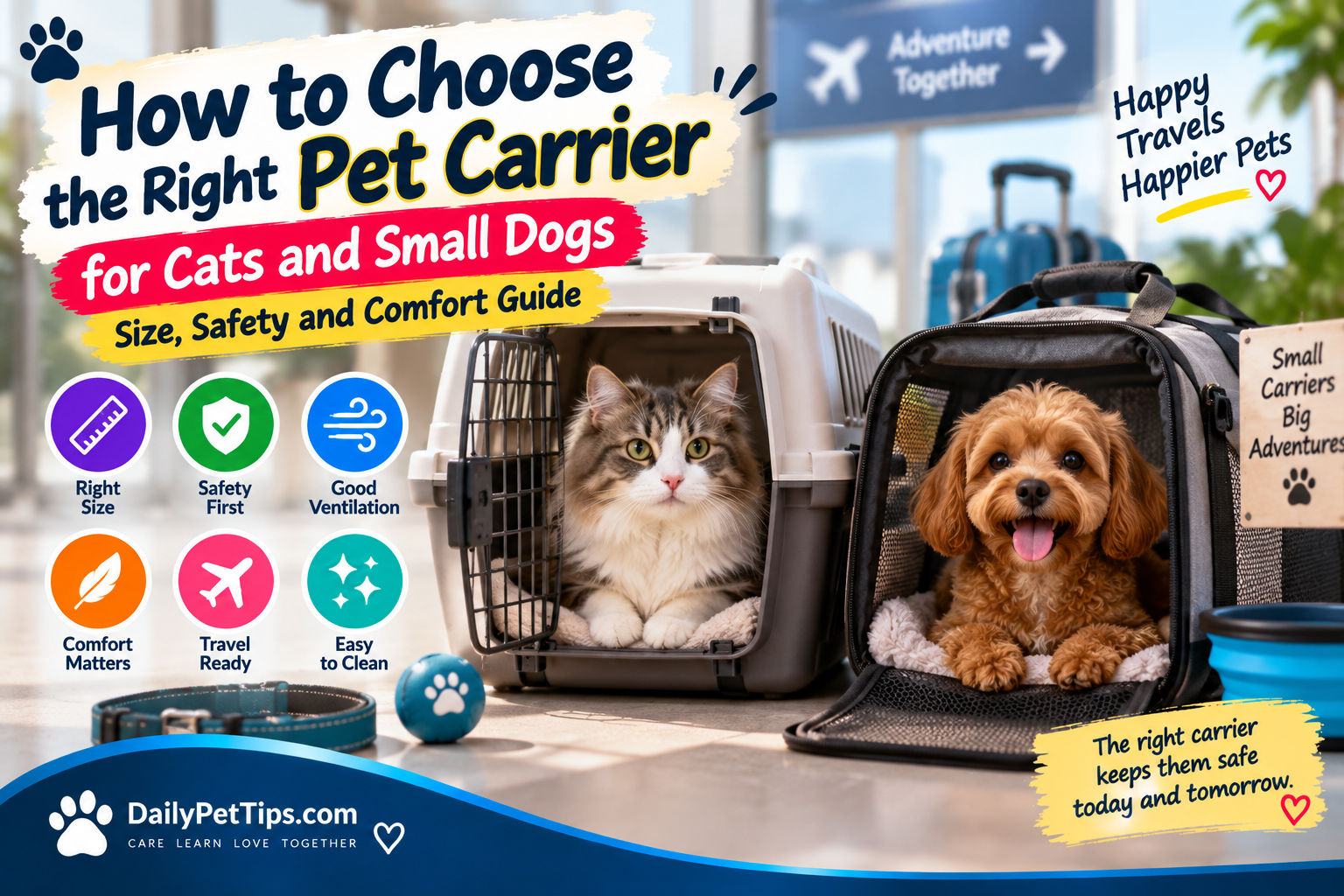
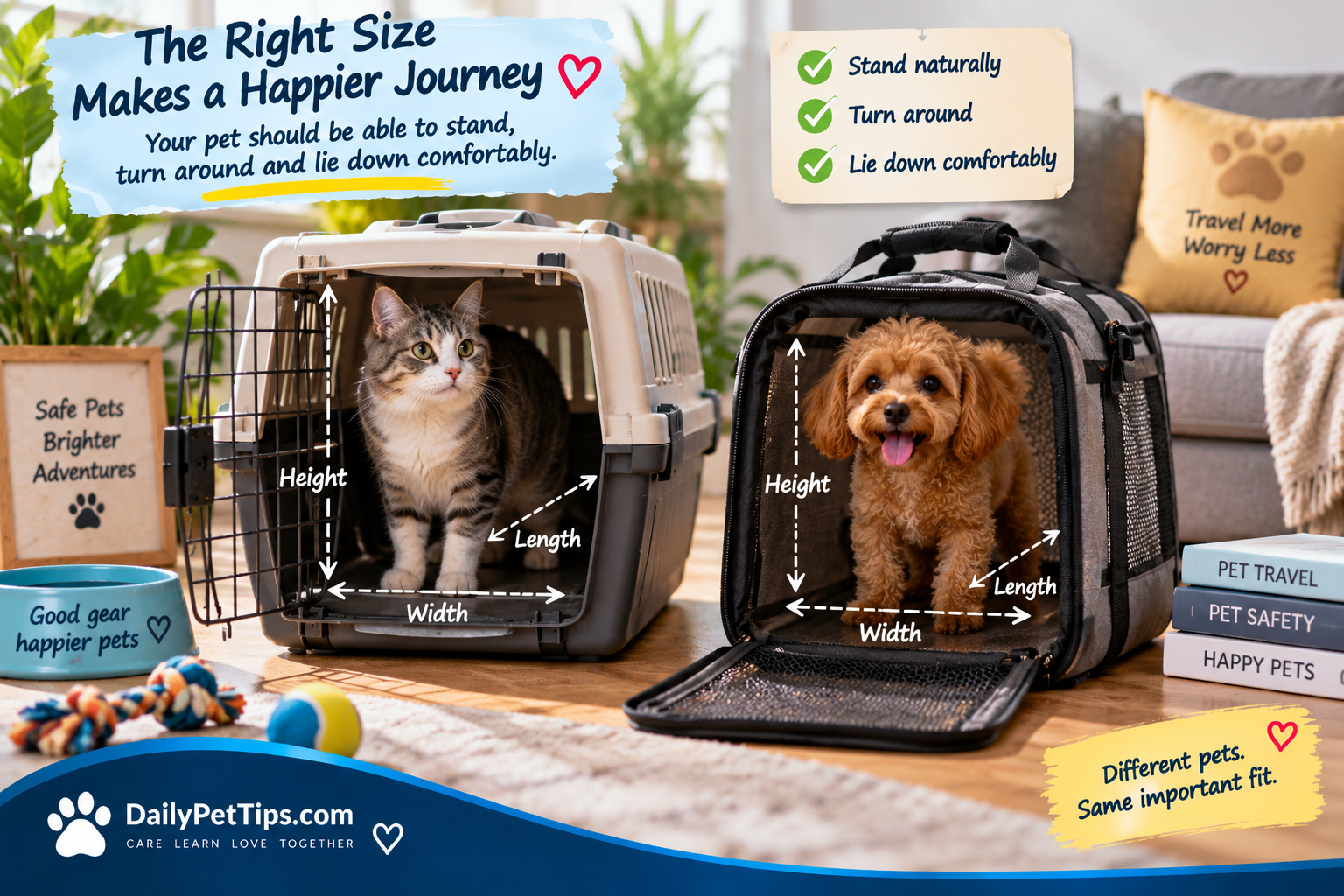
The right pet carrier should be large enough for your cat or small dog to stand naturally, turn around and lie down comfortably without being so oversized that the animal slides around during transport.
Look for strong construction, secure closures, good ventilation, a stable floor and an opening that allows you to place and remove your pet without unnecessary struggle.
Hard-sided carriers can be especially useful for veterinary trips, nervous pets and situations where structure matters. Soft-sided carriers are lighter and easier to store but must still hold their shape and resist scratching or escape attempts.
If you plan to fly, check the airline's current carrier dimensions and animal travel rules directly before buying because requirements vary between airlines, aircraft and routes.
Key Takeaways
- Measure your pet before choosing a carrier.
- Your pet should be able to stand turn and lie down comfortably.
- A carrier should not collapse onto the animal.
- Ventilation should be generous but openings must remain escape resistant.
- Strong zippers doors and latches matter more than decorative features.
- A stable non slip floor can improve comfort.
- Hard and soft carriers each have advantages.
- Carriers should be secured during vehicle travel.
- Never leave a pet unattended in a hot vehicle.
- Airline requirements should always be checked directly before travel.
Why Choosing the Right Carrier Matters
A pet carrier is more than a travel bag.
For many cats and small dogs it may be used during:
- Veterinary visits
- Car journeys
- Emergency evacuations
- Moving to a new home
- Boarding or grooming trips
- Air travel
- Temporary safe confinement
A poorly designed carrier can make these situations more stressful and may create safety risks.
A good carrier should protect the pet while still allowing ventilation, normal posture and practical access for the owner.
Start by Measuring Your Pet
Do not choose a carrier only because the label says small, medium or cat size.
Those terms are not standardized across every manufacturer.
Measure the actual animal.
Measure Body Length
Measure from the front of the chest to the base of the tail rather than including the full tail length.
Measure Standing Height
Measure from the floor to the top of the head or ears depending on the animal's normal posture.
Check Body Width
Make sure the carrier is wide enough for the pet to turn naturally rather than squeezing through a narrow interior.
Check Weight
Carrier manufacturers often provide maximum weight limits.
Do not use weight alone to determine fit because two pets of the same weight can have very different body shapes.
How Much Room Should a Pet Carrier Have?
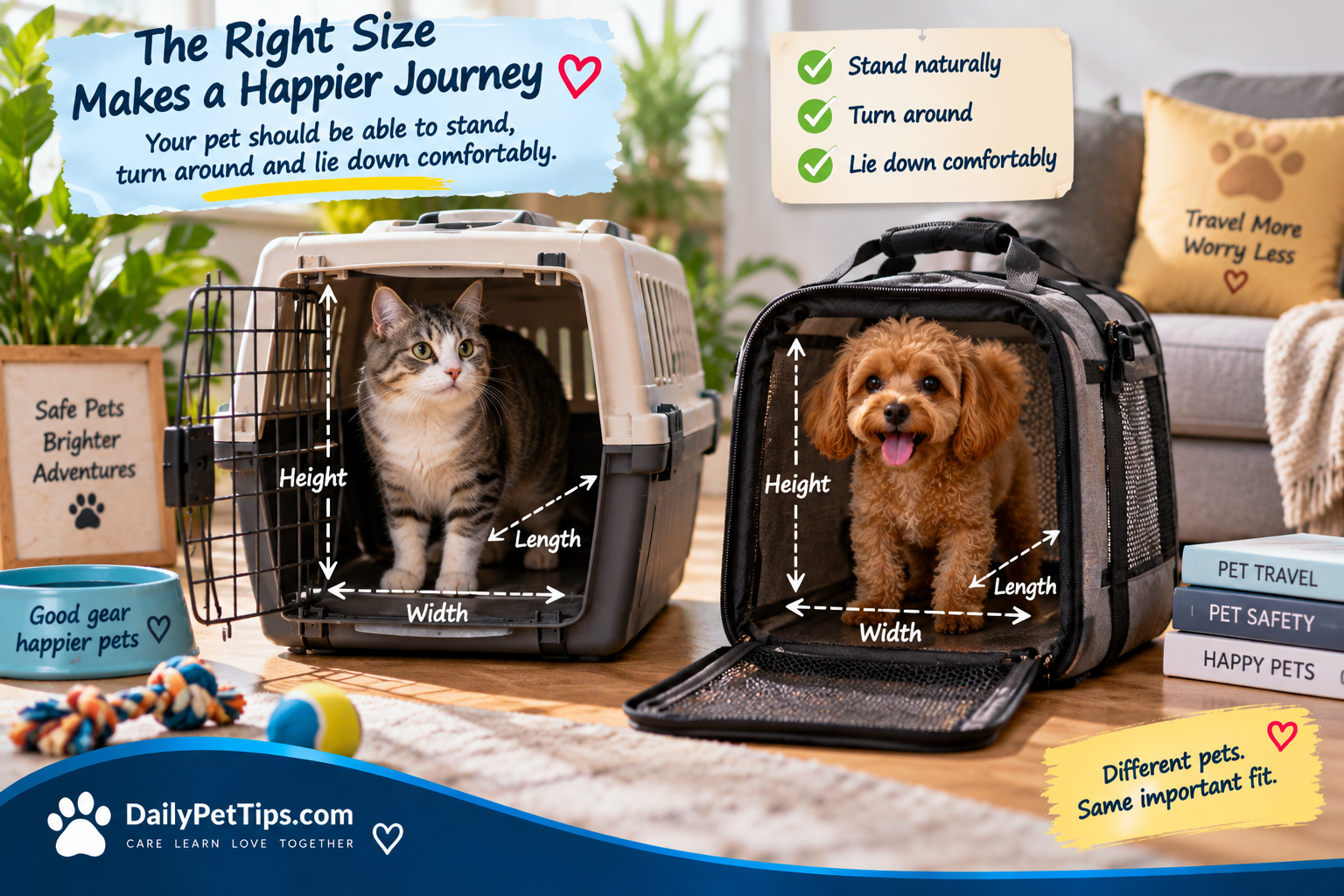
Inside the carrier your pet should generally be able to:
- Stand without being forced into an unnatural crouch
- Turn around
- Lie down comfortably
- Adjust position during the journey
Bigger is not always automatically better.
An extremely oversized carrier may allow the animal to slide around during sudden movement.
The goal is comfortable functional space rather than the largest box that fits in your vehicle.
Hard-Sided vs Soft-Sided Pet Carriers
Both styles can work well when they are appropriately sized and well constructed.
Hard-Sided Carriers
Hard carriers usually have rigid plastic or similar structural panels.
Advantages
- Strong structural protection
- Less likely to collapse onto the pet
- Often easier to wipe clean
- Useful for pets that scratch or push strongly
- Usually provide a stable base
Possible Drawbacks
- Bulkier to store
- Heavier than many soft carriers
- May be awkward to carry over longer distances
Soft-Sided Carriers
Soft carriers are usually made from fabric with mesh ventilation panels and an internal frame or reinforced edges.
Advantages
- Lighter to carry
- Easier to store
- Often include shoulder straps
- Some designs fit more easily beneath airline seats when approved
Possible Drawbacks
- Determined pets may scratch or chew mesh
- Poor quality designs can sag onto the animal
- Zippers must be very secure
- Fabric can absorb urine or vomit more easily
Which Type Is Better for a Cat?
Many cats do well in rigid carriers because the carrier stays stable while being moved.
A top-opening hard carrier can also make veterinary handling easier for some cats.
However a calm cat that is already comfortable with a well-built soft carrier may travel perfectly well in one.
The animal's temperament matters.
Which Type Is Better for a Small Dog?
A small dog may use either style depending on the situation.
A soft carrier can be convenient for a calm small dog during short trips while a more rigid carrier may provide extra structure for car travel or veterinary visits.
Choose based on actual fit, strength and travel needs rather than appearance.
Look for Good Ventilation
Airflow is essential.
A carrier should have multiple ventilation areas rather than one small opening.
Mesh or ventilation holes should allow fresh air while remaining strong enough to prevent escape.
More Ventilation Is Especially Important When
- Weather is warm
- The carrier will be used for longer trips
- The pet becomes anxious and pants
- The carrier is partly enclosed by luggage or surrounding objects
Never cover all ventilation openings with blankets or luggage.
Check the Door and Closure System Carefully
A beautiful carrier is useless if the pet can open it.
Check every closure before buying.
For Hard Carriers
Look for doors that:
- Close firmly
- Cannot be pushed open easily
- Have secure latches
- Do not have sharp exposed edges
For Soft Carriers
Check:
- Zipper quality
- Whether two zipper sliders can separate under pressure
- Mesh strength
- Reinforced stitching
- Any zipper-locking clips
A determined cat may be able to push its nose between poorly secured zipper sliders.
Top Opening vs Front Opening
Some carriers open only from the front.
Others include a top opening as well.
A top opening can be particularly useful for nervous cats because you may be able to lower the animal gently into the carrier rather than pushing it through a narrow front door.
During veterinary visits some carrier designs allow the top half to be removed so the pet can remain in the bottom section during part of the examination.
Check the Floor
The carrier floor should support the pet's weight without bending excessively.
A removable solid base can improve stability in soft-sided carriers.
Add a washable non slip liner when appropriate.
A towel or absorbent pad can provide:
- Better grip
- Extra comfort
- Absorption if the pet urinates or vomits
Make sure loose fabric cannot bunch around the pet or block ventilation.
Look for Easy Cleaning
Travel can be messy.
Pets may:
- Drool
- Urinate
- Defecate
- Vomit
- Shed hair
A carrier should therefore be practical to clean.
Hard plastic interiors are often easy to wipe down.
With soft carriers check whether the base pad or liner can be removed and washed.
Follow manufacturer cleaning instructions so you do not damage waterproof coatings, mesh or structural components.
Check the Carry Handles and Shoulder Straps
Lift the empty carrier before buying if possible.
Ask whether the handles feel comfortable and secure.
Remember that the total weight will include:
- The carrier
- Your pet
- Bedding
- Possibly travel accessories
Weak handles or poorly stitched shoulder straps can fail under load.
Should a Pet Carrier Have Wheels?
Wheeled carriers can help owners move heavier pets through airports or large buildings.
However wheels introduce additional movement and vibration.
The carrier should remain stable and should not roll unexpectedly.
Never place a pet in a wheeled carrier on an incline without securing it.
What About Backpack Pet Carriers?
Backpack-style carriers can be convenient for walking but quality varies greatly.
Before choosing one check:
- Ventilation
- Interior space
- Structural support
- Temperature buildup
- How upright the pet must remain
- Whether the carrier swings excessively while walking
Clear plastic bubble-style carriers may look attractive but can become warm in direct sunlight and may provide limited usable space depending on the design.
Function should come before appearance.
Avoid Carriers That Collapse Onto the Pet
A soft carrier should retain enough structure that ventilation panels and fabric do not fall onto the animal's face.
Press lightly on the top and sides before buying.
If the entire carrier folds inward easily without an animal inside, imagine how it may behave once luggage presses against it.
Do Not Choose a Carrier Only by Weight Rating
A carrier may say suitable for pets up to 20 pounds, but a tall slim dog and a compact cat at the same weight may require different dimensions.
Use both:
- Pet measurements
- Manufacturer weight limit
Neither should be ignored.
Car Travel Safety
A loose carrier can move dramatically during sudden braking or a collision.
Place the carrier in a secure stable location according to the carrier and vehicle manufacturer's instructions.
Some carriers include seat-belt attachment points.
If a product claims crash testing or certification, look for information about the testing standard rather than relying only on advertising language.
Our guide on how to travel safely with a dog or cat by car covers vehicle preparation in more detail.
Never Let a Cat Roam Loose in the Car
A frightened cat can:
- Move under the driver's feet
- Hide beneath seats
- Escape when a door opens
- Be injured during sudden braking
A secure carrier is safer than allowing a cat to move freely through the vehicle.
Small Dogs Also Need Restraint
A small dog should not simply sit on the driver's lap.
The dog can distract the driver and may be injured during an abrupt stop or crash.
Use an appropriate restraint or secured carrier designed for vehicle travel.
Never Leave a Pet in a Hot Car
Vehicle interiors can become dangerously hot even when outside temperatures feel moderate.
Pets should never be left unattended in a vehicle where overheating is possible.
A carrier does not protect an animal from dangerous heat.
Choosing a Carrier for Veterinary Visits
Veterinary travel is one of the most common reasons owners need a carrier.
A carrier that opens from the top or can be partially disassembled may reduce stressful handling for some animals.
Before the visit:
- Place familiar bedding inside
- Keep the carrier stable
- Cover part of the carrier with a light towel if this helps your cat feel secure while keeping ventilation open
- Avoid allowing dogs to approach the carrier in the waiting room
For more preparation read how to prepare your dog or cat for a vet visit.
Do Not Store the Carrier Away Until Travel Day
Many cats learn that the carrier predicts an unpleasant event because they see it only before veterinary visits.
Instead consider leaving the carrier open in a familiar room between trips.
Add comfortable bedding and allow the pet to investigate voluntarily.
How to Help a Cat Like Its Carrier
Step 1: Leave It Open
Place the carrier in an area your cat uses regularly.
Step 2: Add Familiar Bedding
A familiar scent can make the carrier less unusual.
Step 3: Place Treats Nearby
Start outside the carrier if your cat is cautious.
Step 4: Move Rewards Inside Gradually
Allow your cat to enter voluntarily.
Step 5: Practice Closing the Door Briefly
Once the cat comfortably enters, close the door for only a short period and reopen it before the cat becomes highly distressed.
Step 6: Practice Short Lifts
Lift the carrier smoothly and put it down again.
Step 7: Practice Short Trips
If appropriate, make occasional short calm trips that do not always end at the veterinarian.
How to Introduce a Small Dog to a Carrier
Use a similar gradual approach.
Reward your dog for:
- Looking at the carrier
- Approaching it
- Putting its head inside
- Entering voluntarily
- Remaining inside calmly
Do not push or drag a frightened dog into the carrier unless an emergency requires immediate transport.
Should You Use Food Inside the Carrier?
Food rewards can help build a positive association when the pet is healthy and travel is not imminent.
However feeding immediately before a journey may increase nausea in some animals.
If your pet becomes carsick or has a medical condition, ask your veterinarian about feeding before travel.
Should You Put Water Inside the Carrier?
For short routine trips an open bowl inside the carrier may simply spill.
Longer journeys require more planning.
Water access depends on trip duration, temperature, species, carrier design and travel regulations.
For air travel or long-distance transport follow veterinary advice and carrier-specific travel requirements.
Airline Travel Requires Extra Planning
Airline pet policies vary and can change.
Before buying a carrier for a flight check the current rules directly with the airline.
Confirm:
- Maximum carrier dimensions
- Whether the animal may travel in the cabin
- Weight limits if any
- Ventilation requirements
- Carrier material requirements
- Required documents
- Breed or route restrictions
- Health certificate requirements
Do not assume a product labeled airline approved will automatically meet every airline's requirements.
What Does Airline Approved Really Mean?
There is no single universal cabin carrier size accepted by every airline.
The usable space beneath a seat can vary by aircraft and airline.
Manufacturers may use phrases such as airline friendly or airline approved, but the airline makes the final decision.
Always verify dimensions directly before departure.
Check the Carrier Before Every Trip
Even a good carrier can become damaged over time.
Before travel inspect:
- Zippers
- Latches
- Door hinges
- Mesh panels
- Handles
- Shoulder straps
- Floor inserts
- Plastic cracks
- Loose screws or fasteners
Replace a carrier if damage could allow escape or structural failure.
Escape-Proofing Matters More Than Extra Pockets
Storage pockets are convenient, but they should not influence your decision more than security.
A carrier should resist:
- Nose pushing
- Scratching
- Chewing
- Repeated shifting
This is especially important for frightened cats that may become surprisingly strong when attempting to escape.
Check for Sharp Interior Hardware
Run your hand carefully around the interior before placing your pet inside.
Look for:
- Sharp wire ends
- Exposed screws
- Broken plastic
- Rough zipper components
- Uncovered metal edges
Anything that can scratch your hand may also injure your pet.
Avoid Decorative Features That Reduce Ventilation
Carriers sometimes include thick decorative covers, plastic windows or panels that look attractive but reduce airflow.
Prioritize:
- Ventilation
- Security
- Interior space
- Stability
Appearance should come later.
What Color Carrier Is Best?
Color generally matters much less than design quality.
However very dark carriers may absorb more heat when exposed to direct sunlight.
Regardless of color, never leave a carrier in direct sun or a hot vehicle.
Should the Carrier Be Covered?
Some cats feel calmer when part of the carrier is covered with a lightweight towel.
If you do this:
- Keep ventilation openings clear
- Monitor temperature
- Use a lightweight breathable material
- Do not completely seal the carrier
Some pets prefer visual access to their surroundings, so observe the individual animal.
Should You Attach Your Pet's Collar or Leash Inside?
Be cautious with loose straps inside a carrier because they can create entanglement hazards.
Follow the carrier manufacturer's instructions.
For air travel, vehicle travel or other specialized transport, follow the applicable safety guidance.
Identification Is Useful
Add appropriate identification to the carrier when traveling.
This may include:
- Owner name
- Phone number
- Emergency contact
Your pet should also have appropriate permanent identification such as a registered microchip when recommended in your region.
What About Two Pets in One Carrier?
Do not automatically place two animals in the same carrier.
Even pets that normally get along may become stressed during transportation.
Two animals also reduce each other's usable space.
Separate carriers are often safer unless a veterinarian or official transport requirement advises otherwise for a specific situation.
Emergency Evacuation Carriers
If you live in an area affected by storms, wildfires, floods or other emergencies, keep usable carriers readily accessible.
Do not store them somewhere impossible to reach quickly.
Every animal in the household should have an appropriate transport plan.
Our pet emergency kit guide covers additional preparation.
Common Pet Carrier Buying Mistakes
Buying by Weight Alone
Dimensions and body shape matter too.
Choosing the Smallest Carrier Possible
Your pet still needs enough room for normal posture.
Buying an Oversized Carrier
Excessive empty space can reduce stability during travel.
Choosing Style Over Ventilation
Airflow is more important than appearance.
Ignoring Zipper Quality
Weak zippers can become an escape point.
Using a Damaged Carrier
Cracks, tears and failed latches compromise safety.
Waiting Until Travel Day to Introduce the Carrier
Gradual familiarization can significantly reduce stress.
Assuming Airline Approved Means Universal Approval
Always verify current airline requirements directly.
A Simple Pet Carrier Shopping Checklist
Before buying ask:
- Can my pet stand naturally?
- Can my pet turn around?
- Can my pet lie down comfortably?
- Is the carrier within its weight rating?
- Does it have ventilation on multiple sides?
- Can my pet push open the door or zippers?
- Does the floor remain stable?
- Can I clean it easily?
- Are the handles securely attached?
- Are there sharp interior edges?
- Will it fit safely in my vehicle?
- Does it meet my airline's current requirements if flying?
When a Carrier Is Too Small
Signs include:
- Your pet cannot stand normally
- The head presses against the roof
- The body must remain tightly curled
- The animal cannot turn around
- The pet appears physically compressed
Do not rely on weight rating if physical fit is clearly poor.
When a Carrier May Be Too Large
A carrier may be unnecessarily large when:
- The pet slides substantially during normal movement
- The carrier cannot be secured properly
- It exceeds transportation requirements
- The extra space prevents stable placement in the vehicle
The solution is appropriate fit rather than simply maximum interior volume.
How Often Should You Replace a Pet Carrier?
There is no fixed replacement schedule.
Replace it when:
- The structure becomes weak
- Zippers fail
- Latches no longer lock reliably
- Mesh tears
- Plastic cracks
- Handles become loose
- The carrier becomes too small for your growing pet
Frequently Asked Questions
What Size Carrier Does My Cat Need?
Choose a carrier that allows your cat to stand naturally, turn around and lie down comfortably while remaining within the manufacturer's weight limit.
Should a Cat Carrier Be Hard or Soft?
Either can work. Hard carriers provide more structure and can be easier to clean, while soft carriers are lighter and easier to store. Security and fit matter most.
Can a Pet Carrier Be Too Big?
Yes. Excessive empty space may allow the pet to slide around and can make the carrier harder to secure during transportation.
Are Backpack Carriers Safe for Cats?
Some are suitable when they provide adequate ventilation, interior space and structural support. Avoid designs that become hot, cramped or unstable.
How Do I Know if My Carrier Is Airline Approved?
Check directly with your airline. Airline requirements vary, and a manufacturer's airline-approved label does not guarantee acceptance on every flight.
Can I Put Two Cats in One Carrier?
Separate carriers are generally safer because travel stress can change behavior and sharing reduces usable space.
Should I Put a Blanket Over My Cat Carrier?
A lightweight partial cover may help some cats feel secure, but ventilation must remain open and the pet must not overheat.
How Do I Get My Cat Into a Carrier Without Fighting?
Leave the carrier accessible between trips, place familiar bedding inside and reward voluntary exploration. Top-opening carriers can also make placement easier for some cats.
Can I Put My Small Dog Carrier on the Passenger Seat?
Follow the carrier and vehicle manufacturer's restraint instructions. A carrier should be secured so it cannot move freely during sudden braking.
Should I Buy a Carrier Before Getting a Pet?
Yes. Having a suitable carrier ready is useful for the trip home, veterinary emergencies and unexpected evacuation needs.
Related DailyPetTips Guides
- Pet Accessories Guides
- How to Travel Safely With a Dog or Cat by Car
- How to Prepare Your Dog or Cat for a Vet Visit
- How to Build a Pet Emergency Kit
- How to Choose and Fit a Dog Harness
Sources and Further Reading
- American Veterinary Medical Association — Pet Owner Resources
- ASPCA — Pet Travel Safety Tips
- International Air Transport Association — Traveling With Pets
- Cat Friendly Homes — Feline Handling and Travel Resources
Pet Travel Safety Disclaimer
This article provides general educational information about pet carriers and transportation. Vehicle restraint requirements, airline rules and animal travel regulations vary by location and transport provider. Always check current official requirements before travel and consult your veterinarian when your pet has medical, respiratory, mobility or severe travel-anxiety concerns.
Editorial Note
This guide prioritizes fit, ventilation, security, structural stability and gradual carrier training rather than appearance or marketing claims. Airline policies can change, so readers should verify carrier dimensions and travel rules directly with their chosen airline before purchasing or traveling.
About the Author
Ibrahim is a pet care writer at DailyPetTips. He creates practical, easy-to-understand pet guides using established veterinary, animal welfare and transportation safety information with an emphasis on responsible everyday care.

Pet parent notes