
Quick Answer
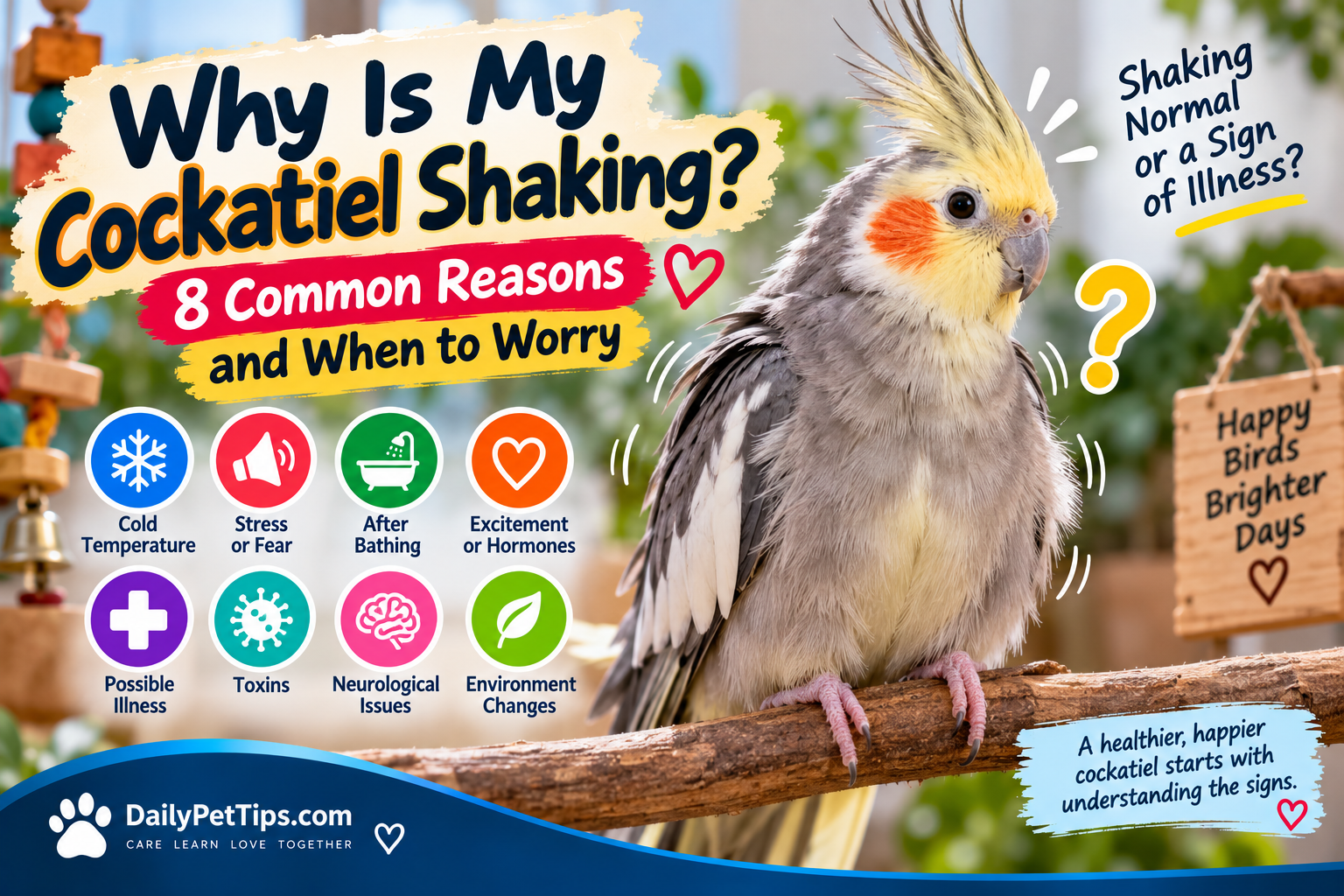
A cockatiel may shake for several reasons. Mild brief trembling can happen when a bird is cold, frightened, excited, drying after a bath or adjusting its feathers.
However persistent shaking is different from a quick body shake.
If your cockatiel continues trembling while resting or also becomes fluffed up, weak, unusually sleepy, stops eating, breathes with effort, loses balance or develops abnormal droppings, contact an avian veterinarian promptly.
Do not assume every type of shaking is normal simply because cockatiels sometimes fluff and shake their feathers during routine grooming.
Key Takeaways
- A quick full-body feather shake can be completely normal.
- Cold temperatures may cause trembling or a tightly fluffed posture.
- Fear and stress can cause visible body tension or shaking.
- Cockatiels may shake after bathing while drying and rearranging feathers.
- Excitement can sometimes look like brief wing or body quivering.
- Persistent trembling while resting deserves closer attention.
- Tail bobbing with breathing is not the same as ordinary shaking.
- Weakness, appetite loss, balance problems or breathing difficulty require veterinary care.
- Never give human medicine to a shaking bird without veterinary direction.
First Decide What You Mean by Shaking
Owners use the word shaking to describe several different bird behaviors.
Your cockatiel might be:
- Briefly shaking all its feathers
- Trembling continuously
- Quivering its wings
- Shivering after a bath
- Moving its tail while breathing
- Having difficulty balancing
- Making repeated uncontrolled body movements
These behaviors do not all have the same meaning.
A healthy cockatiel that performs one quick feather shake and immediately returns to normal activity is very different from a bird that sits quietly and trembles for an extended period.
1. Your Cockatiel May Be Cold
Cockatiels are sensitive to their environment and may become uncomfortable if exposed to cold air or sudden temperature changes.
A chilly bird may fluff its feathers to trap warm air close to the body.
You may also notice mild trembling.
Possible Cold Triggers
- A cage beside an open window
- Strong air conditioning
- A direct fan
- Cold nighttime temperatures
- A sudden temperature drop
- Being wet after bathing
What to Do
Move the bird away from direct drafts and provide a stable comfortable indoor environment.
Avoid putting the cage directly beside heaters because strong heat and rapid temperature changes can also be harmful.
Use a reliable room thermometer if you are unsure about the environment.
If a bird continues shivering despite a comfortable room temperature, look for other signs of illness.
2. Your Cockatiel May Be Frightened or Stressed
Fear can cause visible trembling in birds.
Cockatiels are prey animals, so unfamiliar movement or sound may trigger a strong alert response.
Common stressors include:
- A new home
- A new cage
- Visitors
- Dogs or cats nearby
- Vacuum cleaners
- Sudden loud noises
- Moving furniture
- Unfamiliar toys
- Being grabbed or chased
A frightened cockatiel may become very still, hold its body tightly, raise its crest sharply or move away from the trigger.
Help the Bird Feel Secure
Reduce the source of stress where possible.
Give the bird access to familiar perches and a safe area of the cage.
Move slowly and speak quietly.
Do not force a frightened cockatiel closer to a new object simply to prove it is harmless.
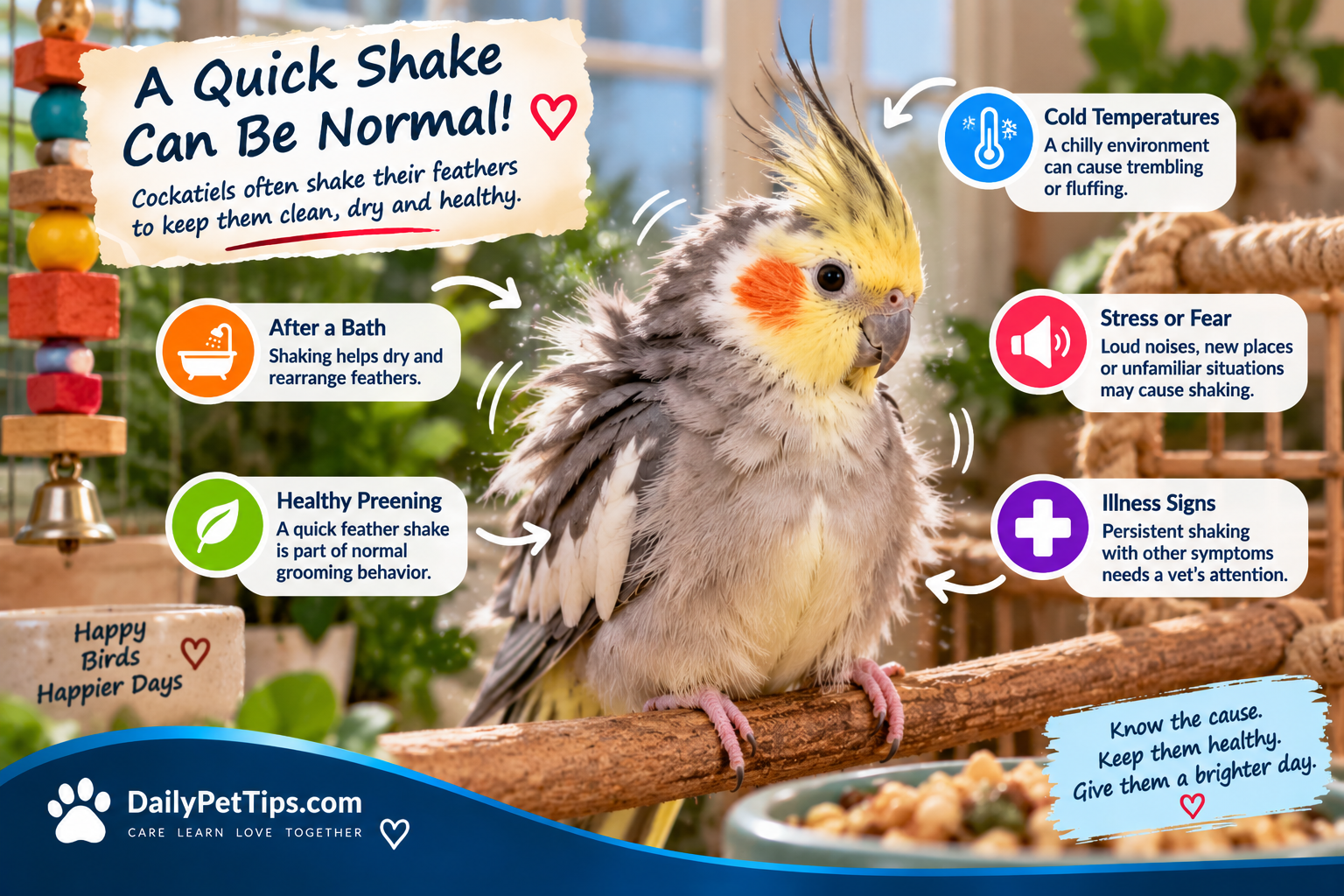
3. A Quick Feather Shake Can Be Normal
Birds regularly rearrange their feathers.
A cockatiel may suddenly fluff up and perform a rapid full-body shake.
This can help feathers settle back into place after:
- Preening
- Resting
- Handling
- Stretching
- Moving between perches
If the shake lasts only a moment and the bird remains active, bright and interested in food, it is usually very different from persistent trembling.
4. Your Cockatiel May Be Drying After a Bath
Cockatiels may shake, fluff and rearrange their feathers after bathing or misting.
This helps separate wet feathers and supports drying.
A recently bathed bird may look temporarily fluffy and untidy.
Keep Bath Time Comfortable
Allow the bird to bathe in a warm draft-free environment.
Do not place a soaking wet cockatiel directly in front of a fan or air conditioner.
The bird should be able to dry naturally in a comfortable room.
5. Excitement Can Cause Brief Quivering
Some cockatiels show small body or wing movements when excited.
This may happen when:
- A favorite person enters the room
- The bird expects interaction
- Food is being prepared
- The cockatiel is vocalizing enthusiastically
- The bird is participating in social behavior
Excitement-related quivering should be interpreted in context.
A bright, active bird eagerly moving toward you presents a very different picture from a weak bird trembling on the bottom of the cage.
6. Hormonal or Social Behavior Can Look Like Shaking
Bird owners sometimes describe certain courtship or social displays as shaking.
A cockatiel may quiver its wings, lower its posture, vocalize differently or show increased attachment during periods of hormonal behavior.
Other possible signs include:
- Regurgitation toward a person or object
- Territorial behavior
- Seeking dark enclosed spaces
- Increased vocal behavior
- Strong attachment to one person
Hormonal behavior should not automatically be assumed whenever a bird trembles.
Persistent physical shaking still deserves proper evaluation.
7. Illness or Weakness Can Cause Trembling
A sick bird may tremble because it is weak, uncomfortable or struggling to maintain normal body temperature.
This is especially concerning when the behavior is new and persistent.
Watch for additional changes such as:
- Reduced appetite
- Weight loss
- Remaining fluffed for long periods
- Sleeping much more than usual
- Weak grip
- Reduced activity
- Changes in droppings
- Vomiting or repeated regurgitation that is not normal social behavior
- Difficulty perching
Birds may hide illness until they are significantly unwell.
Do not wait for multiple severe symptoms before seeking help when your cockatiel has a clear unexplained behavioral change.
8. Neurological Problems, Toxins or Injury Can Cause Abnormal Shaking
Repeated uncontrolled movements can be more serious than normal feather shaking.
Possible causes may include neurological disease, trauma, toxic exposure or other medical problems.
Concerning signs include:
- Falling from the perch
- Loss of balance
- Head tilt
- Seizure-like movements
- Inability to coordinate the feet
- Sudden weakness
- Repeated uncontrolled trembling
These signs warrant prompt veterinary assessment.
Common Household Toxins Matter
Birds can be extremely sensitive to fumes and airborne chemicals.
Potential household hazards include:
- Smoke
- Aerosol sprays
- Strong cleaning fumes
- Some scented products
- Overheated non-stick cookware fumes
- Certain toxic metals or plants
If your cockatiel suddenly becomes weak, trembles or has difficulty breathing after possible exposure to fumes or toxins, move the bird away from the source if it is safe to do so and seek urgent veterinary advice.
Shaking vs Tail Bobbing
This distinction is important.
When a cockatiel breathes, the tail may move slightly with normal body motion.
However obvious repeated tail movement synchronized with each breath can sometimes indicate increased respiratory effort.
Watch for:
- Strong tail bobbing
- Open-mouth breathing
- Rapid breathing
- Wheezing or unusual respiratory sounds
- Repeated stretching of the neck
- Weakness
Breathing difficulty is an urgent concern.
Shaking vs Feather Fluffing
A healthy bird may fluff its feathers briefly and then smooth them again.
A sick bird may remain puffed up for long periods while becoming quiet and inactive.
Do not judge illness from feather position alone.
Consider appetite, activity, droppings, breathing and overall behavior.
Why Is My Cockatiel Shaking While Sleeping?
Small movements during rest can occur, but persistent trembling throughout sleep should not automatically be considered normal.
Check the room temperature and make sure the cage is protected from drafts.
Also observe the bird after waking.
If your cockatiel remains fluffed, weak or shaky during normal active hours, contact an avian veterinarian.
Why Is My Cockatiel Shaking Its Head?
Head shaking is different from whole-body trembling.
Occasional head movements may occur during preening or after eating.
Repeated head shaking can sometimes be associated with irritation involving the feathers, ears, nostrils or other health problems.
If repeated head shaking occurs with discharge, scratching, swelling, breathing changes or other unusual symptoms, veterinary examination is appropriate.
Why Is My Cockatiel Shaking Its Wings?
Wing quivering can occur during excitement, social interaction or hormonal behavior.
However wings that droop unusually, move asymmetrically or appear painful can indicate injury or illness.
Look for:
- One wing hanging lower than the other
- Inability to fly normally
- Visible swelling
- Bleeding
- Loss of balance
- Pain when moving
Suspected wing injuries require professional veterinary care.
Why Is My Cockatiel Shaking After I Bring It Home?
A newly adopted cockatiel has just experienced major changes.
Transport, unfamiliar people, a different cage and new sounds can all cause stress.
For the first few days:
- Keep the environment calm
- Avoid unnecessary grabbing
- Maintain predictable feeding
- Move slowly around the cage
- Allow the bird to observe you
- Provide familiar foods if known
Stress may reduce as the bird learns that the environment is safe.
Persistent trembling or any signs of illness should not be blamed entirely on adjustment.
Check the Cage Environment
A good setup supports both physical and emotional comfort.
The cage should provide:
- Appropriate space
- Stable perches
- Easy access to food and water
- Safe toys and enrichment
- A predictable light and dark cycle
- Protection from drafts
- A location away from dangerous fumes
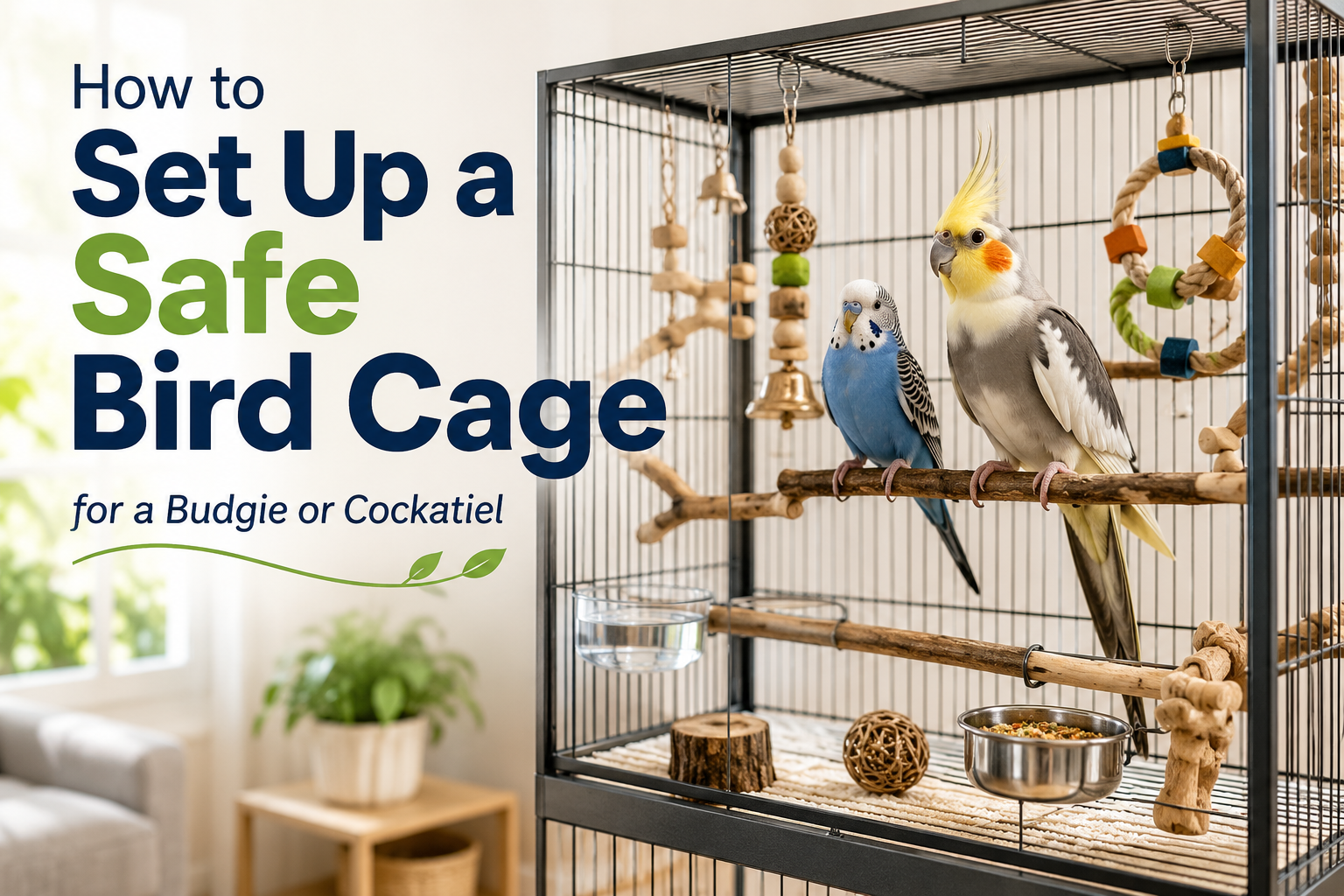
For more setup guidance read our safe bird cage guide for budgies and cockatiels.
Provide Appropriate Sleep
Insufficient rest can affect bird behavior.
Cockatiels generally benefit from a predictable period of quiet darkness each night.
Household televisions, bright lights and frequent late-night activity can interrupt rest.
Keep bedtime consistent and allow the bird a calm sleep environment.
Night Frights Can Cause Sudden Shaking
Cockatiels are known for experiencing nighttime panic episodes sometimes called night frights.
A bird may suddenly flap around the cage after being startled in darkness.
Possible triggers include:
- Unexpected sounds
- Moving shadows
- Another pet
- Sudden light changes
- Unknown disturbances
After a night fright, check carefully for broken blood feathers or other injuries.
Some birds benefit from a very dim night light that allows them to orient themselves if startled.
Check Appetite and Droppings
Two of the most useful daily health clues are eating behavior and droppings.
Pay attention to whether your cockatiel:
- Approaches food normally
- Consumes its usual amount
- Drinks normally
- Produces droppings at a normal frequency
- Shows a major change in dropping appearance
A shaking bird that also stops eating should be taken seriously.
Monitor Body Weight
Birds can lose significant weight before the change becomes obvious beneath their feathers.
A gram scale suitable for small birds can help owners monitor trends.
Weigh at a consistent time and record the measurements.
A sustained unexplained decline should be discussed with an avian veterinarian.
Do Not Try to Warm a Sick Bird With Extreme Heat
A sick bird may benefit from a comfortably warm environment under veterinary guidance, but excessive heat can create additional problems.
Do not place the cage directly beside an uncontrolled heater or use heating equipment that can burn the bird.
The bird should be able to move away from any supplemental warmth.
Do Not Give Human Medicine
Never give aspirin, acetaminophen, ibuprofen, antibiotics or other human medicines to a cockatiel unless an avian veterinarian specifically prescribes an appropriate medication and dose.
Birds are small and can be harmed by medications that appear harmless to people.
What to Do if Your Cockatiel Starts Shaking
Step 1: Observe the Type of Movement
Is this one quick feather shake or continuous trembling?
Step 2: Check the Environment
Look for drafts, sudden cold, loud noises, predators or unfamiliar objects.
Step 3: Observe Breathing
Look for open-mouth breathing, strong tail bobbing or obvious respiratory effort.
Step 4: Check Appetite and Activity
Is your cockatiel eating, climbing, vocalizing and interacting normally?
Step 5: Inspect for Injury
Look for bleeding, drooping wings or evidence of a nighttime panic episode.
Step 6: Monitor the Pattern
Record how long the shaking lasts and what happened immediately beforehand.
Step 7: Contact an Avian Veterinarian if Needed
Persistent unexplained trembling or shaking accompanied by illness signs needs professional assessment.
When Is Cockatiel Shaking an Emergency?
Seek urgent veterinary care when shaking occurs with:
- Difficulty breathing
- Repeated open-mouth breathing
- Collapse
- Seizure-like activity
- Loss of balance
- Severe weakness
- Possible toxin exposure
- Major trauma
- Heavy bleeding
- Inability to remain on a perch
Do not wait for a bird with serious breathing or neurological signs to improve on its own.
When to Book a Veterinary Appointment
Arrange an avian veterinary examination if your cockatiel:
- Trembles repeatedly without an obvious cause
- Remains fluffed for long periods
- Eats significantly less
- Loses weight
- Shows abnormal droppings
- Becomes unusually sleepy
- Has repeated head shaking
- Shows changes in voice or breathing
- Develops a sudden major behavior change
Frequently Asked Questions
Why Is My Cockatiel Shaking but Acting Normal?
A brief feather shake, mild excitement or drying after a bath may be normal. Persistent trembling should still be monitored even if the bird initially appears otherwise normal.
Do Cockatiels Shake When They Are Cold?
They may fluff their feathers and tremble when uncomfortable from cold. Remove drafts and maintain a stable indoor environment.
Why Is My Cockatiel Shaking After a Bath?
Birds may fluff and shake wet feathers while drying and rearranging them. Keep the bird in a warm draft-free environment.
Can Fear Make a Cockatiel Shake?
Yes. A frightened cockatiel may become tense or tremble in response to unfamiliar people, animals, sounds or objects.
Why Does My Cockatiel Shake Its Wings?
Brief wing quivering can occur with excitement or social behavior, while an injured or persistently drooping wing requires closer attention.
Is Tail Bobbing the Same as Shaking?
No. Strong repeated tail movement synchronized with breathing can indicate increased respiratory effort and deserves veterinary attention.
Why Is My Cockatiel Shaking and Fluffed Up?
The bird could be cold, resting or unwell. If it remains fluffed and shaky while also becoming inactive or eating less, contact an avian veterinarian.
Should I Cover My Cockatiel if It Is Shaking?
A cage cover may support a normal sleep routine, but covering a sick bird does not treat the cause of shaking. Make sure ventilation remains good and seek veterinary advice for persistent symptoms.
Can a New Cockatiel Shake From Stress?
Yes. Transport and a new environment can be stressful. Keep the surroundings calm, but do not attribute prolonged trembling or illness signs entirely to adjustment.
When Should I Worry About My Cockatiel Shaking?
Worry increases when trembling is persistent or happens with weakness, poor appetite, abnormal droppings, breathing difficulty, loss of balance or another major change from normal behavior.
Related DailyPetTips Guides
- Bird Care Guides
- How to Set Up a Safe Bird Cage
- How to Keep a Budgie Mentally Stimulated
- How to Train a Budgie to Step Up Safely
Sources and Further Reading
- Association of Avian Veterinarians
- Merck Veterinary Manual — Pet Birds
- RSPCA — Bird Care and Welfare
Bird Health Disclaimer
This article provides general educational information and is not a veterinary diagnosis. Shaking or trembling can occur for behavioral, environmental or medical reasons. Persistent trembling, difficulty breathing, weakness, loss of balance, appetite loss, possible toxin exposure or other significant changes should be assessed by an avian veterinarian.
Editorial Note
This guide separates brief normal feather movement from persistent trembling and emphasizes observing the whole bird. It prioritizes environmental checks and early veterinary attention when shaking occurs with other signs of illness.
About the Author
Ibrahim is a pet care writer at DailyPetTips. He creates practical, easy-to-understand pet guides using established veterinary, animal welfare and husbandry information with an emphasis on safe responsible everyday care.
Pet parent notes