Quick Answer
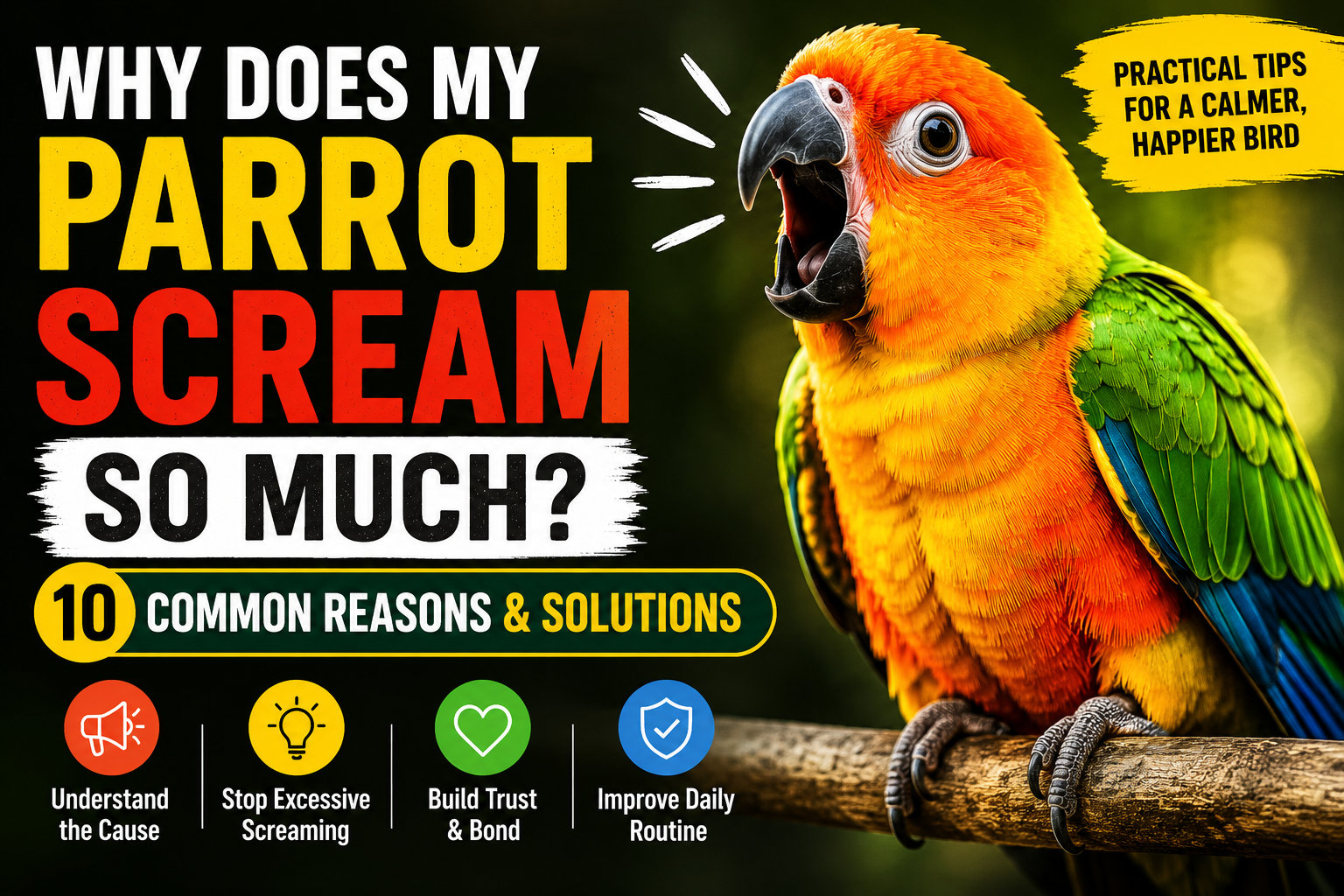
Parrots naturally make noise. Calling flock members communicating excitement and reacting to the environment are normal parts of parrot behavior.
However screaming can become excessive when a bird is bored frightened overstimulated seeking attention uncomfortable or following a routine that accidentally rewards loud behavior.
The best solution is to identify the reason rather than simply trying to make the bird quiet.
Sudden or unusual screaming can also be a sign of pain or illness. If your parrot's vocal behavior changes sharply or happens with reduced appetite weakness breathing changes abnormal droppings or other symptoms contact an avian veterinarian.
Key Takeaways
- Some daily loud calling is normal for parrots.
- Morning and evening vocal periods are common.
- Attention can accidentally reward screaming.
- Boredom and lack of enrichment may increase noisy behavior.
- Fear and environmental changes can trigger alarm calls.
- Sleep quality affects behavior.
- Hormonal behavior can increase vocal intensity.
- Never punish screaming with hitting shouting or spraying water.
- Reward calm and appropriate vocal behavior instead.
- Sudden behavior changes should be checked by an avian veterinarian.
First Understand That Parrots Are Naturally Loud
A parrot is not naturally a quiet pet.
Wild parrots use loud calls to communicate across distance. They may call when flock members move away when danger appears when food is found or when the group becomes active.
Pet parrots still carry these natural behaviors into the home.
This means the goal should not be complete silence.
A realistic goal is to understand which vocalizations are normal and reduce patterns that have become excessive stressful or difficult for the household.
Normal Vocalizing vs Excessive Screaming
Normal parrot sounds may include:
- Morning calls
- Evening flock calls
- Talking
- Whistling
- Chattering
- Excited calls during play
- Contact calls when family members move around
Screaming may need closer attention when it:
- Continues for long periods every day
- Starts suddenly without an obvious reason
- Happens whenever you leave the room
- Occurs together with panic or destructive behavior
- Prevents normal rest
- Becomes much louder or more frequent than usual
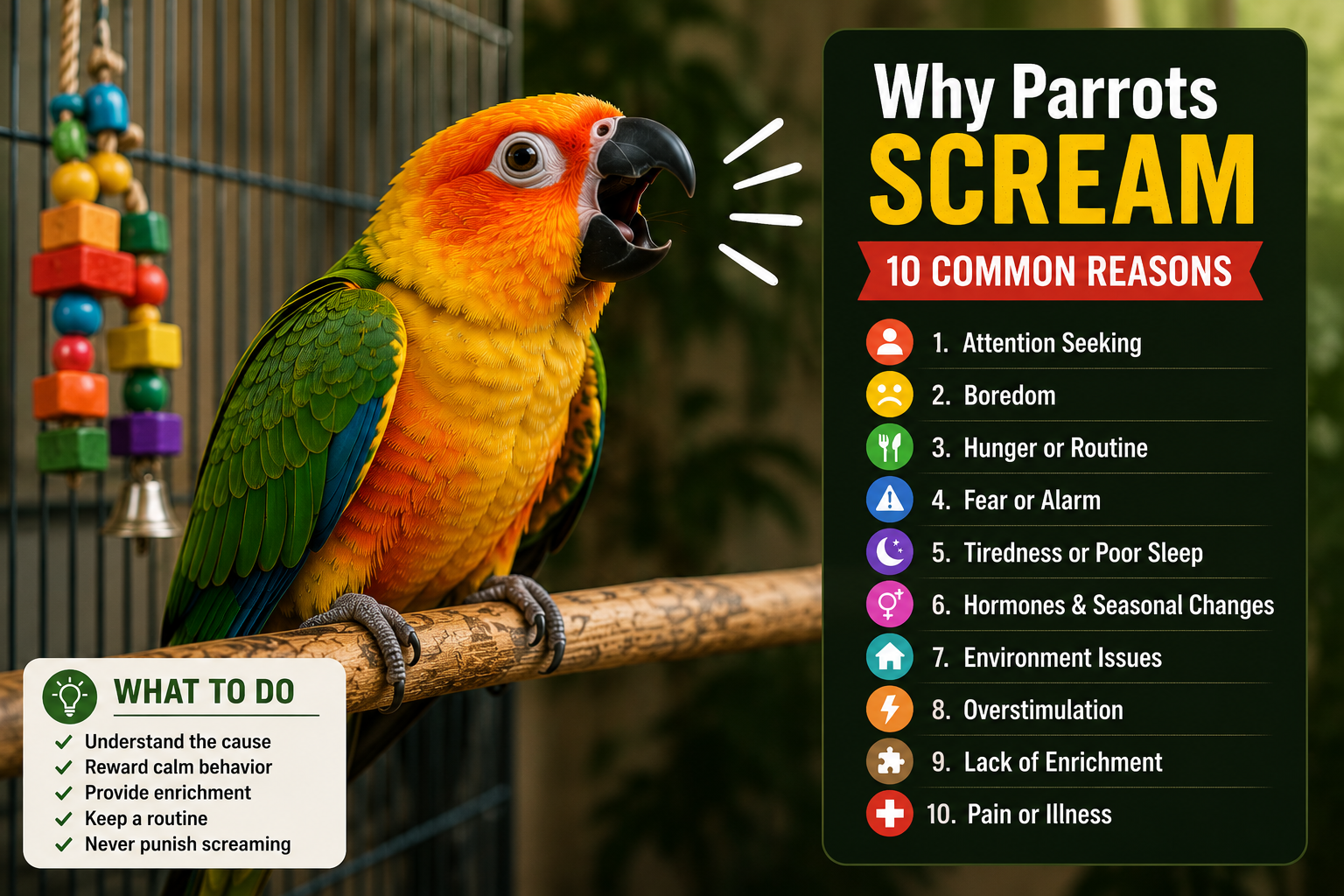
1. Your Parrot Is Calling for Attention
Attention seeking is one of the most common reasons loud behavior becomes stronger.
A parrot may learn a simple pattern:
Scream → person comes back → screaming worked.
Even negative attention can reinforce the behavior.
For example shouting the bird's name from another room may still give the bird exactly what it wanted.
What to Do
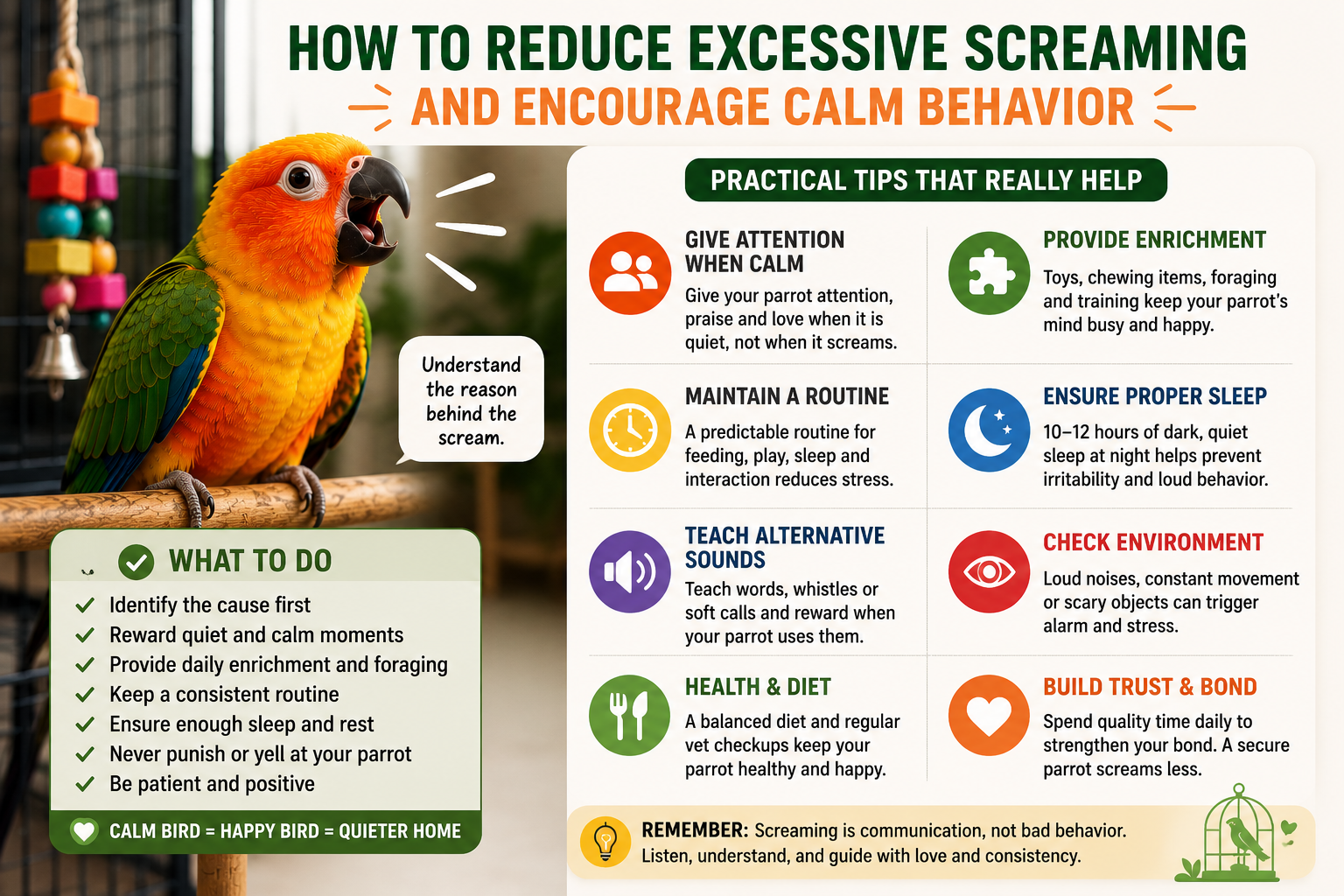
Give attention when your parrot is calm or making an acceptable sound.
You can:
- Enter the room during a quiet moment
- Offer praise after calm behavior
- Reward talking or gentle whistles
- Provide planned social time before screaming starts
The goal is to teach that calm behavior brings interaction more reliably than screaming.
2. Your Parrot Is Bored
Parrots are intelligent animals that need opportunities to explore chew search climb and learn.
A cage with food water and one old toy may not provide enough stimulation.
Boredom may lead to:
- Repeated screaming
- Destructive chewing
- Repetitive movement
- Constant attention seeking
- Reduced interest in the environment
What to Do
Add safe enrichment rather than simply adding more toys at random.
Useful activities may include:
- Foraging for part of the normal diet
- Safe shredding materials
- Climbing opportunities
- Short positive training sessions
- Rotating toys gradually
- Supervised activity outside the cage when appropriate
If your bird is a budgie our guide on how to keep a budgie mentally stimulated and prevent boredom covers enrichment in more detail.
3. Your Parrot Is Making a Contact Call
Parrots are flock animals.
When you leave the room your bird may call because it wants to know where its flock member went.
This is different from random screaming.
Some owners successfully teach a quieter contact call such as a whistle or short word.
Try a Quieter Response Cue
Choose one simple sound.
For example:
- A whistle
- Hello
- A short phrase
When the bird makes the quieter sound respond from another room.
Avoid rushing back immediately after a scream if you are confident there is no emergency.
4. Hunger or Feeding Routine Changes
Some parrots become loud around expected meal times.
If breakfast normally arrives at the same time every morning the bird may begin calling before the food appears.
This can become stronger if screaming makes you feed the bird faster.
What to Do
Maintain a predictable feeding routine without using screaming as the signal for food.
Make sure your parrot receives an appropriate species specific diet.
Do not withhold normal food simply to control noise.
Sudden unusual hunger can also have medical causes and should be discussed with an avian veterinarian when accompanied by weight or behavior changes.
5. Fear or Alarm
A frightened parrot may scream to warn about something it sees or hears.
Possible triggers include:
- A new object
- A visitor
- A vacuum cleaner
- A dog or cat
- Outdoor birds seen through a window
- Construction noise
- A sudden shadow
- Moving furniture
Do not punish an alarm call.
The bird is communicating that it feels unsafe.
What to Do
Identify the trigger and increase distance from it when possible.
Introduce unfamiliar objects gradually.
Speak calmly and allow the bird time to observe from a safe location.
Do not force a frightened bird closer to the object to make it get used to it.
6. The Cage Location Is Too Busy or Too Isolated
A cage placed beside a constantly opening door may expose the bird to repeated surprise and movement.
A cage hidden in an isolated room may create the opposite problem because the bird feels separated from the household.
A good location usually allows social contact while still providing a protected side and periods of quiet.
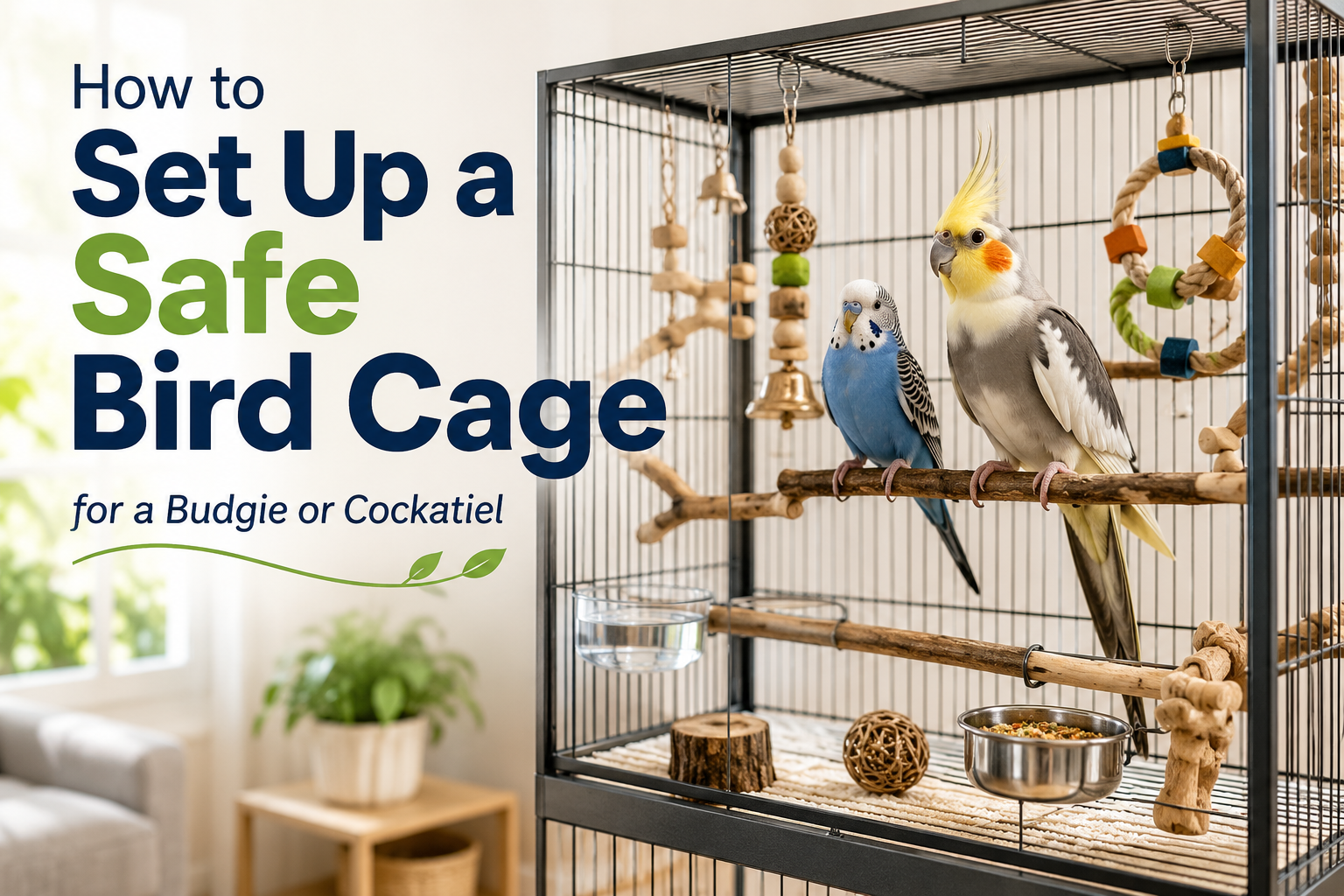
If you are reviewing the basic setup read how to set up a safe bird cage.
7. Your Parrot Is Not Getting Enough Sleep
Sleep is often overlooked when owners troubleshoot behavior.
Many companion parrots benefit from roughly 10 to 12 hours of quiet dark rest although individual needs and species differ.
A bird that stays awake late because of television lights visitors or household activity may become more irritable and vocal.
Improve the Sleep Environment
Try to provide:
- A predictable bedtime
- A quiet environment
- Low light or darkness
- Minimal nighttime disturbance
If nighttime behavior changes suddenly or the bird seems unusually sleepy during the day contact an avian veterinarian.
8. Hormonal or Breeding Behavior
Some parrots become more vocal during periods of hormonal activity.
You may also notice:
- Territorial behavior
- Regurgitation
- Nesting behavior
- Increased aggression
- Seeking dark enclosed spaces
- Strong attachment to one person or object
Environmental factors can encourage reproductive behavior.
Reduce Common Hormonal Triggers
Depending on the species and individual bird an avian veterinarian or behavior professional may suggest reducing:
- Access to dark nesting spaces
- Petting over the back or body
- Excessively long daylight periods
- Access to materials being used for nesting
Do not make major husbandry changes without considering the bird's species and health.
9. Overstimulation
Not all screaming comes from boredom.
Sometimes the environment is too stimulating.
Loud music children running visitors television dogs barking and constant handling may keep a parrot highly aroused.
The bird may need a quiet period rather than another toy or training session.
Signs of Overstimulation
- Very rapid movement
- Repeated loud calls
- Difficulty settling
- Defensive biting
- Frantic climbing
Reduce noise and activity and allow the bird to settle in a familiar safe area.
10. Pain or Illness
A sudden increase in screaming can sometimes indicate discomfort.
Possible health problems include:
- Injury
- Respiratory illness
- Digestive problems
- Reproductive problems
- Foot pain
- Other medical conditions
Behavior alone cannot diagnose the cause.
An avian veterinarian should examine a bird with a sudden unexplained behavior change.
Medical Warning Signs to Watch For
Contact an avian veterinarian if screaming occurs together with:
- Reduced appetite
- Weight loss
- Weakness
- Difficulty breathing
- Tail bobbing while breathing
- Changes in droppings
- Loss of balance
- Vomiting
- Fluffed posture for long periods
- Unusual sleeping during normal active hours
Birds may hide illness until it becomes advanced so subtle changes matter.
Do Not Shout Back
Shouting may feel like a natural response to a loud bird but it can make the situation worse.
Your parrot may interpret shouting as:
- Attention
- A flock member joining the noise
- Exciting interaction
It can also increase fear.
Stay calm and focus on reinforcing the behavior you want.
Never Hit the Cage or Spray the Bird
Punishment can damage trust and increase stress.
Avoid:
- Hitting the cage
- Throwing objects
- Covering the bird immediately as punishment
- Spraying water at the bird
- Grabbing the bird
- Yelling
Water should remain a positive part of bathing and normal care rather than being used as punishment.
Reward the Quiet Moments
Many owners react only when the bird is loud.
This means quiet behavior may receive almost no attention.
Try the opposite.
When your parrot is calm:
- Walk over and talk
- Offer a small safe reward
- Begin a short training session
- Provide attention
This teaches the bird that quiet or appropriate vocal behavior can produce positive results.
Teach an Alternative Sound
A useful strategy is to reinforce a sound that is easier to live with.
For example:
- A whistle
- A short word
- A soft contact call
When the bird uses this sound give attention or respond verbally.
With consistency the alternative behavior may become more useful than screaming.
Use Foraging to Prevent Predictable Screaming
If your parrot often screams during one specific period such as when you start working from home prepare an activity before the behavior starts.
Offer part of the normal food ration through a safe easy foraging activity.
This gives the bird something purposeful to do while you are occupied.
Do not make the activity so difficult that the bird cannot access food.
Create a Daily Routine
Predictable routines can reduce uncertainty.
A simple day may include regular periods for:
- Breakfast
- Independent enrichment
- Social interaction
- Training
- Exercise
- Quiet rest
- Bedtime
The routine does not need to happen at exactly the same minute every day.
It should simply give the bird a general idea of what to expect.
Track When the Screaming Happens
A behavior diary can reveal patterns that are difficult to notice in the moment.
For one week write down:
- Time of screaming
- What happened immediately before
- What you did afterward
- Whether food was involved
- Who was in the room
- How long the episode lasted
You may discover that screaming happens mainly when you leave the room or just before meals.
Check Whether You Are Accidentally Reinforcing the Behavior
Ask what the bird receives immediately after screaming.
Does someone:
- Enter the room
- Talk to the bird
- Give food
- Open the cage
- Move the bird closer
If the answer is yes the screaming may be producing a valuable reward.
Change the timing so those rewards happen during calmer behavior instead.
Should You Ignore Screaming?
Not every scream should be ignored.
You first need to know why the bird is calling.
Do not ignore:
- Panic
- Injury
- Illness
- A predator or safety threat
- A trapped bird
Ignoring may be useful only for a well understood attention seeking pattern when the bird is otherwise safe and healthy.
Even then reward quiet behavior so the bird learns what to do instead.
What if Your Parrot Screams When You Leave?
Start with very short separations.
Leave for only a few seconds and return during a quiet moment.
Gradually increase the time.
You can also teach a quiet contact whistle that you use when moving around the house.
For severe separation related behavior seek help from an avian behavior professional.
What if the Parrot Screams in the Morning?
Morning vocalizing is often normal flock behavior.
Parrots naturally become active around daylight.
You may not be able to eliminate this completely.
A consistent sleep schedule and thoughtful cage location may make the routine easier to manage.
What if the Parrot Screams at Sunset?
Many parrots also become vocal toward evening.
This can be part of normal flock communication.
If it happens for a limited predictable period and the bird is otherwise healthy it may be normal behavior rather than a training problem.
Can Covering the Cage Stop Screaming?
A cage cover can be useful for creating a dark quiet sleep environment when used safely.
It should not be used repeatedly as punishment whenever the bird vocalizes.
This can create fear and interfere with the normal day and night schedule.
Can Another Bird Solve the Problem?
Do not buy another parrot simply to stop screaming.
Another bird may provide social interaction but it also means:
- More noise
- More veterinary expenses
- A larger housing requirement
- Quarantine and introduction planning
- The possibility that the birds will not immediately bond
Add another bird only when you genuinely want and can responsibly care for another animal.
When to Ask a Professional for Help
Seek professional help when:
- Screaming continues for hours
- The bird becomes aggressive
- The behavior appeared suddenly
- You suspect separation distress
- Feather damaging behavior is also present
- The household cannot identify the trigger
Start with an avian veterinarian to rule out medical problems.
If the bird is healthy ask for a referral to a qualified avian behavior professional who uses reward based methods.
Common Parrot Screaming Mistakes
Expecting a Parrot to Be Silent
Normal parrot communication can be loud.
Giving Attention Only When the Bird Screams
This can accidentally teach the bird to scream more.
Punishing the Bird
Punishment can increase fear and damage trust.
Adding More Toys Without Understanding the Cause
A frightened overtired or sick bird does not necessarily need more stimulation.
Changing the Routine Every Day
A predictable environment can help many birds feel more secure.
Ignoring a Sudden Behavior Change
Medical problems should be ruled out when vocal behavior changes unexpectedly.
A Simple 7 Day Observation Plan
If your bird is otherwise healthy try this simple monitoring plan:
Day 1 and 2
Record when screaming occurs and what happens before and after it.
Day 3
Improve sleep routine and reduce unnecessary evening stimulation.
Day 4
Add one simple foraging activity.
Day 5
Begin rewarding calm behavior more consistently.
Day 6
Practice a quiet contact whistle or word.
Day 7
Review the notes and identify the strongest pattern.
If nothing improves or the bird appears unwell contact an avian veterinarian or qualified behavior professional.
Frequently Asked Questions
Why Does My Parrot Scream When I Leave the Room?
Your bird may be using a flock contact call or may have learned that screaming brings you back. Teach a quieter contact call and gradually practice short periods of separation.
Why Does My Parrot Scream Every Morning?
Morning calling can be normal parrot behavior. Wild parrots often communicate loudly when the flock becomes active.
Should I Ignore My Parrot When It Screams?
Only when you are confident the bird is safe healthy and screaming for attention. Never ignore panic illness or injury.
Can I Cover My Parrot's Cage When It Screams?
Do not use cage covering as punishment. Covers can be useful for a normal sleep routine when used safely.
How Can I Make My Parrot Quieter?
You cannot make a healthy parrot completely quiet. Focus on adequate sleep enrichment predictable routines and rewarding acceptable sounds.
Why Did My Parrot Suddenly Start Screaming?
Look for recent environmental changes fear injury illness pain or household routine changes. Sudden unexplained behavior deserves veterinary attention.
Can Boredom Make a Parrot Scream?
Yes. Lack of appropriate mental activity can contribute to attention seeking and repetitive behavior in some birds.
Will Getting Another Parrot Stop Screaming?
Not necessarily. Another bird creates additional care requirements and may actually increase household noise.
Related DailyPetTips Guides
- More Bird Guides
- How to Set Up a Safe Bird Cage
- How to Keep a Budgie Mentally Stimulated
- How to Train a Budgie to Step Up Safely
Sources and References
Bird Health Disclaimer
This article provides general educational behavior information and does not diagnose medical or behavioral disease. Sudden vocal changes breathing difficulty appetite loss weakness abnormal droppings injury or other concerning signs should be assessed by an avian veterinarian.
Editorial Note
This guide treats screaming as communication rather than bad behavior. It prioritizes identifying triggers improving the environment reinforcing calmer alternatives and ruling out medical causes instead of using punishment.
About the Author
Ibrahim is a pet care writer at DailyPetTips. He creates practical easy to understand guides using responsible animal care principles and established veterinary and animal welfare resources.
Pet parent notes