Quick Answer
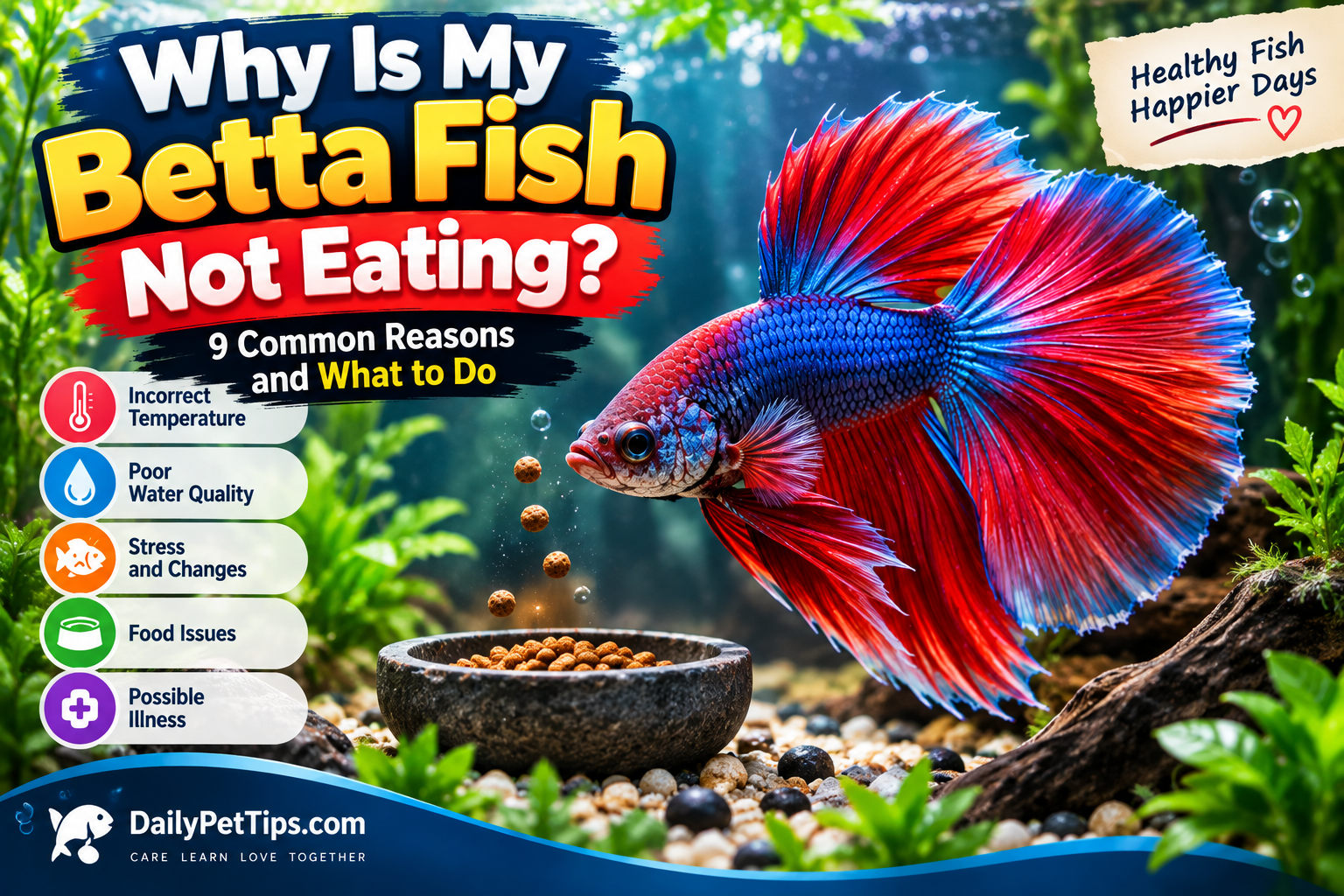
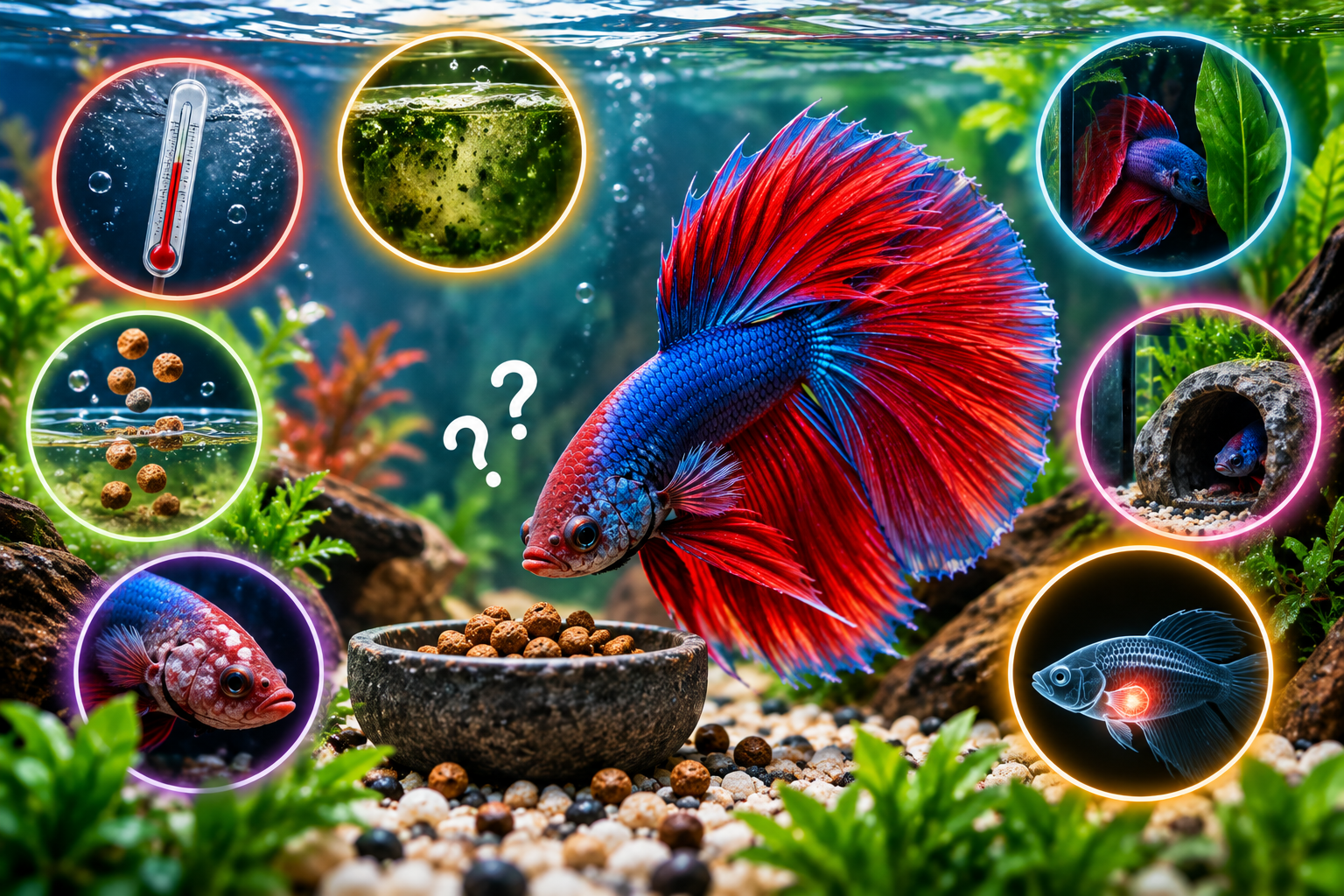
A betta fish may stop eating because the water is too cold, water quality is poor, it is stressed, it was recently overfed, it dislikes the food or it is developing a health problem.
A newly introduced betta may also refuse food temporarily while adjusting to a new aquarium.
Start by checking the aquarium rather than immediately adding medication. Test the water, confirm that the temperature is suitable, look for signs of stress or disease and make sure you are offering an appropriate betta food in sensible portions.
A brief reduction in appetite is not always an emergency, but a betta that continues refusing food or develops swelling, abnormal swimming, breathing difficulty, unusual spots, sores or severe lethargy needs closer attention.
Key Takeaways
- Check water quality whenever a betta suddenly stops eating.
- Bettas are tropical fish and inappropriate temperature can affect activity and appetite.
- A new betta may need time to adjust to its aquarium.
- Overfeeding can reduce interest in the next meal and pollute the water.
- Betta fish need an appropriate protein rich diet.
- Remove uneaten food instead of allowing it to decay in the tank.
- Do not randomly combine medications when you do not know what is wrong.
- Look at swimming, breathing, body condition and appearance as well as appetite.
- Persistent appetite loss accompanied by other symptoms can indicate disease.
Is It Normal for a Betta Fish to Skip a Meal?
One refused meal does not automatically mean your betta is seriously ill.
Appetite can vary temporarily because of environmental changes, stress or a previous large meal.
The important question is whether the loss of appetite continues and whether anything else has changed.
A normally active betta that skips one feeding but continues swimming and behaving normally is different from a fish that refuses food while sitting motionless, gasping or showing visible body changes.
Start With the Aquarium Not the Food
When a betta stops eating, owners often immediately buy a different food.
Sometimes the food is the problem, but the aquarium environment should be checked first.
Fish live continuously in their water. Problems with temperature or water chemistry can affect the entire animal.
Your first checks should include:
- Water temperature
- Ammonia
- Nitrite
- Nitrate
- Recent water changes
- Filter operation
- Recent additions to the aquarium
- Signs of stress or disease
1. Your Betta Is Adjusting to a New Home
It is common for a newly purchased fish to experience stress after transportation and introduction to a different aquarium.
During a short period the fish has experienced:
- Capture and handling
- Transportation
- Different water
- A new tank
- Different lighting
- New surroundings
- A new feeding routine
Some bettas begin eating quickly. Others may be hesitant at first.
What to Do
Keep the environment calm and stable.
Avoid repeatedly tapping the glass or moving decorations around while the fish is settling.
Offer a small amount of appropriate food and remove what is not eaten.
Watch the fish closely for other symptoms because appetite loss in a newly purchased fish can also reflect an existing health problem.
2. The Water Is Too Cold
Betta splendens is a tropical fish.
Temperature affects metabolism, activity and digestion.
Water that is consistently too cold can make a betta less active and may reduce its interest in food.
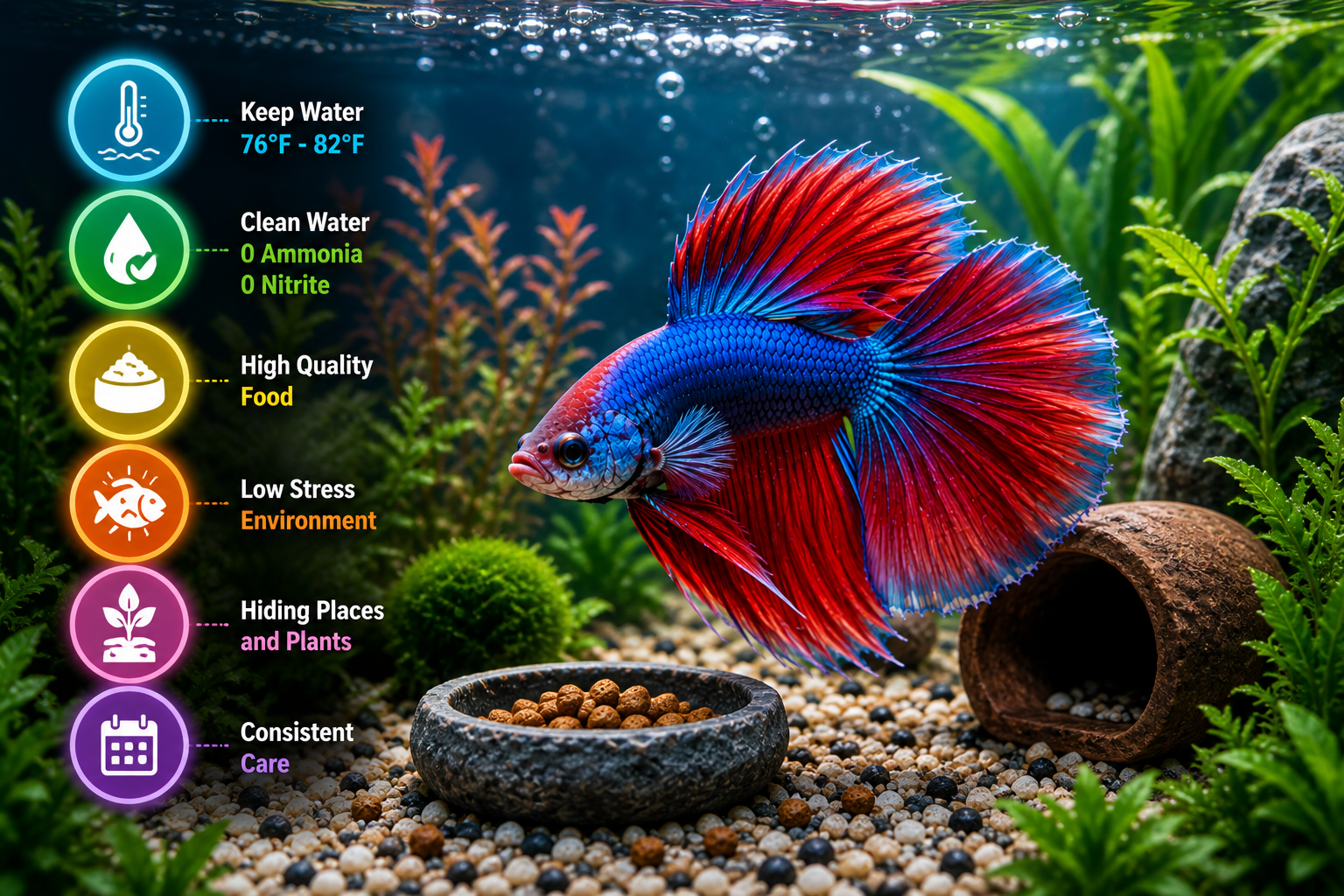
A commonly recommended aquarium range for bettas is approximately 76 to 82 degrees Fahrenheit or about 24.5 to 28 degrees Celsius.
Individual husbandry recommendations can vary slightly, but stable tropical temperatures are important.
Do Not Guess the Temperature
Use a reliable aquarium thermometer.
Room temperature is not the same as aquarium water temperature and water can become considerably cooler overnight.
If heating is necessary, use aquarium equipment designed for the tank size.
Avoid sudden large temperature changes.
3. Poor Water Quality Is Affecting Your Betta
Clear water is not necessarily safe water.
Ammonia and nitrite can be present without making the aquarium visibly dirty.
Both are toxic to fish.
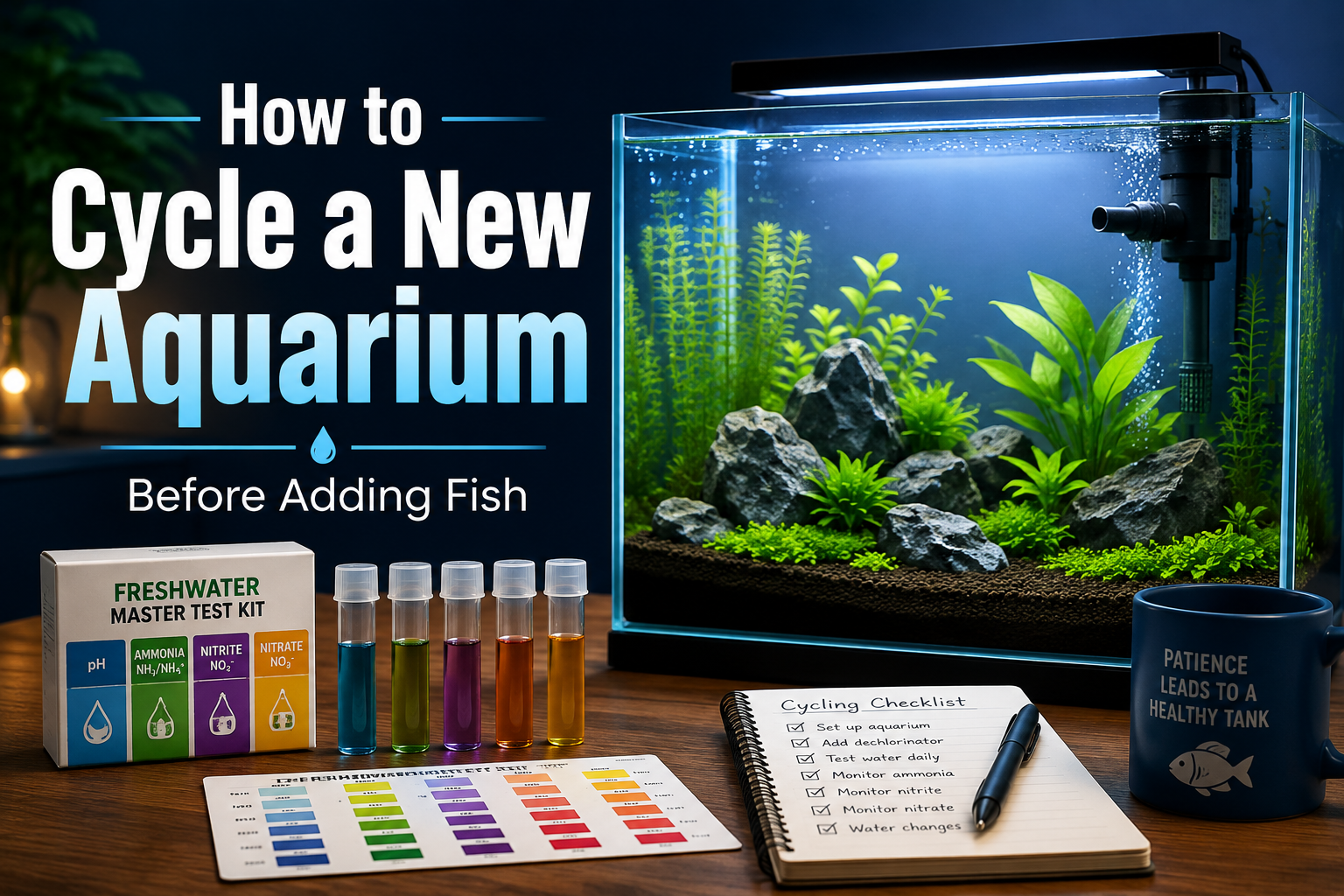
In a properly established aquarium, beneficial microorganisms help process waste through the nitrogen cycle.
Problems can develop when:
- A new aquarium has not completed its biological cycle
- The tank is overfed
- Uneaten food is left to decay
- The filter is inadequate or disrupted
- Too much biological filter media is cleaned or replaced at once
- Maintenance is inconsistent
- Waste accumulates
Test the Water
Do not rely only on appearance or smell.
Use an aquarium water test kit to check important parameters.
In an established freshwater aquarium, ammonia and nitrite should generally be kept at 0 ppm.
Nitrate should also be controlled through appropriate stocking, filtration, plant growth where applicable and regular maintenance.
Why the Nitrogen Cycle Matters
Fish produce waste.
Waste and decomposing organic material contribute to ammonia in the aquarium.
In a mature biological filter, beneficial microorganisms convert ammonia into nitrite and then other microorganisms convert nitrite into nitrate.
If this biological system is not established or becomes disrupted, toxic compounds can accumulate.
This is one reason a newly set up aquarium can create problems even when it looks perfectly clean.
4. You May Be Feeding Too Much
Betta fish have small bodies and do not need large piles of food.
Overfeeding can create two problems at once.
First, a fish that has eaten too much may show little interest in its next feeding.
Second, uneaten food can decay and reduce water quality.
Signs You May Be Overfeeding
- Food regularly sinks uneaten
- Food remains on the bottom
- The abdomen appears unusually swollen after meals
- The fish repeatedly ignores later feedings
- The tank becomes dirty quickly
Feed small portions appropriate to the food product and your individual fish rather than adding a large amount at once.
5. Your Betta Does Not Recognize or Like the Food
Not every betta immediately accepts every food.
This is especially noticeable after bringing a fish home from a store or breeder where it was fed something different.
Bettas are primarily carnivorous or insect eating fish and require an appropriate protein rich diet.
A high quality food formulated for bettas can form the main part of the diet.
Depending on availability and safe handling, suitable variety may include foods such as:
- Quality betta pellets
- Frozen brine shrimp
- Frozen daphnia
- Appropriate bloodworms as an occasional food
These foods should be sourced and prepared appropriately.
Are Flakes Bad for Bettas?
Not automatically.
The nutritional formulation matters more than whether a food is shaped as a pellet or flake.
However some bettas find appropriately sized floating pellets easier to recognize and eat.
Always check that the food is formulated for carnivorous tropical fish or specifically for bettas and that individual pieces are manageable for your fish.
6. The Food Is Too Large or Difficult to Eat
A betta may approach food and then repeatedly spit it out if the piece is difficult to manage.
Spitting food once does not necessarily indicate disease.
Watch what happens afterward.
The fish may break the food into a smaller piece and eat it.
If the fish repeatedly tries but cannot swallow its normal food, consider whether:
- The pieces are too large
- The food is unusually hard
- The fish has a mouth injury
- There is another health problem
7. Your Betta Is Stressed
Stress can affect feeding behavior.
Potential stressors include:
- Poor water quality
- Incorrect temperature
- Sudden changes in lighting
- Strong filter flow
- Constant disturbance
- Incompatible tank mates
- Lack of hiding areas
- Repeated reflections
- Recent transportation
A stressed betta may hide, clamp its fins, become unusually inactive or refuse food.
Strong Water Flow Can Be a Problem
Bettas are not built for fighting a powerful current continuously.
If the filter pushes the fish around the aquarium or the betta constantly struggles to remain in one place, the flow may be too strong.
Use filtration appropriate for the aquarium while providing areas with gentle water movement where the fish can rest comfortably.
8. Digestive Problems May Reduce Appetite
A betta with abdominal discomfort or digestive disturbance may stop eating.
However a swollen abdomen should not automatically be called constipation.
Abdominal enlargement can have different causes including:
- Overfeeding
- Digestive problems
- Egg related enlargement in females
- Internal disease
- Fluid accumulation
This distinction matters because treatments are not interchangeable.
Avoid Automatic Home Remedies
Online advice sometimes recommends peas for every bloated betta.
Bettas are insect eating fish and peas are not a natural dietary staple.
If a veterinarian or experienced aquatic professional believes additional dietary fiber is appropriate, foods such as daphnia may be a more species appropriate option.
Persistent or severe swelling needs proper assessment rather than repeated home remedies.
9. Your Betta May Be Sick
Loss of appetite is a general symptom and cannot identify one specific disease.
A sick fish may also show changes in:
- Swimming
- Breathing
- Color
- Fins
- Scales
- Body shape
- Skin
- Waste production
- Activity
Look at the entire fish rather than appetite alone.
Warning Signs That Need Attention
Take appetite loss more seriously when it occurs with:
- Rapid or labored breathing
- Persistent gasping at the surface
- Severe lethargy
- Loss of balance
- Inability to swim normally
- White spots
- Fuzzy or cotton like growths
- Open sores
- Significant fin deterioration
- Severe abdominal swelling
- Scales sticking outward
- Abnormal eye appearance
- Rapid unexplained weight loss
If possible, consult a veterinarian experienced with fish or an aquatic animal health professional.
What Does Pineconing Mean?
Pineconing describes scales that protrude outward instead of lying flat against the body.
When viewed from above, the fish can resemble a pine cone.
This appearance can occur when fluid accumulates within the body and is a serious sign rather than a specific disease by itself.
A betta showing pineconing, major swelling and loss of appetite needs prompt expert attention.
What About White Spots?
Small white spots resembling grains of salt can be associated with external parasites such as Ichthyophthirius multifiliis, commonly called ich.
However not every pale mark on a fish is ich.
Correct identification matters because unnecessary medication can stress fish and disrupt the aquarium.
Why You Should Not Medicate Before Checking the Water
When a fish stops eating, adding several medications may feel proactive.
But if the actual problem is ammonia, nitrite, inappropriate temperature or severe stress, random medication does not fix the cause.
Some medications can also affect biological filtration or create additional stress.
Check husbandry and identify symptoms before selecting treatment.
Should You Move a Sick Betta to a Hospital Tank?
A separate treatment aquarium can be useful in some situations because it allows closer observation and can prevent medication from affecting the main aquarium.
However moving an already stressed fish can also create additional stress.
A hospital setup must still provide:
- Safe water
- Appropriate temperature
- Suitable oxygenation
- Stable conditions
- Careful monitoring
Do not move a fish simply because it missed one meal.
Could Tank Mates Stop a Betta From Eating?
Yes.
Incompatible or overly active tank mates can create competition and stress.
A betta may hide instead of approaching food.
Other fish may also consume the food before the betta reaches it.
Watch feeding rather than assuming each fish receives an equal share.
Tank mate compatibility depends on aquarium size, species, individual temperament and setup.
Can a Betta Live in a Small Bowl?
A tiny unfiltered bowl makes stable temperature and water quality much harder to maintain.
Bettas benefit from a properly sized, heated and filtered aquarium that allows normal swimming and stable environmental conditions.
More water volume generally provides greater stability than a tiny container, although every aquarium still requires proper cycling and maintenance.
For more fish husbandry guides visit our Fish category.
Should You Keep Offering Food When Your Betta Refuses It?
You can continue offering very small portions at normal feeding opportunities while investigating the cause.
Do not repeatedly add more food in an attempt to tempt the fish.
Remove uneaten food promptly.
Decaying food contributes to waste and can worsen water quality.
How Long Can a Betta Go Without Food?
Healthy adult fish can survive longer without food than many owners expect, but this fact should not be used as a target or routine feeding strategy.
There is also a major difference between a healthy fish temporarily missing meals and a sick fish refusing food.
Instead of asking how long the fish can survive, focus on why its normal appetite has changed.
Do Not Force Feed a Betta at Home
Trying to force food into a small fish can cause injury and severe stress.
Specialized assisted feeding techniques may be used in professional aquatic medicine, but they are not appropriate as casual home treatment.
A Safe Step by Step Troubleshooting Plan
Step 1: Observe Before Changing Anything
Watch your betta for several minutes.
Look at swimming, breathing, fins, scales, abdomen and general activity.
Step 2: Check Temperature
Use an aquarium thermometer rather than estimating by touch.
Step 3: Test Water Quality
Check ammonia, nitrite and nitrate using an appropriate aquarium test kit.
Step 4: Review Recent Changes
Ask whether you recently:
- Changed the tank
- Added fish
- Changed the filter
- Cleaned filter media
- Introduced new decorations
- Changed food
- Performed a major water change
Step 5: Offer a Small Amount of Appropriate Food
Give only enough to observe whether the fish shows interest.
Step 6: Remove Uneaten Food
Do not leave excess food decomposing in the aquarium.
Step 7: Monitor Symptoms
If the fish continues refusing food or develops other symptoms, seek experienced aquatic health advice.
How to Encourage a Healthy Appetite
Once medical and environmental problems are addressed, good husbandry helps maintain normal feeding behavior.
Provide:
- Stable tropical temperature
- Clean cycled water
- Appropriate filtration
- A gentle current
- Suitable hiding and resting areas
- A consistent light and dark cycle
- A nutritionally appropriate diet
- Sensible portions
How Often Should You Feed a Betta?
Healthy adult bettas are commonly fed small measured meals once or twice daily depending on the food, individual fish and husbandry plan.
Follow the feeding guidance for the specific product and adjust based on your fish's body condition and health.
Avoid using the fish's willingness to beg as the only measure of how much food it needs.
Some bettas will continue showing interest even after receiving an adequate meal.
Why Portion Size Matters
Statements such as "feed as much as the fish can eat" can be difficult for beginners because some fish eat quickly and owners may keep adding food.
Instead, learn how much of your particular food is appropriate for your individual betta.
Pellet sizes and calorie density vary between brands, so a fixed number of pellets is not universally correct.
Should Bettas Have a Fasting Day?
Some keepers routinely skip a feeding day, but a scheduled fasting day is not required for every healthy betta.
Correct portioning is more important than deliberately overfeeding and then trying to compensate with fasting.
If your fish has a medical or digestive problem, obtain advice appropriate to that situation.
Common Mistakes When a Betta Stops Eating
Changing Everything at Once
If you replace the food, filter, decorations and water at the same time, you may create more stress and make it difficult to identify the original problem.
Adding Medication Immediately
Appetite loss alone does not identify a disease.
Ignoring Water Testing
Water can look crystal clear while containing harmful ammonia or nitrite.
Continuing to Add Food
Uneaten food decomposes and increases waste.
Making a Sudden Temperature Increase
Temperature should be corrected carefully rather than changed dramatically.
Assuming Every Bloated Fish Is Constipated
Swelling has multiple possible causes.
Assuming a Tiny Bowl Is Enough
Very small containers are difficult to keep stable and provide limited swimming space.
When Should You Get Expert Help?
Seek help from a veterinarian experienced with fish or another qualified aquatic health professional when appetite loss persists or is accompanied by concerning symptoms.
Prompt advice is especially important if your betta has:
- Difficulty breathing
- Loss of balance
- Severe swelling
- Pineconing
- Open wounds
- Rapid physical deterioration
- Major color or skin changes
- Inability to swim normally
- Persistent refusal of food
A Daily Observation Checklist
A few seconds of observation during feeding can help you notice changes early.
Check:
- Did the fish approach food?
- Did it swallow normally?
- Is its swimming normal?
- Are the fins open normally?
- Is breathing comfortable?
- Does the abdomen look normal?
- Are the scales flat?
- Are there new spots or sores?
- Is the water temperature stable?
Knowing what is normal for your individual fish makes unusual behavior easier to recognize.
Frequently Asked Questions
Why Is My Betta Fish Suddenly Not Eating?
Check water quality, temperature, recent environmental changes, stress and physical symptoms. A sudden appetite change can have environmental or medical causes.
Why Is My New Betta Not Eating?
Transportation and a new aquarium can temporarily reduce appetite. Keep conditions stable and monitor closely for symptoms of illness.
Can Cold Water Make a Betta Stop Eating?
Yes. Bettas are tropical fish and water that is too cold can reduce activity, metabolism and appetite.
Why Does My Betta Spit Out Its Food?
The food may be too large or unfamiliar. Some bettas also manipulate food before swallowing it. Repeated inability to eat normal food can warrant closer investigation.
Should I Change the Water if My Betta Is Not Eating?
Test the water first when possible. If ammonia or nitrite is present, appropriate water management is important. Avoid unnecessarily replacing all aquarium water at once because sudden changes can create additional stress.
Why Is My Betta Not Eating and Staying at the Bottom?
This combination can occur with cold water, poor water quality, stress or illness. Check the aquarium parameters immediately and look for additional symptoms.
Why Is My Betta Not Eating but Still Active?
The fish may be adjusting to a new environment, may have eaten too much previously or may dislike the current food. Continue monitoring because persistent appetite loss still deserves investigation.
Can Overfeeding Make a Betta Stop Eating?
Yes. A fish that has consumed too much may refuse its next meal, and excess food can also worsen water quality.
Should I Give My Betta a Pea for Constipation?
Peas are commonly suggested online, but bettas are primarily insect eating fish and peas are not a natural staple. Avoid automatically treating abdominal swelling as constipation. Determine the likely cause first.
When Should I Worry About My Betta Not Eating?
Concern increases when appetite loss persists or occurs with abnormal breathing, severe lethargy, swelling, pineconing, sores, white spots, abnormal swimming or other physical changes.
Related DailyPetTips Guides
Sources and References
- Merck Veterinary Manual — Aquarium Fish
- University of Florida IFAS — Fish Health Resources
- RSPCA — Fish Care and Welfare
- Aquatic Veterinary Resources
Fish Health Disclaimer
This article provides general educational information about betta husbandry and is not a diagnosis or treatment plan. Appetite loss can result from environmental problems, stress or disease. Persistent refusal of food, breathing difficulty, severe swelling, abnormal swimming, pineconing, wounds or rapid deterioration should be assessed by a veterinarian experienced with aquatic animals when available.
Editorial Note
This guide prioritizes checking water quality, temperature, diet and stress before assuming that appetite loss represents a specific disease. It avoids recommending medication without a reasonable diagnosis because unnecessary treatment can create additional risks for the fish and aquarium.
About the Author
Ibrahim is a pet care writer at DailyPetTips. He creates practical and easy to understand guides using established veterinary, animal welfare and husbandry information with an emphasis on safe and responsible pet care.
Pet parent notes