Quick Answer
Do not assume a new aquarium is ready for fish as soon as the water looks clear.
A new tank needs a biological filter that can process toxic ammonia produced by fish waste and uneaten food.
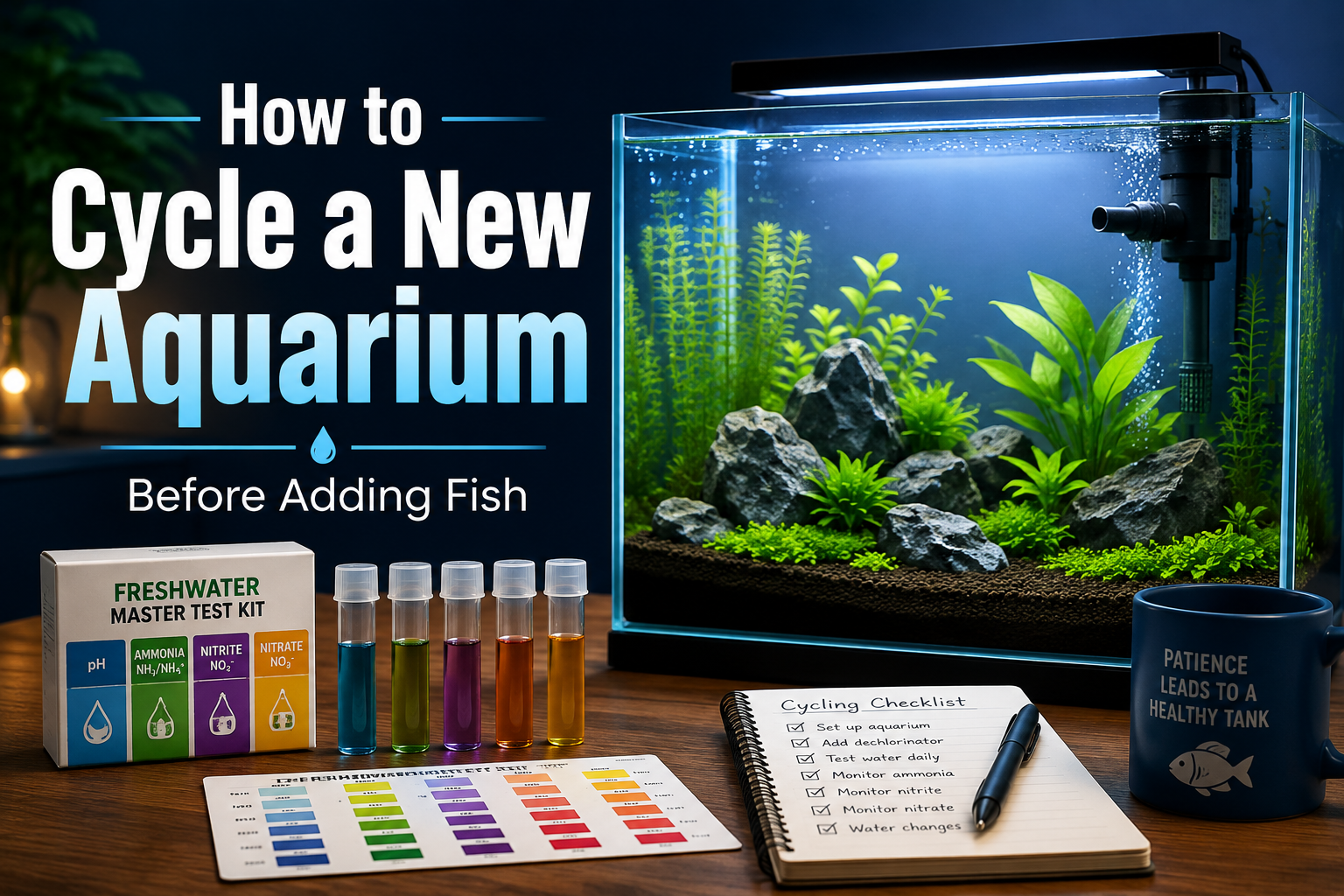
Fishless cycling allows beneficial bacteria to establish before animals are added. Use dechlorinated water a running filter and an aquarium test kit to monitor ammonia nitrite and nitrate.
The process may take several weeks. Water test results are more useful than counting a fixed number of days.
Key Takeaways
- Clear water does not mean a tank is biologically ready.
- Chlorine or chloramine should be treated with an appropriate conditioner.
- The filter should run continuously during cycling.
- Beneficial bacteria convert ammonia to nitrite and then nitrate.
- Ammonia and nitrite are toxic to fish.
- Fishless cycling avoids deliberately exposing fish to these toxins.
- Use aquarium tests rather than guessing.
- Do not add a full population of fish all at once after cycling.
What Is the Aquarium Nitrogen Cycle?
Fish produce waste.
Uneaten food and other organic material also break down inside an aquarium.
This process can produce ammonia.
Ammonia is toxic to fish.
In an established aquarium beneficial microorganisms help convert ammonia into other nitrogen compounds.
A simplified version looks like this:
Ammonia → Nitrite → Nitrate
Nitrite is also toxic.
Nitrate is usually less immediately toxic at appropriate levels and is controlled with water changes plants and good aquarium maintenance.
Why Does a New Aquarium Need Cycling?
A brand new filter does not automatically contain enough beneficial bacteria.
If several fish are placed into a new aquarium immediately their waste may create ammonia faster than the new biological filter can process it.
This can expose fish to harmful water conditions.
Cycling the aquarium first allows the biological filtration system to develop before fish depend on it.
What You Need Before Starting
Prepare the basic equipment before beginning.
You may need:
- An aquarium suitable for the species you plan to keep
- A properly sized filter
- Water conditioner
- A heater for species that require warm water
- A thermometer
- An aquarium test kit
- Substrate and decorations if desired
- A safe ammonia source for fishless cycling
Research the exact fish species before choosing tank size temperature filtration and social group.
Different fish have very different requirements.
Prepare the Water
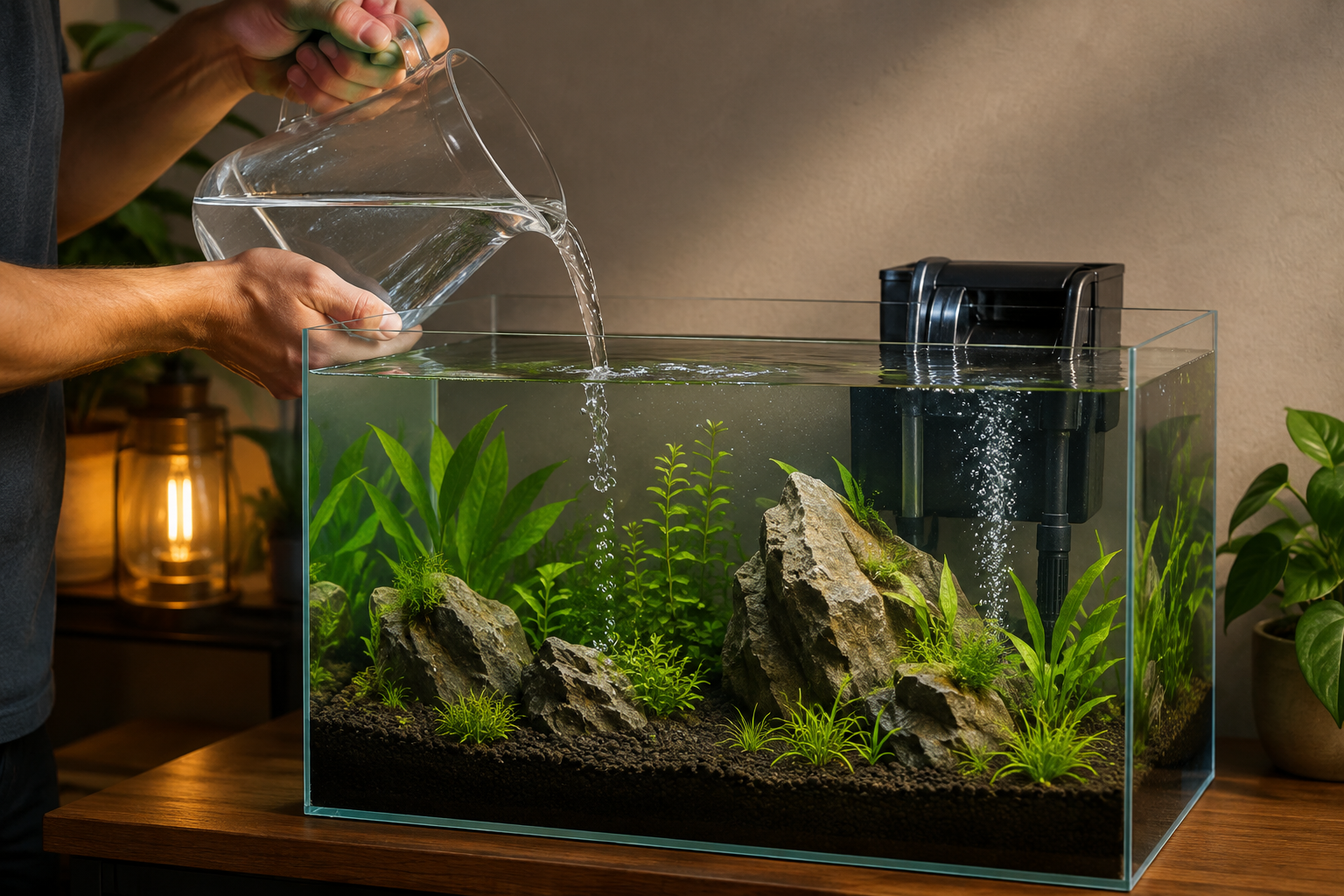
Tap water in many areas contains chlorine or chloramine to make drinking water safer for people.
These chemicals can harm fish and beneficial aquarium bacteria.
Use an aquarium water conditioner that treats your local water supply and follow the product instructions.
Do not guess the amount.
Knowing whether your water provider uses chlorine chloramine or another treatment can help you select the correct conditioner.
Start the Filter
The aquarium filter should run continuously while the tank cycles.
Much of the useful biological activity develops on filter media and other aquarium surfaces rather than simply floating in the water.
Make sure water flows through the filter properly.
If your future fish require a heater set it to an appropriate temperature for the planned species.
Do not choose the temperature before researching the animals you intend to keep.
Provide an Ammonia Source Safely
Beneficial bacteria need a source of ammonia to establish.
Fishless cycling methods create this source without intentionally placing fish in toxic water.
Use a method designed specifically for aquariums.
If using a bottled ammonia product make sure it is suitable for fishless aquarium cycling and follow reliable dosing instructions.
Do not use household ammonia that contains perfumes surfactants soaps or unknown additives.
Do not add ammonia to an aquarium that already contains fish or other animals.
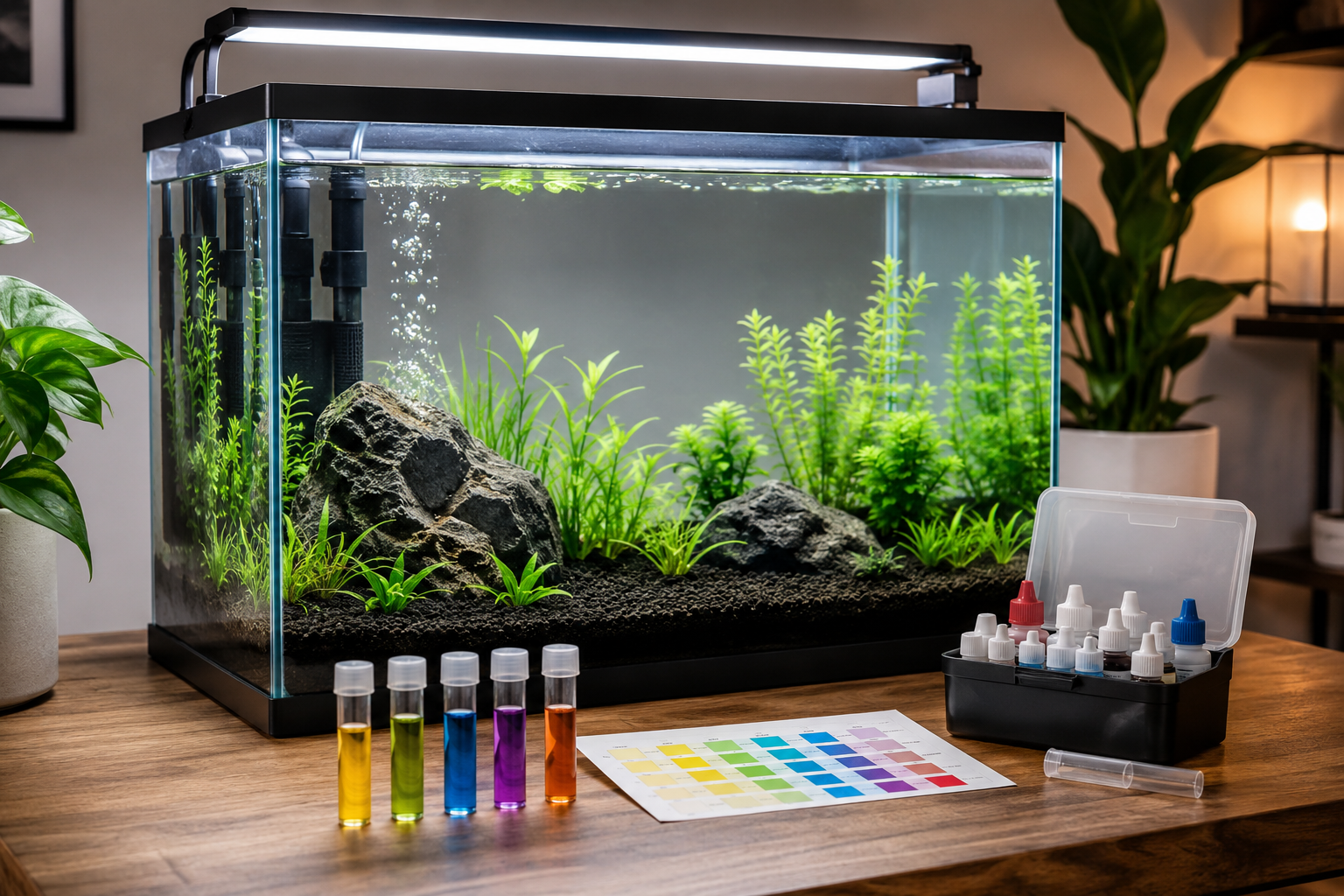
Test the Water Instead of Guessing
Water can look perfectly clear while containing dangerous ammonia or nitrite.
Testing is the only practical way to understand what is happening.
During cycling monitor:
- Ammonia
- Nitrite
- Nitrate
- pH when relevant
Follow the test manufacturer's instructions carefully.
Record the results so you can see how they change over time.
What Happens During the Cycle?
Early Stage
Ammonia is present because the biological filter is not yet established.
Middle Stage
Bacteria that process ammonia begin growing.
Ammonia may begin decreasing while nitrite rises.
Later Stage
Another group of beneficial bacteria becomes established and processes nitrite.
Nitrite eventually begins falling while nitrate becomes measurable in many tanks.
Every aquarium develops at a different speed.
Temperature pH source water filter media and cycling method can all affect timing.
How Do You Know the Cycle Is Ready?
Do not rely only on a calendar.
The biological filter should be able to process the ammonia generated by your chosen cycling method without leaving measurable toxic ammonia or nitrite.
Before adding fish you should have repeated test results showing that ammonia and nitrite are being processed appropriately.
If you are uncertain take your test results to an experienced aquarium professional or aquatic veterinarian before adding animals.
A large water change may be needed before adding fish if nitrate has built up during cycling.
Always dechlorinate new water and match appropriate temperature conditions.
Add Fish Slowly
A cycled tank does not mean you should add every planned fish on the same day.
The biological filter grows according to the amount of waste it has been processing.
A sudden large increase in fish can overload the system.
Add fish gradually and continue testing the water.
Research compatibility too.
Fish that require different temperatures water chemistry tank sizes or social groups should not be mixed simply because they look attractive together.
Water Changes During Cycling
Water changes do not automatically destroy the aquarium cycle.
Most beneficial bacteria live on filter media substrate decorations and other surfaces.
However the need for water changes depends on the cycling method and test results.
Follow a reliable fishless cycling method rather than changing water randomly.
After fish are added regular partial water changes become part of normal aquarium maintenance.
Protect Your Beneficial Bacteria
One common mistake is replacing all filter media simply because it looks dirty.
That media may contain a large part of the aquarium's biological filtration.
Do not replace all established biological media at once unless there is a specific reason.
When reusable media needs rinsing many aquarists use removed aquarium water rather than untreated chlorinated tap water.
Follow the filter manufacturer's instructions while preserving established biological media whenever practical.
What if Fish Are Already in an Uncycled Tank?
Do not add an ammonia source.
Fish already produce waste themselves.
Test ammonia and nitrite frequently and use appropriate partial water changes and water treatment to protect the fish.
Reduce unnecessary feeding and do not add more animals.
Because toxic ammonia and nitrite can injure fish seek advice from an experienced aquarium professional or aquatic veterinarian when readings become unsafe or fish show distress.
Common Aquarium Cycling Mistakes
Adding Fish the Same Day the Tank Is Filled
Clear water does not mean the biological filter is ready.
Never Testing the Water
You cannot reliably see ammonia or nitrite.
Turning the Filter Off for Long Periods
The biological filter needs flowing oxygenated water.
Replacing All Filter Media at Once
This can remove a large amount of established beneficial bacteria.
Adding Too Many Fish at Once
A sudden waste increase can overwhelm the system.
Believing Bottled Bacteria Makes Testing Unnecessary
Products may help but water testing is still necessary before assuming the tank is safe.
Frequently Asked Questions
How Long Does Aquarium Cycling Take?
It often takes several weeks but there is no universal number. Use water test results rather than a calendar alone.
Can I Cycle an Aquarium Without Fish?
Yes. Fishless cycling is widely used because it avoids intentionally exposing fish to ammonia and nitrite during the process.
Do I Need a Filter During Cycling?
Yes. The filter provides important surfaces and water flow for biological filtration.
Can I Add Fish When Ammonia Is Zero but Nitrite Is Still Present?
No. Nitrite is also toxic and should be processed appropriately before fish are added.
Should I Replace the Filter Cartridge Every Month?
Do not automatically discard established biological media simply because a date has passed. Follow the filter instructions while protecting useful biological filtration.
Related DailyPetTips Guides
Sources and References
Fish Health Disclaimer
This guide provides general educational information. Aquarium requirements differ greatly between fish species. Research the exact animals you intend to keep and seek aquatic veterinary or experienced professional help when fish show signs of illness or water tests indicate dangerous conditions.
Editorial Note
This article recommends fishless cycling because it avoids intentionally exposing fish to toxic ammonia and nitrite while a new biological filter develops.
About the Author
Ibrahim is a pet care writer at DailyPetTips. He creates practical easy to understand guides with a focus on responsible animal care and reliable educational sources.
Pet parent notes